

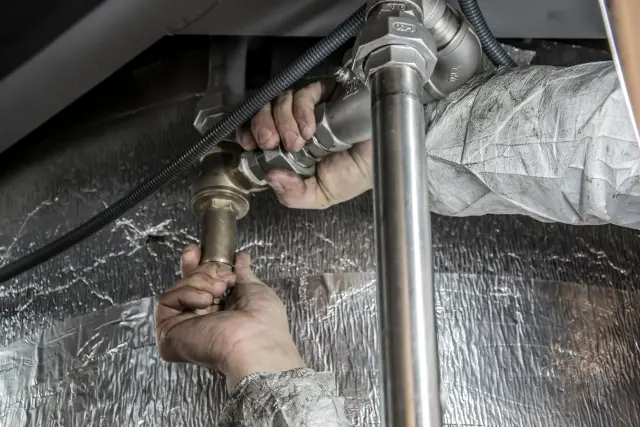
Water-Saving Plumbing for Low-Income Housing: Payback and Design Tips
Water shortages and increases in utilities are becoming an issue of concern in all parts of the world especially the low-income earners households, where any slight increment in the monthly bills is a cause of strain. Water costs take an unreasonable proportion of family income in most localities, and this disproportion is higher in economically disadvantaged areas.
 Simultaneously, the old infrastructure, ineffective plumbing fittings,
and bad design decisions contribute to a high level of wastage of water in the
affordable housing projects. Saving Plumbing: Water-saving plumbing is an
effective tool that can be used to solve environmental sustainability and
economic resilience.
Simultaneously, the old infrastructure, ineffective plumbing fittings,
and bad design decisions contribute to a high level of wastage of water in the
affordable housing projects. Saving Plumbing: Water-saving plumbing is an
effective tool that can be used to solve environmental sustainability and
economic resilience.
In low-income housing, this is not just about conserving water but it must be in a manner that is affordable, long lasting and simple to maintain. Water-efficient plumbing can be as simple as selecting the right type of fixtures, smart layouts, and a small upgrade to their systems contrary to the expensive and complicated green technologies that need sophisticated systems and designs to be installed.
These measures provide quantifiable pay
back in terms of low utility charges, reduced maintenance, and enhanced long
term viability of housing developments.
Notably, water saving plumbing is not merely a technical
problem, but a social problem. Access to affordable water with reliability
upholds health, dignity and hygiene. Poor plumbing systems can lead to low
pressure, constant leakage, or unreliable supply, which compromises the quality
of life. Properly designed water efficient systems, conversely, are able to do
the same with less resources.
This blog discusses the opportunities of implementing the concept of water-saving plumbing into use in low-income housing. It discusses the financial feasibility of the efficient systems, viable design strategies, the choice of fixtures, longevity of the systems, maintenance implications and the community benefits in general.
These are centered on solutions that are
practical and realistic on tight budgets and can be expanded to large housing
projects. The knowledge of the economic and design aspects helps housing
providers and policymakers to make wise decisions that would benefit both the
environment and the residents.
Economic Payback of Water-Saving Plumbing system.
It has one of the strongest arguments in the form of the financial case of water-saving plumbing in low-income housing. Although developers and housing authorities need to concentrate on keeping down initial construction costs, long-term operating costs are also worth attention.
Water-efficient plumbing systems are always characterized with high payback in terms
of cut back utility bills, reduced strain on infrastructure and prevented
future maintenance interventions.
Low-flow faucets, dual-flush, low flow toilets and efficient faucets are often priced only slightly higher than traditional ones, particularly when they are bought in large quantities to furnish housing projects.
Nevertheless, their generated water savings may be high. A big
portion of indoor water use is in toilet usage, and the replacement of
inefficient models with efficient ones can save thousands of liters of water
per household annually. As far as residents that pay monthly water bills are
concerned, these savings are directly translated to decreasing financial load.
In the eyes of housing providers, reduced water consumption
also has the added benefit of lessening the burden on the plumbing
infrastructure. When the systems are efficient, pipes, pump, and water heaters
are less likely to wear and tear as the systems last longer, leading to a
decrease in repair expenses. Efficient plumbing in multi-family housing where
leaks and overuse can easily blow up operating budgets can stabilize the
operating budgets.
Water saving plumbing has a short payback period. The extra
initial cost of efficient fixtures is saved in less than a year in most
instances, in less than three years in most cases. The financial gain gets even
better when one considers energy savings due to less consumption of hot water.
These savings can be substantial in case of such developments which involve
centralized water heating.
There are indirect economic benefits found in water efficiency. Where there is water shortage or an increase in the tariffs, the efficient housing type is more resilient to the price increase and the supply limitation.
This stability cushions the residents and housing operators against
any future financial shocks. Some jurisdictions also provide incentives,
rebates or faster approvals of water efficient developments which enhance the
financial payback further.
Finally, the plumbing that requires water saving is not an
additional cost but an investment. By changing the short-term perspective on
the savings of construction to the long-term perspective of affordable housing,
the low-income housing project will be able to attain greater financial
performance yet provide the actual benefits to residents.
Intelligent Planning of plumbing in low-cost housing
Plumbing design is the first step towards effective water
conservation. In low-income housing, the design choices have to be based on the
efficiency, simplicity, and cost-effectiveness. Effective plumbing designs will
help to minimize the amount of used material, water wastage, and system
efficiency without having to use costly technologies.
Compact and centralized plumbing is one of the most influential design strategies. When the developers cluster the kitchens, bathrooms, and laundry areas, they are able to limit the length of the pipes and the amount of water that is lying idle in the water system.
Smaller pipes
translate to a decrease in water wasted in waiting until hot water arrives at
taps which improves the efficiency and user satisfaction. This also reduces on
the cost of materials and labor in the construction.
Another important issue is the sizing of pipes. Majored
pipes cause stagnation of water and slow delivery whereas correctly sized pipes
enhance pressure and lower wastes. Considerate hydraulic design is used so that
water arrives at the fixtures fast as well as reliably, thereby deterring
residents to leave tabs running without reasons.
Gravity-assisted drainage designs also lead to efficiency.
Systems that utilize gravity instead of pumps are designed in such a way to use
less energy and less maintenance. The low affordable housing with low rise is
the area where this can be applied to great effect and at relatively low cost.
The design should accommodate access due to maintenance
reasons. There are readily available shut-offs, cleanouts, and meter that
ensure minor problems are prevented because they can be easily repaired and
detected within a short period of time by the leakage. Maintenance-oriented
design is particularly crucial in low-income residential design where postponed
repairs may result in a great deal of water loss and damage.
Adaptability is another designing factor. Plumbing systems
ought to be built in such a way that they can add on to them in the future,
like rainwater harvesting or greywater reuse even though they are not installed
during its construction. Most components can be phased added with capped
connections or space provided so that the improvements can be made as funds are
received.
Smart plumbing design consists of making the system operate
as a system, not as a system with high-tech elements. Low-income housing
projects can also realize a high level of water savings without a significant
increase in costs through layout, sizing, and accessibility.
Selection of Water efficient Fittings and Fixtures.
The fittings and fittings represent the most noticeable
elements of a plumbing system and contribute significantly to the water
consumption. When choosing the fixtures in low-income housing, it is critical
to consider the correct choice that would lead to the attainment of water
savings without affecting the performance and comfort of its use. Fortunately,
there are a lot of water-efficient solutions which are now common and cheap.
The simplest ones include low-flow faucets and showerheads.
In modern designs, aeration and pressure compensation techniques have been
employed to achieve the same performance with much less water. These fixtures
can be hard to tell the difference between the traditional ones and be able to
use them on an ordinary basis, which lowers the chances of dissatisfaction or
breaking by residents.
Another area of utmost concern is toilets. Low-volume and
dual-flush toilets significantly decrease the amount of water used per flush
and still provide a high degree of waste disposal. Long-term performance
depends on making sure that the system is compatible with the local water
pressure and waste systems.
The issue of durability is particularly critical when it
comes to affordable housing, wherein the aspect of replacing the housing on a
frequent basis cancels out the savings in the first place. The fixtures must be
strong, easy to maintain, and not used abusively. Metal parts last longer than
plastic parts and standardized parts become an easier task to maintain and save
the housing operators on inventory expenses.
Ease of use is also essential. The fixtures must be
user-friendly and convenient to both the elderly and the less able citizens.
Easy to use controls, labeling, and consistency in operation promote the
correct usage and minimize water waste. Complex, or not well-known design may
result in exploitation or evasion.
The costs should not only consider the purchase price but
also the lifecycle costs. A more costly and yet longer lasting and less water
consuming fixture can be better value in the long run. The costs can be further
decreased as a result of bulk purchasing and standardized specifications across
developments.
The housing projects with low-income earners will be able to
save water by a considerable margin by creatively choosing water-efficient
fixtures that consider a balance between performance, durability, and
affordability to make the residents comfortable and the system reliable.
Long-term performance, Maintenance and Leak Prevention.
Even the most effective plumbing design will not bring
savings in case of neglect in maintaining the plumbing. In low-income housing,
the maintenance and preventing of leaks are vital to maintaining the water
efficiency and operational costs. Water waste can also be significantly caused
by leaks, and sometimes they can remain undetected over a long period of time.
First step is to design systems in a way that is maintenance
friendly. Pipe routes are also visible, valves are easily accessible and well
labeled meters, making it easier to find problems and fix them within a short
time by the maintenance staff. Where possible, installation of unit water
meters can be used to identify abnormal patterns of usage and promote
conservation.
Long term performance also varies with the selection of
materials. Pipes and fittings must be selected so as to be durable and
resistant to corrosion, scaling and joint failure. Although quality materials
can be a bit more expensive to purchase initially, they will decrease the
amount of leakages and replacement, hence better in the long run.
It is necessary to have regular inspection and preventive
maintenance programs. Even simple routines like checking the dripping faucets,
running toilets and even damp areas can save a lot of water. Educating
maintenance personnel to be aware of the early warning signs of flukiness is a
cheap though very efficient approach.
Education of the residents is also a factor. Education of
residents on the leaks reporting, proper use of fixtures, and preventing
plumbing destruction can ensure the effectiveness of the system. Good
communication systems among residents and housing managers will make sure that
problems are solved in time.
The water quality also affects long-term performance. Where
water is hard or contains sediments, fixtures and pipes can be preserved by
means of proper filtration or treatment. Such precautionary measures do not
have to be complicated, ordinary strainers and available cleanups can make
systems last longer.
Maintenance is something that cannot be considered optional
but rather a part of the water-saving strategy. Water-efficient plumbing is a
system that provides financial and environmental value during the lifetime of
the building when the system is well-maintained.
More Extensive Social and Environmental Water Efficiency.
Low-income housing has water-saving plumbing that produces
more than just household benefits. Ineffective use of water at a community and
societal level leads to environmental sustainability, infrastructure
resilience, and human health. These extended effects affirm the worth of making
designs water-efficient.
Less water usage reduces pressure on the municipal water and sewerage networks. This is especially critical in the fast expanding cities where infrastructure is strained. Proper housing development will save the unnecessary expenditure of expanding the system to the advantage of the whole community.
The other big advantage is energy conservation. The process
of treating, pumping and heating water also consume energy. Housing
developments also decreases the demand of energy and related greenhouse gas
emissions by minimizing water consumption. This puts affordable housing in line
with the wider climate and sustainability objectives.
Water efficiency increases the stability of housing to
residents. Reduced utility charges can give the household more money to spend
on food, medical care, and education. Estimated and controllable costs curb
risk of arrears and displacement in favor of long term tenancy.
Equity is also encouraged by water efficient housing. Poor
families usually tend to stay in structures which have their systems being old
and inefficient that burn waters and are costly. Plumbing upgrade will solve
this imbalance and make vulnerable populations enjoy the benefits of the modern
standards of efficiency.
As a policy issue, water-saving plumbing promotes
comprehensive strategies to housing, environmentalism, and social wellbeing. It
shows that the two concepts are not competing issues but rather complementary
ones that are termed sustainability and affordability.
When low-income housing development is perceived as a
collective good and not as an individual loss, the projects will help to build
healthier communities and more resilient cities.
Conclusion
Water saving plumbing is a viable, affordable measure of enhancing affordability, sustainability, and habitation of low income housing. By considering the design, efficient fixtures, proactive maintenance and long term planning, it is possible to save a lot of water without straining budgets.
The financial benefit is evident: the reduction of utility payments made by
residents, the cut of operating expenses incurred by housing providers, and the
increase in the service life of the systems.
Outside economics, water efficient plumbing will maintain
human health, environmental sustainability, and social equity. It guarantees
that inefficient systems and increased expenses do not strain the low-income
households, as well as helps to manage the resources in a more responsible way
on a larger scale.
Water-efficient housing requires early planning and whole of mind thinking. Water efficiency is no longer to be viewed as a slap-on solution but it should be incorporated into the design process at its inception.
The water efficient systems when incorporated in a thoughtful manner do not attract attention, they work silently behind the scenes, minimizing waste, decreasing expenses, and enhancing dependability.
Such an easy method is sure to make
homes work better in their everyday operation so that residents can enjoy
better homes without having to change their habits or learn technical skills.
Well-thought water-efficient design will be an unseen and effective quality
that will add comfort, affordability, and sustainable living in the daily
environment.
The value of effective plumbing in low income housing will continue to increase as the issue of water scarcity and affordability rise. Through the adoption of proven and low-cost solutions, the housing stakeholders will be able to provide affordable homes that are not only economical to construct, but also to use today and in the future generations.
Also read: Navigating The Housing Market With Flisp: A Step-By-Step Guide For Low-Income South Africans








LEAVE A REPLY