

Uttar Pradesh's Greenfield Townships: A Model for Affordable Housing Expansion
The affordable housing question has been one of the challenges ever faced by the policymakers, urban planners and communities in India. The dramatic urbanization, sky-rocketing population, and the escalating land values have combined forces to squeeze millions of the people in getting decent and affordable houses. The struggle can be nowhere more evident than in the Indian state Uttar Pradesh, which is the most populous state. The state housing sector presents both daunting challenges and great opportunities given that it has more than 240 million residents with a large portion of the residents being of working age.
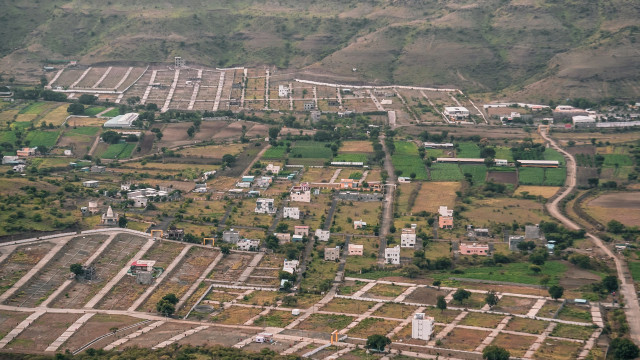
In the past few years, Uttar Pradesh has embarked on a novel way of solving the housing crisis by way of establishing Greenfield townships i.e. self-contained, planned urban settlements located on hitherto virgin land. In contrast to the unplanned growth of existing cities, Greenfield projects are a positively planned way of producing sustainable communities that have housing, infrastructure and social amenities built into them at the outset. These townships are not only conceptualised to cater to low cost houses, but also the reimagining of urban dwelling by providing transport and connectivity corridors, green ecosystem and employment and education.
Greenfield township model is important since it is no longer retrogressive such as retrofitting overcrowded cities and transit-oriented development but a prospective approach of expansion. In Uttar Pradesh, places like Lucknow, Noida, Greater Noida, and Ghaziabad have already experienced the presence of township that caters to all in terms of being affordable and liveable. What is more important is that the cities of a smaller size and peri-urban settlements are trying to implement the same strategy that is going to help to reduce the gap that exists between rural migration and urban absorption.
This blog discusses how Greenfield townships of Uttar Pradesh have taken the shape of an affordable housing growth model. Analyzing planning framework, socio-economic impacts, sustainability aspects and future lessons, we can come to a better understanding about how this approach is transforming the housing sector in the state and where such an approach leads to the rest of India.
Greenfield Townships with Planning and Policy Support
The current policy frameworks of the Greenfield township development in Uttar Pradesh are solid enough to support the state and national interests. The Pradhan Mantri Awas Yojana (PMAY-Urban) has been instrumental in terms of laying down the high ambitions of the Housing for All, the subsidies, and the privatization attempts. Under PMAY, Uttar Pradesh as the most populous state was accorded a large portion of the housing requirement. Greenfield projects were considered as a resource power that would address these target amounts effectively and build sustainable cities.
In Uttar Pradesh, the government has also taken initiative in promoting townships by formulating the UP Township Policy, which gives the exact roadmap to the developers who wants to build townships and also how to acquire the land, the maintenance of infrastructure and the type and mix of the housing. This limits the extent to which projects can be based purely on the luxury market as it ensures that a large percentage of the apartments, or homes are allocated to the affordable and mid-income groups. Focus on PPPs has caught the attention of major real estate developers and government incentives like reduced stamp duty or single-window clearances have helped swift execution of projects.
Planning agencies like Noida Authority, Greater Noida Authority and Lucknow Development Authority have been instrumental in the need to allocate land and to enforce master plans. What is special about Greenfield projects is they feature integrated planning. These townships do not just provide separate housing blocks with a living environment but roads within them, water systems, sewage treatment plants, clinics, and schools, markets, and others. This renders them independent and lessens the burden of established (urban) centers.
The other important thing is the application of digital tools and Geographic Information Systems (GIS) in planning. Sophisticated mapping and modeling has led to authorities establishing the most appropriate land use, density patterns and mitigation of environmental impacts. This type of planning guarantees the efficiency as well as the resilience of the Greenfield townships in the face of future externalities like climate changes and population explosions.
In this respect, the policy situation in Uttar Pradesh shows progressive thinking in the context of affordability and sustainability. One of the reasons why the Greenfield model being pursued by the state is the subject of study across India is the success it has had in designing systems that bring in investment, as well as protect the interests of the community.
Economic-Social Impact of Greenfield Townships
Greenfield townships in Uttar Pradesh hold socio-economic impact to a great extent. The first step is that these projects respond to the following main problem: affordable housing. Developing new and planned societies in the urban outskirts is an affordable way of having alternatives to land in urban centers which are very expensive. The developers will have reduced land costs and this allows them to sell quality houses on a price that the middle and lower economic groups can afford.
A population of considerable employment is created in townships as well Construction itself is quite labor intensive, which makes thousands of workers employed, most of who migrate to this industry from countryside. Besides, when townships become functional, they also result in permanent jobs in schools, hospitals, retailing shops and service sectors. This benefits local economies and takes pressure off of traditional cities and urban centers where competition in the job market is so high.
Change is probably most transformative in the sphere of social upliftment. Green field townships are planned with facilities that in many cases exceed those of the old neighborhoods in crowded cities. Accessibility to schools, health modules, entertainment centers and other good amenities provide good living standards to the families. This leads to long term gains including better educational performance of children and health standards of whole communities.
The fact that housing in such projects is affordable enables the families to spend some money in other areas of their lives, including education, starting businesses, or even medical care. Effectively, affordable housing can be seen as a springboard to greater economic upsurge. Residing in secure placements and well-planned neighbourhoods has special advantages to women as it expands access to opportunities and increases female labor market participation.
In addition, the townships promote development of a region. The land that was originally used as agricultural or undeveloped land becomes lively city areas connected through highways, airports, and other centers of industry. This helps in eliminating regional imbalance and also supports Indian interest of balanced urbanization. The Greenfield townships of Uttar Pradesh do not only create socio-economic effects in housing. They spill into livelihoods, regional equity and human development and thus become a revolutionary process in the state development processes.
Sustainability and Environmental Considerations
Environmental sustainability concerns have been attributed to one of the major environmental issues that arise in the growth of the cities. Greenfield townships in Uttar Pradesh are interesting to note since most have adopted green urban planning ideals to reduce the ecological imprint of the fast growth. The incorporation of sustainability helps make sure that these townships are not only affordable, but also environment friendly.
The notable features would be including rainwater harvesting, and having solar energy systems as well as sewage treatment plants with reheated wastewater to use in other landscaping or non-drinking purposes. Both large-scale township and mountainside projects tend to open up considerable swathes of land in the form of parks, lakes, and green belts that boost biodiversity without sacrificing the quality of life of its citizens. Townships can plan these points in advance so they do not experience the common concerns of adding solutions to problems in urban areas after the fact.
The use of transportation planning is another sustainability attribute Townships promote non-motorized mobile facilities with the introduction of wide internal roads, cycle track and pedestrian friendly designs. They are also well placed near express ways and metropolitan expansions so that the residents do not feel isolated but are well connected to the metropolitans. This lessens the use of the private vehicle, hence cutting the emission.
The other important consideration is building technology Modular and pre-fab building is also on the rise being used by developers, which also reduce constructions costs and minimize waste materials. Fly-ash bricks and energy-efficient glass are some of the materials being put in place in order to reduce the carbon footprint of constructive pieces. In the long term, such innovations have lowered energy consumption by the residents turning homes more affordable to maintain.
The GC critics are afraid that Greenfield development might result in sprawl. Such projects, however, when informed by sound master plans and density control, such as observed in the state of Uttar Pradesh, can actually act as a check against the unplanned sprawl of cities by developing well-organized compact urban centers. In such a manner, sustainability is not solely environmental interest but a design philosophy that creates adequate towns that guarantee long life and sustainability.

Lessons and the Replicability of the Rest of India
The lessons learnt by Uttar Pradesh in working with Greenfield townships can be of value to other states in India which are going through the housing crisis. The first biggest lesson is the lesson of proactive planning. Rather than letting cities suffocate in population pressure, cities should be planned with a vision of the long term with anticipation that it will expand and develop.
The second is the incorporation of affordability requirements. The state ensures that it is inclusive by forcing developers to dedicate part of the housing units to people on lower and middle-income groups. This does not allow a township to turn in to an exclusive home of the rich in a way that accurately reflects the general population.
The model illustrates the usefulness of public and private companies working together, as well. Through its ability to match government assistance with world class private skills and funding, Uttar Pradesh has been in a position to implement projects on huge scale and within a short time. The synergy that has been successfully experienced could be adopted by other states like Maharashtra, Gujarat and Karnataka among others, who can tailor it to the differing contexts.
A fourth lesson is that of infrastructure connectivity. Townships survive majestically when they are well connected to economic powers. The emphasis placed on expressways, airports and metro extensions by Uttar Pradesh cannot be ignored. This demonstrates the importance of the states to coordinate the development of housing areas with the overall planning of the infrastructure.
Lastly, the model evidences the necessity of community involvement. It applies to successful townships in Uttar Pradesh to draw the participation of residents in decision-making and make them feel like owners. This reinforces social cohesion and makes it sustainable. In this manner, Greenfield approach in Uttar Pradesh is not only state-wide corrective measure but a high-scale-up model, which may inform the national strategy of achieving affordable housing in India.
Obstacles and the Future Path
The Greenfield township model in the state of Uttar Pradesh has not been without challenges although success has been achieved. Land acquisition can be a bone of contention as there are cases of compensation and eviction of farmers. Although there are policies in place to encourage fair practices, their enforcement may be far between resulting in social upheavals. The other difficulty is that affordability should not be compromised. There is a threat that future projects could be too focused on profitability and neglect the elements of inclusivity since their success may drive up the costs of land around townships. The tight regulatory control will play the key role to avoid this slide towards gentrification.
Provision of infrastructure is a two-edged sword. Townships stand on their own but the approach to connecting it with regional infrastructure demands constant investment. Difficulties in meeting metro extensions or highway extensions can cut townships off, and aggravate their appeal. Environmental issues also should be well handled The sustainable development-conservation debate is one that should not be carelessly overlooked and the possibility of successful rebalance of planned township ecological potency can be easily influenced.
The days to the future are bright. Uttar Pradesh can clarify its status as a driving force behind housing growth by meeting the threats with truthfulness, novelty, and inclusion. Their experience can serve as an example to other states to consider Greenfield townships model as a practical and future-forward solution to urban housing problem India is facing.
Technology’s Role in Strengthening Greenfield Township Development
One of the strongest aspects about the Greenfield township of Uttar Pradesh is the high degree of modern technology incorporated in the planning and construction of the township. New technologies made it possible to take such projects beyond the traditional housing paradigm with its guarantees of efficiency, transparency, and long-term sustainability. In another example, geographic information systems (GIS) and Satellite mapping are very popular in locating viable land parcels, evaluating environmental risks, space planning line layouts that consume as little space as possible and that cause the least interruption to the ecology. This method of science has minimised the speculation which commonly characterises unplanned urban sprawl.
Further, the digital governance portal creates efficiency in approvals to the developer where the red tape is cut and the projects are delivered in time. Technology has also increased transparency as online portals have enabled home buyers to access project details, approval by local authorities and payment status.
On the construct side, modern methods like pre-built systems, pre-built materials, and energy-efficient frame work not only increase the speed of the construction but also makes the construction less expensive and more rigorous in nature. Digital security, and smart infrastructure, such as solar grids, waste recycling, and more, contribute to the livability of these townships. Technology ultimately makes sure that the Greenfield projects are not only affordable, but also modern and future-ready. It achieves the balance of affordability and innovation, making these townships excellent to be occupied by a variety of residents and establishing new standards in India in the sphere of housing.
Conclusion
The freehold Greenfield townships in Uttar Pradesh provide a radical and visionary answer to the housing problem of affordable housing. The state has been able to expand housing supply through undertaking entire communities on a ground-up construction and offering them integrated amenities, sustainability advantages and socio-economic benefits. Such projects prove that affordable housing does not need to be a synonym to compromises- it can be brought along with quality, dignity, and ecological responsibility.
What makes this model a success is that it is a holistic implementation of the following policy frameworks, proactive approach to infrastructure development, inclusivity requirement, and a mix of public-private synergy. Despite the obstacles still being faced, especially in land acquisition and long-term affordability, the trend in general tends to be a sustainable and replicable paradigm across rest of India.
As India moves towards a process of urbanization that is as much unprecedented, as it is unexpected, the experience of Uttar Pradesh provides a major lesson in things to come: this future of affordable housing does not lie in a series of half-baked solutions, but rather the knowledge of sound, visionary communities that surpass the states current crisis, as they cater to the needs of the future. Greenfield townships should not merely equal housing projects- but, rather, they should be social change agents through which inclusive, sustainable urbanization blueprints are realized.
Also read: Modular Housing in India: A Solution for Rapid Affordable Housing Development










LEAVE A REPLY