

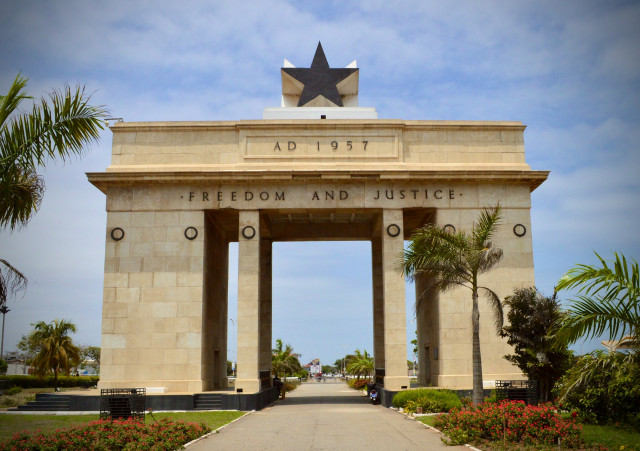
Transforming Urban Living: Ghana’s Slum Upgrading And Prevention Strategy
In Ghana city life has taken shape as one of its most
characteristic features. The cities have grown in the recent few decades in
unmatched rates due to rural-urban migration, natural expansion of population,
and economic prospects. Though this change has enhanced trade, education and
infrastructure building, it has also created multifaceted social and spatial
issues. The most urgent of them is the expansion of informal settlements- also
known as slums.
Accra, Kumasi, and Tamale cities have been receiving
thousands of new residents every year. But the rate of formal housing
development and growth in infrastructure has not kept up with population
growth. Due to this situation, most of the low-income migrants end up settling
in unplanned places where the land is less expensive or unlawfully obtained.
Such communities are usually without secure tenure, clean water, amenities,
permanent housing facilities and waste disposal facilities.
The emergence of informal settlements in Ghana is not merely
a cause due to poverty but it is highly intertwined with structural
limitations. Worrying prices of land, land registration systems, poor
availability of mortgage facilities, and lack of employment compel the
susceptible households to dangerously live conditions. Informal settlements
enter into the life in cities- providing access to employment and social
contacts even where the provision of basic facilities is insufficient.
Other communities have emerged to be associated with Old
Fadama in Accra since they represent the intricacies of urban informality. The
local people tend to operate in marketplaces, recycled industries or
micro-trades. These settlements have a big contribution to the urban economy
despite the fact that they are not formally recognized. The policy dilemma is
to consider this contribution and deal with the weaknesses of overcrowding and
environmental threat.
The issue on climate change has heightened the urgency of
slum upgrading. Informal settlements are disproportionately affected by
flooding, especially in coastal and riverbank regions which are low lying. The
heavy rains have also caused devastating floods in the city of Accra exposing
poor drainage systems and lack of proper spatial planning. These threats to the
environment will persist in posing a threat to lives and livelihoods without
special efforts.
Governance is also an issue raised by urban informality.
City governments find it hard to provide services to the localities that are
unofficially laid out or legally unrecognized. In other instances, efforts to
remove informal settlements have led to social friction and displacement and
thus the need to adopt inclusionary rather than punitive strategies.
The slum upgrading and prevention plan of Ghana can be seen
in this light. It appreciates the fact that demolition is not a humane and
sustainable solution of eradicating slums. Rather, the emphasis is on how to
better the living conditions, provide them with greater tenure security and how
to prevent the emergence of new informal settlements due to the proactive
planning.
Policies and Institutional Arrangements of Slum Upgrading.
The strategies of Ghana in slum upgrading are based on the
greater national development policies which focus on inclusive development,
reduction of poverty, and sustainable urbanization. The government has over the
years embraced frameworks that are designed to bring in the informal
settlements to the formal systems within the city instead of treating them as
illegal enclaves.
The Ministry of Works and Housing in conjunction with the
metropolitan and municipal assemblies is at the centre of formulating slum
upgrading programs. Liaison with the agencies that deal with land
administration, sanitation, and infrastructure is done to enable interventions
to be integrated as opposed to being isolated. It is also important that this
institutional cooperation takes place since in most of the cases the slum
conditions are based on the various deficits that may include housing, water, sanitation,
drainage, and tenure insecurity.
The relationship of Ghana with international partners has
also affected the upgrading strategies of the country. Initiatives in line with
international urban development strategies have brought with them the
participatory planning framework and community enumeration drills. These
strategies promote mapping of community settlements by residents,
prioritization and direct participation with the authorities. These
participatory systems will provide confidence and enhance accuracy of data.
There is gradual advancement of legal reforms to secure
tenure. Even though traditional land systems are still intricate, attempts at
policy formalization do not provoke mass displacement, focusing on bringing
order to occupancy arrangements. Mortgage guarantees allow residents to invest
in their house upgrading, which strengthens the sustainability of the projects
of upgrading.
Reforms in urban planning are also significant. Conventional
zoning programmes do not usually serve the needs of low-income housing. Relaxed
standards of planning, such as incremental standards of building codes, given
the opportunity to make gradual improvements without significant compliance
costs. This is flexibility indicates a realization that upgrading is a process
and not a treatment.
The role of the local government is growing. Cities such as
Accra are increasingly left to Metropolis assemblies that are mandated to mold
slum inhabitants into wider development schemes. Decentralization can be able
to make interventions more responsive; however, it needs proper funding and
technical capacity.
There are still institutional issues such as small budgets
and bureaucratic redundancy. Nevertheless, the strategic change in terms of
responding to evictions with upgrading responses will be a significant change.
The fact that slum dwellers are stakeholders and not a hindrance is an
indication of the change about urban governance philosophy.
The institutional framework of slum upgrading in Ghana is
changing towards being integrated, transparent, and partnering by 2025. The
success of this framework in ensuring that living standards improve will depend
on how well the national policy and local implementation are coordinated.
Infrastructure, Services, and Environmental Resilience.
The core of slum upgrading is infrastructure development.
Quality urban life is characterized by the availability of clean water,
sanitation, drainage, electricity and waste management services. These services
in most informal settlements in Ghana are either poor or nonexistent.
The access to water is a priority. Informal settlements
typically have to use pipes that they share or water sellers, and thus use them
at a higher cost unit than formal neighborhoods do. The upgrading projects are
meant to extend the piped water networks and create community managed systems
to make them reliable and affordable.
The issue of sanitation is more complicated. The issue of
overcrowding and lack of space make it difficult to form traditional sewer
systems. New ways of doing things are being developed like decentralized waste
treatment and better communal toilets. The interventions lower the risks to the
health of the population without colliding with space limitations.
The drainage infrastructure is important in flood prone
cities such as Accra. Inadequate drainage worsens seasonal flooding, destroying
houses and waterborne diseases. The upgrading plans hence give more emphasis on
storm water channels, culverts and routine desalting plans. The concept of
environmental resilience is taking center stage in the debates of urban
planning.
The access to electricity that is more available than other
services has safety issues in the heavily populated settlements. Informal
relationships are a source of fire hazards. Standardization of the electricity
supply will increase the safety and make it more economically productive to
allow the functioning of the home-based enterprises in a better manner.
Another pillar of transformation is solid waste management.
Wastes which are not collected block drains leading to flooding. Waste
collection programs conducted by people in their localities, with the help of
municipal authorities, result in cleaner environments and the provision of
jobs.
With infrastructure enhancement, community education is
required. Awareness and training on hygiene make residents able to maintain
upgrades. Physical improvements are likely to be wasted without local
ownership.
Sustainability in the environment is being incorporated in
strategies of upgrading. Greening in cities, enhanced ventilation of
residential buildings, and climate responsive building materials will all add
to resilience on the long-term. With the rising trends of natural calamities,
the planning based on climate sensitivity is no longer a choice.
Infrastructure does not just achieve physical development but is the pillar of dignity and opportunity. Slum upgrading strategy in Ghana aims at transforming vulnerable slum areas into safe functional urban neighborhoods by focusing on service delivery, and ensuring sustainability of the environment.

Social Inclusion, Community Participation.
It cannot be applied only to the infrastructure but should
also be based on social cohesion and active involvement in order to
successfully upgrade the slums. Engagement of the community would make sure
that interventions are in line with cultural contexts and priorities of the
residents. Participatory strategies are in growing appreciation in Ghana as a
solution to sustainable urban change.
The residents have firsthand information about their
neighborhoods- where floods occur, social groupings and economic activities.
Inclusion in the planning improves the validity and correctness. The
participatory mapping, stakeholder meetings and community forums are the ways
of dialogue between authorities and residents.
Informal settlements have a particularly large part in women
and youth. There are also a lot of women who have small businesses, who are
housewives and organize activities in the community. Sanitation campaigns and
advocacy campaigns are common among the youth groups. Inclusive upgrading plans
are those that acknowledge such contributions and provide leadership
opportunities.
The tenure insecurity is also a subject in social inclusion.
The fear of being evicted discourages the investment in the home improvements.
The processes of regularization and an occupation grant lead to social
stability, and promote self-initiated improvements.
Other aspects of social change are education and access to
healthcare. There are usually no schools or clinics around the informal
settlements. The inclusion of social infrastructure in upgrading strategies
enhances livelihood and disrupts poverty trends.
The systems of conflict resolution also matter. Projects can
be sabotaged by land disputes and political tensions. Open communication and
mediation systems decrease miscommunication and create trust. The other potent
instruments of collective action are the emergence of community savings groups.
The residents are pooling their resources and finance small scale improvements
and show interest in co-investment. These projects come along with state
funding and ownership strengthening.
Finally, through social inclusion, upgrading becomes more of
a movement than a technical undertaking. When the residents feel that they are
partners and not beneficiaries, the sustainability of interventions is
significantly high. The strategy in Ghana focuses more on empowerment whereby
resilient communities are developed internally.
Avoidance of New Slums Formation.
On the one hand, it should be emphasized that the upgrade of
the existing settlements is necessary; however, it is necessary to avoid the
appearance of new slums as well. Fast urbanization will be maintained, and
unless there is action taken, the informal growth might pay ahead of the
betterment.
Prevention is based on the supply of affordable housing. The
availability of cheap housing meant that the informal land markets are not
strained. This is facilitated by coordinated housing policy, land reform and
financing innovation.
Another pillar is proactive urban planning. Projecting
population increase and setting up of the serviced land with low-income housing
avert unplanned sprawl. The expansion of urban areas can be evenly spread in
satellite towns and mixed-income neighborhoods.
Reform on land administration also has a preventative role.
Streamlined registration systems and open land distributions discourage
speculative procedures which drive up prices. Informal occupation is
discouraged by safe and inexpensive access to land.
Prevention is also assisted by economic empowerment
activities. Training of skills, creating job and microenterprise assist
households to earn higher income levels which help families to acquire better
housing opportunities. The housing policy and urban poverty reduction should,
therefore, be coordinated.
The management of migration is a sensitive and yet pertinent
matter. Internal migration should not and cannot be limited, however, balanced
regional development can help alleviate the overload in major cities.
Opportunities are more equally spread through investments in the secondary
cities like Tamale.
The political commitment that is needed in preventive
strategies is long term. Settlement has to go ahead before crisis,
infrastructure investment has to come in. Future oriented governance lowers
ex-post expenditure and societal turmoil.
Ghana is to combine the housing, planning and economic
policies to end the informal expansion cycle. Prevention is a complement to
upgrading, which makes gains not to be counteracted through uncontrolled
growth.
Planning Urban Transformation in Ghana.
With Ghana moving towards a more urban future, the
development of informal settlements is a development potential as well as a
moral one. Prevention and upgrading of slums indicate a larger change to
inclusive and resilient cities.
The journey is complex. There are challenges of
institutional coordination, funding constraints as well as risks of climatic
conditions. However there is an improvement in participatory planning,
development of infrastructure and policy reform.
New possibilities are provided by technology. The efficiency
and transparency are transformed through digital mapping, mobile data
collection, and smart infrastructure systems. The use of innovation can help
speed up implementation and monitoring.
The involvement of the private sector is also a prospect.
Social impact investors and construction companies are also becoming more
concerned with affordable housing and infrastructure initiatives. Relationships
that are community-oriented may access new resources.
The future of urban governance will be determined by the
involvement of youths. Since the demographic profile of Ghana is young, it is
important to empower young leaders in the field of urban planning and
environmental management.
Finally, to change the situation in urban living, the
ability to engage in long-term cooperation between industries and neighborhoods
is needed. It requires acceptance that informal settlements are not transient
exceptions but constituted elements of the urbanity.
Financing and Investment Models for Sustainable Slum Transformation
Innovative and diversified mechanisms of financing are
important to sustainable slum upgrading in Ghana. Conventional state funding is
not enough to accommodate the magnitude of infrastructure development and
people housing upgrades needed in the fast developed cities like Accra and
Kumasi. Consequently, blended finance models are gaining relevance.
One of the avenues of capital mobilisation is through
public- private partnerships (PPP). In these schemes the government agencies
might offer land, regulatory concessions or even the basic infrastructure, and
the upgrading projects are funded and implemented by the private developers and
investors. PPPs can be developed in a transparent manner that enhances service
delivery without necessarily reducing its affordability.
Community savings programs as well as cooperative financing
systems are also important. Incremental maintenance or small-scale housing
upgrades organized resident associations frequently combine small donations to
finance sanitation or drainage enhancements. Such grassroots investments
mobilize local capital as well as increase accountability and ownership.
Impact investors and development finance institutions are
increasingly becoming interested in urban projects that are socially
responsible. Through the match between financial returns and quantifiable
social deliverables, Ghana will be able to establish long-term capital flow to
inclusive urban transformation. The sustainability of financing will eventually
depend on the viability and magnitude of the slum upgrading projects in the
country.
Conclusion
The slum upgrading and prevention plan by Ghana is a
comprehensive solution to the urbanization reality. Focusing on infrastructure,
institutional change, community engagement and active planning, the country is
restructuring urban growth and development.
The way ahead is not easy, however, the desire to create an inclusive development is promising. When the policies keep on changing and remain transparent, innovative, and socially just, Ghana can transform the precarious settlements into strong, dynamic neighborhoods, so that urbanization is the source of opportunities and not marginalization.










LEAVE A REPLY