
The Concept Of Affordability And The Affordable Housing In Pakistan
1. Introduction to Affordable Housing
Affordable Housing is a central element in securing social welfare, economic stability, and environmental sustainability for Pakistan’s rapidly growing population. Housing is universally acknowledged not merely as a commodity but as a basic human need that supports dignity, health, productivity, and community cohesion. In Pakistan, it remains an endemic challenge, shaped by rapid urbanization, socio-economic disparities, inadequate financial systems, and regulatory inefficiencies — together generating a massive shortfall in decent and affordable homes for millions of citizens.
The concept of Affordable Housing extends beyond mere shelter to embrace accessibility, quality, environmental sustainability, and socio-economic inclusivity. Sustainable urban development frameworks, like the United Nations Sustainable Development Goal 11, underscore the need for “Affordable Housing for All People” as essential to achieving safe, resilient, and inclusive cities.
This summary explores the complex economic, social, institutional, and policy dynamics that define Affordable Housing in Pakistan, including: definitions and affordability concepts; demographic pressures; affordability barriers; policy frameworks; financing mechanisms; stakeholder roles; and solutions drawn from global best practices and local research.
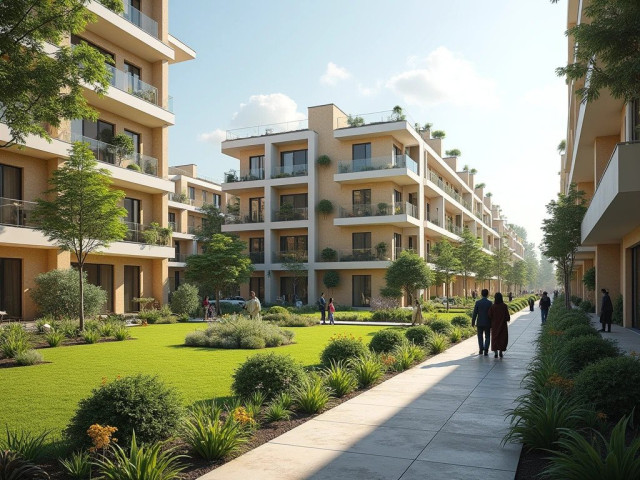
2. Defining Affordable Housing
2.1 Conceptual Understanding
At its core, Affordable Housing refers to homes that can be obtained and maintained by households without compromising other essential needs such as food, health, education, and transportation. A commonly accepted affordability threshold is that total housing costs should not exceed 30-40% of a household’s gross income.
This definition includes:
-
Income-based affordability: Where costs (purchase price or rent) align with the earnings of low- and middle-income households.
-
Quality and adequacy: Differentiating mere shelter from housing that provides health, safety, and dignity.
-
Long-term sustainability: Inclusive of life-cycle costs such as utilities, maintenance, and accessibility.
2.2 Affordable Housing in the Pakistani Context
In Pakistan, the meaning of Affordable Housing is heavily influenced by structural realities:
-
A massive national housing deficit estimated at 10 million units.
-
Rapid urbanization adding an estimated 2.3 million new urban residents per year.
-
Increasing displacement due to environmental shocks, economic instability, and rural-to-urban migration.
Affordable Housing in Pakistan must therefore address quantity, quality, and equity, especially for those in the low-income and lower middle-income strata who are most affected by housing insecurity.
3. Demographic Dynamics and Demand for Affordable Housing
Population and demographic pressures are primary drivers of demand for Affordable Housing:
-
Pakistan ranks among the world’s most populous nations, with the urban population projected to comprise nearly half of all residents by 2040.
-
Major cities like Karachi, Lahore, and Islamabad are experiencing ever-higher migration rates, placing strain on already limited housing stock.
-
Informal settlements and slums proliferate as low-income households seek shelter in urban peripheries where Affordable Housing options are scarce or inaccessible.
These demographic trends mean that Housing demand is not static but expanding, driven by:
-
Household formation rates.
-
Rural-to-urban movement.
-
Income volatility.
-
Displacement from climate impacts (e.g., floods).
This compounded demand far outpaces supply, further exacerbating the housing affordability gap.
4. Barriers to Affordable Housing in Pakistan
Although the need for Affordable Housing is clearly established, multiple barriers hinder its delivery at scale:
4.1 Economic and Financial Barriers
4.1.1 High Land and Construction Costs
Land scarcity and speculative real estate markets make urban land unaffordable for most developers focused on Affordable Housing. Consequently, low-income households are pushed towards informal settlements with poor infrastructure.
4.1.2 Lack of Accessible Finance
Affordable Housing finance options are limited in Pakistan. Conventional mortgages are largely inaccessible to low-income households due to:
-
High interest rates.
-
Stringent collateral requirements.
-
Limited innovative or tailored financial products.
Although the State Bank of Pakistan has mandated that banks allocate a portion of their lending portfolios toward housing finance — including Affordable Housing — credit remains insufficient and risk-averse.
4.2 Regulatory and Institutional Barriers
Complex land titling, fragmented regulations, lengthy approval processes, and bureaucratic red tape deter both developers and households from engaging in Affordable Housing initiatives. Fragmented governance structures mean there is often no coherent national strategy to streamline housing policy or ensure regional policy coherence.
4.3 Social and Spatial Barriers
Urban inequality and spatial segregation further marginalize low-income groups, pushing them into informal settlements with limited access to essential services. These conditions entrench cycles of poverty, making Affordable Housing not only about construction but also about inclusive city planning.
5. Dimensions of Housing Affordability
Understanding affordability requires examining both supply and demand factors:
5.1 Supply Side Constraints
-
Insufficient housing stock to meet rising demand.
-
Limited incentives for developers to engage in Affordable Housing projects.
-
High development costs due to infrastructure and compliance burdens.
5.2 Demand Side Pressures
-
Stagnant or unequal income growth makes market housing inaccessible for large segments of the population.
-
Poor households allocate disproportionate shares of income to rent or mortgage costs, undermining other necessities.
6. Policy Frameworks for Affordable Housing
Effective Affordable Housing policy must balance regulation, incentives, and inclusive planning:
6.1 National and Provincial Housing Strategies
Countries that have succeeded in expanding Affordable Housing — such as through public–private partnerships (PPPs) and streamlined regulation — offer lessons for Pakistan. Reform agendas may include:
-
Zoning reforms to encourage diverse housing typologies.
-
Density incentives in urban core areas.
-
Subsidies targeted to low-income households.
6.2 Housing Finance Policy
Affordable Housing financing mechanisms, such as low interest loans, down-payment assistance, and risk-sharing instruments (e.g., social impact bonds), are essential to bring houses within reach of vulnerable households.
6.3 Integrated Urban Planning
Housing strategies must be integrated with transportation, employment hubs, and social services to ensure that Affordable Housing is not isolated from economic opportunity.
7. Institutional and Stakeholder Roles in Affordable Housing
Successful Affordable Housing systems require coordination across:
-
Government agencies: Policy, land allocation, planning.
-
Private sector developers: Design, build, finance.
-
Financial institutions: Credit and mortgage products.
-
Civil society and community groups: Local advocacy and co-planning.
Multi-Criteria Decision-Making (MCDM) frameworks, as explored in the Sindhu (2024) study, can support inclusive and evidence-based policy formulation for Affordable Housing, especially in contexts with competing objectives like cost, sustainability, and social equity.
8. Innovative Solutions and Models for Affordable Housing
Several promising models emerge from both international practices and Pakistan-specific research:
8.1 Public–Private Partnerships (PPPs)
PPPs leverage private capital and expertise to deliver Affordable Housing at scale while sharing risk and returns.
8.2 Cooperative and Not-For-Profit Housing
Housing cooperatives and non-profit models help align community governance with affordability goals, often reducing profit-driven cost markup and increasing social accountability.
8.3 Technological and Construction Innovations
Pre-fabricated units, modular construction, and green building practices reduce build times and costs, boosting the feasibility of Affordable Housing projects.
9. Case Studies and Strategic Examples in Affordable Housing
9.1 National Housing Initiatives
Although Pakistan does not yet have a fully-scaled national Affordable Housing program comparable to global counterparts like India’s Pradhan Mantri Awas Yojana, incremental steps such as mortgage finance mandates and urban development authorities hint at emerging frameworks — yet require expansion and coherence.
9.2 Community Engagement and Local Planning
Community-driven housing initiatives often outperform top-down schemes, aligning Affordable Housing designs with actual user needs and fostering inclusive neighborhoods.
10. The Way Forward: Strategies for Scaling Affordable Housing
To achieve sustainable progress in Affordable Housing, Pakistan must:
-
Strengthen policy frameworks to integrate housing with urban planning, finance, and social welfare.
-
Reform regulatory systems to reduce barriers and costs for developers willing to deliver Affordable Housing.
-
Expand financial instruments that ensure low-cost credit for low- and middle-income households.
-
Promote innovative construction methods to reduce costs and enhance sustainability.
-
Encourage community participation in planning and implementation.
-
Priorities data and research to monitor housing affordability metrics and inform policy.
11. Conclusion
Affordable Housing in Pakistan is a multidimensional challenge shaped by population growth, economic instability, institutional fragmentation, and inadequate financing frameworks. While the housing deficit is large — estimated at more than 10 million units — a combination of policy reform, financial innovation, community engagement, and technology can move the needle toward inclusive, equitable Affordable Housing for all.
Addressing Affordable Housing will not only provide shelter but also improve quality of life, strengthen socio-economic participation, and drive sustainable urban growth. The future of Pakistan’s cities depends not only on building more houses but on ensuring that those houses are truly Affordable Housing — accessible, sustainable, and dignified for every Pakistani family.
Also Read: Affordable Housing and Resilient Design: Preparing Low-income Housing for Climate Change Impacts