
Affordable Housing and Resilient Design: Preparing Low-income Housing for Climate Change Impacts
Introduction
Affordable Housing and Resilient Design is no longer a niche conversation among urban planners and climate scientists; it has become a critical imperative for cities across the Global South and beyond. As extreme weather events intensify, floods submerging informal settlements, heatwaves crippling poorly ventilated homes, and storms dismantling fragile infrastructure, the vulnerability of low-income housing becomes impossible to ignore. Affordable Housing and Resilient Design must move from theoretical frameworks to on-the-ground action, embedding climate adaptation not as an afterthought, but as a foundational principle in every brick, roof, and drainage channel built for communities with limited resources.
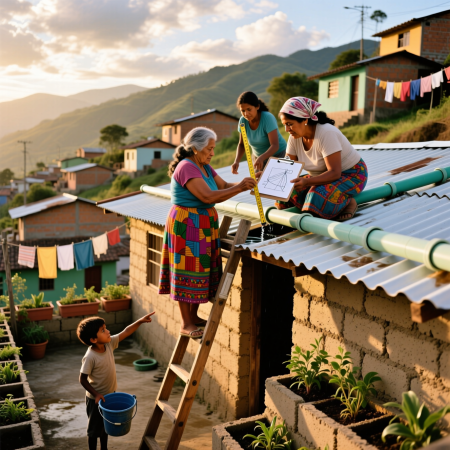
At the heart of this challenge lies a paradox: the people most affected by climate change are often those least responsible for it, and yet they are also the least equipped to respond. In secondary cities like Medellín, Surat, or Kampala, where informal settlements sprawl along floodplains, hillside edges, or industrial peripheries, affordable housing is frequently constructed without formal permits, engineering oversight, or access to municipal services. These are not failures of individual choice; they are outcomes of systemic neglect, economic exclusion, and the absence of inclusive urban planning.
Yet within these communities, there exists a quiet, resilient ingenuity: neighbours who raise homes on stilts after monsoon floods, women who organize drainage patrols, builders who repurpose scrap materials into wind-resistant walls. Affordable Housing and Resilient Design must learn from these grassroots innovations, not impose top-down solutions.
The concept of resilient design in affordable housing goes beyond structural reinforcement. It encompasses social cohesion, economic accessibility, environmental adaptation, and cultural relevance. It means designing homes that can withstand a 100-year flood without requiring government subsidies to rebuild. It means ensuring that cooling strategies don’t rely on electricity grids that fail during heatwaves. It means empowering residents not just as beneficiaries, but as co-designers, data collectors, and maintenance stewards. This is not about charity. It is about justice. And it is about practicality. Climate resilience in low-income housing is not an expense it is an investment in stability, health, and long-term economic productivity.Affordable Housing and Resilient Design Must Start with Local Knowledge and Vernacular Practices
One of the most overlooked aspects of Affordable Housing and Resilient Design is the role of natural systems. In many traditional settlements, indigenous and locally evolved building practices already incorporate climate adaptation. In Surat, for instance, homes built with lime-based plasters and elevated foundations naturally regulate temperature and resist water ingress.
In Medellín’s hillside barrios, terraced gardens and permeable pathways reduce runoff and stabilize slopes. These are not relics of the past they are living, evolving systems of knowledge that modern design often ignores in favor of standardized, imported models. Affordable Housing and Resilient Design must prioritize these vernacular strategies, adapting them with contemporary materials and engineering where necessary, but never replacing them outright.
Affordable Housing and Resilient Design Requires Integrated Water Management Systems
Water management is perhaps the most urgent component of Affordable Housing and Resilient Design. In cities where formal drainage systems are absent or overwhelmed, even moderate rainfall can turn streets into rivers and homes into temporary shelters. Simple interventions like rainwater harvesting systems integrated into rooftop designs, permeable paving in communal courtyards, or bioswales planted with native vegetation can drastically reduce flood risk while also providing supplemental water for gardening and hygiene.
These systems are low-cost, community-maintainable, and scalable. When implemented with local participation, they foster ownership and long-term sustainability. A study in Nairobi’s Kibera slum showed that when residents were trained to construct and maintain small-scale detention basins, flood-related displacement dropped by 62% over two years. This is not magic it is design with dignity.\
Affordable Housing and Resilient Design Must Address Heat Through Passive Strategies
Heat resilience is another silent crisis. In many low-income neighborhoods, homes are built with concrete slabs, tin roofs, and minimal ventilation. During summer months, indoor temperatures can soar 10–15 degrees Celsius above outdoor levels, creating dangerous conditions for children, the elderly, and those with chronic illnesses.
Affordable Housing and Resilient Design must address this through passive cooling: orienting homes to capture prevailing breezes, using reflective or insulated roofing materials, incorporating shaded verandas, and planting trees for natural canopy cover. In Chennai, a pilot project retrofitting 300 low-income homes with white-painted metal roofs and rooftop shade nets reduced indoor temperatures by an average of 4.5°C without any electricity use. The cost? Less than $50 per home. The impact? Lifesaving.
Affordable Housing and Resilient Design Should Embed Decentralized Energy Solutions
Energy access is deeply intertwined with resilience. When power grids fail during storms or heatwaves, refrigeration, lighting, and communication devices become useless. Solar-powered microgrids, paired with battery storage, can provide continuous power for lighting, fans, and medical devices—even in the absence of municipal electricity. These systems are increasingly affordable and modular, allowing communities to expand them incrementally. In Bangladesh, community-managed solar microgrids in flood-prone coastal villages have not only kept lights on during cyclones but also enabled mobile charging stations that connect residents to emergency alerts and relief services. Affordable Housing and Resilient Design must integrate energy resilience not as a luxury, but as a core component of shelter.
Affordable Housing and Resilient Design Demands Appropriate, Localized Materials
Material selection is another critical frontier. In many informal settlements, homes are built with whatever is available discarded plastic sheets, scrap metal, compressed earth blocks, or even cardboard. While these materials are accessible, they are rarely durable or safe. Affordable Housing and Resilient Design must introduce locally sourced, low-carbon, climate-adaptive materials that balance cost, availability, and performance.
Bamboo, for example, is not only renewable and strong, but also flexible enough to withstand seismic activity and high winds. Compressed earth blocks, when stabilized with minimal cement, offer superior thermal mass and fire resistance. Recycled plastic bricks, developed by social enterprises in Colombia and India, are waterproof, lightweight, and can be assembled without skilled labor. These materials are not just technical innovations they are acts of economic empowerment, creating local supply chains and jobs.
Affordable Housing and Resilient Design Thrives on Social Infrastructure
But technology alone is not enough. The most resilient homes are those that are socially resilient. This means designing housing not as isolated units, but as interconnected communities. Shared courtyards, communal kitchens, and collective storage spaces foster mutual aid networks that become critical during disasters.
In the aftermath of Hurricane Maria in Puerto Rico, neighborhoods with strong social ties recovered faster not because they had better infrastructure, but because neighbors checked on each other, shared food, and coordinated repairs. Affordable Housing and Resilient Design must intentionally create spaces that encourage connection: benches under shade trees, communal wells, shared tool sheds, and multipurpose halls that double as emergency shelters. These are not amenities they are lifelines.
Affordable Housing and Resilient Design Must Be Co-Created with Communities
Community participation is the cornerstone of any successful Affordable Housing and Resilient Design initiative. Too often, housing projects are designed in offices far removed from the communities they serve, then delivered as finished products. This approach breeds mistrust, disuse, and failure.
The most effective projects involve residents from day one: through participatory mapping of flood zones, co-design workshops on roof shapes, or training programs for local masons in resilient construction techniques. In Medellín, a program called “Barrio en Construcción” invited residents to co-design their own housing upgrades using 3D-printed models and community assemblies. The result? Higher satisfaction rates, lower abandonment, and a 70% increase in maintenance compliance over five years. When people feel they own the solution, they protect it.
Affordable Housing and Resilient Design Needs Grassroots Data and Local Monitoring
Data collection and monitoring are often sidelined in low-income housing projects, but they are essential for long-term resilience. Residents in informal settlements are experts in their environments they know which alleys flood first, which roofs leak in the monsoon, which walls crack after heavy winds. Affordable Housing and Resilient Design must equip them with simple tools: smartphones for photo-based reporting, low-cost sensors for temperature and humidity, community-led risk registers.
In Surat, women’s collectives began documenting rainfall patterns and home damage using hand-drawn maps and voice recordings, which they later shared with city officials. Within three years, their data led to the reallocation of drainage funds to three previously ignored neighborhoods. This is grassroots intelligence powerful, precise, and profoundly democratic.
Affordable Housing and Resilient Design Must Center Women’s Leadership
Gender plays a central, often invisible, role in Affordable Housing and Resilient Design. Women are disproportionately affected by climate impacts: they bear the burden of water collection during droughts, manage household health during heatwaves, and are often excluded from decision-making spaces. Yet they are also the primary caregivers, community organizers, and informal builders in many low-income contexts.
Resilient housing must be designed with their needs in mind: safe, well-lit pathways to water sources; indoor kitchens with smoke-reducing stoves; childcare spaces within communal areas; and secure storage for food and medicine. In a project in Dhaka, a housing complex designed with input from women’s groups included enclosed courtyards for laundry and storage, reducing harassment and increasing safety. These are not “women’s issues” they are human issues that make entire communities stronger.
Affordable Housing and Resilient Design Requires Innovative Financing and Policy Shifts
Policy and financing are the hidden engines of Affordable Housing and Resilient Design. Too often, climate adaptation funding is channeled into large infrastructure projects seawalls, storm drains, elevated highways that bypass informal settlements entirely. Municipal budgets rarely allocate funds for retrofitting existing low-income housing, and international aid often prioritizes visible, short-term interventions over long-term capacity building.
Affordable Housing and Resilient Design requires new financial models: blended finance that combines public subsidies, community savings groups, and impact investment; microgrants for home upgrades; and insurance schemes that reward resilience, not just recovery. In Colombia, the “Resilient Home” subsidy program provides matching funds to low-income families who implement climate-adaptive upgrades like waterproofing walls or installing solar lamps creating a ripple effect of adoption across neighborhoods.
Affordable Housing and Resilient Design Depends on Local Capacity Building
Education and training are equally vital. Local builders, masons, and carpenters need to be trained in resilient techniques—not as specialists, but as everyday practitioners. In Kenya, a program called “Housing for Tomorrow” trains masons in low-cost seismic and flood-resistant construction using locally available materials. Graduates then work on community projects, earning income while spreading knowledge. This model is scalable, culturally embedded, and sustainable. It turns resilience from a foreign concept into a local trade.
Affordable Housing and Resilient Design Demands Equitable Urban Governance
The role of local government cannot be overstated. Municipalities must shift from reactive disaster response to proactive resilience planning. This means updating zoning laws to prohibit construction in high-risk zones, incentivizing retrofits, and integrating climate vulnerability assessments into all housing approvals. But this shift requires political will and public pressure. When communities are organized, informed, and empowered, they become powerful advocates. In Pune, residents of a flood-prone settlement organized a “Climate Walk,” mapping their own risks and presenting them to city engineers. Within months, the city revised its drainage plan to include their neighborhood. This is democracy in action—and it is the most sustainable form of resilience.
Affordable Housing and Resilient Design Must Challenge Historical Injustices
The future of Affordable Housing and Resilient Design lies in integration not isolation. Resilience cannot be achieved through isolated housing units or single-purpose interventions. It requires systems thinking: linking housing with water, energy, mobility, health, and education. A home that is flood-resistant but lacks access to clean water is not resilient. A house with solar power but no shade is not resilient. A structure built with climate-adaptive materials but located in a zone without emergency evacuation routes is not resilient. True resilience is holistic.
And it is scalable. The most effective models are those that are simple, replicable, and locally owned. A bamboo-reinforced foundation in Nepal can be adapted in Guatemala.
A community-managed solar microgrid in Bangladesh can inform a project in Lagos. A participatory mapping tool developed in Medellín can be used in Jakarta. Affordable Housing and Resilient Design must embrace horizontal learning cities learning from cities, communities learning from communities, not just from distant consultants. The time for incrementalism is over. Climate impacts are accelerating. By 2050, an estimated 1.6 billion people will live in informal settlements, many in areas increasingly vulnerable to climate extremes. Without urgent, intentional, and inclusive action, the human cost will be catastrophic. But there is hope. The tools, the knowledge, the models, and the will already exist. What is missing is the scale, the funding, and the political courage to implement them equitably.
Affordable Housing and Resilient Design Is a Moral Imperative
Affordable Housing and Resilient Design is not a technical challenge alone it is a moral one. It asks us to see the people living on the edge not as victims, but as partners. It asks us to invest not just in buildings, but in relationships. It asks us to design not for the future we fear, but for the future we can build together.
The path forward is clear: center community voice, prioritize nature-based solutions, leverage local knowledge, embed equity into every decision, and treat resilience as a right not a reward. Affordable Housing and Resilient Design must become the standard, not the exception. Because when we build homes that can withstand the storm, we are not just protecting structures we are protecting lives, dignity, and the very possibility of a just urban future.
In secondary cities across the Global South, where sunlight filters through corrugated roofs and children play in courtyards cooled by shade trees, resilience is already alive. It is in the hands of women who collect rainwater, in the voices of elders who remember past floods, in the quiet determination of builders who stitch together homes from scraps and hope. Affordable Housing and Resilient Design is not about importing grand solutions from the North. It is about listening, learning, and lifting up what is already working. It is about seeing the extraordinary in the ordinary and building from there.
Also read: Launch of the Affordable Housing Investment Alliance