MICROFINANCE AND FINANCIAL SECTOR DIAGNOSTIC STUDY IN BANGLADESH
Introduction
Microfinance and Financial Sector Diagnostic Study in Bangladesh represents a landmark effort to map, analyze, and reimagine the country’s complex financial landscape—one where world-renowned microfinance institutions coexist with traditional banks, informal lenders, digital fintech, and vast unbanked populations. Bangladesh, often celebrated as the birthplace of modern microfinance through Grameen Bank and BRAC, now stands at a critical juncture.
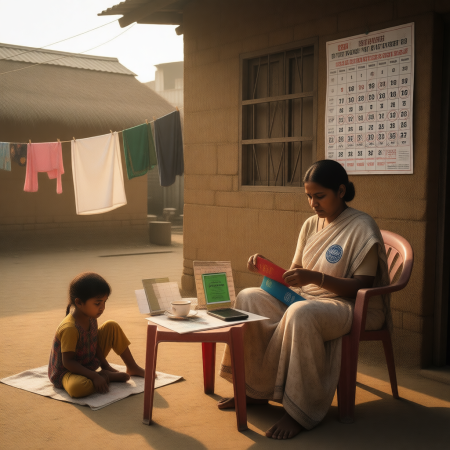
While microfinance has lifted millions out of extreme poverty, new challenges—digital disruption, climate vulnerability, over-indebtedness, and persistent financial exclusion among marginalized groups—demand a more integrated, inclusive, and resilient approach. The
Microfinance and Financial Sector Diagnostic Study in Bangladesh provides precisely that: a holistic, evidence-based assessment of how the entire financial ecosystem can better serve the needs of low-income households, women, small entrepreneurs, and rural communities.
This comprehensive diagnostic, typically commissioned by development partners like the World Bank or IFC and conducted in collaboration with Bangladesh Bank and local stakeholders, goes beyond celebrating past successes. It identifies systemic gaps, regulatory bottlenecks, and emerging opportunities to strengthen the link between microfinance and the broader
Microfinance and Financial Sector.
Historical Context: From Microcredit Pioneer to Financial Ecosystem
Bangladesh’s journey in financial inclusion began in the 1970s with Nobel laureate Muhammad Yunus’s experiment in Jobra village—lending tiny sums to women excluded from formal banking. This model evolved into Grameen Bank and inspired thousands of NGOs and MFIs (Microfinance Institutions) across the country. By the 2000s, Bangladesh was hailed as a global leader in microfinance, with over 30 million clients served.
However, the
Microfinance and Financial Sector Diagnostic Study in Bangladesh acknowledges that this success story has limits. Most MFIs focus on credit, often at high interest rates, with limited offerings in savings, insurance, or digital payments. Meanwhile, the formal banking sector remains concentrated in urban centers, serving salaried professionals and large businesses. Between them lies a vast “missing middle”: rural entrepreneurs, youth, persons with disabilities, and ultra-poor households who fall through the cracks.
The study argues that Bangladesh must now move from a
microfinance-centric model to a
fully integrated financial sector—where banks, MFIs, mobile financial services (MFS), and cooperatives work in synergy. This shift is central to the vision of the
Microfinance and Financial Sector Diagnostic Study in Bangladesh.
The Current Landscape: Strengths and Fragmentation
The
Microfinance and Financial Sector Diagnostic Study in Bangladesh paints a picture of a sector that is both vibrant and fragmented.
Strengths include:
- High outreach: Over 80% of adults now have some form of financial access, largely due to bKash, Nagad, and other MFS platforms.
- Strong MFI networks: Institutions like BRAC, ASA, and Proshika operate in even the remotest unions.
- Regulatory innovation: Bangladesh Bank has introduced agent banking, fintech sandboxes, and green finance guidelines.
Yet fragmentation persists:
- Siloed systems: Banks, MFIs, and MFS providers rarely share data or infrastructure.
- Product duplication: Multiple MFIs lend to the same clients, raising over-indebtedness risks.
- Limited depth: Most accounts are dormant; savings and insurance penetration remain low.
The
Microfinance and Financial Sector Diagnostic Study in Bangladesh emphasizes that
access does not equal usage—and usage does not equal impact. True inclusion requires quality, relevance, and resilience.
Digital Transformation: Mobile Money as a Game Changer
One of the most transformative findings of the
Microfinance and Financial Sector Diagnostic Study in Bangladesh is the explosive growth of Mobile Financial Services (MFS). With over 180 million mobile connections and 70+ million MFS accounts, platforms like bKash have become the de facto financial backbone for millions.
The study highlights how MFS enables:
- Instant remittances from urban workers to rural families
- Digital wage payments for garment workers
- Micro-insurance premiums collected via mobile airtime
However, the
Microfinance and Financial Sector Diagnostic Study in Bangladesh also warns of risks:
- Gender gaps: Women are 30% less likely to use MFS due to ID barriers and digital literacy.
- Agent liquidity shortages in remote areas
- Lack of interoperability between platforms
To maximize impact, the study recommends regulatory reforms to promote open APIs, standardized KYC, and MFI-MFS integration—so that a BRAC client can seamlessly save via bKash and access credit through a bank.
Over-Indebtedness and Client Protection
Perhaps the most urgent concern raised in the
Microfinance and Financial Sector Diagnostic Study in Bangladesh is
over-indebtedness. With dozens of MFIs operating in the same villages, borrowers often take multiple loans to repay others—a dangerous cycle.
The study cites field data showing that in some districts, households hold 3–5 concurrent microloans. While default rates remain low (due to strong social collateral), stress levels are high, and financial health is poor.
In response, the
Microfinance and Financial Sector Diagnostic Study in Bangladesh calls for:
- A national credit bureau that includes MFI data
- Client protection principles enforced by Bangladesh Bank
- Financial literacy programs co-delivered by schools and NGOs
Without these safeguards, the
Microfinance and Financial Sector risks undermining its own mission of poverty reduction.
Inclusion Gaps: Who Is Still Left Behind?
Despite progress, the
Microfinance and Financial Sector Diagnostic Study in Bangladesh identifies persistent exclusion:
- The ultra-poor: Those living on less than $1.90/day often lack assets to qualify for even microloans.
- Persons with disabilities: Physical and attitudinal barriers limit access to branches and agents.
- Rohingya refugees: Legally restricted from formal finance, they rely on informal hawala networks.
- Youth and women: Cultural norms and ID requirements block full participation.
The study advocates for
graduation models (like BRAC’s), which combine asset transfers, coaching, and financial access to lift the ultra-poor into the
Microfinance and Financial Sector. It also urges gender-intentional design—such as female agent networks and women-only savings circles.
Climate Resilience and Green Microfinance
Bangladesh is on the frontlines of climate change—facing floods, cyclones, and salinity intrusion. Yet traditional microfinance rarely accounts for environmental risk. The
Microfinance and Financial Sector Diagnostic Study in Bangladesh pioneers a new agenda:
climate-smart finance.
It showcases pilot programs where:
- Index-based insurance pays out automatically after satellite-confirmed floods
- Green microloans fund solar home systems or saline-tolerant seeds
- Disaster recovery credit lines activate post-crisis
Integrating climate resilience into the
Microfinance and Financial Sector isn’t optional—it’s essential for long-term client welfare and institutional sustainability.
Regulatory and Policy Recommendations
The
Microfinance and Financial Sector Diagnostic Study in Bangladesh offers a clear roadmap for reform:
- Harmonize regulation: Create a unified framework for banks, non-bank financial institutions (NBFIs), and MFIs under Bangladesh Bank.
- Strengthen the credit bureau: Mandate MFI reporting to prevent over-lending.
- Promote interoperability: Require MFS platforms to connect via a national switch.
- Support agent banking: Expand rural agent networks with liquidity guarantees.
- Incentivize savings: Offer tax benefits for long-term micro-savings accounts.
These steps would transform the
Microfinance and Financial Sector from a collection of parallel systems into a cohesive ecosystem.
The Role of Data and Evidence
A distinguishing feature of the
Microfinance and Financial Sector Diagnostic Study in Bangladesh is its reliance on granular data—household surveys, transaction records, and GIS mapping. This evidence base allows for precise targeting.
For example, the study uses mobile money data to identify “financial deserts” where agent density is low. It combines this with poverty maps to prioritize expansion. Such data-driven approaches ensure that policy interventions are not just well-intentioned, but effective.
Future Outlook: From Inclusion to Impact
The ultimate goal of the
Microfinance and Financial Sector Diagnostic Study in Bangladesh is not just more accounts, but
better financial health. This means:
- Households that can absorb shocks without selling assets
- Women who control their own financial decisions
- Farmers who invest in productivity, not just survival
To achieve this, Bangladesh must treat microfinance not as a standalone solution, but as a
gateway into the broader financial sector—linked to savings, insurance, pensions, and digital platforms.
The
Microfinance and Financial Sector Diagnostic Study in Bangladesh concludes that the country has the potential to become a global model—not just for microfinance, but for
inclusive, resilient, and adaptive finance in the 21st century.
Conclusion: Building a Financial Ecosystem for All
Microfinance and Financial Sector Diagnostic Study in Bangladesh is more than a report—it’s a call to action. It honors Bangladesh’s legacy as a microfinance pioneer while challenging it to evolve. The next frontier isn’t just reaching more people, but serving them better: with products that build resilience, systems that protect dignity, and policies that ensure no one is left behind.
As climate pressures grow, digital tools advance, and inequality persists, the insights from the
Microfinance and Financial Sector Diagnostic Study in Bangladesh offer a blueprint for a financial sector that is not only inclusive but truly transformative. And in doing so, it reaffirms that the future of finance in Bangladesh—and beyond—lies in integration, innovation, and unwavering commitment to the underserved.
Also read: Homes and Loans: Decoding Bangladesh's Housing Finance Sector
