
GLOBAL: PLASTIC WASTE FOR AFFORDABLE BUILDING MATERIAL
Introduction
In an era defined by both environmental urgency and housing insecurity, one innovative solution is gaining global traction: plastic waste for affordable building material. Around the world, discarded plastic—once destined for landfills, oceans, or open dumps—is being transformed into durable, cost-effective construction products. This approach not only addresses the mounting crisis of plastic pollution but also offers a lifeline to low-income communities struggling with access to safe, affordable housing. From roads paved with recycled plastic in India to bricks made from melted wrappers in Colombia, the repurposing of plastic waste into building components represents a compelling intersection of sustainability, circular economy principles, and social equity.
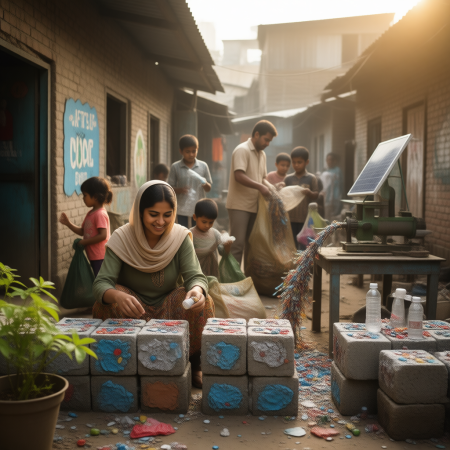
The Plastic Pollution Crisis Meets the Housing Affordability Challenge
Every year, the world produces over 400 million tons of plastic, and less than 10% is effectively recycled. The rest accumulates in ecosystems, clogs drainage systems, and pollutes marine habitats. Simultaneously, the United Nations estimates that 1.6 billion people globally live in inadequate housing, with nearly 100 million homeless. As urban populations swell—especially in the Global South—governments and communities face immense pressure to build quickly, affordably, and sustainably. Plastic waste for affordable building material emerges as a pragmatic answer to both problems. Instead of treating plastic as a liability, innovators are reimagining it as a resource. By integrating post-consumer plastics into construction—whether as aggregates, binders, or structural elements—communities can reduce landfill burdens while creating new, resilient building solutions. This dual benefit makes the approach not just environmentally sound but also economically and socially transformative.How Plastic Waste Becomes Building Material
The transformation of plastic waste into usable construction products relies on several proven methods, each tailored to the type of plastic and intended application. One common technique involves shredding or melting non-recyclable plastics—such as polyethylene (PE), polypropylene (PP), and polystyrene (PS)—and mixing them with sand, concrete, or other aggregates. The resulting composite can be molded into bricks, tiles, or interlocking blocks. These materials often exhibit superior water resistance, insulation properties, and durability compared to traditional alternatives like clay or concrete. In road construction, plastic waste is melted and blended with bitumen to create “plastic roads.” Pioneered in India, this method has been tested in over 100,000 kilometers of roads across the country. The plastic-bitumen mix enhances road longevity, reduces potholes, and prevents water seepage—all while diverting tons of plastic from the environment. Another promising application is 3D printing with recycled plastic filament. Startups and NGOs are using large-scale 3D printers to construct entire homes from shredded plastic waste, layer by layer. These homes can be built in days rather than months and at a fraction of conventional costs. In the Philippines, for example, organizations have printed low-cost shelters using locally sourced plastic waste, proving that plastic waste for affordable building material can scale even in resource-constrained settings.Environmental and Economic Benefits
Using plastic waste for affordable building material delivers a cascade of environmental advantages. For starters, it diverts non-biodegradable waste from ecosystems where it can persist for centuries. It also reduces reliance on energy-intensive raw materials like cement, which accounts for roughly 8% of global CO₂ emissions. Plastic-based composites often require less energy to produce and transport, thanks to their lighter weight and modular design. Economically, the model fosters local job creation. Sorting, cleaning, shredding, and processing plastic waste can provide livelihoods in informal and formal sectors alike. In Nairobi, Kenya, community cooperatives collect plastic bottles and wrappers, which are then sold to local brick manufacturers. In Medellín, Colombia, women’s groups have turned plastic recycling into micro-enterprises centered around eco-brick production. Moreover, the affordability of these materials makes safe housing more accessible. Traditional building materials—cement, steel, fired bricks—have seen steep price hikes due to inflation and supply chain disruptions. In contrast, plastic composites can be produced locally using abundant waste streams, drastically lowering input costs. A house built with plastic bricks may cost 20–30% less than one built with conventional materials, a difference that can determine whether a family secures shelter or remains exposed.Global Innovations and Real-World Applications
The potential of plastic waste for affordable building material is being realized across continents:- India leads the way in plastic roads and eco-bricks. Since the early 2000s, engineers like Dr. Rajagopalan Vasudevan have championed the use of shredded plastic in road construction. Cities like Chennai and Pune now mandate plastic waste inclusion in public works projects.
- Netherlands-based company ByFusion creates building blocks from unsorted, unwashed plastic waste using a proprietary compression process. Their “ByBlocks” require no glue or adhesives and are used in sound barriers, retaining walls, and modular housing.
- In Colombia, the "Plastic Bottle School" movement—started by Laura Kutika and Fernando Llanos—inspired the construction of over 20 schools using “eco-bricks” (plastic bottles stuffed with non-recyclable waste). These bricks are embedded in concrete walls, providing insulation and structural support.
- Nigeria faces severe plastic pollution and housing shortages alike. Entrepreneurs like Jerry Nwokolo are turning plastic waste into roofing sheets and wall panels, offering affordable alternatives to corrugated metal in informal settlements.
- In the United States, startups like Conceptus Plastics (originally from Colombia) and UBQ Materials (Israel) are partnering with municipalities to build emergency shelters and community centers from recycled plastic composites.