

The Motorbike Epidemic: How Urbanization Changed Pakistan’s Commute
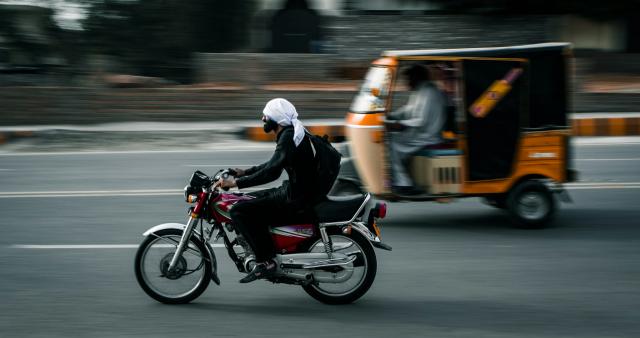
Pakistan’s city transport has seen major changes throughout the past two decades. In the past, packed buses and local rickshaws ruled the city, but today you see motorbikes everywhere, both in Karachi’s Lyari and Lahore’s Gulberg. The fast spread of motorbikes has earned the term “epidemic” from observers, though it refers instead to the sudden presence of many motorcycle on the roads. Many people in Pakistan’s cities ride motorbikes not only to get around; they see them as symbols of independence, earning money and cultural change.
Pakistan’s cities have seen motorbikes rise to become more common along with urbanization. As more people moved into cities, public transport struggled to serve the extra passengers traveling. Many people opted for motorbikes because traffic made cars difficult, prices increased at the pump and taking buses often took too long. Motorbikes could pass between cars, park in narrow places and cost less to buy, so millions chose them. Whether students, workers, women or business people, riders found motorbikes a good way to save time during traffic jams and to benefit from opportunities that had been difficult to reach earlier.
However, this change happens even in cities that are not very developed. The motorbike has changed the way society is organized, allowing people from different classes to have the same employment opportunities. Many young Pakistanis now earn their living by becoming motorbike delivery workers with app-based companies. Having a motorbike now seems like the first step for many families who used to be too poor to own a car. People at schools, workplaces and shopping malls wear helmets and drive through busy streets, with their two-wheelers making a nearly silent statement: Pakistan has made motorbikes part of its urban lifestyle.
This blog sets up an understanding of how the growth of motorcycles played a role in changing cities. Next, we will look into the past of Pakistan’s commute by bike, the reasons behind its growing popularity, the threats it brings to infrastructure and society, its effect on the environment and how government actions can control this situation.
Changes through History – From Rickshaws to Riders
Even as Pakistan’s big cities grew fast after independence, their means of transport developed slowly. Ridership during the 1960s and ’70s was mostly done on shared buses and three-wheeled rickshaws. You could use them at a low cost, but routes were set, hours were limited and the crowded vans made getting around each day tiring. Although trains were convenient for short trips between communities, they were not packed enough to reach people in big cities. As cities grew bigger, the original modes could not keep up: people had to wait for slow and unpredictable buses or trains and usually found themselves riding crowded vehicles.
In the 1980s, owning a private car was a relief for the wealthy, but it was still too expensive for most people. At the end of the 1990s and start of the 2000s, bikes started to take off in popularity. Engine sizes of 125cc to 150cc for commuter bikes were chosen by international firms and local assemblers to provide the right blend of power, cheaper fuel and minimal upkeep. Meanwhile, easier import policies and more available loans helped lower-income people get motorcycles.
The popularity of motorbikes soon matched the rise of many informal transport services. People who offered motorbike taxi services in the city, called bajajs, started riding passengers for reduced fares in areas with heavy traffic. As a result, the service gained a large following because it was quick and adaptable. Bus horns used to be heard throughout these cities, but now there’s the sound of motorbikes from rivers of traffic. The views on motorbikes have changed as time passed.
At the start, these vehicles were meant for workers and students and then appealed to a wider audience. Some people had two cars, so they used the sports cars on errands and for beating traffic in the morning and evening, while young professionals also bought them to beat the rush hours. Groups on both social media and in real life were created to share the excitement of motorbikes and their modification. Both the spread of motorbikes and the changes they encouraged in cities reflected a move from traditional, planned transportation to flexible traveling on two wheels.
Thanks to this change, motorbikes now experience a surge in popularity. That technology, the economy and city crowding all came together to transform the two-wheeler from normal transportation to essential for daily life. Understanding how the motorcycle evolved in Pakistan is the key to realising why they are so well adopted by city dwellers.
Socio-Economic Drivers – Affordability, Aspiration, and Employment
Lots of social and economic factors make motorbikes popular with many people. Above all, affordability is the main issue. A motorbike costs less to buy, license and keep up than a car does. Liquid fuels are used much less which becomes important in the face of Pakistan’s fluctuating fuel prices.
These finance houses provide plans where modest-income families can pay a little each month, instead of all at once. Besides helping people travel, motorbikes are now seen as tools for making money. Apps for delivery and ride-hailing have allowed motorbike riders to earn money every day as part of the gig economy.
In Karachi, Lahore and Islamabad, thousands of riders work for Foodpanda, Quickr and courier and ride services such as Bykea and Careem Moto. For many young men—and now young women too—getting a motorbike is the way to make money quickly, become independent and find jobs outside the usual types of employment.
Bikes for roads influence both learning and choice of jobs for women. Members of middle-class families rely on them for getting to universities that are set on large and scattered campuses. When family rules keep women from moving about freely, motorbike taxis give female students and professionals a private and secure means of travel.
Even though it’s not easy for women, female riding clubs and schools are now appearing, a sign that attitudes toward women are slowly changing. Because the motorbike industry is expanding, similar industries are also emerging. Riding a motorcycle helps mechanics, spare-parts dealers, accessory shops and petrol bunk attendants have steady work. Cycling businesses are now thriving where, in the past, only traditional trades kept neighborhoods economically strong.
Yet, there are some negatives that come along with these benefits. Most informal gig workers do not have health insurance, regular social security or steady income secured through their work. Many skip gear and safety training in order to increase their daily earnings. Some families choose jobs over security in their work, so drivers might act recklessly behind the wheel. Even so, motorbikes are still influencing the epidemic with their interplay as causes and solutions to urban economic changes in Pakistan.

Infrastructure and Safety – Navigating Risks on Two Wheels
Because there are more motorbikes today, the infrastructure of Pakistan’s cities is under increasing pressure. Faster-moving motorcycles, adding thousands to the traffic, now must use roads planned for buses and rare private cars. As a result of this, certain gaps in road design, controlling traffic and ensuring safety have become clear. The combination of broken roads, not enough lighting and no dedicated space for riders makes urban riding a dangerous activity. The problems of traffic congestion are compounded as impatient drivers pass other vehicles any way they can and riders move through crowded areas in unexpected patterns. At intersections not controlled by lights or police, there is a much higher chance of collisions.
Safety laws do not guarantee that everyone on a motorbike will use a helmet. Under pressure and wanting to save time, many people riding a bike for work often take fewer or no precautions at all. As a result, cities have to handle a rising number of serious head injuries and loss of lives. Because they were not built for such high numbers of accident victims, emergency teams often delay urgent care.
On-site realities have moved faster than the rules made by government agencies. On paper, licensing rules are standardized, but often they are not implemented with much care. Many licenses seem anime and they are rarely taught new lessons. Infractions are not fined and the result is a buildup of cases before the courts. At times, the main goal of motorcycle import regulations is to generate revenue which means unsafe or unregistered bikes can be used on the road.
Therefore, certain city governments are starting to carry out safety campaigns and make infrastructure improvements. Lahore developed a two-wheeler lane for selected roads and Karachi put on pop-up training classes for anyone who just started riding a bike. Together, NGOs and businesses have been working to distribute low-cost helmets and arrange riding instruction for all. Many such efforts are restricted to one place and lack the support needed.
Solving problems in infrastructure and safety depends on reforming the system. Considerations for bikes should be included in the design of roads, nearby signals and all kinds of public transportation. Using data in traffic management can improve the timing of traffic lights and uncover areas where security might be better increased. Ensuring that licensing rules are strong, that rider education is regular and that riders always use helmets are all necessary. Everyone involved in transportation must take action together for Pakistan to face the dangers linked to motorbikes and keep motorcycle riders safe.
Looking Off the Road – Impacts of Automobiles
As a result of the motorbike boom, every aspect of movement, city air quality and how locals relate has changed. Although their carbon footprint per vehicle is lower than that of cars, motorbikes’ large numbers and often faulty engines lead to plenty of pollutants. Being two of Pakistan’s most polluted cities, Karachi and Lahore see two-stroke motorcycles and aging four-stroke engines worsen their smog and respiratory illness situations. Noise is another problem that is not always seen. Echoing noises from tuned engines and modified exhausts disturb homeowners and interrupt everyday activities and sleeping. The noise of passing traffic is something roadside businesses deal with; for people living nearby highways or expressways, it regularly causes stress.
From a community point of view, the motorbike epidemic can be complicated. Two-wheeler networks encourage people to unite—riders exchange ride routes, useful hints and shops to fix their problems. Now, coffee shops and street teashops are where riders pop in for a chat or to agree on a group adventure. Meanwhile, since motorcycles can go unnoticed, criminals may become bolder; small-scale street crimes on two wheels often use the motorbike’s sneaky advantages to get away with the crime, leading to police restrictions that make life complicated for upstanding riders.
We are seeing continuous changes in how gender is understood. Men usually do most of the motorbike riding, but a lot more women are joining in, some as passengers and others as riders and taxi passengers. As a result, women are now confronted with both gender bias change and new dangers that come with driving. Several groups are providing gender-aware safety classes and making sure communities feel safe. Although motorbikes boost the economy in towns, they further divide rich from poor. Riders who have access to training, insurance and the right gear are safer on the streets; those who don’t are still at risk. People living in low-income neighborhoods are most at risk because older polluting bikes discharge air pollution.
In short, the damage caused by the motorbike epidemic goes well beyond the journeys of each rider. They are linked to public health, the environment around cities, membership in different social groups, how men and women interact and inequality. Trying to improve two-wheeled mobility must consider its impact on both the world and society as a whole.
Policy Responses and the Road Ahead
The increase in motorbikes on Pakistani roads is likely to stay and change how people move in urban areas. To get the most from its use and lessen the negative effects, policymakers should develop detailed and future-minded strategies. Local transport planners should take into account motorcycles along with buses, hailed cars and ordinary mass-transit programs. If bike lanes are marked and isolated from cars on the road, both the number of accidents and problems with traffic will drop. Motorcycle parking close to transportation hubs supports mixed forms of commuting and trimmed-down sidewalk space.
Additionally, rules should be changed to ensure licenses are stronger, training is more adequate and vehicles are properly designed. If riders must complete basic safety training and are observed riding before getting a license, it helps make them more capable on the road. Helmet subsidies offered to gig-economy employees may help boost helmet use. Cleaner emissions and regular vehicle checks will lead to the replacement of the most polluting engines from city streets.
Thirdly, linking government and private efforts can speed up modernizing infrastructure and improving safety measures. Mobile apps for reporting issues, training with others or keeping track of requirements all use the same technology that makes motorcycle travel easier. Programs for accidents involving costly medical care and loss of income are necessary, mainly because low-income riders often face the worst consequences. There are steps being taken, including tax benefits, new charging points and test vehicles, to promote electric motorcycles and keep our cities less polluted. Those who own an electric vehicle can use workplace charging spots and special lanes for electric cars. If the price of batteries falls, using e-motorbikes may become a good choice for city commuters.
Being engaged with people from the community is very important. Giving road safety lessons in schools, riding clubs and community forums teaches people to ride safely. When media stories emphasize the effects of injuries on lives and tell how other cities solved their motorbike issue, people can begin to change their attitudes.
The authorities and planning bodies in Pakistan’s cities have a big decision to make. Motorbikes have already transformed the way we get around cities; today, it is left to policymakers, civil leaders and private organizations to direct this change wisely. If we value two-wheelers for what they can do in urban areas and support the required changes and community cooperation, the motorbike will continue to help rather than hinder urban life. Once this happens, the two-wheel movement will truly meet its goals of being efficient, open to all and green in cities.
Conclusion
With cities in Pakistan growing so quickly, riding a motorcycle is now a big part of people’s everyday lives. Thanks to mobile phones, people from gig and student groups often have more economic chances and traditions about women’s movement are changing for the better. Still, with so many motorbikes on the roads, problems with safety, pollution and infrastructure become more common than the road laws can manage.
Real solutions for these issues involve planning that sees motorbikes as a crucial form of urban transportation, along with dedicated lanes, strict licensing and special safety drives, as well as introducing tough emissions rules and increased support for electric bikes; all this, together with public-private partnerships, can provide badly needed funds for upgrades. If Pakistan invests in both safer roads and rider training, encourages green methods and follows rules, its motorbike industry can create an urban future for everyone.
Also Read: HOW TRANSPORTATION REFORM COULD INCREASE THE AVAILABILITY OF HOUSING AFFORDABLE TO FAMILIES



-3dkuLgKhRD.jpg)
-49HupTvwDD.jpg)



LEAVE A REPLY