

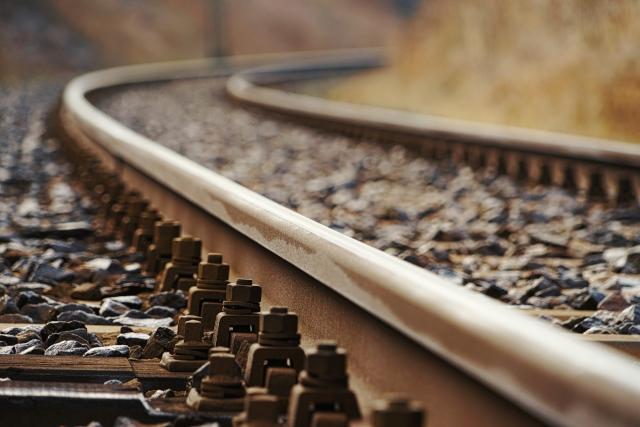
The Karachi Circular Railway Failure: Lessons for Future Urban Projects
The city of Karachi once saw the Karachi Circular Railway (KCR) as an example of hunger for progress. In 1969, KCR was introduced to better link Karachi’s wide urban area, making travel convenient and inexpensive for people. Initially, the system comprised just a mainline and a loop that connected the city heart to its enlarging suburbs.
Between the 1970s and 1980s, Karachi was doing well with a growing population and thriving industry before the city was overrun by urban development. But KCR’s achievements did not last for very long. Gradually, the railway was neglected, investment was low, maintenance decreased and road transport began to gain more popularity.
Passengers were put off by problems such as trains running on tracks near homes and cities, old trains and poor service. Less and less people were using the trains and KCR was formally suspended in 1999. It found little success when it was tried to be brought back in later years.
Poor management was not the only reason for KCR’s fall; it was a sign of wider problems in running urban Karachi. Planning measures did not improve as the city’s population rose by more than two-fold. Policymakers did not focus on promoting green ways of transport, preferring instead to make roads wider and to increase private cars. At the same time, people turned to minibuses and rickshaws, but doing so usually meant accepting lower efficiency, less safe journeys and more pollution.
KCR’s setback has prompted important questions about the management of urban developments in Karachi. How did such a promising system fall apart so thoroughly? How can lessons help us avoid making them in the future? By studying the factors behind KCR’s decline, this blog aims to understand what it says about future city planning in Pakistan.
Problems with Leadership and the Freeze of Government Bodies
A major reason for the KCR’s failure was that governance and teams working together stopped working well. At first, Pakistan Railways oversaw the railway system which needed to work well with local city planners and groups from law enforcement and municipal authorities.
Because efforts were not coordinated and judicial and executive roles overlapped, government activity slowed to a stop. Nobody clearly held responsibility for the system, so it continued to fall apart. Over the years, different government departments and development authorities joined the KCR with their own competing interests.
Although the KMC, Ministry of Railways, Sindh Government and federal transport departments were all part of the project, they rarely joined forces. Money for the initiative was irregular and, when received, often not put to good use. The lack of integrated institutions meant that new ideas, fast responses and railway spending were all held back.
In addition, political intervention made things worse. Assignments given to individuals based only on their loyalty, shifts in authority and political decision making created delays, poor management and inefficient execution. Talks to update the KCR were surrounded by much excitement, but these efforts were repeatedly set aside or put on hold because of government changes or paperwork delays.
This proves that it is important for urban governance to be integrated. Around the world, effective urban transport is guided by strong, specialized groups responsible for planning, carrying out activities and upkeep. The city had no such rule and KCR became a target of institutional troubles. A new urban transport system can succeed only if it has a smooth management structure and clearly laid out who is responsible for what.
The Cost of Ignoring Public Transport in Urban Growth
For many decades, Karachi’s urban area has expanded very rapidly. Still, although there were more people and new neighborhoods, public transport planning remained behind. At the time the KCR was halted, the city needed public transport the most. Because of this gap, people started using dirtier and more risky alternatives such as minibuses, rickshaws and personal vans.
The dangers to people from not having better mass transit are significant. Getting around the city takes a lot of time, energy and can be very dangerous. Because there is no effective railway, the city’s working class mostly uses unregulated road transport, resulting in heavy traffic, bad air quality and an increase in road accidents. Because there are not enough accessible and reliable ways to travel, women and students happen to be the ones commonly facing harassment and danger.
Economic challenges are experienced by the city too. The economy suffers greatly when people spend extra time getting to work, when traffic burns fuel and when they purchase private transportation. Because mass transit is lacking, Karachi’s workers travel less, attracting and retaining employees becomes more difficult for companies and economic growth is not even across the city. If well looked after an extended, the KCR had the potential to change the face of Karachi. Having neighborhoods designed around railways would have helped stop messy urbanization and made the use of land more planned. Alternatively, unintentional expansion and excessive speculation in land have become main priorities.
When Urban Poor Use Public Land
Land encroachment has been one of the main problems leading to the collapse of the KCR. Because KCR services stopped working regularly and ceased after some years, the land, including the railway track area, was gradually invaded by slum dwellers, mini-businesses and sometimes those with political support.
This happened not only because people saw a chance, but also because many urban areas have inequality and expensive housing. A lot of urban poor in Karachi depended on land left by the abandoned railway for shelter and to make a living. There were large settlements created by informal communities along the KCR. Illegal suburbs still settled deep into the city landscape, leading to the creation of schools, stores and places for worship. Facing difficulties politically and socially, KCR had to reject plans for evicting these residents.
In the last few years, supporters of renewing the KCR project were met with opposition due to the many relocations it would lead to. Even though the government promised to support and compensate the displaced people, most residents said they did not receive much aid. Human rights groups worried about the way affected families were treated and the lack of transparency during the eviction process.
In urban planning, regularly, there are problems with the balance between building infrastructure and equality issues. Urban projects planned for the future must pay attention to the rights of people and ensure everyone has fair chances to use land. Disregarding the issues of the urban poor can result in opposition, lawsuits and unrest that lasts for years. A good and adaptable urban transport network should include all members of society. When infrastructure development takes place without looking out for vulnerable people, it can fail just like the KCR. Planning in cities should ensure transport is efficient, beneficial and also just for everyone.

Lessons from Global Urban Transit Successes
Although KCR is a lesson to be careful about, there are plenty of urban transit success stories elsewhere. Bogotá, Seoul and Mumbai have put in place creative ways to deal with urban mobility, despite having similar economic and social difficulties. Thanks to Trans Milenio’s BRT system, Bogotá’s public transport has become fast, reliable and easy on the wallet. Because of firm political support, organization from the top and improvements for cyclists and walkers, the system inspired countries in the developing world.
Because the population of Mumbai is similar to that of Karachi and the two cities have a similar economic divide, Mumbai has been able to keep a large system of suburban trains that millions of riders depend on each day. Although Mumbai’s local trains had their problems, they were more reliable and better connected than Karachi’s KCR ever succeeded in being. Such achievements have been made possible by ongoing investments, strong political will and the leading place of public transit in city development.
Engaging the public is an important factor in developing good transit systems. In Seoul, making transportation decisions was a joint effort with the public. The work of the public enabled those making policies to be grounded in concrete experiences, preventing assumptions from government offices from leading the way.
Planning the Future – Past KCR
I believe the Karachi Circular Railway should not be forgotten as a total failure. The lessons from its story are important as Pakistan plans its future urban transport system. We need a fresh plan that gives priority to involving everyone, lasting sustainability and responsive government. In the first place, we should treat urban transit as mainly something good for all, not only an opportunity to profit. Both transport planning and urban development should aim to link housing, employment and the environment. It’s not only about getting people from one place to another; a mass transit system also encourages growth, relieves inequality and improves living conditions.
Besides, it’s important to continuously improve the way the government operates. Karachi should have a particular urban transport authority responsible for planning, executing and managing the transport systems throughout the city. A clear system for sharing information among agencies should be set up and politicians should be encouraged to keep out. In addition, infrastructure projects should be designed for the benefit of everyone and be just. Community engagement, organizing resettlement and assessing social impact should be done for every major project. It is wrong to build smart transport systems by removing the poor or disrupting community networks.
To be successful moving forward, future projects need to incorporate innovation. Karachi can take advantage of digital ticketing, environmentally friendly buses and modern methods in planning, all of which are ahead of primitive models. Despite the KCR not succeeding, those in charge should not abandon the city’s plans for better transit. On the other hand, it should open an era that lets the city envision mobility as something available to all, not just those who can afford it.
The Role of International Donors and Missed Financial Opportunities
Foreign organizations and donors have long been fascinated by the Karachi Circular Railway project. Many organizations, for example JICA, the World Bank and the ADB, have shown interest or expressed their readiness to help KCR at important points in its history. Still, due to red tape, different policies and disrupted project continuity, the project wasn’t able to benefit from these engagements. In the early part of the new millennium, JICA provided technical and feasibility assistance for an improved KCR system.
According to the plan, the new railway would be electrified, have a ticketless system and its facilities would be modern, in line with global requirements. Meanwhile, government officials either set these plans aside because they were given lower priority or delayed them due to questions about how to settle and provide for the refugees, spend the required funds or resolve the conflicts over land.
Doubts about transparency, possible corruption and unstable policy-making by Pakistan have made international donors less willing to participate in lengthy infrastructure projects. When projects miss targets, discover errors in numbers or fail to meet regulations, they are either delayed or end up without funds. In addition, short-term loans for recognition usually take priority over structural projects, leaving urban traffic management off main budget lists. Rather than relying on international aid for city-building and development, it has frequently been applied to fixing immediate needs.
The inability to involve countries abroad in KCR demonstrates that the project could benefit from better continuity and more long-term planning. Pakistan and similar developing countries should ensure that urban infrastructure projects are supported by accurate plans, detailed studies and regular political commitment. Such support can only be used effectively when these problems are solved. Moving forward, it will be important to earn donor trust, make projects easy to see and use best practices for procurement and execution from around the world. It is too urgent to improve traffic in Karachi to allow any financial benefits or slow government action to hold us back.
Building Resistance to Climate Change Events in Urban Transport
With a growing risk of climate change, Karachi’s plan for city transport must also protect the environment which is something the KCR’s restoration could also have achieved. Rail travel is both energy efficient and very clean compared to other forms of public transport. Relying on diesel buses, motorbikes and private cars continues to make air cleaner, as these vehicles also release lots of carbon dioxide. Flooding caused by climate change is a yearly challenge for Karachi, harming motor vehicles, infrastructure and lives. In times of trouble on the roads, a solid public transport network may help people reach their destinations and avoid carbon emissions. Sadly, making the KCR more resilient to climate was never considered by its designers.
All over the world, cities are creating transportation systems that can handle climatic challenges such as elevated tracks, trains using green energy and urban designs that deal with water well. Karachi needs to do the same. In the future, KCR and comparable mass transit projects ought to be environmentally planned, including designing for no drainage, generating renewable energy and causing as little disruption to land as possible. By encouraging public transport, cities can see fewer vehicles on both their roads and in their airspace. Plans for the transport system now closely link climate resilience and public health.
Because already air pollution is very high in Karachi, it must focus greatly on green modes of transport. Not contributing to a greener city is a weakness of this transport system, yet future work can change that by combining transportation plans with climate adaptation targets.
Conclusion: Charting a New Course for Karachi’s Urban Mobility
The Karachi Circular Railway gives us lessons and shows us what can happen in city transport in Pakistan. From the time it launched in 1969 up to when it was no longer used in the late 1990s, the KCR highlights the important role of sensible leadership, enduring political goal and inclusive designs. It reveals how neglecting infrastructure can create now useless space which a city struggling for new housing and work opportunities may later take over.
Even so, learning from failure can be extremely important. We cannot design urban transport as though it were unrelated to wider social systems. Because coordination among government institutions has failed, a single powerful transit authority is needed to complete the project without being affected by politics. In addition, it is obvious from the KCR story that pushing mass transit solely for profit is not enough; it should be seen as a beneficial service to people. When focus is placed on ensuring public well-being, the environment and social fairness, ridership, maintenance and how the system is funded improve automatically.
Essentially, the KCR was harmed the most when the needs of its core support—low-income workers, students and poor people—were ignored. Evictions that follow informal land claiming show the dangers of infrastructure projects at the cost of social justice. Every new project is required to offer clear relocation plans, fair compensation and let people from affected communities participate, so that no neighborhood can be razed simply in the interest of progress.
Examples from Bogotá and Mumbai demonstrate that when innovative solutions meet a regulatory push, results can still be achieved with little money. Policymakers in Karachi are able to skip old-fashioned systems by adopting ways that use real data, eco-friendly trains and smart cards. Providing extra safety for trains in flood-prone areas, electricity for comfortable travel and more green areas can help the railways avoid disruption from monsoon floods and sunny heat, reduce pollution and lower emissions.
Karachi is facing important changes. If it repeats the errors of the past, key parts of the transport system might break down due to bureaucratic inactivity, but if it acts fast enough, it could build a sustainable transport network based on what KCR achieved. If Karachi takes the lessons of history, brings about combined administration, centers on social fairness, uses modern technology and focuses on green growth, its diverse groups can return to shared development, much like the Circular Railway once accomplished.
Also Read: Other Slums Worth Knowing (Korail, Makoko, Mathare, Kawangware)



-ySWGlp0vgc.jpg)




LEAVE A REPLY