

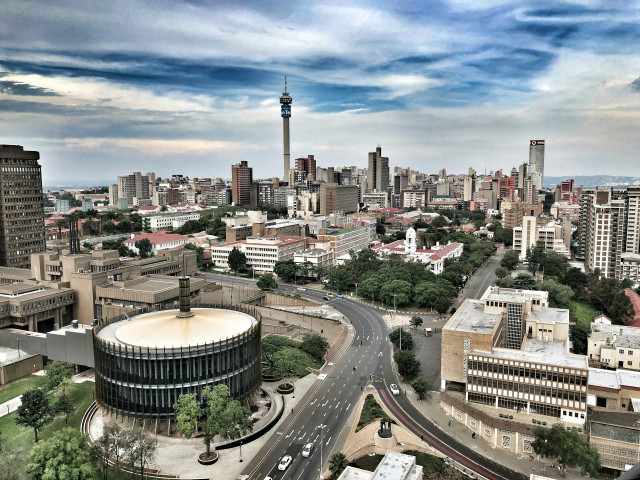
The Importance of Sustainable Practices in Affordable Housing Development in South Africa
The provision of affordable housing has been one of the most serious socio-economic issues in South Africa. Having a fast urbanizing population, scarce land at the backdrop, as well as rising construction expenses, the need to ensure the provision of quality housing to all citizens has become a pressing concern. The housing backlog of the country (which is estimated over 2.5 million units) is ever increasing every year, thereby being worsened by the urban migration and income inequality. In this regard, sustainability in housing development has not only come out as an environmental requirement, but it has also come out as a practical and moral requirement.
Affordable housing sustainability is not only the use of green materials but also power conservation, resource management, integrating the social into it and making it economically viable in the long-term. With its distinctive combination of environmental diversity, economic disparity, and policy-making development, South Africa is a valuable case study on how developing countries can achieve development impact and ecological sustainability. The national strategy towards sustainable housing is also influenced by the national adherence to international regulations like the Sustainable development Goals (SDGs) of the United Nations, especially SDG 11 that requires inclusive, safe, resilient, and sustainable cities.
This blog examines the key relevance of sustainable development in the development of affordable housing in South Africa. It looks at the ways in which the eco-friendly construction, local strategies, policy provisions and material and design innovations are revolutionizing the industry. Moreover, it emphasizes the possibility of sustainable housing to spiral not only the ecological gains but also the economic empowerment and social equity.
The Sustainability requirement in the Housing sector in South Africa.
Population growth, migration, economic inequality, and climate change are forces that intersect in South Africa to cause pressures associated with housing. By 2030, almost 70 percent of all the people in the country are likely to be urbanized and several cities are already facing extreme housing shortages including Johannesburg, Cape Town and Durban. The historical effects of apartheid spatial inequality are also a basis that makes the situation worse because millions of people still reside miles away, in underdeveloped settlements, and lack access to economic opportunities. It is based on this scene that the idea of sustainability in housing development becomes inevitable.
The conventional construction approaches, which are cheap in the short-run, in most cases lead to long-term inefficiencies. Due to low insulations, excessive energy usage, and insufficient access to water and sanitation, there are increased costs of operation and environmental degradations. The approach to sustainable housing, in turn, tries to reduce the ecological impact and enhance the quality of life of population. These are incorporating renewable energy, application of water-efficient technology and making buildings have flexibility to the surrounding climate and environment.
Besides, sustainability is a question of resilience as well. South Africa has already experienced the physical effects of the climate change such as water shortages, droughts and extreme weather conditions. Economical housing with sustainability features i.e. rainwater collection, solar energy, and passive cooling would cushion the vulnerable groups against economic and environmental shocks of such transition.
In 2004, the government came up with the Breaking New Ground (BNG) policy that recognized the importance of sustainability in human settlements. Nevertheless, the actual practice has been intermittent because of funding, capacity and unavailability of technical know-how. However, there is improvement that is going on: the Green Building Council South Africa (GBCSA) and the National Home Builders Registration Council (NHBRC) are also marketing sustainability standards and certification schemes to both publicly and privately developed projects.
After all, housing is not merely an environmental problem in South Africa, but a socioeconomic one as well and sustainable. It is concerned with making sure that affordable housing brings about economic growth, social integration, and environmental protection at the same time.
Green Construction Materials and Building Technologies.
The most effective method of ensuring sustainability in affordable housing is by incorporation of environmentally friendly and locally obtained building materials. The conventional building materials such as concrete and steel are energy consumptive and also they result in high carbon emission. In comparison, alternative solutions to the challenges include compressed stabilized earth blocks (CSEBs), bamboo, and recycled materials that present low costs, durability, and environmental friendliness to the South African climate.
Such practices as the use of earth blocks have been adopted in various housing projects in the country. These blocks are manufactured by stamping on locally produced soil with little cement or lime thus minimizing transportation costs and emissions. They also assist in the natural insulation of the houses and help to keep them cool during hot summer days, as well as warm during winter.
Recycled construction waste is also another innovation that is promising. The waste that is demolished concrete and plastic can be reused into composite building materials thereby lessening the waste in landfills and raw material usage. This circular economy approach to building makes the economy more sustainable as a whole because waste is converted into resources.
Prefabricated and modular housing is also becoming very topical. Prefabrication minimizes the waste on-site, minimizes construction time, and also ensures uniform quality. South African firms Moladi and Kubik have been the first to develop modular housing systems, which can be used to create low cost, long lasting homes using recyclable metallic frames or recyclable plastic molds. The technologies can support the housing backlog in the shortest time and still uphold sustainability.
Another important element is energy efficient construction methods. Insulated roofs, reflective paints and glassed windows can lessen the artificial cooling to prevent the need to have artificial heating. These physical enhancements when combined with renewable energy instalment like solar panels and solar water heaters increase the environmental performance further.
South Africa can use the construction sector as a major sector to implement transition to low-carbon economy as it produces close to 40 percent of greenhouse emission in the world. Through scaled sustainability in building, the nation will be able to produce affordable yet environmentally friendly homes.

The Affordable Housing and the Role of Renewable Energy.
The focus of sustainable housing is energy access and affordability. Electricity prices have been on a steady increase in South Africa in the last decade with low-income households being the most impacted. Cooking and heating still use fossil fuels like coal or paraffin, which is not only expensive but also dangerous to the community living in the area. Inclusion of renewable energy systems in affordable housing is one of the practical solutions to this energy crisis as well as the promotion of the environmental interests.
Energy solar in particular have become a game changer. South Africa is also endowed with a lot of sunshine- one of the greatest solar radiations in the globe and solar power is therefore feasible and affordable. Rooftop solar systems, solar water heaters, and micro grids can save a lot of money used in the house. A number of pilot initiatives, such as those facilitated by the Department of Human Settlement and Development Bank of Southern Africa (DBSA), have shown that solar installations could be incorporated in affordable housing initiatives to offer clean energy that is reliable.
In other ways, other than the production of electricity, renewable technologies enhance the sustainability of the housing projects. Communal lighting using solar power will improve the level of safety and minimize dependence on the grid. In the meantime, waste management and cookstove based on the use of biogas systems offers a further added dimension of energy efficiency.
Renewable energy is also a source of social empowerment besides solutions which are related to technology. Solar installation and maintenance training programs would help to generate jobs; especially among the youth and women. Locally based ownership and responsibility are built through community energy cooperatives in which the residents own the renewable infrastructure jointly.
However, challenges persist. The initial high prices of solar systems, inaccessibility to capital sources and the demand of the supportive regulatory frameworks have retarded widespread use. However, renewable energy incorporation in low cost housing is on the rise with more and more involvement of the private sector and international donors. In the long run, the utility costs savings and environmental benefits will easily outweigh the initial costs by far, and hence renewable energy is an essential ingredient of sustainable housing development.
Policy Frameworks Supporting Sustainable Housing
The government policies are very important in promoting sustainable housing in South Africa. The housing policy has changed since the abolition of apartheid, which adhered to the principle of quantity, i.e. mass provision of basic units, to that which now requires quality, sustainability, and inclusiveness. The Reconstruction and Development Programme (RDP) and Breaking New Ground (BNG) initiatives have been the platform on which affordable housing is being established, although latest frameworks are focusing increasingly on environmental friendliness.
In 2009, the National Housing Code was revised and came up with guidelines that establish sustainable human settlements that incorporate infrastructure, environment and social services. On the same note, the National Climate Change Response Policy identifies housing as one of the key sectors towards the delivery of the emission reduction targets in South Africa. The City of Cape Town and eThekwini Municipality are some local authorities that have also formulated their own green building policies to ensure that they encourage energy savings in their housing projects.
There are also changes in the financial and regulatory mechanisms. Green Fund is an initiative managed by DBSA that funds projects with proven innovative developments as far as sustainable development is concerned such as affordable housing. In addition, there is the Carbon Tax Act (2019) and other incentives that would help in reducing the emission produced by developers through the adoption of green technologies.
These efforts are being enhanced by international alliances. The UN-Habitat, World Bank and GIZ have engaged South African institutions in pilot projects of sustainable housing developments and formulation of policy toolkits. Specifically, the Sustainable Housing Finance Project, which is a co-finance endeavor with the World Bank, is notable due to its contribution to the growth of access to green mortgages and climate-resilient financing solutions.
Even though these frameworks are encouraging, the application is not even. Bureaucracy, inefficiency, and lack of local knowledge as well as enforcement of building standards are still holding back development. In order to bring about significant change, sustainability needs to be embedded in the housing policy on all levels, including planning and procurement, building and renovation.
Social and Economic Provinces of Sustainable Housing.
The benefits of sustainable housing go way beyond the ecological benefit- it is a socially and economically transformative benefit. Sustainable housing, in this case, will mean reduced energy and water bills, healthier households and a higher quality of life to low-income households. Families will be able to spend more on education, healthcare, and the development of small businesses by lowering their monthly utility bills.
Social inclusion also results due to environmentally conscious housing. Mixed-income, mixed-use projects that promote walking and green areas foster interaction in the community and diminish social division. Efforts to re-develop neglected neighborhoods in Cape Town and Johannesburg in the form of urban regeneration utilizing sustainable housing reveal how cultural identity can be maintained without sacrificing neighborhood attributes.
Economically, sustainable construction generates industries and employment. The green building materials, renewable technologies and the services related to the environment demand support local manufacturing and entrepreneurship. Energy auditing, eco-design and waste management training programs equip the workers with skills that are relevant to the green economy.
Also, green housing is a source of climate resilience. Houses that have an eco-friendly architectural design and those that are flood-resistant have a higher chance of surviving severe weather conditions. This resilience does not only save lives but also minimizes the amount of money spent by the people in disaster recovery.
On the macroeconomic level, sustainable housing is compatible with the Just Energy Transition (JET) strategy of South Africa that is focused on balancing economic development with environmental safeguarding. Using sustainability in housing development, South Africa is able to deal with all three elements of the national development plan, namely unemployment, inequality, and environmental degradation at the same time.
Difficulties and the Way Ahead.
Although there is a positive trend, the popularity of sustainable practices in affordable housing has a number of obstacles. The main obstacle is cost. Even though sustainable technologies lower the costs in the long run, the initial cost is high and cannot be afforded by low-income developers and municipalities. Green mortgages or climate adaptation loans are products that financial institutions do not have differentiated to facilitate such efforts.
Another limitation is technical capacity. Most local construction firms and contractors are not familiar with green material and practices resulting in lack of uniformity. Training and certification systems should be expanded in order to professionalize the sector.
Moreover, the stakeholders require closer cooperation. The various departments of the government, private developers and civil society organizations tend to work in silos thus making their efforts disjointed. The lack of transparency can be addressed by having integrated planning, which can be supported by community participation and ensure that sustainable housing projects are replicable and scalable.
Finally, there is poor awareness among the population. The perceptions of many South Africans about sustainable housing are still too strong of high-cost homes or high-end projects, instead of looking at it as a long-term survival tool. The change of these perceptions and the illustration of the real value of sustainability may be conducted with the assistance of specific education campaigns and pilot projects.
The middle way is to strike a balance between practicality and innovation. There are emerging technologies that are promising to be cost-effective in terms of scaling, like 3D printing, modular construction, and green financing models. Adopting these tools alongside strengthening supportive policy frameworks can mean having a sustainable future in housing that will work in the best interests of both people and the planet in South Africa.
Conclusion
Sustainable practices in the development of affordable housing forms are no longer a choice, rather it is a necessity to the social, economic, and environmental future of South Africa. With the country struggling with urbanization, inequality, and climate change, sustainable housing can provide a way to sustainability and inclusive living. It is a transformation of the short-term solutions to the long-term ones, which focus more on human dignity and ecological balance.
Sustainable housing development should be regarded as an investment and not as an expense. The advantages which are a lower energy price, job creation, community empowerment, and environmental protection go far beyond the housing sector itself. This can be achieved by integrating sustainability into all facets of the housing policies and practices so that South Africa can turn its cities into the exemplar of sustainable, sustainable development.
In the end, sustainable affordable housing success will be based on cooperation - between government, industry, academia and communities. It is the collective efforts only that will allow South Africa to realize its vision of housing of all which will not only be affordable, but it will be sustainable.
Also Read: Policy Recommendations for Sustainable Slum Solutions




-ySWGlp0vgc.jpg)









LEAVE A REPLY