

Sustainable Housing Solutions for Ghana: How Green Building Practices Can Lower Construction Costs
The issue of housing is one of the overriding development crises in most emerging economies especially in the fast-growing African nations. Ghana is no exception. Due to the ever-growing population and the escalating city migration, the need to find cheaper and long lasting homes has become a major demand.
 Accra, Kumasi, Tamale, and Takoradi are some of the
cities which are fast growing due to the migration of people in search of jobs,
education and better livelihood. The housing development has however not been
able to match the rising demand resulting in housing shortages, congestions and
the growth of informal settlements.
Accra, Kumasi, Tamale, and Takoradi are some of the
cities which are fast growing due to the migration of people in search of jobs,
education and better livelihood. The housing development has however not been
able to match the rising demand resulting in housing shortages, congestions and
the growth of informal settlements.
The traditional ways of construction in Ghana tend to use a lot of imported materials like cement, steel among the manufactured components. Although these materials are popular due to their longevity and commonness in the construction sector, they may greatly add to the expense of constructing homes.
These expenses can render homeownership hard or even unfeasible to the
family, which is in low- and middle-income. Moreover, the traditional
construction method may assist in environmental degradation, energy wastefulness
and expensive maintenance costs in the long term.
With the increasing worries regarding the affordability of housing and the sustainability of the environment, the focus on green building has been receiving more and more attention. Green building is described as the application of construction methods, materials and design techniques of the buildings which are environmentally friendly and improve efficiency and comfort of buildings.
Such practices also have the potential of lowering the
construction costs in most instances especially when they use locally sourced
resources and designs that consume less energy.
Green building solutions are a good alternative in Ghana that can bring about a viable way of tackling affordability of houses and environmental sustainability. Developers can design homes that are cost effective and eco-friendly by using energy-efficient designs, renewable materials, and climatic construction patterns.
The solutions are especially
applicable in the country where the innovative methods of construction can be
supported by the natural resources, knowledge of local building, and appropriate
climate conditions.
Nonetheless, green building application in Ghana is still fraught with a number of difficulties. These are low awareness of developers and homeowners, lack of technical knowledge and skills, regulatory obstacles and the belief that sustainable construction is costly as compared to traditional modes of building.
These obstacles can only be overcome through
government organizations, business stakeholders, architects, engineers, and the
locals.
This blog discusses how the practices of green buildings can help to find sustainable housing solutions in Ghana. It looks at the existing housing issues in the nation, the use of sustainable construction materials, the need to design buildings in a climate-friendly way, the significance of economic gains in green building, and the policy provisions required to make them be widely adopted.
With these issues in mind, Ghana will get closer to affordable, environmentally friendly, and resilient housing systems that the generations to come will appreciate.
The Housing Crisis in Ghana and the Need for Sustainable Solutions
The housing industry in Ghana has been experiencing pressure in the last several decades as the urban population is growing. The fast urbanization, population increase and rural to urban migration has also led to high housing demands especially in the big cities.
However, there has not been
an equal demand of affordable housing supply along with this demand in turn
leading to severe shortages of housing.
A large number of urban dwellers cannot afford to get decent housing. The cost of building construction in Ghana has steadily increased because of high cost of building materials, transportation costs as well as labor costs.
The traditional materials of construction such as cement, steel,
and other building materials are usually imported and manufactured in a high
energy demand hence costly to developers and home owners.
Due to these expensive prices, most of the families are not able to construct or acquire houses in formal housing markets. This has led to the development of informal settlements and overpopulated house situations in the cities.
The lack of access to sanitation, inappropriate infrastructure, and
their exposure to environmental risks are some of the issues that make
residents of these communities struggle.
Another issue is the environmental effects of the traditional construction procedures. Conventional construction products like cement and steel cost a lot of energy to manufacture and carry.
This is a
source of greenhouse gas emission and environmental degradation. With climate
change emerging as a more critical challenge with worldwide concern, it is
becoming a trend that the construction industry needs to be more sustainable.
Sustainable housing designs focus on solving the affordability issues and the environmental responsibility. The green building practices are aimed at resource minimization, energy efficiency and materials that are less harmful to the environment.
The construction of homes that are
adjusted to the local climatic conditions and the usage of materials that are
available locally can help to cut the price of the construction process and the
long-term costs of work.
In Ghana, the sustainable housing solutions can be based on
the traditional architectural knowledge and the new technological inventions. A
large number of existing traditional building methods already provide the
elements of climate responsiveness like natural ventilation, shading, and the
usage of the materials that are available locally.
Combining these conventional methods with the new green
building technologies would provide housing solutions, which would be feasible
and economical. Sustainable housing does not only help the individual home
owners but also helps in the larger environmental and economic objectives.
The Role of Local and Sustainable Building Materials
Use of locally available and sustainable building materials is one of the most effective ways of cutting construction costs in Ghana. The transportation, taxes and processing of construction materials make imported materials to be very expensive.
Compared to this, local materials would save
substantial costs and at the same time support the local economies.
Earth, clay, bamboo, and laterite are the traditional
building materials that have been in use centuries in Ghana in most areas.
These are materials that are rich, eco-friendly and good to the climate of the
country. With a proper process and combination it can give long lasting and
beautiful solutions to housing in the combination of modern engineering
techniques.
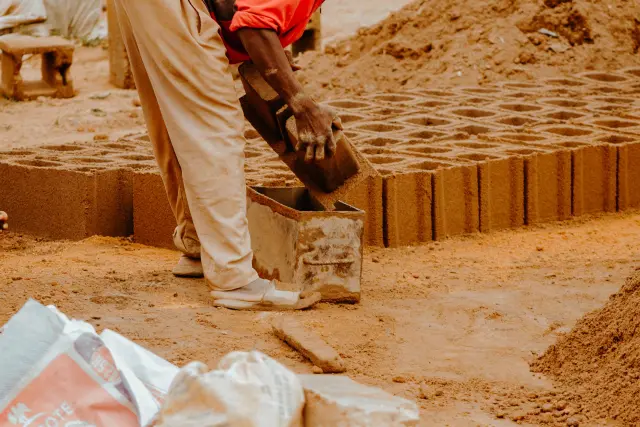
Compressed earth blocks e.g. are gaining popularity as an alternative to normal concrete blocks. These are blocks of soil that is pressed into firm and homogeneous forms and is locally available.
They need less energy
to be manufactured compared to cement based materials and can cut down the
costs of construction to a great extent.
One more sustainable material that can be used to construct
houses is bamboo. It is fast growing and is easily found in most areas and is
strong and flexible. Bamboo can be utilized as structural structures, roofing,
and interior elements when it has been treated and designed properly.
Eco friendly materials that are locally available also
impart less environmental impact of transportation and industrial production.
Most sustainability materials consume less energy and emit fewer greenhouse
gases than the traditional building materials.
Besides environmental, local materials are able to enhance thermal comfort in the houses. Earth and clay are one of the materials that have a natural ability to insulate buildings and maintain the indoor temperatures.
This saves them the expenditure on artificial cooling systems
which may minimize the use of energy and utility expenses by the households.
Nevertheless, these positive features not always allow the use of local materials because of the attitudes towards the quality and durability. Certain developers and homeowners are of the opinion that concrete and steel, which are modern materials, are more reliable.
To overcome these
perceptions, education, research, and demonstration projects should be done to
illustrate that sustainable building materials are effective.
Ghana is able to enhance the performance and acceptance of
local materials through investment in research and development. Architectures,
engineer, and builders can also be trained on how to make good use of these
materials in construction works in a way that is safe and effective.
Climate-Responsive Design and Energy Efficiency
One of the principles of green building is climate-responsive design that concentrates on the adaptation of the buildings to the surrounding environmental factors. The tropical climate of Ghana is characterized by a lot of heat and humidity which makes the indoor environment uncomfortable when the buildings are not constructed properly.
The building
traditions used to be built with the features that enhanced natural ventilation
and minimized heat accumulation.
The green building practices of the modern world are based
on these old ideas and they incorporate scientific knowledge of climate and
energy conservation. Housings can be oriented correctly, windows positioned
properly, and shade devices used to a large degree in order to reduce the
amount of heat that enters the house.
One of the best strategies of ensuring comfortable
temperatures in the premises without air conditioning is natural ventilation.
Cross-ventilating buildings will enable the movement of fresh air in the
interiors, which will decrease the levels of humidity and enhance the quality
of indoor air.
Roof design tells a lot about climate-responsive architecture. Long roof overhangs, reflective roof coverings and insulated ceilings can be used to reduce heat gain by direct sunlight.
Light and
appliances that consume less energy also help in achieving sustainable housing
solutions. The LED lighting systems also use a lot less electricity compared to
the conventional incandescent bulbs which also saves on energy expenses
incurred by households.
Another potential element of green building in Ghana is
solar energy. Considering the fact that there is a lot of sunlight all year
round, one can utilize solar panels to generate renewable electricity to homes,
and not to rely on the traditional sources of power.
Solar systems can be economically advantageous in the long
term even though initial costs may be incurred in installing them because of
electricity savings in the long run. Solar technology should be made more
affordable to the home owners with the help of government incentives and
financing programs.
Climate responsive design does not only conserve energy but
also enhances comfort and health among the occupants. These homes have a lower
chance of developing issues with dampness, mold or bad air quality as they have
stable temperatures and better air circulation.
Economic Benefits of Green Building Practices
Green building practices are not seen as being very costly
although in most instances it can actually lower the total costs of
construction and operation. Although certain sustainable technologies are not
cost-effective in the short-term, the financial costs are usually compensated
in the long-term.
Green building offers one of the key economic benefits which
include the minimization of energy. Energy efficient homes demand fewer
electricity units to meet the cooling and lighting needs as well as appliances.
In the long run, the savings may greatly reduce the household costs.
Cost saving is also achieved through water conservation
measures. Water saving fixtures, rainwater collection systems as well as
enhanced drainage systems can help cut down on the dependence on water supplies
in the municipalities, and also ultimately cut down on utility expenses.
Another factor of concern is maintenance costs.
Constructions made of eco-friendly and long-lasting materials tend to have less
repair and replacement. This saves on the maintenance cost of home owners and
property managers in the long term.
Green buildings are also capable of raising property value. With the increasing awareness on environmental sustainability, there are increasing numbers of buyers and tenants who would like to reside in homes where energy efficiency and eco-friendly facilities are availed.
This has the
potential of making green housing developments more appealing in the housing
industry.
In terms of national economic consideration, green building
practices would help in creating employment opportunities and the local
industries. The manufacturing of green building materials, erecting renewable
energy sources as well as coming up with energy-efficient technologies generate
jobs.
The reliance of Ghana on imported building materials and
fossil fuels can also be minimized by promoting green buildings. This enhances
the domestic economy and enhances energy security. Policymakers and developers
can achieve this by showing developers the financial benefits of sustainable
construction to increase the use of green building practices by more people in
the housing sector.
Policy Support and Institutional Frameworks for Green Housing
Policies by the government are very important in encouraging sustainable housing. The implementation of green building practices might not take off without enabling regulatory systems.
The update of building codes and
construction standards is one of the policy measures that should promote energy
efficiency and environmental responsibility. The regulations may mandate or
encourage use of sustainable materials, energy efficient design and renewable
energy technologies.
Green construction can also be promoted by using financial
incentives. Sustainable housing can be accessible to the developer and
homeowner through tax cuts, subsidies, and low-interest financing programs.
Another significant element of policy support is the public
awareness campaigns. The community can be educated about the advantages of
green building which can create an atmosphere where sustainable homes are
demanded and the people are willing to change their behavior.
Research and innovation on sustainable construction can be
supported through partnerships among government institutions, universities and
organizations in the private sector. Green housing can be demonstrated by
demonstration projects and pilot programs that can provide the best examples.
There is also a need of training and capacity-building to the architects, engineers and construction workers. These programs make sure that professionals possess the knowledge and skills that are required in putting the green building practices into practice.
Ghana stands to gain
through the development of enabling policies and institutional frameworks that
will hasten the move towards a sustainable solution to housing.
Conclusion
The housing problems in Ghana need new and sustainable solutions, which should address the affordability of houses, environmental sustainability, and sustainability in the long run.
Although traditional ways
of construction are very common, they are very expensive and they have severe
environmental effects. Due to the rising population in the urban areas,
alternative housing strategies have become highly urgent.
Green building practices provide a viable avenue of dealing
with these challenges. Using local materials, climate friendly design, energy
efficient technology and renewable energy systems, developers can come up with
affordable yet environmentally friendly homes.
The sustainable housing solutions are also known to cut on
the construction cost as well as enhance the living of people. Energy efficient
houses reduce the utility bills, whereas durable materials minimize maintenance
bills and also increase the lifespan of the building.
These solutions need supportive policies, awareness of the
people, and training in technology in order to be used widely. The government
institutions, the private developers and the communities should collaborate in
ensuring that sustainable construction methods are encouraged and that
investing in green housing programs is done.
Ghana can turn its housing sector into a more inclusive, resilient, and environmental sector by adopting green building practices. Such a change will not only solve the existing housing problems but also make sure that the future generations will have safe, affordable, and natural living environments.
Also read: How Green Building Practices Can Reduce the Cost of Affordable Homes in Nigeria





LEAVE A REPLY