

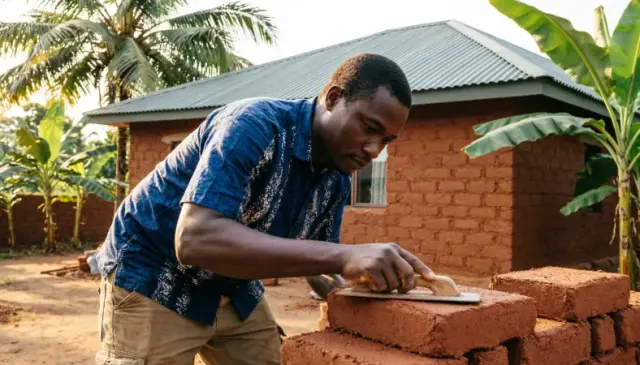
Sustainable Building Materials: Cutting Costs in Nigerian Housing Construction
One of the most urgent developmental issues in Nigeria is the housing shortage, which is estimated at tens of millions of units. The high rates of urbanization, population increase, and increasing construction expenses have rendered decent housing unaffordable to a large number of people.
 Traditional construction resources like cement, steel, and fired clay bricks
are largely reliant on imported resources, energy-intensive manufacturing and
fluctuating international markets. Consequently, the prices of a typical house
construction in Nigeria have soared drastically in the last 20 years, making
owning a house unattainable to the masses.
It is against this background that environmentally friendly building materials are being revisited as a viable and economically viable solution. The concept of sustainability in construction is not confined to protecting the environment but embraces economic efficiency, use of local resources, and affordability in the long term.
Nigeria is also highly
blessed with natural resources, including laterite, clay, bamboo, timber, and
agricultural wastes that can be used to cut on the construction costs without
compromising structural integrity and comfort.
This blog presents the idea of using sustainable building materials in housing construction in Nigeria, which will reduce the cost of construction drastically. It discusses the local material choices, economic gains, and environmental gains, relevance to culture, implementation issues, and future prospects of sustainable housing in Nigeria.
Nigeria can be closer to
its housing crisis solution, which will be affordable, resilient, and
environmentally responsible by concentrating on locally accessible, low-energy,
and durable materials.
Economic Impact of Traditional Building Material in Nigeria
The high price of constructing a house in Nigeria is highly associated with the use of traditional construction materials. Most buildings in modern times are made up of cement, reinforcement bars of steel, aluminum roofing sheets, and imported finishes. Although these materials are known and accepted as standard, they are also quite costly and can be characterized by a significant change in price.
An example is the production of cement, which
consumes high energy and uses fossil fuels; therefore, its price is sensitive
to the costs of energy and changes in government policies. The price of steel
is determined by world demand, foreign exchange rates, and import duties,
which are also factors in the instability of the construction industry.
To the ordinary Nigerian household, such expenses lead to long construction periods or even cancellation of building projects. Most of the families develop in bits after a number of years, not out of choice but due to financial limitations.
On the other hand, developers charge high
material prices to the customers or tenants, which further enhances the problem
of affordability in the urban housing market in Lagos, Abuja, and Port
Harcourt.
In addition to direct material costs, traditional ways of construction are also costly in terms of transport and labor. Manufacturing plants can be located centrally, which means that heavy materials need to travel long distances to the manufacturing location, which in turn comes at a logistics cost that is eventually passed down to the end user.
Delivery of
skilled labor that is conversant with reinforced concrete construction is
also in high demand, which increases wages and project budgets.
On the contrary, sustainable building materials allow
breaking this cycle of cost. Through the use of locally available materials and
minimal construction methods, contractors will be able to save a lot of money
in terms of the cost of purchases, transportation, and manpower. The economic cost
of traditional materials underscores the necessity to find alternatives that
can be more consistent with the economic realities in Nigeria.
Local Sustainable Building Materials and their Cost-Saving Benefits
The varied ecological zones of Nigeria give it an array of sustainable building resources, which have been in use for centuries in time. One of the most cost-effective and widely available is laterite, which is reddish in nature and contains a good amount of iron and aluminum elements.
Laterite
blocks can be made with remarkable strength and longevity when sufficiently
stabilized with small doses of cement or lime at much less expense of sand
Crete blocks. The cost of transportation is low since, in most cases, the
laterites are picked out of the building sites or some nearby site.
Another promising material that is characterized by high
cost benefits is bamboo. It thrives very well in a good portion of southern
Nigeria and it has excellent strength to weight ratio. Bamboo when properly
treated can serve roofing structures, wall panels and even reinforcement in low
rise structures. Bamboo is cheaper, renewable and has simple tools of working
compared to steel or timber.
Timber can be harvested in a sustainable manner; hence it can be used as a structural and finishing feature. Timber construction in Nigeria is a long history, especially in rural areas. Well-seasoned and treated wood can offer durability and beauty at a lower price compared to imported ones.
Also, the wastes generated in agriculture, like rice husks,
coconut shells and palm kernel shells, can be used in the manufacturing of
composite materials in boards, insulation and lightweight blocks.
The benefits of these materials when it comes to cost do not
just depend on the purchase prices. Most of these sustainable materials use
less energy to make them and less specialized workforce is required to put them
together. It is this low cost and availability that makes local sustainable
materials an effective means of cutting down the overall housing construction
expenses in Nigeria.
Environmental and Energy Saving as an Indirect Cost Reduction
Although the initial expenditure on materials is a
significant issue, the operational expenses of buildings in the long run are of
significant importance. Green building materials can offer better thermal
performance, which may lead to great savings in the energy cost of a building.
Due to the hot weather in Nigeria, compressed earth block, adobe, and
laterite walls have high thermal mass that helps to control the temperatures
indoors without the use of heating and cooling systems.
Such thermal efficiency plays down the need to use air conditioning and electric fans, which results in reduction of electricity bills by occupants. These savings can be quite large taking into account that power supply is expensive and unreliable in most areas of Nigeria.
In the long run,
the decreased energy usage would be turned into tangible financial benefits of
households, resulting in sustainable homes becoming cheaper to inhabit,
and not only to be constructed.
Sustainable materials lessen the effects on the environment (deforestation, carbon emissions, and waste). The amount of carbon dioxide emitted into the global environment is high due to cement production alone.
Nigeria can also save funds that would have been used on energy consumption and environmental degradation by minimizing reliance on cement-intensive building and also lessen its effect on the environment.
Natural materials can also reduce health costs, since most have low emissions of harmful chemicals in comparison with some construction products made with synthetic materials.
These are the indirect costs that are usually not considered
in more traditional cost analysis, but they are a significant factor in the
overall affordability and sustainability of housing. Sustainable building
materials prove to be a viable option to the housing industry in Nigeria when environmental and energy-saving is considered.
Social Benefits and Cultural Acceptance of Sustainable Construction
The cultural familiarity of sustainable building materials in Nigeria is one of their strengths. A lot of traditional Nigerian houses were constructed with the help of earth, timber and other natural materials which were very suited to the local climate.
These works of
architecture were very resilient and comfortable even with minimal
technological contributions. These materials can be introduced and updated to
overcome the tradition and innovation gap.
Through cultural acceptance, resistance to alternative
building methods is minimized and this is important towards large scale
adoption. When they appreciate materials as it is a heritage they have more
chances of trusting their functionality and longevity. The developers and
policymakers of sustainable housing can reduce the cost of marketing and
persuasion using this acceptance.
On a social level, construction sustainability opens up the possibilities of local jobs and expertise. At the community level, production of laterite blocks, bamboo treatment or agro-waste composites can be produced, which boosts the local economy.
Rather than wasting money purchasing
imported materials, investment is still done locally, which produces a
multiplier effect that gives back to the artisans, small-scale manufacturers,
and suppliers.
Social stability is also enhanced because affordable housing is made of sustainable materials. When family members can afford to live in decent houses, health conditions get better, education levels go higher, and communities become stronger.
Although these are not necessarily measured in
monetary values, these social benefits indirectly lead to economic growth and
lower financial support for health and social welfare.
Obstacles to Adoption and Effective Resolutions
In Nigeria, sustainable building materials have a number of challenges, although they have their benefits. Perception can be used as one of the major barriers. Most individuals perceive earthly or natural resources as a sign of poverty or inferiority and thus use concrete and steel as the symbols of modernity.
Such an attitude may make people disregard the introduction
of sustainable alternatives because they are cheaper and more appropriate.
There are also regulatory barriers. The construction code
and standards used in Nigeria tend to be biased towards using traditional
materials; therefore, it is scarcely possible to secure permission to use other
forms of construction. The avoidance of standardized testing and certification of
sustainable materials also makes them less acceptable to professionals and
financial institutions.
Technical knowledge is another difficulty. However, in the
case of traditional there are modern uses of sustainable materials that
necessitate the appropriate design, treatment and construction methodology to
allow durability and safety. Poor implementation of the projects will further
entrench the negative perception unless proper training is done.
Potential solutions are the revision of building codes to provide use of sustainable materials, research and testing, and integration of sustainable construction into architectural and engineering schools.
Adoption
can also be expedited by government incentives e.g. tax breaks or subsidies
relating to sustainable housing projects. Perception can be altered through
public awareness programs demonstrating some successful projects with the aim
of instilling confidence.
The Future of Cost-Effective Sustainable Housing in Nigeria
The affordability, sustainability, and quality of housing in
Nigeria are key factor that determines the future of housing in the country.
Green building materials provide a way of attaining this balance as they lower the cost of construction and operation as well as improving the environmental
and social performance. With the increasing population in the cities, the need
to build affordable housing will just escalate, and thus alternative ways of
building will be required.
It is probable that technological advancement would be
instrumental in the development of sustainable materials. Better stabilization,
prefabrication and material testing can result in better performance and
consistency. Together with conducive policies and investment by the private
sector, these innovations can raise sustainable housing to mainstream
solutions.
Financial institutions can also contribute by seeing the
long term worth of sustainable buildings and provide good means of financing
them. Once the lenders and insurers realize that sustainable homes can be long
lasting, energy efficient and affordable, funding will be easily accessible.
Finally, the way of reducing the costs of housing construction in Nigeria is not quality and safety. It is concerned with making smarter decisions that are in line with the local resources, environmental reality, and social requirements.
Sustainable building materials can create the
chance to reconsider the way in which homes are constructed in Nigeria and
develop a housing sector that is affordable, robust and inclusive.
Government Policy, Private Sector Involvement, and Financing Mechanisms
The joint efforts of the government institutions, the private sector, and financial stakeholders are crucial towards the successful implementation of sustainable building materials in the construction of housing in Nigeria.
The policy direction is very important in construction practices, creating standards of materials in use and market behavior. By establishing
clear regulations, incentives, and the use of public housing projects, governments
ensure the development of confidence and legitimacy of alternative construction
techniques.
Costs can be minimized by government policy supporting the production of sustainable materials locally. Research institutes, laboratories of building material testing, and pilot housing schemes also improve quality control and standardization.
The professionals concerned, including architects,
engineers, and builders, are more inclined to specify sustainable materials in a
project when these materials are certified and included in national building
codes. This saves on time, approval hurdles and unknown costs that seem to be
brought about by regulatory uncertainty.
The scaled-up sustainable housing solutions also rely heavily on the role of the private sector. Innovation can be stimulated by real estate developers, material manufacturers, and construction companies by investing in efficient production methods, prefabrication, and large-scale acquisition of local materials.
The unit costs can be reduced greatly through economies of scale, making homes that are sustainable viable in the
competitive environment against traditional concrete buildings. Adoption
can also be further accelerated through public-private partnerships, which
entail government support and capital, coupled with private efficiency and
capital.
Funding is one of the significant obstacles to affordable housing in Nigeria, and dedicated financial products can be useful in sustainable building. Sustainable buildings have lower lifecycle costs (e.g., lower energy and maintenance costs) which can be included in the loan schemes developed by mortgage institutions and microfinance banks.
By lenders taking
into account such savings, borrowers will be able to receive improved loan
conditions, reducing the total cost of owning a home.
The opportunities to finance sustainable housing projects are also offered by international development agencies and initiatives connected with climate finance. The housing needs of Nigeria can be aligned with grants, low-interest loans, and technical assistance that can be provided to reduce carbon emissions and enhance the resilience of urban areas.
Through policy support, innovation by the private sector, and proper financing
mechanisms, sustainable building materials can be transitioned to large-scale applications to reduce the cost of housing construction in Nigeria.
Conclusion
The high cost of building housing in Nigeria can be addressed effectively by sustainable building materials. Regardless of their cost reduction in the short term and economic gains in the long term, by decreasing dependence on very costly, imported, and energy-consuming materials, they can provide short-term cost reductions and long-term economic returns.
It
is possible to capitalize on the resources available locally, like laterite,
bamboo, timber, and agricultural by-products to develop strong and comfortable
houses at much lower prices.
In addition to economics, sustainable materials also work in protecting the environment, energy saving, continuity of culture and social development. Although the problems associated with perception, regulation, and technical capacity still exist, they can be overcome.
Sustainable construction
can be an element in the housing policy in Nigeria, through the concerted
efforts of government, practitioners, communities, and the private sector.
When it comes to solving the housing shortage in Nigeria, it is no longer a question of whether sustainable building materials can work, but how fast and efficient they can be implemented. Adopting these materials does not only make a cost-saving option, but also a move towards a more equal and sustainable future of housing in Nigeria.
Also read: How Green Building Practices Can Reduce the Cost of Affordable Homes in Nigeria













LEAVE A REPLY