

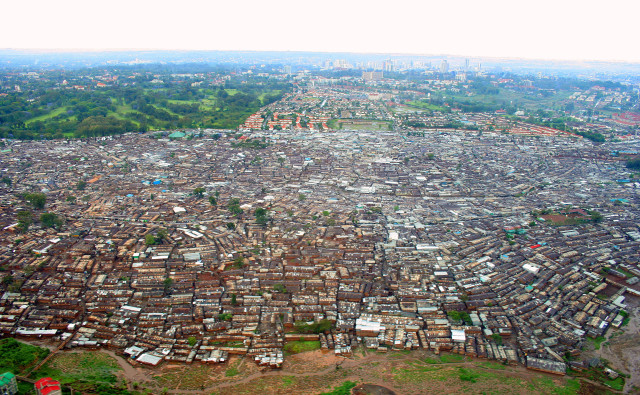
Slums of Nairobi
Nairobi is the capital city of Kenya, and it is a city of contrasts. As the hustling economic and political capital in East Africa, it has shining skyscrapers, luxury estates and vibrant tech start-ups. However, next to this modernity exists some of the biggest and most dense slums in the Africa. Over 60% of Nairobi population lives in informal settlements, occupying about 5% of the residential land of Nairobi.
Again, slums such as Kibera, Mathare, Mukuru and Korogocho are not among the statistics. They are vibrant communities that have tenacity, culture, creativity, and without a doubt, suffering. These settlements have become an image of urban poverty, which demonstrates the growing pains of a rapidly urbanising Africa. This blog takes an in-depth exam of the reality of Nairobi’s slums under 5 key themes: past origins, socio-economy dynamics, conditions of living, community resilience, and policy reaction.

Historical Roots: The Origins of Nairobi’s Slums
To be able to comprehend today’s slums, one should dig into Nairobi’s colonial and post-colonial urban biography. Nairobi was founded in 1899 as the Uganda Railway rail depot and soon progressed to become a great administrative and commercial city under the British colonial rule. Nevertheless, the city was never designed for its African people. Africans were not permitted to own property and live in cities, and those that were allowed, were made to live in segregated zones with bad amenities.
Things did not change drastically after independence in 1963. Urban planning and housing development failed to match increased number of people coming from the rural areas seeking work and improved standard of living. This led to the starting of the informal settlements. Kibera, for instance, a place that was meant to be a settlement for Nubian soldiers under the British rule but grew at such a rapid rate after independence with no Any formal recognition or planning.
Neglect on the part of the government, issues of land tenure and increased rates of population growth fed to the explosive growth of slums. Nowadays, Nairobi slums are a direct consequence of exclusion in history, lack of proper urban planning and socio-political neglect.
The Socio-Economic Fabric: Poverty, Work, and Inequality
The slums in Nairobi are characterised by complex socio-economic forces. The rate of unemployment is high especially among the youth. Statistics shows that Kenya National Bureau of Statistics paints a picture that reveals a rate of about 38.9 % of cases of unemployment among the youth in urban areas and that slums areas are disproportionately impacted. Still, even in spite of that, the informal economic sector flourishes in these places. Activities that are practised by the residents include street vending, tailoring, small scale manufacturing, and transportation (boda bodas and matatus).
For most slum dwellers, they should expect to do backbreaking jobs, for long hours and for low pay (picking casuals, being a domestic, or constructing walls). Much of this is done without any legal protection and the associated benefits. Income uncertainty, combined with high expenses on living, holds most families in a constant state of poverty.
Furthermore, in Nairobi, the inequality is spatially represented-there are neighbourhoods of the wealthy that have amenities such as piped water, security, and good schools that are just mere kilometres from slums where people lack such basic services as running water and sanitation. This sharp difference creates a social menace and highlights structural inequalities imbued in the urban structure of Nairobi. Education and health in slums are the other indicators of these disparities. Even though NGOs and community-based organisations (CBOs) have done their best to fill the gaps, government investment in quality education and healthcare in informal settlements is very little. School dropouts are high; health facilities are congested and lack requisite stock to serve the people.
Living Conditions: Infrastructure, Housing, and Sanitation
The word slum usually evokes pictures of packed shacks, open sewers, and meagre alleys, and sadly, that is not far from the truth in many of Nairobi settlements. Houses are normally constructed from corrugated iron sheets, wood, mud and other junks. These buildings are poorly ventilated, are not insulated and are likely to collapse, particularly during the rainy seasons.
Overcrowding is severe. In Kibera for example an average dwelling can accommodate an average of 5-8 people in a room smaller than 12 metres square. Clean water is not easily available, and in most cases people depend on the vendors who do charge exorbitantly. The water is not always safe and there is constant problem of waterborne disease e.g. cholera and typhoid. No doubt, sanitation is arguably the biggest problem.
It is found in most slums that they do not have a working sewage system. Pit latrines are shared by dozens of households, and more depths are still accessed by the “flying toilets”, i.e., plastic bags used for defecation and tossed into the open. There is no proper waste management and hence pollution and grave health hazards.
Electricity connexion is sporadic as many of them are illegal and dangerous. Fire, mostly brought by faulty electric cables or kerosene stoves, is a common occurrence and wide scale disaster because of the inflammable materials used for construction. Security is another concern. Lack of formal policing and street lighting makes slums central to crime even when various communities have established their own systems of neighbourhood watch.
Community Resilience and Innovation: Thriving Against the Odds
In spite of all the challenges, people in slum communities are not helpless victims of poverty. They are focal points of creativity and social structuring, as well as cultural vivacity. People living in the area regularly organise themselves in the form of savings groups (chamas), women collectives, youth associations, and cooperative societies where people pool resources for support.
Social entrepreneurs in slums are developing tech-based solutions to issues with access to water and recycling of wastes. One of the examples is the Umande Trust that has pioneered bio-centres in Kibera which convert human waste to biogas providing sanitation and clean energy. Art and culture are also good here. Kibera has given birth to musicians who have been at the international level, photographers, and spoken word artists. Community radio stations and youth media collectives empower the residents and present awareness on issues of the community and country.
Education, which is underfunded, is one of the main dreams. Many of the informal schools function at a very low capacity having the motivation of the local educators. Initiatives which are being put in place by NGOs such as Shining Hope for Communities (SHOFCO), and Mathare Youth Sports Association (MYSA) are opening alternative routes for the youth through sports based projects, education programmes and mentorship programmes.
When COVID-19 pandemic hit in, it were these grassroots networks that mobilised relief efforts, distributing food, sanitizers, and information much better than the state. This resilience highlights the vibrant nature of community-based governance and solidarity during the dark times.
Government Policies, Urban Planning and the way forward.
The policy of government towards slums has for decades swung back and forth between neglect, evictions, and partial engagements. Coercive evictions and demolitions, particularly in such like Mukuru and Mathare, has outraged the public and ended up in lawsuits. These programmes tend to evict thousands, without alternative housing provided.
More constructive efforts include the Kenya Slum Upgrading Programme (KENSUP), a programme that was started in the year 2004 with the help of UN-Habitat. It should facilitate better housing in informal settlements, with Kibera being the first place in focus. Nevertheless, the programme has been mired in corruption and delays and is not in tune with the needs of the society.
The other promising initiative is the Mukuru special planning area (SPA) issued in 2017. It draws together the government agencies, NGO, urban planners and residents to co-design a redevelopment plan for Mukuru that comprises land tenure reform, infrastructure, health and education. It entails a change from the top-down interventions to participatory planning. Nevertheless, these attempts are not sufficient either. In order to have sustainable impact, there should be political will which needs to be sustained constantly, affordable housing in addition to access to credits and integration of slums into the city’s wider infrastructure. Policies have to be inclusive, but also data-driven and centred on dignity and human rights.
The reform of land tenure is especially important. Most occupants of slums do not own the places they live at hence making them susceptible to evictions. A clarification of land rights and provision of secure tenure can release investments in improved housing and services to the tenants themselves.
Women and Gender in Nairobi slums’ Navigating Double Marginalization
In the slums of Nairobi the poverty is highly gendered. Women and girls live under the twin aspects of poverty and systemic gender discrimination. Although all inhabitants of informal settlements are faced with the challenge of limited access to basic services, the women are worse affected because of the traditional gender roles, insecurity, and absence of gender sensitive urban policy.
Female involvement in economic activity is high in informal settlements, but under severe and exploitative circumstances. Most women are involved in small scale vending, domestic work or run home based businesses such as tailoring hair salons and food carts. But without access to credit facilities, formal training, nor secure premises their income generating potential remains limited. In addition, there are gender pay gaps in informal work.
Gender based violence in slums (GBV) is amongst the most critical challenges faced by women in the slums. The unsafe nature of the housing, inadequate lighting and lack of police protection are the reasons for wild sexual and physical abuse. We have no private sanitation facilities, especially toilets and bathing areas, leaving women and girls at constant risk and especially at night. This is where such community-based groups as Wangu Kanja Foundation and FIDA Kenya play in places like Mathare and Korogocho to give legal aid and psychosocial support to the survivors, but the services are vastly underfunded.
Girls’ education is another concern. Many girls leave school because of economic pressures, early pregnancy or to wash at home. Most girls lack access to menstrual hygiene products and tend to miss school or are humiliated. Agencies such as ZanaAfrica and Akili Dada have come in to work on this, but systemic barriers are firmly in place. Women also bear the hidden costs of unremunerated care —care for children, the old, or the sick, particularly within the context of illnesses such as HIV/AIDS and tuberculosis that are endemic to these regions. This labour, while crucial to family survival, is neither economically acknowledged nor directed by policy.
Those challenges notwithstanding, it has been found out that slum women are indeed powerful agents of change. From top of savings groups and cooperatives, to those who fight for safe public places and those that run community clinics, women are at the center of grassroots development. Policies centering on slum upgrading have to take a gender lens approach in Nairobi to avoid leaving the women in the city behind as the urban transformation take place. This demand takes the form of safety, economic empowerment as well as access to reproductive health services.
Youth and the Future: From Marginalization to Mobilization
Nairobi’s slums are overwhelmingly youthful. More than 70% of the Kenyan population is under 35 years old and much of young population lives in informal settlements. These children, who are so often observed through the lens of vulnerability or criminality are, in truth, an incredible driving force of change – if given the right opportunities.
Slum youths are highly unemployed and underemployed. Even the possessors of secondary or tertiary education have trouble finding formal jobs. The informal economy receives many people, but the lack of job security and poor pay discourages future contacts. With very few opportunities of going up, others go into crime, drugs, and radicalization, a trend that has raised eyebrows among the security agencies and policies makers.
However, none of this is the full storey. Nairobi’s slum youth are also entrepreneurs, artists, coders, activists and community leaders. iHub, Nairobits, Tunapanda Institute type of initiatives offer digital skills and tech training, ready-made youths for job opportunities in the growing tech sector in Kenya. These programmes show how digital engage can change lives and reduce inequality.
Sports and arts have also come out as important let-outs for youth expression and empowerment. Organisations such as Mathare Youth Sports Association (MYSA) use football as the medium for educating, environmental sensitization and leadership training. In their own ways, music, graffiti, spoken word, and photography provide material for both storytelling and advocacy—provide voice for youth on matters affecting their communities.
Slum youth political mobilisation is also increasing. At the grassroots, case studies such as Sauti ya Mtaa (“voice of neighbourhood”) or PAWA254 have empowered youth to fight corruption, pressure for service delivery and participate in civic education. These movements test the belief in the apoliticality or apathy of slum youth and demonstrate their ability to lead social change. There are challenges the youths are still facing; these include; police harassment, lack of political representation; and being pushed out of the formal decision-making process. Curfews and anti-gang operations tend to pick on the youth in an indiscriminate manner, spurting cycles of mistrust and marginalisation.
In order to realise the potential of Nairobi’s youth, policies cannot be token at best. This includes investment into education, vocational training, and startup financing and inclusive urban plan. Young people require safe places, mentorship status, and opportunities to sit at the table where decisions are made. Empowering the youth in the slums is not a social justice issue – it is an economic necessity for Nairobi’s future stability and innovation.
Conclusion
The slums within Nairobi city are an embodiment of an urban paradox – a heritage of historical injustices and systemic indifference, and a failure of urban planning. They are worlds full of deep suffering. Overpopulated and poor housing, ubiquitous insecurity, absence of most basic services and lasting socio-economic exclusion. However in this hardship, there is an unprecedented resilience.
These communities are the expressions of survival in adversity and self-determination in adversity. Vice more than any other factor, the conditions within Nairobi’s informal settler areas do not simply exemplify the realities of poverty, but also the deep failures of urban governance and planning. They are a stark reminder of the need for inclusive development, fair sharing of resources and inclusive policy formulation. Instead of being peripheral worlds, the slums are a very important constituent of the city’s economy and cultural identity. Their further neglect is not only unfair – it is unsustainable. It is not only morally desirable, but also strategically imperative to come to the aid of their challenges for the future of Nairobi.
The way forward has to be comprehensive, inclusive and participatory. It is impossible for Nairobi to be a sustainable and equal city without the considerations of its informal settlements. Not only investments in affordable housing, infrastructure, education, and healthcare should go hand in hand with community involvement and legal changes, but working in favour of human dignity, too. In the ghettos of Nairobi beat the pulse of the city; its workers, its artists, its entrepreneurs, its future. Leveraging potential and developing such people is not only a moral obligation – it is the road to Nairobi’s prosperity.
Also Read: Slums of Nepal






-ySWGlp0vgc.jpg)











LEAVE A REPLY