

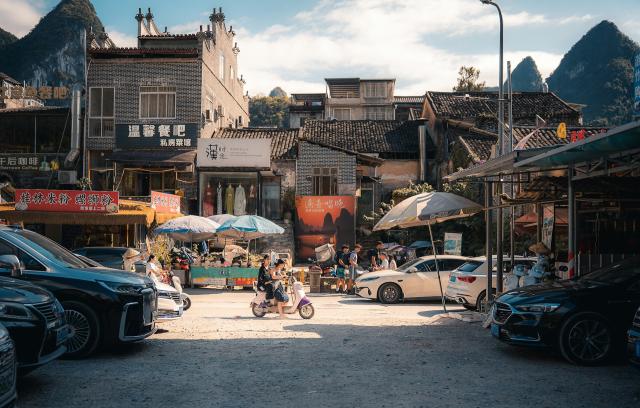
Slums of China
Urbanisation in China has been very rapid in the last few decades and this has made the cities of this great nation to become extremely busy metropolitans. Nevertheless, this is a reality not apparent under glittering skyscrapers and modern facilities: the existence of urban slums. Although China has witnessed remarkable developments in terms of the economy, urban poverty and informal settlements are daunting issues. These slums are usually known as “urban villages”, marked by overcrowded housing, poor infrastructure and lack of even basic necessities.
It takes more than a mere observation of the apparent poverty in the shadow of sky-scraping buildings to understand the phenomenon of slums in China. It requires a further examination of what has historically created these informal settlements, the socio-economic pressures behind them and the government responses to such pressures. China’s slums are not a matter of negligence, but the product of a complex set of forces of urbanisation, migration, and systematic inequality and development priorities. To understand their reality these people need to reflect on the lives of individuals who live in such territories, the structural conditions they are confronted with, and the policy decisions that powers that be made to address these realities.
The rise of slums in contemporary China closely correlates with the change in the economy from the rural to urban-industrial dynamo. Mass resettlement out of rural areas and into the cities has occurred because of the Chinese economic reforms since late-1970s. Millions of people have flocked to urban areas in the search of employment, and hence there is huge demand for the cheap housing.
So nevertheless, under the tyrannous hukou (household registration) system, many rural migrants were not able to access public housing, education, and health care in urban areas on formal terms. Consequently, they are left with no option but to move into informal or semi-formal communities which are commonly known as “urban villages” or chengzhongcun (where “cheng” means city and cun means village) – literally villages within city.
These settlements are usually materialised by high population density, poor buildings and not so perfect infrastructure. However, they are also living environments of human resilience. They give footing to millions of workers, small scale entrepreneurs and service providers who are vital to the urban economy. In these slums, people find informal economies — street vendors, home businesses and labour markets provide people with both income and community. Spite of the physical and institutional constraints, slum is a dynamic place where migrants adjust and make a high contribution to the life of the city.
There are various efforts, which have been made by the Chinese government so as to contain the problem of slums, mostly in massive form of destruction and redevelopment programmes. Such initiatives are usually meant to modernise city landscapes, improve living conditions and drive economies up. Nonetheless, the efforts have also caused forced evictions that were not followed by proper resettlement plans and the eradication of long-standing communities. Much redevelopment favours the commercial interest at the expense of the rights and needs of the current residents with social dislocation and the growing public concern about urban inequality as an outcome.
This blog dives into the complex world of urban slums in China – their formation and driving socio-economic forces and ways in which policies are changing the trajectory of their future. In the process, it reveals much beyond what slum dwellers experience but also the wider implication for urban planning, social justice, and inclusive development in one of the world’s most rapidly transforming societies.
The Emergence of Urban Villages
Urban villages or “ chengzhongcun” is a peculiar feature in the urban setup of China. They came from rural villages that were surrounded by the growing cities but still managed to hold their collective ownership of the land. As cities expanded, these villages became the islands of the urban area, which were not usually incorporated into municipal schemes both in planning and provision of services.
The inhabitants of the urban villages usually consist of migrant labourers, low income earners, among others who cannot afford formal housing. Such regions provide cheap houses, which come however at the price of poor living conditions such as lack of sufficient sanitation, and insufficient clean water and overcrowded houses. The non-formal character of urban villages has excluded them from official recognition thus giving the residents difficulty in accessing public services and legal protections. Nevertheless, the urban villages are of great significance to the smooth operation of cities in terms of offering affordable housing and sustaining the informal economy.
Socio-Economic Factors are Triggers of Slum Developments
Some of the socio-economic factors, which contributed to development and growth of slums in China, are discussed below. One of them is the rural-to-urban migration that is being spurred by the quest for better employment opportunities. Often, migrant labourers are unable to access formal housing due to the household registration system, or "hukou,” which links benefits up with one’s origins.
The hukou system denies migrant’s access to education, healthcare and social security in urban areas and as a result leads to many migrants seeking accommodation in informal settlements. What is more, rapid urbanisation has also gone much ahead of urban facilities to avail the necessary affordable housing, hence the expeditiousness of developing slums. The gap between the rich and the poor and the high cost of living in cities are the contributing factors to the problem. Low income earners and their families are normally unable to afford formal housing options thus settling on urban villages as the only viable housing alternatives. The absence of policies for affordable housing and meagre social safety nets continue to ingrain slums in urban regions.
Living conditions and problems in slums of urban centers.
Life in urban slums of China is characterised by many challenges. Overcrowding is a widespread problem, and various families end up living in small living rooms in a place. Absence of adequate sanitation facilities and wastes management systems brings health threats such as the spread of diseases. Infrastructure is normally poor in such areas with small alleys, poor lighting, little access to clean water and electricity. Fire hazards can be observed because of the use of poor-quality building materials and lack of fire safety procedures.
The urban slum dwellers also find themselves in social predicaments in form of discrimination and marginalisation. By not being legally acknowledged and granted property rights, they are exposed to being evicted and translocate without proper compensation and relocation opportunities. In spite of all these hardships, the urban slums are vibrant communities with strong social networks. The residents commonly depend on support systems based on mutuality and informal economies to support their livelihood.

Government Policies and Redevelopment Efforts
The Chinese government has adopted different policies that are meant to tackle the challenges that are brought about by urban slums. Renovation efforts have targeted the razing down of urban villages to put up modern housing and infrastructure. These initiatives seek to upgrade the living conditions and mainstream the slums into the regular urban fabric.
However, such redevelopment projects have been criticised due to uprooting people without compensating them properly and not presenting alternative housing options. The loss of affordable stock of housing has also intensified shortages of housing for the low income groups. The more inclusive methods that have been gaining popularity in recent years include upgrading the existing infrastructure and recognising urban villages legally. Certain policies have been established with the aim of enhancing access to public services, providing property rights and engaging the locals in decision-making processes.
The levels of success that these initiatives record are not equal among different cities, whereby some employees have produced better results through community involvement and customised solutions. However, there are still issues involved with the balance between the aspirations of redevelopment and the needs and rights of slum inhabitants.
Case Studies: Urban Slums in Major Cities
From a close look at individual cases, it can be understood that slum development and redevelopment in China is a complex process.
Guangzhou: The Guangzhou is the city with rapid urbanisation whose population teems with various urban villages which are the direct consequence of the rapid growth of the city. These are crowded areas that lack proper urban arrangement and are now the bane of the city’s socio-economic fabric. The government, in reaction, has introduced several redevelopment programmes that have comprised of both demolitions based programmes as well as the initiative to improve the existing facilities.
While some of the initiatives are being made with the intention of removing these settlements to make way for modern developments, others are being carried out to improve the life in those settlements without destroying the tightly-knit networks that the people have built. A successful project has given precedence to improving infrastructure –sanitation, transport and public services- while keeping the social fabric people depend on. Such more reflective redevelopment initiatives are viewed as a step in the right direction towards making our cities more inclusive in balancing economic booms with local communities’ needs.
Beijing: The capital city has evinced quite a number of challenges in incorporating the urban village in its urban planning plan. Renewal projects to upgrade these places have often displaced migrant labourers, causing concerns of equity and inclusion. As they are torn down to give space for new development, most of the residents lose their appropriate resettlement alternatives or proper compensation for the lost property.
This has led to increased social inequality because the displaced workers are often shoved out into the outskirts of the city or forced into the informal houses where such basic services are unavailable. Absence of a holistic approach that places priority on the development and welfare of the marginalised populations points to the need of more inclusive urban policies that would ensure the rights and interests of all population are provided for, particularly those who contribute extensively to the city workforce but end up being on the margins of urban living.
Shenzhen: Shenzhen being a fast developing city has adopted creative ideas in redeveloping the urban villages. Projects target at saving affordable houses and engage residents in planning procedures as this leads to better sustainable ends.
Such case studies prove the necessity of the context-specific strategies and the conclusion that inclusive policies are of great importance which should focus on the well-being of slum residents.
The work of civil society and community initiatives.
Civil society organisations, as well as the community-based initiatives, are vital for addressing the difficulties that the residents of urban slums face. NGOs have been effective in promoting the rights of the residents, offering legal support, and improving people’s access to public services.
Community-driven initiatives have prioritised the enhancement of living standards by means of participatory planning, improved infrastructure and setting up social enterprises. These efforts enable the residents to be proactive in determining how their communities should become, as well as encouraging social harmony. Collaborations between civil society and residents and local governments have shown promise as regards the inclusive and sustainable redevelopment of slums. Such partnerships focus on bottom-up practises that take into consideration the needs and aspirations of slum dwellers.
Future Perspectives and Policy Recommendations
The remedy to the problem of urban slums in China calls for a multifaceted approach that involves policy reform, an active community, and sustainable urban planning. Key recommendations include:
- Reforming the Hukou System: Decoupling social benefits from household registration can foster access to services among the migrant workers and does away with reliance on informal settlements.
- Expanding Affordable Housing: Development of affordable housing projects and rental control can help address the shortages in housing of the low-income populace.
- Inclusive Urban Planning: One way of ensuring that redevelopment projects reflect the needs of slum residents and that communities are not broken in their networks is by involving them in the planning processes.
- Strengthening Legal Protections: Providing the urban village residents with property rights and legal recognition may improve security and avoid forced evictions.
- Supporting Community Initiatives: Supporting the community-led projects with resources and support creates empowerment and sustainable development.
Through the implementation of these methods, China will be in a position to eliminate urban slums and promoting an equitable growth of the urban areas.
Conclusion
In many ways, the emergence of slums in China’s rapidly developing urban centers highlights the dangers of increasing urbanisation and an increase in divergent socio-economic levels. In spite of China’s liberal strides in economic expansion and establishment of infrastructure, out of joint is the distribution of benefits of urbanisation. A large part of the population, including migrant workers and the poor, still live in the marginalised areas of informal settlements. These are not just physical deprivation zones that comprise these urban slums. They denote underlying systemic issues concerning being excluded, inequality, and policy neglect.
Solving the issue of urban slums does not equate to the removal of ramshackle buildings in the urban areas or transfer of people to the urban fringes. Instead, it requires a multidimensional approach, which is all-inclusive, not cosmetic in nature. What is needed is a paradigm change in urban development; one which embraces thoughtful policy reform, engagement of the community, and consideration of social equity in development of and execution of urban development.
Underlying this approach is the understanding that slum dwellers are not temporary visitors, but people making significant contributions to the economy and culture of a city. They construct the cities, power the informal service sector and energise the local economy. Of course, negating the presence of these groups or relocating them without support worsens inequality in cities and perpetuates cycles of poverty that are more difficult to escape. Therefore, the recognition of the functions (and, chiefly, of the rights to housing, services, and security) that the slum dwellers play is of utmost importance for the creation of a just and durable urban future.
As the paradoxes of slum development and perpetuation are not easily solved, policy reform should come first. This involves reviewing and remoulding the hukou (household registration) system, which does not allow migrants to use needed public services in urban areas. Low-income population will need viable, secure housing options and affordable housing strategies need strengthening. Urban planning should also be participatory so that it can reflect the feelings of the people, which affect their homes and livelihoods.
Furthermore, civil society cannot be underestimated. Non-government organisations, organisations in the community, and advocacy groups fill the gap between government institutions and the marginalised populations. They deliver necessary services, support amplified voices of residents, and hold redevelopment efforts accountable. Together civil society, local authorities, and members in the community can come up with more sustainable and human-centered solutions.
Eventually, eradication of slums in urban areas is not happening once in a day but is a continuing affair. It is long-term, dialogic, and flexible in nature. But through synchronisation, understanding, and the common goal of creating inclusive growth, it is perfectly possible to make China’s cities places in which opportunity, dignity, and well-being can be enjoyed by all. Through this association of economic advancement with social justice, China has the opportunity of providing a world model of how modern urbanisation can be teaming yet just.
Also Read: Affordable Housing System for Shanghai China








LEAVE A REPLY