

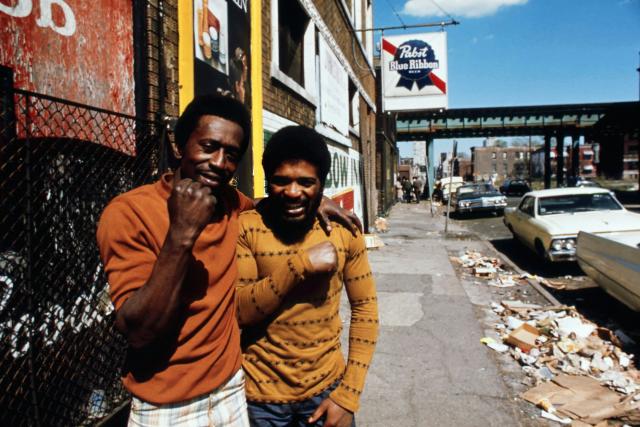
Slums in America
When we talk about slums, our mind is likely to call forth the images of sprawling informal urban settlements in the southern cities such as Mumbai, Nairobi or Rio de Janeiro. Slums are, however, not only found in the developing countries; they also exist in many places of the America both north and south. In the United States and Latin America, the slums appear differently driven by historical, economical, and sociological factors. Although the informal settlements and the substandard accommodation conditions in the American cities may have a different look or size when compared to those abroad, they are riddled with many of the same issues at their core: poverty, over-crowding, poor infrastructure, absence of services, and social exclusion.
In this blog, we look at the nature of slums in America by analysing their historicity, their features, their reasons, and their consequences. We will discuss the phenomena of urban poverty, lack of housing and informal settlements in U.S., as well as go in detail about Latin American favelas and barrios. The aim is to come up with a discerning perception of how slums impact millions of people in the Americas and raise the issue of current attempts to make the conditions of life better. This discussion breaks stereotypes as well as the need for all surroundings-based national policies on urban planning that account for structural inequality and promote inclusive, sustainable cities.
Historical Context of Slums in America and its Development
Slums in America have long historical ties leading to urbanisation, industrialization as well as patterns of migration. The advent of slum-like neighbourhoods in the United States started in the 19th and early 20th century when boom in industrial activity saw influx of waves of immigrants and rural citizens to cities such as New York, Chicago, and Boston. Such migrants found themselves in cramped living conditions, back in their shacks, or worse yet, crowed into filthy tenement housing, lacking any form of ventilation or sanitation and built with dangerous construction material. Places such as New York’s Lower East Side were associated with urban poverty and congestion with entire families living in single rooms.
This model was repeated in numerous American cities, where industrial economy created the urban area. Slums developed around factories and docks further separating working-class and immigrant neighbourhoods from richer communities. Racial segregation exacerbated spatial inequalities since the black people and those of other minority groups were relegated to the substandard living conditions by highly discriminative practises such as redlining and restrictive covenants.
The formation of slums, popularly referred to as favelas, barrios, and colonias depending on the country, emerged differently but with the same processes of inequality, in Latin America. Urban migration, limited supply of formal housing, and exclusion from economic opportunities meant that many of the low-income families moved into marginal lands, establishing informal settlements with no legal entitlement, and basic services. Mega-cities such as São Paulo, Mexico City, and Buenos Aires emerged with vast slums that comprised of millions.
The historical development of slums in America shows a long trend: marginalised groups are relegated to the peripheries or ignored inner city precincts, living in precarious situations that are representative of larger corruptions in society and economy.
Features and Way of Living in American Slums
The attributes of slums in the Americas are highly diverse because of different urban shapes, economic environments, and organisational structures, but there are some common denominators. In the United States, slums are found as pockets of heavily concentrated poverty in the cities, often termed as “ghettos” or “projects”. Such areas are characterised by an aged, overcrowded stock of housing, substandard maintenance, and poor access to good services like schools, healthcare, and public transportation.
Some of the American slums are characterised by high rates of unemployment, crime, and social dislocation. The history of the systemic racism, deindustrialization, and urban disinvestment had left neighbourhoods in such cities as Detroit, Baltimore, and St. Louis facing blight and the economic downturn. Despite all these challenges, these communities are rich cultural centers where people’s social ties and strength are highly developed.
On the other hand, Latin American slums are usually informal settlements developed by the inhabitants bit by bit with whatever resource available. These neighborhoods usually have no secure land, and there are no basic infrastructural facilities such as water, sanitation, electricity, and roads. The overcrowding is great as densely families live in the small, self-built homes. Public services are intermittent or non-existent, while people run the danger of environmental hazards, like a landslide or flooding.
Irrespective of the problems, Latin American slums are centers of informal economic and social activities. Community organisations and local leaders are significant in working for improvements and for social support. Nevertheless, marginalisation of the people dwelling in slums often gives them exclusion from the formal political practises and city planning. The comprehension of these living arrangements exposes the need for policies that would enhance housing and infrastructure, social inclusion, but respect the agency and dignity of slum residents.
Reasons for Slums in America. Economic and Social Drivers
Formation of slums in the Americas is complex and comes with a mixture of economic, social and political issues. High rate of urbanisation is one of the major causes. as the cities expand faster than their formal housing and infrastructure potential, proliferation of informal settlements and deteriorated neighbourhoods ensues.
In the United States, economic restructuring, and in particular the erosion of manufacturing and industrial employment, has come down hard on poor urban residents. Deindustrialization had caused a lot of loss of employment, poverty and depopulation in inner cities. While discriminatory housing policies such as the redlining limited access to mortgages and homeownership for African Americans and other minorities locking many in overcrowded rental or public housing project with unsuitable living conditions. Many urban renewal and highway building developments in the mid twentieth century displaced minority communities into the concentrated poverty areas. Such policy disturbed social networks and did not provide low cost housing well enough, deteriorating slums.
In Latin America, the underlying issues are long-term inequality and rural to urban migration as well as the inability of governments to offer affordable housing alternatives. Millions flock into cities in search of economic opportunities only to find themselves locked out from the formal housing markets owing to their high costs and bureaucratic barriers. This makes them have informal settlement in unsafe or marginal lands. Economic marginalisation is exacerbated by poor urban governance, absence of tenure security in land, and poor investment in infrastructure and social service in the slum areas.
These structural factors reinforce the poverty-growth of informal settlements cycle. Addressing slum formation means addressing such underlying economic and social drivers of slum through inclusive growth, equitable housing policies, and proactive urban planning.

Impact of slums on urban America – social and economic.
Slums in America have severe social as well as economic effects on both the slum settlements and into the wider urban fabric. For the people who live in slums, living in such conditions usually involves daily struggles with health hazards, threats, and lack of prospects. Overcrowding and lack of sanitation leads to disease outbreaks and lack of access to education as well as employment cripples upward growth.
Crime and violence tend to be common in slums where such conditions as poverty, social disenfranchisement, and lack of state presence conspire together. This vicious circle of marginalisation ensures that the threat and instability deters investment and continue to make the living conditions worse. However, these are also, cultural-rich, resilient, and community solidary neighbourhoods.
Slums economically can act as both barrier and drive to urban development. On the one hand, they capture failures in housing markets and rule and related cost of alleviating slum condition can be high. On the other, slums offer cheap housing to labour forces that are integral to urban economies and efforts to survive and provide services in the informal economic activities in slums. The strategy for the policymakers here is to convert slums from liabilities to assets by upgrading interventions that make residents feel better off, economically more active and socially more integrated. This would necessitate a balancing of the immediate needs as opposed to long-term urban development objectives.
Expenditures and Actions to Deal with Slums in America
Governments and civil society has put various efforts in handling slum condition in America with mixed results. Some of the efforts in the United States are the public housing programmes, urban renewal programmes, and the community development programme to upgrade or replace slums. The public housing project of the New Deal in the1930s was the first step of state intervention in the field of housing with low prices. Later, such programmes as Housing Act of 1949 were targeted at eliminating slums by clearing and redeveloping them.
Numerous such programmes have been criticised though for displacing residents, destroying communities, or outputting new segregation and poverty concentration. Focus has been shifted to revitalization, mixed-income housing, and community-driven improvement to the total redevelopment to prevent past errors. In Latin America, there are initiatives which aim at upgrading slums, and it targets at upgrading infrastructure, legalising land tenure and increasing community participation. Some successful ones are Brazil’s Favela-Bairro and Colombia’s integrated urban projects in Medellín. Several organisations such as UN-Habitat have helped participatory upgrading efforts in the region.
Other important stakeholders in championing the course of slum dwellers’ rights, provision of goods and services, and community empowerment prove to be non-governmental organisations and grassroots groups. With the increased recognition of slums as a part of cities, there should be inclusive, rights-based, and sustainable policies.
The Future of Slum Development: Innovations and Sustainable Solutions
Since slums keep developing as an urban phenomenon in America, identifying sustainable and creative solutions that will improve living conditions is an urgent issue. Sustainable slum development lies in the implementation of strategies to combine technological advances, inclusive urban planning and environmental sustainability, and empowerment of residents.
The potential exists in which technology can be used to improve infrastructure and service delivery. For example, digital mapping and geographic information systems (GIS) can undergird a better understanding about the needs of the informal settlements, the facilitation of targeted interventions. Mobile technology allows residents to report such issues as water shortage and waste management problems on time which is a great response by the local authorities. Further, renewable energy approaches such as solar energy are now increasingly becoming used in slum areas to give reliable, affordable electricity thereby limiting dependence on dangerous or costly alternatives.
Sustainable urban planning is important in order for slum upgrading to be in line with citywide development objectives. It includes inclusive integration of informal settlements into the formal city structure, enhancing connexion by creating transportation links and developing areas that contribute to high-quality life. By utilising mixed use developments, economic opportunities can be generated in proximity to residential areas, thereby reducing commute time and proximity to jobs.
A slum upgrading process should also have environmental sustainability at the core. Nobody locations many slums in risk areas; prone to flooding, landslides, or pollution. Introducing climate-resilient infrastructure, like good drainage systems, green spaces and flood defences etc can reduce risk, and enhance health outcomes. In addition, waste recycling and sanitation advances can solve long public health problems.
Out perhaps the most remarkable, the success of slum development in future will rely on expanding community involvement and empowerment. The most successful technology and infrastructure improvements occur when accompanied by capacity-building programmes that allow the residents to take care and control of the improvements. Building local leadership, as well as building strong community organisations, guarantees that the interventions are culturally acceptable and long lasting.
Teamwork between governments, non-governmental organisations, private actors and communities is necessary to mobilise resources and knowledge. New sources of financing such as social impact bonds and micro finance can be used to scale solutions and reforms in policies that ensure land tenure stability and investment give an assurance to the residents..
Conclusion
America’s Slums – which constitute the United States as well as Latin America – are dynamic urban realities that are laden with historical inequalities, pressure from the economics sphere, and social dynamics. Although the situation in these slums may differ from one region to another and from one country to another, the essential practical difficulties that these poor communities face are surprisingly coherent. These include endemic poverty, poor housing situation, limitation in access to basic services, and social isolation. These issues are not individual problems, but aspects of larger urban issues derived by complex historical and modern forces.
To understand slums in America, one has to understand the fact that just because they lack physical deprivation or informal construction doesn’t mean they do not exist, and it is a symptom of longstanding structural inequalities. Uneven development, unemployment, and lack of access to formal housing markets push many people to such marginalised neighbourhoods due to the influence of the economic forces. Simultaneously, social factors such as racial and ethnic discrimination, migration trends, and the political ostracization also perpetuate exclusionary loops. These conditions culminate to entrap slum dwellers where they live in situations depriving them of basic rights and opportunities for prosperity, instead.
Dealing with the challenges emanating from slums requires a thoughtful and all round solution. It entails leaving behind the attitude to treat slums as issues to be swept under the carpet and into recognising slums as components of the urban face that should be respected, attended to and included. This demands for participatory and inclusive policies which will empower residents and not displace them. Investment in Infrastructure, social services and economic opportunities needs to be a constant process so as to enhance living standards sustainably. It also involves the recognition of agency of slum dwellers themselves whose local knowledge and resilience can be leveraged out to co-create solutions suitable for their specific contexts.
The urban predicament and the invitation to rethink development and service of cities are both elements of perseverance of slums. Slums are the display images of the shortcomings and deficiencies of the urban planning, housing policies and governance arrangements. However, they also are potential test-beds for innovation in the process of urban development – spaces where inclusive, integrated and human-centered solutions can be trialed. Some of the experiences that have been yielded from different cities in America and elsewhere have shown that the options of community-led and participatory upgrading programmes could contribute to great housing, infrastructural, and social cohesion improvements.
From decades of lessons it has become apparent that slum upgrading is not only physical upgrade, but a social change. Secure tenure, improved access to education and healthcare, and life-sustainable livelihood options, and social inclusion are critical aspects. A sense of ownership and dignity, which is achieved through obtaining a dignified home rather than a mere shelter, results when slum residents are consulted when it comes to decision-making processes, this contributes to vibrant communities.
Eventually, the problem and chance is how to direct the American cities to models of development, where social equity and sustainability are key. By including slum settlements in wider urban networks instead of excluding or displacing them, cities can guaranteed that every citizen no matter their income and background is provided with decent and dignified living conditions. Such a vision needs a commitment of governments, civil society, and private sector to partner with the communities in the long-term endeavour.
Also Read: A Review of Slum Housing Policies in Mumbai



-ySWGlp0vgc.jpg)











LEAVE A REPLY