

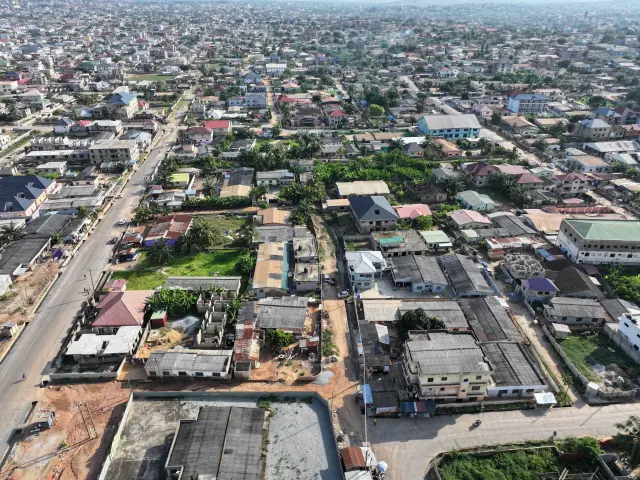
Slums In Accra: How Informal Settlements Are Growing and What Needs to Change
The problem of urbanization is changing cities of the developing world and offering both opportunities and severe challenges. The most obvious consequence of urbanization is the increase of informal settlements, also referred to as slums.

Such communities developed are usually
a result of an increase in growth rate of cities beyond the capacity of their
infrastructure, housing systems and systems of governance to handle. It has
been a trend growing in most of the African cities, since individuals flock
into urban centers in search of employment, education, and better living
standards in rural areas.
A good example of this transformation is the capital of
Ghana, Accra. Accra has evolved in the last decades to be one of the most
significant economic and cultural centers in West Africa. Its population has
grown at an alarming rate as due to both natural population growth and rural to
rural migrations. Although this development has added to the economic
operations and cultural diversity, it has also caused a considerable strain to
the housing market and the city infrastructure.
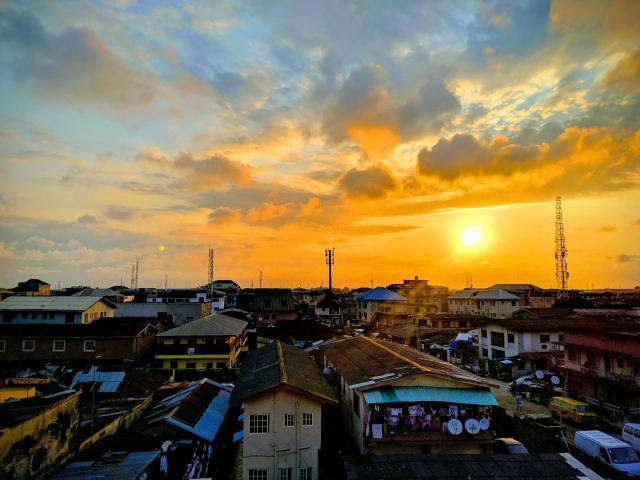
This has resulted in the growth of informal settlements in
most of the areas in Accra. All these are normally defined in terms of
congested housing, restricted access to clean water, poor sanitation systems,
and poor waste disposal. The residents do not have legal possession of the land
they are living in and can thus be easily evicted and their potential to invest
in permanent housing enhancement is curtailed. Slums despite all these
challenges, have thousands of people that make a contribution to the city economy
by working informally and having small businesses and providing services.
Housing is not the only issue that is causing the increase of slums in Accra but also indicates deeper structural problems with regard to economic disparity, urban development, governance, and environmental control.
Appropriate living areas are not readily available in the official
housing sector; thus, informal settlements usually develop to accommodate poor people living in the area. Meanwhile, the lack of access to
education, jobs, and social services may complicate the process of people leaving
these communities.
The blog discusses the causes of slum expansion in Accra,
the social and environmental dilemmas that people have to endure, and the
nature of the policy-oriented changes and development policies that should be
implemented to shape more inclusive and sustainable city communities. Through
these issues, it is possible to determine significant steps to the direction of
a better life and make sure that urban development is beneficial to both the
city residents.
The Rapid Urbanization of Accra and Its Impact on Housing
The high urbanization process in Accra has been among the
strongest factors contributing to the growth of informal settlements. The
population of the city has increased tremendously over the last few decades, with people in the rural regions relocating to the city in pursuit of improved
opportunities. In these cases, urban areas tend to have more job opportunities,
education facilities, and better healthcare facilities than in rural areas.
This has made the decision to move to Accra by many individuals and families to
be a gateway to a better future.
Nevertheless, population growth has posed serious challenges to housing and development of infrastructure due to the pace of population growth. The city has been unable to create sufficient affordable housing to be occupied by the rising population of citizens.
Although new residential
projects are still emerging in some parts of Accra, most of its residential
projects are targeted at the middle and high-income families as opposed to low-income employees. This inequality places a significant percentage of the
population in a situation where they cannot access formal housing.
The price of renting or buying formal houses is simply too
high to many migrants that arrive in Accra. Rental agreements may involve the
payment of advance and deposits which are beyond the reach of the low-income
earners. Lack of affordable housing compels a good number of individuals to
seek other living places. The informal settlement offers quick-fix, although
the conditions under which people live might be very demanding.
These settlements are usually constructed on the unutilized
or marginal land like riverside, wetlands or on government land that is owned
by the government. People make temporary shelters using cheap materials such as
wood, metal sheets, plastic materials and recycled material. Although these
buildings are a source of shelter, they are not always durable and weather
proof. Flooding will be very disastrous to the houses and even the safety of
the people during heavy rains.
Besides lack of housing, growing populations at high rates
strain the state services. Sewage systems, water supply systems, transportation
systems and waste management facilities might fail to match demand. Informal
settlements usually have limited access to these services or inconsistencies.
The residents can use community water, informal power supply or informal
dealers to obtain the essentials..
The rapid urbanization in Accra indicates that there is need
to have more inclusive housing approaches. The rising disparity between
population and housing provision can be resolved through the development of
affordable housing programs, better urban planning systems, and infrastructure
development. Without these, there is a high possibility of informal settlements
growing slowly because there are new individuals arriving to the city in
pursuit of opportunities.
Economic Inequality and the Rise of Informal Settlements
Economic inequality is an important factor in development of
slums in Accra. Although in recent years, the city has witnessed economic
development, the fruits of the economic development have not been distributed
equally among the residents. Low incomes, unstable employment, and access to
financial resources remain a problem of many people. All these situations have
contributed to low-income households inability to afford formal housing or
attaining stable living conditions.
A good number of informal settlement residents are employed
in the informal economy sector. This encompasses employment like street
vending, minor trading, construction, domestic services and transportation
business. Although these jobs offer critical income earning opportunities, they
can be described as low paying jobs, working odd hours, and lack of job
stability. Lack of economic stability can leave the family incapable of
financing the requirements of formal housing.
The other cause of inequality is the inaccessibility of
credit and financial services. The poor people with low income do not have the
documents or collateral required to secure loans at the banks and other formal
financial institutions. They are unable to invest in property or erect
permanent housing units without having access to credit. This makes informal
settlement the most convenient space to stay.
There is also economic disparity in terms of access to
social mobility and public service. The better-off the neighborhoods in Accra
are normally better characterized by superior infrastructure such as paved
roads, proper electricity, water supply and medical infrastructure. Conversely,
informal settlements do not necessarily have such basic services which makes
life harder to the locals.
Slum children can be subjected to high obstacles to
education. The families who have problems with maintaining the basic living
costs might not afford school fees, school uniforms, and learning materials. In
other instances, children are obliged to take up jobs to help in sustaining
their families. This minimizes their likelihood of finishing their schooling
and minimizes their prospects of working in the future.
In spite of this, informal settlements tend to have good
community networks and economic activities. The community backs one another in
terms of community resources, the community businesses, and small savings.
These networks assist individuals to endure tough economic times and generate
space on small-scale entrepreneurship.
Urban Planning Crashes and Governing Problems.
Urban planning systems are very important in the developmental process of cities, in most of the cities which are rapidly developing; planning institutions are unable to match with the population growth.
In Accra, urban governance and planning have been found to be weak, and
this factor has contributed to the prevalence of informal settlements. Lack of
co-ordination of government agencies and old planning policies and lack of
resources have complicated the effective control of the growth of the city.
Complex land ownership and land administration is one of the
key challenges. The land ownership in Ghana is usually a mixture of the
customary, the private, and the government authorities. Such a complicated
system may cause misunderstanding and disagreement about the right of a
specific piece of land to use or develop it. This has led to a high number of
the urban population living in informal occupancy of land.
Informal settlements are bound to emerge when the planning
systems do not give ready and affordable land to the development of housing.
Individuals who fail to acquire land titles through courts can go ahead to
construct houses in places where regulations are not strictly applied.
Gradually, the settlements grow by the inflow of people and by the building of
new constructions.
The other governance issue that is to be considered is
regarding the enforcement of building laws as well as zoning laws. In other
situations, local governments are not able to survey the building work or
uphold planning criteria. Regulations may not be followed strictly even in the
presence of the regulations. This may enable the informal settlements to
develop without adequate infrastructure or safety concerns.
The reaction of the government to slums has been, in some
cases, eviction and demolition as opposed to long-term solutions. Although the
process of clearing informal settlements can work wonders in eliminating the
apparent manifestations of urban poverty, it hardly benefits the underlying
causes of the issue. Misplaced residents will migrate to other informal
settlements that will result in formation of new settlements in different parts
of the city.
More efficient solutions are to incorporate informal
communities into larger urban development techniques. The enhancement of
programs may advance infrastructure, sanitation, and housing conditions, the
increase of which will greatly improve the lives of people, who do not need to
abandon the respective communities. More sustainable and inclusive results can
also be the result of participatory planning processes that engage residents in
the process of making decisions.
Informal Settlement: Environmental and Health Effects of Settlements.
The environmental and public health implications of the
development of informal settlements in Accra are great. Since such communities
tend to be located in infrastructural underdeveloped regions which tend to be
constructed in unplanned regions, they are exposed to a lot of environmental
hazards not only to the people living in them but also to the larger urban
ecosystem.
Flooding is one of the most topical environmental problems.
Lots of informal settlements are situated close to the waterways, wetlands or
lowlands which are highly susceptible to floods in the event of heavy
precipitation. Flooding can also be aggravated by poor drainage system and
blocked waterways due to wastes deposits. During floods, residents can be
deprived of valuable properties and means of livelihood, homes can be ruined or
damaged and also people lose their homes.
The next significant problem is waste management. In both
regions where there are no official garbage collection systems, inhabitants
might be left with not many alternatives on how to dispose of their domestic
trash. This may also result in trash accumulating in the open areas, drainage
networks, or water bodies. Poor waste management causes pollution, a poor
quality of life and diseases.
Many informal settlements also do not have access to clean
water and sanitation. The residents can use common water points or water
vendors who may sell them water at a high price. Sanitary amenities like
toilets and sewage are usually poor or crowded. The conditions augment the
vulnerability of waterborne illnesses and other health issues.
Microorganisms may also be transmitted through the
overcrowded housing. Diseases can be easily transmitted when several families
reside within a small area, which lacks ventilation. The problem of distance or
the expense of medical services of facilities can also lead to constraints in
access to healthcare services, and residents can find it more difficult to
promptly obtain treatment.
The wider city can also be affected by the degradation of
the environment that is brought about by informal settlements. The natural
ecosystems may be disturbed by pollution of waterways, deforestation and land
degradation, which can pose a threat of environmental disasters. To eliminate
these problems, there is a need to have coordinated environmental management
strategies that involve both the governmental agencies and local societies.
Sustainable Accra: Solutions and Policy Modifications to the Future.
The development of slums in Accra needs proper and
sustainable solutions that are not limited to short-term solutions. The
governments, city planners, community groups, and other international partners
should collaborate to develop measures aimed at enhancing the living conditions
and at the same time ensuring that the urban population continues to grow.
Among the priorities is the increase in affordable houses.
The government can promote low-cost housing development by forming partnerships
with other companies, subsidies, and land allocation schemes. Cities can
alleviate this pressure by providing more affordable homes to keep people out
of informal settlements.
The other applicable measure is the enhancement of the
already existing informal settlements instead of clearing them. The slum
upgrading projects are aimed at enhancement of infrastructure, housing
standards, sanitation and public services but leave the residents to reside in
their neighborhoods. Such programs will be able to change the conditions of
living considerably without disrupting the social networks and economic
opportunities.
It is also necessary to strengthen the urban planning
institutions. Cities require new planning systems that take into consideration
the increased population and make sure that land is used in the affordable
housing and the development of the societal services as well as infrastructure.
Clear systems of land administration could also be used to minimise conflicts
and give the inhabitants more security.
Poverty will also be reduced by coming up with economic
development programs that would generate stable jobs and therefore better
housing outcomes. Financial services, vocational training initiatives and
supporting small businesses can enable residents to enhance their economic
situations.
Conclusion
The growth of informal settlements in Accra is a
manifestation of the multifaceted issues that face rapid urban growth at the
rate of housing development, economic opportunities and urban governance. The
slums are not only the consequence of poor planning or individual decisions; it
is the consequence of wider structural problems such as the economic disparity,
population explosion, the lack of infrastructure and housing policies.
The communities living in these neighborhoods encounter a
lot of problems such as low living standards, environmental risks,
inaccessibility of the services, and financial vulnerability. In spite of these
challenges, informal settlements are dynamic places where individuals occur,
create relationships as well as making contribution to the economy of the city.
Such communities are resilient and have potential, which should be understood
in order to come up with meaningful solutions.
The development of slums in Accra is a long term issue that
needs concerted efforts. This can be achieved by increasing affordable housing,
enhancing the settlements that already exist, enhancing infrastructure,
enhancing and reinforcing the governance structures and encouraging economic
inclusion that would ultimately result in more sustainable urban settings.
In a fast-growing city like Accra, the decisions in the present will determine the future of the city. With the focus on the inclusive urban development and investment in the well-being of all its inhabitants, Accra will be able to change its adversities into opportunities and create a city where every person will have the opportunity to live a safe life and have access to the necessary services and a chance to prosper.
Also read: Mapping Informal Settlements Ethically: Privacy, Safety, And Consent



-3dkuLgKhRD.jpg)
-49HupTvwDD.jpg)


LEAVE A REPLY