

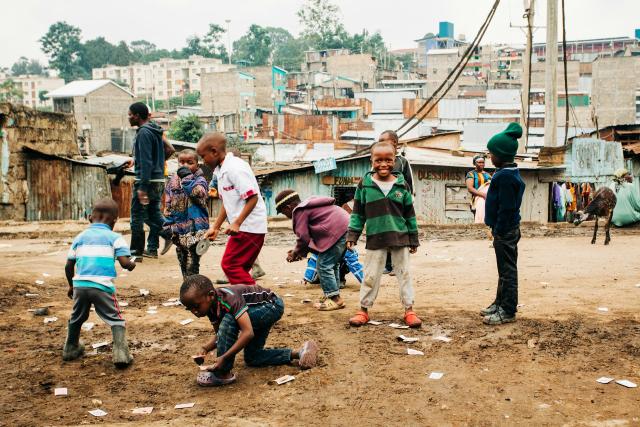
Slums And Informal Settlements: The Hidden Face Of Housing Poverty
When we mention the global housing crunch we tend to think of the skyrocketing prices of London, the bidding frenzy of Toronto, or the unaffordable skyscrapers of Hong Kong. However, these sensational markets are just one side of the coin in housing distress. Under the ground, beyond the glossy real estate brochures and economic forecasts, there is a much more pervasive and pressing crisis: the spread of slums and informal settlements.
It
is estimated that over one billion people around the world today live in
substandard houses, and one out of eight urban residents today live in slums.
That figure will be three billion in 2030. They are not peripheral communities,
but rather the unavoidable byproduct of an economic system that operates
globally and has not been able to afford cheap housing to the poorest and most
vulnerable communities of the world.
Physically poverty in housing has the urban expression of slums and informal settlements of housing areas constructed not by developers or governments but by the desperate ingenuity of families with no other choices. They are located in the outskirts of mega cities, along a railway line, on sharp mountainous slopes subject to landslides, on floodplains that no other group will occupy.
They are crowded,
poorly served in terms of clean water and sanitation, weak tenure and
vulnerable in nature. The blog focuses on the dark side of housing poverty: the
dynamics which produce slums, the strength of those who live in them, and the
pressing necessity of a radical reevaluation of the way the world treats
housing of the poorest people.
The Characteristics of Slum Life
A constellation of deficits which combine to form a crisis of human dignity characterizes slums and informal settlements beyond poverty. The United Nations defines slum conditions by five major deprivations; absence of access to improved sources of water, absence of access to improved facilities of sanitation, insufficient living space (overcrowding), non-durable housing facilities, and insecure tenure. Whenever a household has one or more of these deficits then they are considered to live in a slum. The clinical reality is the reality of daily struggle.
The shanties in the Kibera area, one
of the biggest slums in Nairobi, Africa, are made up of mud walls and
corrugated iron roofs, and have up to eight individuals sharing a room that is
barely space enough to accommodate a bed. This water has to be bought to
vendors at a rate much more than that which the rich people who have piped
connections pay.
Excessive crowding is a question of not only comfort but of health and safety. Tuberculosis rates are also one of the highest in the world in the slums of Mumbai, where Dharavi crams a million people on about a square mile of land. The cramped living conditions of the slums give rise to an environment in which respiratory diseases, infectious diseases, and mental health issues thrive.
An additional layer of trauma is insecure tenure, or a
constant fear of eviction. It might take decades before families in a
settlement get to have a good sleep only to wake one morning and see the
bulldozers and destruction of all they have worked so hard to put up yet, they
have no legal recourse and no compensation.
The Causes of Slums and Slum Creators
There is no emergence of slums. They represent the immediate
consequence of systemic failures, economic policies, urban planning decisions,
and governance structures that place the priorities of capital over the people.
The main force of slum development is the fast urbanization in the absence of
housing. With the world becoming urbanized faster than ever, especially in
Africa and Asia, cities have been swamped by the magnitude of movement.
Economic opportunity drives people to relocate into cities, where the official
housing market has nothing to sell to them. Having no cheap alternatives, and
no government schemes of social housing to absorb them, they must build their
own, wherever they can get the space. An important consideration is land
policy.
The sheer majority of land in most cities is privately owned or managed by a government body that refuses to make it available to build low-income housing. Speculation is driving land prices well beyond the reach of the poor, forcing them to move to the most dangerous and unpleasant places namely steep slopes, flood prone areas and even contaminated areas.
The zoning laws which frequently are the legacies
of colonial times, have required minimum lot size, building, and land use that
rendered low-income housing economically unfeasible by law. The consequence is
that the poor are forced to construct on the illegal side. The problem is
exacerbated by governance failures. Corruption implies that money, used in
providing public houses, does not end up in its rightful hands
In other instances, governments are very keen to promote slum conditions by taking advantage of informal settlements as sources of cheap labour-a available population which can be exploited precisely due to the fact that they lack security and rights. It is not a failure of development to continue the slums, it is a characteristic of a development model that externalises the costs of urbanisation on the weakest. The slums will continue to expand as long as there are economic incentives to speculate rather than to help housing and to shut out rather than to include.

The Strength and Power of Slum Communities
Slums are not despairing places, although the conditions in which they are located are crushing. They are dynamic, alive communities, in which members prove to be exceptionally resilient, creative and agentic in the face of systemic neglect. It is a mistake to see slums as mere deprivation, and to overlook the spectacular ways in which slums and urban poor organize themselves to address their needs, creating social infrastructure where the state has failed to deliver. Globally, slum residents have established federation, cooperatives, and community based organizations which lobby their rights, negotiate with governments, and work together to develop their areas.
The movements of shack dwellers in South Africa including Abahlali baseMjondolo
have won some historic court cases and compelled the government to deliver
basic services.
The Baan Mankong program is an initiative in Thailand where
slum communities collaborate with the government to develop settlements via
collective tenure and community development. In India, the Society for the
Promotion of Area Resource Centers (SPARC) has collaborated with women groups
to carry out community enumerations, mapping their settlements to show their
presence and demand their right of stay. These actions are an overt challenge
to the perception that slum inhabitants are mere victims who are waiting to be
rescued. They are dynamic change agents, not of charity but of rights - the
right to the city, the right to good tenure, the right to basic services. The
reality of slums itself is a demonstration of resiliency.
Home owners themselves construct their own houses, which in
many cases take years to complete and each time more resources are obtained the
work is improved. They develop their own water and sanitation systems, their
own schools and health clinics, and their own elaborate social networks that
support each other. This is the agency around which good policy should
establish itself. The best slum upgrading initiatives understand that
communities are more aware of their needs than any external authority and that
a lasting solution can only be achieved by associating with the residents and
not imposing on them. Slum areas are resilient but this should not be used as
an excuse to remain neglected.
The Climate Crisis and Health and the Environment
Slums, health and environmental vulnerability have become a
more pressing concern due to the intensification of climate change. The
environmental hazards affecting slum dwellers are skewed and the health impacts
are appalling. Poor sanitation in the slums is a leading cause of preventable
disease. The presence of open defecation and almost no waste disposal
conditions favor the development of diarrheal diseases, cholera, typhoid, and
intestinal parasites. Indoor air pollution due to solid fuel cooking, lack of
ventilation, and closeness to industrial activities worsen respiratory
diseases. Dengue and malaria are examples of vector-borne diseases that thrive
best in stagnant water and poor garbage management. These vulnerabilities were
revealed by the COVID-19 pandemic.
In slums, there was no possibility of social distancing, no
hand washing, and residents could not afford to isolate or work. The virus
ripped through these communities, and since they are not recorded by official
data collections, the actual death toll might never be known. The dangers are
magnified by climate change. Slums tend to be built in the most climate-prone
areas of land, such as low-lying coastal lands, floodplains, steep slopes that
are liable to landslides. These settlements are increasingly becoming
uninhabitable as sea levels rise and events of extreme weather become more
severe.
In the city of Dhaka,
Bangladesh, the slums frequently get submerged in monsoon floods, displacing
hundreds of thousands of people. The Lagos people in Nigeria face the risk of
erosion along the coastline that surrounds informal settlements constructed on
reclaimed land. However, these communities enjoy the least protection and are
at the bottom of the list in terms of the considerations in climate adaptation
planning. One of the humanitarian crises of the next decades is the
intersection of slum conditions and climate vulnerability. There are millions
of individuals on the front lines of climate change with inadequate resources
and political capacity to defend themselves.
The Collapse of Traditional Methods
The international community reaction to slums has long been marked with two unsuccessful strategies, including forced displacement and abandonment. Neither has resolved the root cause of the issue and both have caused immense damage to the communities they were supposed to serve. One constant of urban policy in Rio de Janeiro and Mumbai and Nairobi has been forced evictions under the guise of beautification, development, or public health. Governments evict slums without or with minimal warning, destroying property, tearing down communities and displacing residents to far off places where they lose access to livelihoods, education and social connections.
These forced
displacements infringe international human rights law, but they are impuned.
The reason given which is that slums are illegal and should be abolished
overlooks the fact that the illegality is a result of policies which make legal
housing unaffordable to the poor. The other side of failure is neglect.
Governments that do nothing about slums leave them to their own devices, deprived of basic services and infrastructure. In this strategy, slums are seen as transient and are likely to fade away somewhere along the way. Rather they develop into permanent entities that increase in size and roots with time. These approaches can be deemed unsuccessful because of the numbers: after decades of programs and policies, the absolute population of slum slum dwellers is still growing.
Millennium Development Goal target of increasing the living standards of 100
million slum dwellers was met however the total number of slums increased even
more in the course of the same period. Traditional methods are ineffective as
they are symptomatic and not causative. Instead of being willing to deal with
the structural causes of slums, such as, but not limited to, uncontrollable
formal housing, exclusionary land markets, and failure of governance, they put
their efforts in the eradication of slums.
Urbanism Pathways: Secure Tenure and Inclusive Urbanism
The way ahead is through the radical re-definition of our
concept of housing and cities. Secure tenure, providing slum residents with
legal status and defending them against eviction, is the most urgent
intervention. When individuals feel safe, they invest in their communities and
houses. They erect superior constructions, and create infrastructure, and take
part in civic life. All other improvements are based on security of tenure.
There are various avenues to tenure security. In situ upgrading, where slums
are not destroyed, and upgraded instead, has been successful in cities such as
Medellin and Bangkok. These programs offer land title, install water/sanitation
infrastructure, pave road networks and improve public space whilst enabling
people to stay there.
Efforts by communities, involving their collaboration with
local governments and non-governmental organizations to design and introduce
upgrades, have demonstrated specific effectiveness in ensuring that upgrades
respond to real needs. A model which has been first introduced in Thailand,
land sharing mediates between slum inhabitants and landowners, and enables both
parties to reap the benefits of development. In addition to tenure, there
should be a reconsideration of urban planning to deal with slums. The zoning,
minimum lot-size, and building code that renders legal low-income housing
unfeasible have to be changed.
Cities need to adopt incremental housing the realization that poor families are constructing what they can afford with time and that this form of housing should be accepted as a norm and not criminalized. Social housing should be released on public land and not sold to the highest bidder. And the voices of slum dwellers need to be part of the planning processes that have long been dominated by them. The Sustainable Development Goals have established a goal of providing all people with adequate, safe, and affordable housing by 2030. Ambition on that order has not yet been witnessed in order to meet that target.
It involves acknowledging that slums are not an issue to be
abolished but the symptom of the failed system where housing as a human right
has been neglected. The roads are there; the only issue is the political good
will to exercise them on the scale needed.
Conclusion
Informal settlements and slums are the dark side of housing poverty, an international problem that affects over a billion population but is hardly visible to policy makers and society at large. They are not exceptions, but the natural result of economic systems that have commodified housing and urban planning, and made forms of planning that see capital, not community, as its priority.
The absence of infrastructures such as water, sanitation, space,
permanent buildings/structures and tenure security of the slums are the
defining attributes of slum life, an infringement of human dignity and a
setback to human progress. And in these settlements we see, alongside
deprivation, extraordinary resilience, community organization and agency of
people struggling to claim their right to the city.
The mechanisms that produce slums are not predetermined:
rapid urbanization, land markets that are not open, failure of governances.
They are the outcome of policy decisions which can be re-decided. The
ineffectiveness of traditional solutions, such as forced evictions to neglect,
indicates that we will not be able to end slums without acting on the
structural issues that create them. The ways ahead: secure tenure, in situ
upgrading, inclusive urban planning, community-led development, provide us with
a vision of the cities that will serve all its inhabitants, not only the rich.
With people across the world becoming urban and climate change placing greater
frailty on informal settlements, the imperative of this work has never been
higher.
The dark side of housing poverty needs to be brought to light. The billion slum dwellers are not an issue to be dealt with but a population to be taken into consideration and whose voice needs to be heard. Housing is not a commodity, it forms the basis of human dignity, health, and opportunity. Creating a city without slums is not a dream, but a moral necessity, the type of thing that needs us to re-envision what can and should cities become when we build them so that all people can afford.



-ySWGlp0vgc.jpg)



LEAVE A REPLY