

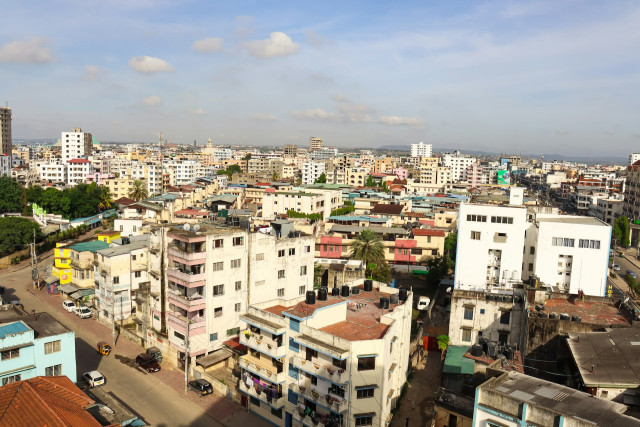
The Role Of Rental Housing Solutions In Tackling Kenya’s Urban Housing Crisis
The urban housing crisis has been established as one of the
developmental issues of the 21 st century in Kenya. The high population growth
rate, rural-urban migration, and creation of economic opportunities in urban
areas has increased the demands in the supply of houses. Nairobi, Mombasa, and
Kisumu have remained urban centers so far around which thousands of new people
are attracted every year in pursuit of jobs, education and superior services.
Nevertheless, the increase in the housing stock has not been commensurate to
the demand leading to the increase in the rents, overcrowding and formation of
informal settlements.
Homeownership has been the ultimate objective of housing
policy debate in Kenya over the decades. Although ownership is a significant
aspect, this solution fails to consider a very crucial fact: most urban
dwellers are tenants. To a good number of low- and middle-income earners,
rental homes are not a transitional process; they are a permanent process
because of income limitations, employment, and land cost.
The renting housing solutions provide a pathway to the
solution of the urban housing crisis in Kenya at a flexible scale and
economical way. Policymakers and even private developers can react better to
the pressure of urbanization by increasing access to safe and cost-effective
and controlled rental units. Rental houses may limit the increasing informal
settlements, better the living conditions and boost the economy.
This blog discusses how the rural-urban housing problem in
Kenya can be resolved through a complex role played by rental housing. It shows
that to make rental solutions to sustainable urban development in Kenya core,
there are six dimensions used; these are trends in urbanization, affordability,
informal settlements, involvement of the private sector, policy frameworks and
social transformation.
The Growing Demand of Rental Housing and Urbanization.
The urban population of Kenya is rapidly increasing during
the last several decades turning cities into vibrant economic centres. The
internal migrants are absorbed in Nairobi in large proportions every year. With
the growth of industries and the development of service sector, cities are
still creating jobs that appeal to young professionals, informal workers and
students.
Nevertheless, urban land is still limited and costly. Most
of the low- and middle-income earners can not afford to buy property in major
cities. The mortgage financing which has been growing continues to cater to a
comparatively low percentage of the population owing to the high interest rate
and rigorous qualification criteria. This makes rental housing the main housing
choice to most of the urban dwellers.
Rental apartments provide the opportunity of flexibility
that suits the contemporary life of the city. Due to the high concentration of
people in cities, a large number of people are more concerned about how close
they are in relation to their places of work, school and transport networks
more than the long-term ownership of property. Renting also gives households
the ease of moving around as the employment opportunities fluctuate. This
mobility is especially significant in rapidly changing economies where one is
not always sure of the job security.
Moreover, the growth of the owner-occupied housing is
restricted due to the urban planning limitations. Developing infrastructures
like roads, sewer systems, electricity networks is a process that is time
consuming and costly. Rental constructions especially the multi-unit apartment
complexes will be able to host a larger population on a smaller land hence
efficient utilization of the urban space.
Increase in major cities in the form of satellite towns also
depicts the escalating significance of rental markets. The regions around
Nairobi have experienced an increase in the number of apartments being built to
cater to the demands of commuters as a way of finding affordable housing
options that are not within the city center. These constructions show how
rented housing is able to accommodate the urban development trends.
Finally, the process of urbanization in Kenya is not likely
to decrease in the nearest future. By appreciating rental housing as one of the
key components of urban development, the policy makers can be able to plan
instead of responding. Kenya is capable of managing the urban transition by
predicting demand and ensuring development of planned renting projects.
Affordability and Economic Openness.
A relative cheapness to own homes compared to renting is one
of the fundamental benefits of renting housing. Buying of property entails huge
initial capital investment in down payments, legal charges, and registration.
To most families especially those who are on informal jobs, such savings are
not realistic to accumulate.
Renting worksheet of the cost of housing through time so
that a family can use the money on other important needs like education,
medical services and small enterprises. Such financial flexibility provides the
resilience of the economy, especially in the nation where the income level may
be high and low at the same time.
Nevertheless, there are still challenges of affordability in
rental markets. The demand and limited supply have led to high prices of rents
in major towns such as Mombasa. In the absence of proper regulation and
incentives to develop affordable rentals, market forces only might leave
low-income households out.
This gap can be closed through public-private partnership
that will encourage the developers to develop the rental units that are
oriented to the lower-income segments. Programs like Big Four Agenda that are
supported by government have identified housing as a national agenda. This can
be used to increase the success of affordability by extending the efforts to
include rental housing.
The ideas of micro-housing and incremental housing rentals
also hold some promise. The units can be smaller and designed well with many
amenities shared to reduce the monthly rents without compromising on the
quality. Such models when well controlled avoid congestion and inadequate
living standards.
Access to the economy is also based on the security of
tenure and an unambiguous rent system. Open lease contracts and equitable ways
of resolving disputes foster mutual trust between tenants and landlords. The
stability of rentals allows the families to plan both financially and socially.
Essentially, rental house fulfills a critical role in the
progression of the affordability gap. It will offer Kenyans a viable way to
access decent housing to millions by lowering entry barriers as well as
spreading the long term costs.
Lessening the Expansion of Informal Settlement.
One of the most apparent forms of Kenya housing crisis is
the growth of informal settlements. Poor access to affordable formal housing
compels most of the city dwellers to find refuge in unplanned communities,
which lack proper infrastructure, sanitation and security.
Rental housing intervention can play a very important role
in curbing the growth of these settlements. With formal alternatives of renting
available and reasonably priced, the probability of households utilizing a
risky form of living is reduced. This change has far reaching consequences on
the health of the people, the sustainability of the environment and social
equality.
Structured rental models are also promising as a way of
upgrading informal settlements. Rather than people being evicted in large
numbers, government officials can liaise with the community organizations and
re-develop the places into planned rental states with better infrastructure.
These plans maintain social networks and improve the standards of living.
Effective urban planning is also facilitated by well-planned
rental housing. Condensed settlements, adequate sewage, waste and access to
roads avert the environmental deterioration that is usually related to informal
settlements. Formal housing in flood-prone zones may be resiliently designed to
contain occupants against such dangers as climate variations.
Further, formal rental markets are a source of government
income in terms of tax and compliance with regulations. The money can be
recycled into the services and infrastructure of the urban areas and this will
form a vicious circle of betterment.
The informal settlements should be tackled in a comprehensive approach and one of the most important aspects is the rental houses. Through the increased formal supply of rentals, Kenya will be able to slowly resettle the vulnerable populations into healthier and safer living conditions.

The Investment and the Role of the Private Sector.
Scaling rental housing solutions is based on the private
sector. The real estate developers, institutional investors, and financial
institutions can be in a position to mobilize the capital and expertise
required in large scale rental projects.
Over the past few years, Kenya has experienced an increasing
interest towards development of rentals. Mixed-use developments that consist of
residential, commercial, and recreational facilities are the ones that can
serve various requirements of tenants. Such combined models make living
convenient and united.
Markets and standards can be stabilized by an institutional
investment in rental housing. Professional property management provides
maintenance, safety and satisfaction of tenants. Apart from informal landlords,
institutional investors usually have long-term views, where sustainable returns
take precedence over short-term returns.
Financial innovation plays no less a role. The funds can be
directed to the rental projects through real estate investment trusts (REITs)
and housing bonds. These are the instruments of diversification of funding
sources and decreased dependence of the traditional bank loans.
Nonetheless, the involvement of the private sector needs the
constructive policy frameworks. The efficient approval of designs, zoning area,
and tax incentives have been encouraging developers to invest in low-cost
rental houses.
The challenge of renting housing can be used to solve the
urban challenges in Kenya through the alignment of the public policy with the
private initiative.
Policy, Regulation, and Protection of the Tenants.
Good systems of renting houses are based on sound regulatory
systems. Clear policies ensure that tenants are not exploited and the landlords
receive good returns. The law in Kenya regulates the relations between the
landlords and tenants, and in some cases it is still not effectively
implemented. The transparency and trust can be increased by strengthening the
dispute resolution mechanisms and improving the standardization of lease
agreements.
Policies of rent controls have to be very sensitive. The
over-control can deter investment, and the lack of control can result in rent
increments that are unaffordable. There is a need to balance between
evidence-based policymaking.
The policy of urban planning must identify areas where
high-density rental construction is to take place along transport corridors.
This will cut commuting durations and will endorse sustainable movement. A
partnership between state and local authorities is a guarantee of a consistent
implementation. The counties have a significant role in the regulation of the
rental housing in their jurisdiction as devolution influences the forms of
governance.
An efficient and consistent regulatory climate leads to
investor confidence and security of tenants, which is the foundation of a
successful rental market.
Urban Change and Social Mobility.
Rental housing is not just a temporary measure but a good
driver of social mobility and urban change. Rental markets can help people to
obtain educational opportunities, jobs, and entrepreneurships because of the
availability of safe and convenient housing.
Rental housing is a common practice among young
professionals and students who want to settle in cities. The ability to have
flexible housing will lower entry barriers and foster innovation. Successful
urban economies rely on dynamism.
Rental communities, which are well-planned, also promote
diversity and inclusion. Mixed-income developments ensure that there is no
socio-economic segregation and that there is social cohesion. The common areas
promote socialization and cultural diversity.
In addition, the rental housing promotes gender equity.
Women, especially single mothers and young professionals enjoy secure and
independent living conditions.
With the development of cities, there is the opportunity of
the rental housing to follow the demographic trends. Flexible rental models
cater to various needs regardless of whether they are accommodating the growing
families or the aging population.
Through the incorporation of rental housing into the long
term urban planning, Kenya will be able to create inclusive urban cities that
can empower the people of Kenya and facilitate their sustainable development.
Strengthening Urban Infrastructure through Rental Housing Development
Rental housing construction is very important towards
bolstering the urban infrastructure and enhancing the general city operations.
Rental projects should be well planned and incorporated in the overall urban
development strategies to promote better utilization of land, utilities, and
the services of the government. An example of this is the high-density rental
apartments which can put higher populations in smaller land areas, minimizing
urban sprawl and conserving the areas around agriculture or other environmentally
sensitive places.
Rental housing is strategic and well geared towards
transport corridors, business and industrial areas to minimize the commuting
distances and congestions. This reduces transportation expenses among tenants
besides relieving the burden on the road networks and transport systems.
Consequently, cities are able to operate more efficiently and also curb the
emission of carbon emissions and reduce the time of travelling.
Infrastructure planning is also favored with formal rental
developments. The developers also tend to tie the buildings to water, sewer and
electrical systems that conform to the regulations. This helps in enhancing
sanitation, garbage collection and distribution of energy in the cities. The
concentrated rental estates offer more cost effective opportunities of
government to extend the infrastructure services than the scattered informal
settlements.
In addition, properly managed rental houses promote the
creation of social facilities like schools, health facilities, shopping and
recreational facilities within a short distance. Such a combined strategy
empowers community networks and increases the quality of life.
Kenya can create a more inclusive and at the same time more
organized and long-term sustainable city by deciding to correlate the growth of
the rental housing sector with the expansion of infrastructure in its city
centers.
Conclusion
The urban housing crisis in Kenya requires new, adaptive,
and integrative solutions. Although homeownership is still a desire among many
households, it cannot be the sole option of solving the rising housing needs in
the booming cities. The rental housing needs to be identified and made one of
the most important priorities of urban development, particularly in locations
where the population growth and economic change are high.
Rental accommodations have convenient and short-term
benefits. It is responsive to the intense urbanization that leads to the
migration of people to cities in search of work and education opportunities as
it offers them flexible living styles. Affordability wise in terms of cost,
renting makes proper housing affordable to a larger group of the population
since the huge initial financial cost incurred in buying a house is eliminated.
Moreover, increasing formal rental facilities have a great potential of minimizing
the increase of informal settlements by providing a secure, controlled, and
well-managed substitute.
By having favorable policies by the government, the private
sector involvement, and effective tenant safeguards, the rental market is able
to change living standards throughout the city centres. Renting housing
facilities that are secured and managed will improve stability and facilitate a
process of social mobility as well as aid in the development of cities which
are better organized.
The relevance of formal renting solution will only continue to grow as cities like Nairobi continue to grow. Adopting rental housing is not a trade-off or even an alternative, but a visionary transition to resilient, inclusive and sustainable urban futures in Kenya.













LEAVE A REPLY