

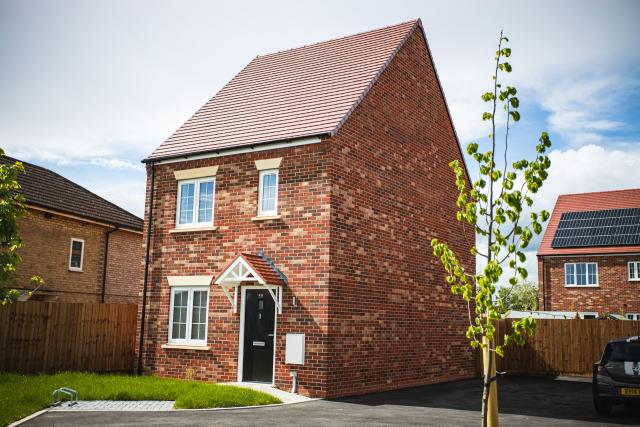
The Role of Housing Associations in Addressing the Affordable Housing Shortage
Affordable housing is one of the most acute social and economic issues of the 21 st century. The world, especially in the developed countries like the United Kingdom, Australia and the United States of America, has witnessed soaring property prices, stagnant wages, and population congestion in cities, thus making it more and more challenging to afford decent and safe living to the low and middle income households. This task cannot be left to governments only. It is in this convoluted terrain that housing associations have up to now become central players, by mediating between the public policy and the individual action to provide long term, inclusive solutions in housing.
The housing associations which started as community-based projects have developed into complex organizations that are both social oriented and financially sound. They are not-for-profit, and they reinvest the excesses in keeping the existing stock, construction of new homes, and community services. They are likely to be coupled with local authorities, private developers and financial institutions as semi-autonomous bodies, which integrates social mission and business acumen. They do much more than just construction, however, their services include tenancies, support services and better housing policy advocacy.
With the worsening housing affordability, the role of housing associations increases exponentially. They are also placed in a unique position to solve market failures, produce mixed-income communities and make sure that the vulnerable populations do not miss out on the benefits of urban development. In the sections that follow, the reader can learn how housing associations are defining the future of affordable housing- by being innovative, partnering, being financially responsible, and being socially responsible.
The Evolution and Purpose of Housing Associations
The history of housing associations is long and dynamic and it is connected to the dynamism of Housing needs and priorities of the policy. They can be traced back to the 19th century, when industrialization and overcrowding urbanization led to the emergence of unsanitary and overcrowded living conditions. Social reformers, who often headed charitable organizations, started to construct affordable and hygienic homes to the working population. These pioneer efforts formed the basis of what is to be known as the present-day housing association sector.
There was a significant change in the period after World War II. However, governments in Europe and other parts of the world realized that huge masses of public housing schemes were needed but over time due to the economic reasons and the shift in politics, there was a shift towards a non-state-based housing program. The gap was filled by the housing associations which became the major channel of delivering affordable housing. Taking the combination of the public and the private money they came up with a hybrid model which up to date is at the center of their success.
Housing associations have increased their roles in providing. They have become custodians of community welfare and incorporated social care, job schemes, and sustainability of the environment in their operations. The contemporary housing association is a complicated organism - a part developer, part landlord, part social enterprise. Their twofold task of offering affordable houses and at the same time being financially viable requires both emotion and business acumen.
The role of housing associations has never been more important than in the context of the increasing inequality and the loud increase in the cost of housing. They provide a flexible model that can address local requirements and at the same time contribute to national housing targets. They have hundreds of thousands of units, which are well maintained, affordable and well engaged with the residents in many countries. More importantly, they represent a long-term view: they do not invest to increase profits in a quarter, but to stabilize their generations.
With society struggling with the issue of insecurity of the housing sector, as well as the problem of homelessness and urban ostracism, the housing associations are one of the few organizations capable of providing long-term and people-centered solutions.
Financing Affordable Housing: The Role of Housing Associations
The affordable housing finance is a balancing process between social value and economic viability. The housing associations have mastered this crossroad and have been able to finance their projects using a combination of public subsidies, commercial loans and rental earnings. This economic framework enables them to act on their own and yet be in line with the goals of the public policy. Their ability to tap capital markets at will has rendered them durable and scalable which have the capacity to deliver thousands of homes annually despite fiscal limitations.
Grants that were provided by the government played a great role in housing associations building affordable units. The subsidies have however reduced with time thus compelling associations to diversify their funding sources. They have now begun to issue bonds, joint venture with private developers and also by cross-subsidization which is the profits made in market-rate sales or rents back into affordable housing programs. The hybrid model of financing makes it financially viable and does not compromise on the social mission.
Besides, impact investing and green finance are becoming more popular among housing associations. Housing associations attract ethical investors, pension funds, and ESG-oriented portfolios due to their predictable returns as well as quantifiable social returns. In particular, green bonds have turned into a new trend, which allows associations to finance energy-efficient projects that decrease carbon emissions and reduce the overall operational expenses in the long term.
Financial soundness of housing associations is well known. Most of them are governed by housing authorities to enhance fiscal stability, governance, and transparency. Their good credit ratings make them a good borrower at favorable rates and hence an appealing partner to both bank and the institutional investors.
Nevertheless, landscape funding is not an easy task. Increasing land and construction prices and stricter monetary policy are putting margins under the strain. It implies that housing associations need to keep innovating - finding alternatives to conventional methods in building such as modular construction, digital project management, and other forms of ownership such as shared equity or rent-to-buy. With innovation in line with finance, they will be able to maintain the provision of homes that are not only affordable at the access point, but also over generations.
Partnerships and Collaboration in Delivering Affordable Homes
Housing associations are successful through cooperation. Their effectiveness requires them to establish alliances in the public, the corporate, and the community domains. Through these alliances, they are able to scale up to development, resource sharing as well as provision of projects, which would not have been possible alone. Partnership is not a strategic option, it is a structural reality in the modern day divided housing environment.
Their most important partners are the local governments. Social housing projects are frequently funded and supported by councils in terms of land and planning, and offered professional experience in management and dealing with tenants by housing associations. They collaborate to make sure that developments that are done satisfy the needs of the community as well as statutory requirements. The partnerships between the public and the private (PPP) are also of crucial importance because the partnerships create an opportunity to co-develop sites with the private builders who introduce efficiency, innovative designs, and construction skills.
In addition to construction, partners go on to include support services, such as employment training and health services, and digital literacy and energy assistance services. Working in cooperation with charities, social enterprises, and NGOs, housing associations establish a whole ecosystem improving the quality of life of residents. As an example, the cooperation with renewable energy suppliers could be used to lower the utility bills of the tenants, and the cooperation with local business companies can create employment opportunities in the community.
Co-production is yet another new trend, which implies the residents in the housing environment becoming co-creators of their styles. The involvement of tenants in design, maintenance and governance will create a sense of ownership, responsibility and social unity. Housing associations that adopt this participatory model are not only constructing houses, but they are constructing empowered communities.
Such partnerships bring about resilience. Housing delivery is made stronger and more flexible when the various stakeholders share risk, knowledge, and resources. With the economy under pressure, demographic trends restating housing demand, it is by collaborating that the housing associations will still remain on the first line towards inclusive and affordable living.

Innovation and Sustainability in Housing Association Development
The contemporary housing association is based on innovation. Faced with the growing cost of construction, the shortage of land, and green issues, these organizations have turned into the birth places of new concepts in the design, technology, and sustainability. The future of affordable housing lies in their ability to embrace innovation so that they can provide homes that are not only cheap, but also of low impact and quality.
Prefabricated and modular construction has been one of the most radical inventions. Manufacturing components offsite enables housing association to radically save time in construction, minimise wastage and enhance quality control. Scalability is also a possibility with modular housing- projects can be increased or reduced with change of demand, which cannot be achieved with traditional construction.
Another cornerstone is sustainability. Renewable energy systems are being incorporated into housing development with solar panels and heat pumps becoming common in housing associations. They are also laying more emphasis on passive design features such as maximizing the use of natural light, insulation and ventilation in order to reduce the use of energy. These green programs do not only minimize the environmental impact, but also decrease the cost of living of the tenants supporting the social mission of affordability.
This digital transformation is also transforming operations. Asset management is becoming data-driven, predictive maintenance is becoming a reality, and tenant portals are becoming more efficient and transparent. Smart housing technologies, e.g., energy trackers and online fixing reporting, enhance customer satisfaction and decrease long-run expenses.
In addition, social innovation is being adopted by housing associations. They are trying models of intergenerational living, community land trusts and cooperative housing schemes, which are strategies that disrupt standard ownership models and promote inclusivity.
There are barriers, however, in the innovation journey. Slow progress may be caused by regulatory inertia, funding constraints, and skills shortages. But change is an area that is best pioneered by housing associations, by virtue of their hybrid nature. They are able to experiment with new models without the immediate need to make a profit that plagues the private developers, and make sure that innovation is first to serve the people, then profits.
Addressing Social Impact and Tenant Well-being
The most fundamental aspect in the mission of any housing association is the assumption that housing is not just a building facility but rather a source of dignity, opportunity and wellbeing. When it is conducted properly, affordable housing is transformative. It enhances health outcomes, increasing the level of education, promoting social inclusion, and stabilizing families. Housing associations appreciate this fully and have developed elaborate systems to assist their tenants in ways other than collecting rent.
These institutions put investments in community development programs that offer employment training, financial advisory and youth involvement activities. Many of the partnerships run by healthcare providers to support physical and mental health issues that tend to come with housing insecurity. Others are concerned with the issue of digital inclusion where residents can gain access to technology and online services.
Their operations also revolve around tenant engagement. Periodic feedback, non-closed communication channels and participatory forms of governance give the residents a voice in the management of their communities. This sense of belonging will lead to the decreasing turnover, vandalism, and tight social networks.
More importantly, vulnerable populations, such as the elderly, single parents, refugees, or individuals with disabilities, are frequently the subject of housing associations and offered housing and support services. They take the role of social safety nets, which are the lapses left by overstretched state sectors. Their contribution to better, stronger and more resolute neighborhoods can be seen through their social impact on their immediate tenants as well as those who are further down the line.
With the intensifying urban inequality, such a human-focused style will characterize the future of housing associations. They are not only solving a housing shortage by focusing on well-being as well as affordability, but also establishing the social framework over which cohesive, inclusive societies are established.
The Future of Housing Associations: Challenges and Opportunities Ahead
The future of housing associations will be determined by both the enormous difficulties and the opportunities like no other in the past. On the one hand, they have the increasing land prices, material shortages, and the increased complexity of regulations. On the other, they lead the pack in innovation, sustainability and empowerment of communities.
The main issues are monetary strains, in particular, the escalation of interest rates and construction costs, and policy insecurity that may upset long-term planning. Furthermore, with the increasing demands on sustainability and digitalization, associations have to be fast to change according to new requirements and technologies. Striking the right balance between making it affordable and ensuring that the environment is reached will challenge the well-run organizations.
However, the possibilities are equally high. Housing associations are better positioned to spearhead net-zero housing delivery, capitalize on impact investment and introduce social value-based models of finance. They will be able to influence the discussion of inclusive cities and governments to achieve the goals of Housing for All. They can reinvent the meaning of affordable housing in the 21st century by adopting digital innovation and strengthening their governance as well as enhancing community partnerships.
Collaboration, adaptability and vision will be the keys to success in the coming years. Housing associations need to keep a balance between sympathy and business savvy - to be mission-driven, and at the same time profitable. When they manage to do so, they will not only reduce the problem of housing shortages, but also change the social and economic landscape of their respective countries.
Conclusion
One of the problems of our time is the shortage of affordable housing and the housing associations are the centre of the solution. They are an example of inclusive capitalism, where there is the social purpose and financial responsibility. Their capability to integrate long term investment, community and creative thinking makes them essential in solving the housing crisis.
With urbanization and increasing inequality, the demand of resilient, affordable, and sustainable housing will increase. Housing associations provide a guide on how societies will fulfill this need- by collaborating, being compassionate and innovative. Their further development will define not only the place of life of people, but the prosperity of communities.
Housing associations are not just about constructing houses, they are also about resolving a community based on hope, fairness and opportunity. Their blend of social purpose and sustainable development helps them to provide spaces in which people and families can flourish and become more inclusive and stable than the bricks and mortar.












LEAVE A REPLY