

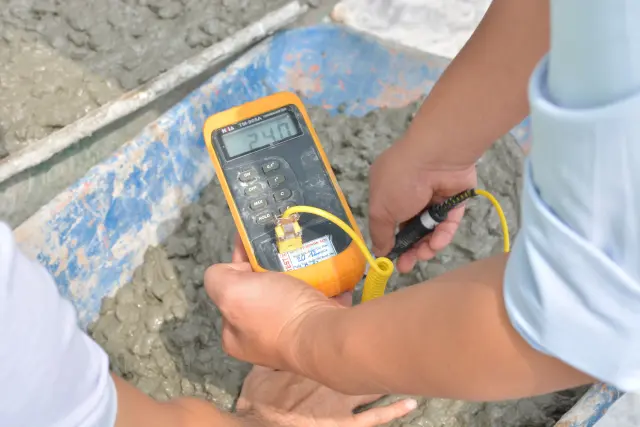
Quality Control On A Budget: Simple Site Tests And Inspection Routines
Most people are confused about quality control in construction as an expensive process that demands high-tech machinery and high-level expertise of consultants. The fact is that a lot of quality problems that are significant can be observed and controlled with the help of simple and cheap site tests and meticulous inspection routines.
In small projects, low-cost housing, and developments that are developmentally constrained, low-cost quality control is not only feasible, but it is necessary. Structural failure, poor maintenance costs and poor living conditions can be experienced due to poor workmanship, poor materials and poor supervision.
Conversely, consistent
quality control practices enhance durability, safety, as well as long life
value without having to spend much on them.
This Blog discusses the methods of quality control that may be undertaken on a modest budget, through emphasizing on site tests that are practical, regular inspections and good management techniques.
With the quality awareness incorporated in the
everyday construction operations, builders, engineers, and supervisors will
have the opportunity to attain credible results without compromising the cost
of the projects and their efficiency.
The meaning of Quality Control as a Process
Quality control is expected to be a continuous process as opposed to an inspection. This attitude change, particularly in a budget, is of paramount significance since prevention is never as costly as correction.
Quality is initiated during the planning of a project, whereby the drawings,
specifications and construction techniques are outlined. When it is made clear
on what is expected, the errors are minimized. Regular observation and record
keeping are essential during construction so that it can assist in the early
detection of deviation.
Effective quality tools can be in the form of simple checklists of each phase of work, e.g. excavation phase, formwork phase, concreting phase, or finishing phase. These checklists do not entail any high level of expertise but a lot of consistency and attention.
When quality control
is treated as routine and not as an audit conducted by external parties, it
would motivate workers to own their work. The quality culture minimizes the
rework, wastes of materials, and delays over time and is hence considered one
of the cheapest strategies in construction management.
Inspection of Material on Delivery and Storage
The quality of the materials directly affects the quality of the construction and its maintenance, and the inspection upon delivery is one of the most essential quality control tools that are budget friendly.
Visual inspection of battered cement bags, rusted steel, polluted aggregates, or bent timber can be easily detected before being consumed.
The counting of
the numbers, reviews of the label, and assurances of conformity to
specifications can be used in the prevention of the replacement with poor materials.
It is also important that it should be stored properly which is frequently
neglected.
Cement must be stored dry and high, steel must not be in contact with moisture and aggregates must be stored separately to prevent contamination. The practices are cost-effective but they avoid the loss of quality.
Site teams can be in a position to be
consistent by delegating the task of inspecting and storing materials. Efforts
to detect material problems early prevent expensive demolition or repair in the
future, which proves that cautious material treatment is one of the most
effective and the easiest quality control measures on a budget.
Simple Soil and Excavation Inspections
Although the expensive advanced soil testing is required, yet simple soil and excavation tests can give useful data in small scale projects. The appearance of the soil type, consistency and moisture content can be used to check whether excavation has reached appropriate bearing strata.
Easy field tests, e.g., hand compaction or seepage of water, may persuade about possible issues. Measuring excavation depth and width makes sure foundations are in accordance with the design.
What is required in the foundation
performance is clean excavation bottoms with no loose soil or organic matter.
These tests are not as much equipment-based as they are observation and
measurement. Documenting results in a site log provides responsibility and
accountability.
During excavation,
numerous defects to do with the foundation may be avoided provided that special
attention is paid. Foundations are hard and costly to fix, hence low cost
quality management at this level provides high value with low financial input.
Cheap Quality checks of Concrete: Low-cost Inspections
The quality of concrete is paramount to structural safety, but numerous effective tests could be conducted without laboratory work. The check of mix consistency, color, and uniformity by visual analysis detects inappropriate batching or mixing.
 Even without formal equipment,
simple slump observation will be able to tell whether the mix is either too wet or
too dry. Excessively moist concrete can be straightforward to install, but it
can result in low strength and lifespan.
Even without formal equipment,
simple slump observation will be able to tell whether the mix is either too wet or
too dry. Excessively moist concrete can be straightforward to install, but it
can result in low strength and lifespan.
Another important inspection point is to make sure that compaction is done properly using sufficient vibration or rodding. Curing measures, like keeping concrete wet enough until it is dry, are frequently overlooked, yet are very inexpensive.
These regularly occurring checks have a considerable impact on concrete
performance. Even with budget projects, concrete quality can be obtained in a
reliable manner by using workmanship and curing instead of just using test
results.
Masonry and Block work Inspection Routines
The quality of masonry and block work heavily relies on workmanship, and this is why it is necessary to regularly check masonry and block work. The basic examination is simple checks such as alignment, level and plumb with simple equipment such as spirit levels and string
lines. Continuous
observation of mortar consistency, joint thickness and appropriate bonding
patterns should be made. Improperly filled joints or too much waste of mortar
is a sign of poor quality that can be immediately rectified.
Performance is also enhanced by ensuring that blocks or bricks are well cured before they can be used. These checks are low-cost and can be done in a daily basis. Early correction of mistakes avoids cracks, water and structural weaknesses in the future.
The final masonry is usually part of the visible section of the structure; thus quality control at this level also enhances the appearance and value as well. One of the most feasible and least expensive measures of quality in the field is regular inspection of blockwork.
Basic Reinforcement and Formwork Inspections
The structural integrity greatly depends on reinforcement and formwork, but most of the common mistakes are easily identified by the eye. The thickness, spacing and position of the checks against drawings should be checked against drawings to ensure that reinforcement works as intended.
Durability and protection against corrosion requires adequate cover to
reinforcement. Prior to concreting, formwork must be checked with regard to
alignment, stability, and cleanliness.
Honeycombing or dimensional inaccuracy may occur due to gaps or weak supports. Such checks do not need any specialized devices but simple knowledge. The application of plain checklists aids the supervisors to be sure that they have not missed anything.
Because the mistakes in reinforcement and
formwork are hard to correct once the concreting has been done, the cheap
checks at this stage avoid structural and durability issues that may be
encountered in the long run.
Quality of Finishing Works and Workmanship
Finishing works are significant in terms of usability, maintenance, and user satisfaction, but are frequently hurried on cost-cutting projects. Output can be highly enhanced with simple inspection routines.
Assessing surface level, adhesion, alignment, and curing of finishes allows to
detect defects at an early stage. They should ensure that there is proper slope
in wet areas, fixing of doors and windows is secure and that fittings work
smoothly. The quality of materials is not the cause of many of the finishing
defects, but rather it is caused by bad workmanship or sequencing.
Frequent walkthrough inspections will enable one to rectify
problems before they become irreversible. Good finishes help to minimize
maintenance charges and add to comfort. Because finishing works are very
visible, quality maintenance at this point is the best way to enhance both the
functional and perceived value without the need of incurring any major cost.
Administration, Reporting and Forms
Documentation and accountability is essential in the
effective quality control on a budget. No complex site logs, checklists, and
photos make up an opaque system of accountability. Such tools can be used to
monitor the progress, detect the issues that occurred repeatedly, and
facilitate the remedial action. It is not necessary that documentation should
be complicated, consistency is more significant than detail.
Quality checks are serious and that is achieved through assigning clear roles of inspection and sign-off. This would also act as security to the builders and owners by showing compliance.
With the course of
time, the records that are kept in good order help in decision-making as well
as continuous improvement. On small sites, quality results are enhanced by
rigorous records that do not add material and labor expenses.
Health and Safety Checks as Part of Quality Control
Health and safety are not considered to be intertwined with the quality control, yet, on a construction site, they are interrelated. Unsafe practices often result in bad workmanship, material spoilage, and defects that last in the long term.
Basic safety inspections like proper scaffolding, safe
edges of excavations, and proper handling of materials contribute directly to
quality results. Workers are able to work more effectively with regard to
accuracy and workmanship when they are in safe working conditions. Safety
checks do not need sophisticated systems to be carried out, especially on a
budget, visual inspections and toolbox talks are usually enough.
Early hazard recognition in any construction site is a very important factor in avoiding an accident that may derail the plans of the construction project since it may raise the project cost and affect the construction quality.
When probable risks like loose excavations, unsafe scaffolding, poor material handling, and insufficient protective gear are identified at an initial stage, then remedial actions may be taken before things get out of professional control.
The consequences of accidents frequently
include work stoppage, health care costs, material damages, and loss of skilled
time in labor which adds further financial strains to projects particularly
those with small budgets.
In addition to the cost and time implications, unsafe conditions are harmful to the morale and concentration of the workers, which increases the chances of making wrong decisions in workmanship. Simple health and safety measures in the day-to-day inspection procedures are going to assist in making the workplace safer and more organized.
Rudimentary steps like frequent visual inspections, easy access routes, good housekeeping and frequent safety briefings will go a long way in minimizing risk. When safety is incorporated in the daily site administration, employees are better protected and feel more assured to do their duties.
This unwavering concern on the safety
issues not only contribute to the physical health of workers, but also
reinforces reliability, durability and the standards of the finished building.
Electrical and Plumbing Quality Control
Electrical and plumbing systems play a vital role in the performance of buildings and the safety of the user but most flaws are not realized until occupation. Quality control in these works (that is budget-friendly) is based on critical visual examination and simple functional testing.
To avoid leaks and blockages, slope checking of the pipes, tightness
of joints, and support should be done correctly. In electrical works, checking
cable sizes, fixed connections and earthing minimizes the chances of failure or
fire.
Early diagnostic tests can be used to detect issues, which
are as simple as water pressure checks or continuity testing. It is important
that services are covered under drawings prior to concealment because it will
be expensive and disruptive to have to fix them later. Regular inspection of
electrical and plumbing work maintains long-term functionality and minimizes
the problems of maintenance and is not costly.
On-site training and Skill awareness
Among the best quality control mechanisms that cost less is enhancing skill awareness in the site workers. Most of the quality problems are not due to neglect, but due to the absence of knowledge on proper procedures.
On-site short informal training sessions can solve the frequent mistakes in
mixing, setting, curing, or alignment. The use of proper techniques is usually
more effective than instructions. Responsibility and pride in working is
developed by encouraging the workers to question and seek explanations on why
they should do things in a particular way.
Training is not dependent on a formal classroom or costly
training; it is dependent on communication and supervision. With time, more
informed employees will help in ensuring consistency in quality, less rework, and improved project implementation.
Inspections: Community and Owner involvement
In small projects with low budgets, owners or community members can be employed in routine inspection procedures and this can play a great role in controlling the quality. When the stakeholders know what to watch for, like cracks, poor finishes, or misalignment, they will be involved in standards maintenance.
The joint accountability enhances on-site transparency
and accountability. No technical walkthroughs with explanations allow
non-technical participants to identify what is acceptable and unacceptable work.
Involvement of the community also fosters trust, and that the construction is
done to the expectations of the user.
The responsibility of cross-inspection is a powerful tool of authority over the site, but at the same time, the decision-making procedures for technical decisions should remain in the hands of appropriate professionals.
Errors and omissions can be detected at an early stage when they are monitored and supervised by various stakeholders during construction work. This collective responsibility does not substitute professional expertise, but will enhance it with transparency and accountability.
Cross-inspection promotes effective communication among the
builder, supervisors and users resulting in improved construction standards.
This practice, in addition to enhancing the quality in the short term, is also
important to occupants to know how the building is assembled. Consequently,
they are better placed to take care of, maintain, and preserve the building in
the long-term increasing its value and durability.
Conclusion
Budget quality control does not entail compromising quality, but rather involves simple, pragmatic approaches at all times and in a smart way. By use of basic site tests, visual inspection and routine checks, a great deal of construction defects can be avoided before they turn into expensive issues.
The emphasis on materials, foundations, concrete, masonry,
reinforcement, and finishes will help to guarantee that the key aspects are
covered with the acceptable quality standards.
Good practices are further strengthened by documentation and accountability, which develop a culture of responsibility. Despite the low budget, even with low-budget projects, safe, durable, and sustainable outcomes may be obtained when quality control is incorporated into daily site activities. Finally, the inspection routines are disciplined, and this is one of the greatest investments in construction since good quality does not need to be costly.
Also read: Disaster Recovery Housing: “Build Back Better” On A Budget





-3dkuLgKhRD.jpg)
-49HupTvwDD.jpg)










LEAVE A REPLY