

Disaster Recovery Housing: “Build Back Better” On A Budget
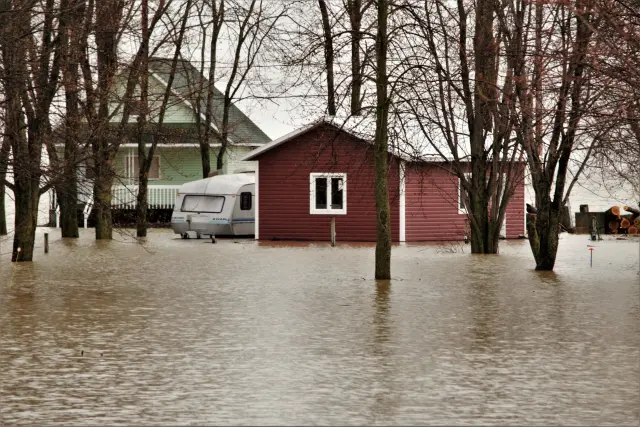
Disasters tear more than houses, they tear lives, means of livelihood and social networks. The loss of their homes due to floods, earthquakes, cyclones or fires may wipe decades of accumulated wealth and lead households to prolonged poverty, especially to low- and middle-income households.
 Disaster recovery housing programs, in turn, tend to be more
focused on speed and scale, making it an attempt to shelter the affected as
fast as possible. Although such a sense of urgency may be explainable, it often
leads to accommodation that merely reinstates the pre-disaster vulnerabilities.
The communities are vulnerable to the next shock due to poor quality of
construction, lack of safety of locations, and absence of simple services.
Disaster recovery housing programs, in turn, tend to be more
focused on speed and scale, making it an attempt to shelter the affected as
fast as possible. Although such a sense of urgency may be explainable, it often
leads to accommodation that merely reinstates the pre-disaster vulnerabilities.
The communities are vulnerable to the next shock due to poor quality of
construction, lack of safety of locations, and absence of simple services.
Such a cycle of loss and reconstruction led to the development of the so-called build back better. It focuses on constructing safer, more resilient, and more habitable homes than the ones that were available prior to the catastrophe.
The concept is, however, seen as costly and
impractical, especially in low-resource contexts. Governments are concerned that
increased standards will slow recovery and strain available budgets.
Consequently, the principles of build-back-better are occasionally turned into rhetoric,
as opposed to strategies that are actually to be implemented.
As a matter of fact, the construction of build-back-better does not involve fancy materials and sophisticated technologies. When used prudently, it largely pertains to improved planning by way of smarter design, small steps of risk reduction at a low price.
The layout, methods of construction,
location, and materials can be changed simply to enhance safety and longevity,
without causing a noticeable rise in cost. The task is to balance technical
research and funding systems, and community involvement in the context of
post-disaster settings.
This blog will discuss the ability of disaster recovery housing to literally build better on a budget. It discusses the main ideas of resilient reconstruction, cost-efficient design solutions, community-based solutions, funding and delivery systems, institutional organization, and the long-term results.
It is concentrated on practical teachings that can assist
governments, NGOs and communities to restructure safer homes without postponing
recovery and omitting the most vulnerable.
Innovate Build Back Better into Low-Budget Recovery
The term build back better has been misconstrued to mean more expensive constructions or more rigorous criteria that are unaffordable in a post-disaster environment. As a matter of fact, the idea is not so much to do more and more spending but to do it wiser.
In the case of low-budget recovery
projects, building better involves fixing the vulnerabilities that led to the
home failures during the disaster and rectifying them to ensure the homes are
sound via a set of low-budgeted, targeted interventions.
Disasters often cause most of the housing damage as a result of a few foreseeable failures. Homes constructed too near waterways or on the ground level without adequate drainage are destroyed by floods.
Earthquakes
result in collapse because of poor bonding between walls, roofs and
foundations. Poorly anchored roofs are torn by the cyclones. To solve these
problems, there is no need to completely redesign the designs; it is necessary
to pay attention to important details that can contribute to high performance
to a large extent.
Prioritization is one of the greatest changes in the low-budget build-back-better programs. Instead of trying to modernize all elements of a house, the priority should be made on life-safety as well as structural integrity.
The high plinths in flood-prone zones, strengthened
corners and masonry walls and the stable roof and wall connection have
disproportionate benefits in comparison with their cost. These measures are
usually only a minor percentage to the total construction costs and
significantly lower the future losses.
Contextual design is another important principle. Examples of standardization of housing include housing to hasten recovery and might not be appropriate to local climates, materials, and cultural practices.
Build-back-better solutions must never entirely replace existing typologies of
housing, but must enhance them. This minimizes expenditures, enhances
acceptability and the provision of labor and materials by households.
Notably, the concept of building back better also implies
the inadvisability of unsafe places. Rebuilding in the high risk areas can be
cheap in the short-term but it ensures that they make recurring losses. Even
relatively small investments in safer location choices or simple safety
measures will pay off in the long run.
By repositioning the build back better as a series of
intelligent, focused decisions, but not an expensive upgrade package, disaster
recovery housing programs can be resilient, even on small budgets.
Low-Cost Design and Construction Strategies That Improve Resilience
The determination of resilience/weakness of post-disaster
housing depends on design and construction decisions. In cost-sensitive
recovery environments, it is not architectural elegance but scalability in
performance.
In the case of flood-prone territory, among the most effective tools is the elevation. Moderate flooding of homes can be guarded at a relatively low cost through raising floor levels with compacted earth, rubble, or simple masonry plinths.
Homes designed to have space sacrificed on
the ground or waterproofing materials result in a further minimization of
damage. The enhancement of drainage systems around the house is often cheap and
yet it lowers the water standing.
Structural continuity should be put in the limelight in
areas that have high probability of earthquakes. Basic steps like inclusion of
horizontal stripes, increasing the quality of mortars and proper connection
between walls and roofs contribute a lot to seismic effect. The methods may be
executed via local materials and skills at little extra costs.
Design of roof is essential in a variety of hazards. Roofing
made of lightweight and properly fastened materials to the ground is effective
during earthquakes and cyclones as compared to the heavy roofs which are not
well attached. The catastrophic failure can be avoided by simple enhancement
like the use of hurricane straps, more nails, or better truss connectivity.
Ventilation and thermal comfort cannot be neglected. During heat waves, poorly ventilated houses are too unsuitable and people are compelled to make unhealthy modifications to their buildings. The passive design measures that are low-cost in nature like appropriate orientation, shaded openings, and reflective roofing enhance comfort without raising the building expenses.
The other cost-efficient measure is incremental design.
Homes can also be built with solid cores which will enable them to expand
safely in the future as households pick up economically. This helps in avoiding
the building of initial structures that are oversized and which would be unsafe
in the long run.
Disaster recovery housing can deliver significant resilience
benefits without spending too much money by targeting hazard-specific
vulnerabilities and applying locally suitable methods.
Community Participation and Owner-Driven Reconstruction
Community involvement is an element of effective, low-cost
disaster recovery housing. Active participation of affected households in the
rebuilding process saves costs, builds local skills and makes results more
sustainable. Particularly, owner-driven reconstruction has proven to be a
working approach to constructing back better at a reduced cost.
In owner-managed strategies, the households are given
financial aid, technical assistance, and specially approved design options
instead of having the complete houses. This enables the families to work out
construction in their priorities, provide labor, and apply familiar materials.
Consequently, the little money will be used constructively and houses will be
more probable to satisfy the needs of the households.
To be safe, technical support is necessary. Easy building
instructions, on-site training and periodic check-ups will enable household to
install resilient techniques in the right way. It is usually much cheaper than
full contractor-led construction, and it generates capacity in communities in
the long term.
Accountability is also enhanced by the involvement of the
community. With an active participation of the residents in the decision-making
process, they will be more apt to check quality and oppose the short-cuts that
reduce safety. Knowledge sharing is done through social networks and
neighborhoods are enlightened with good practices.
Another advantage is cultural appropriateness. The failure
of standardized post-disaster housing is due to the fact that the new housing
is not culturally appropriate and lacks local lifestyle and social frameworks.
Community-based reconstruction enables designs to be modified and at the same
time maintain minimum safety requirements.
Nonetheless, the involvement has to be inclusive. Women and
those who are rented, and marginalized in society are normally left out of
decision making although they are greatly impacted by disasters. These voices
should be intentionally incorporated in programmes so as to have equal results.
With appropriate encouragement, community involvement
will help change the top-down delivery process of disaster recovery into mutual assistance, providing resilience, ownership, and dignity which in most
instances is cheaper than the traditional method.
Funding and Delivery Designs of a Recovery with a Constrained Budget
One of the most important limitations of disaster recovery
housing is financing. Build-back-better strategies have to operate within
constrained government funds, donor exhaustion, and other recovery needs. This
demands versatile, stratified financing and effective delivery process.
Cash-based assistance has become well known as a cost
efficient tool. Direct cash grants enable households to recover based on their
requirements and minimized overheads. Cash-based programs are capable of
providing strong housing results on a large scale when combined with technical
guidance and clear milestones.
Another viable one is phased financing. Rather than paying
the full reconstruction funds as a lump sum, the aid may be disbursed in phases
that are dependent on the construction stage and safety measures adhered to.
This promotes good sequencing and curbs wastages of funds.
Combining the state funds with family finances also strains
budgets. With a low level of basic support, many households are able to donate
their labor, salvage materials or small savings. These contributions should be
appreciated in recovery programs instead of trying to substitute all them.
Local buying helps in saving money and economic recovery.
The supply chains will be reduced with the utilization of local materials and
manpower, and the finances will remain in the impacted regions. The cost
reduction can also be made by standardizing some of the parts like the doors or
the roofing parts thus buying in bulk.
There should be coordination of the donors and agencies to
prevent duplication and gaps. Disjointed financing causes discrepancies and
wastage. The integrated recovery framework contributes to the alignment of
resources with the goals of build-back-better.
Smart financing does not entail the pursuit of additional
funds, but smart utilization of the resources at hand to achieve optimal levels
of safety, speed, and coverage.
Recovery to Long-term resilience and Development
Disaster recovery housing cannot be considered a stand-alone
event, but a transition between emergency response and the long-term
development. Budget-friendly build-back-better strategies have the potential to
create safer and more resilient communities when associated with larger systems
and policies.
Security of tenure on land is very vital. Some kind of
tenure assurance is necessary to encourage households to invest in safer
construction. Recovery programs have the capacity of giving interim
documentations or attach housing assistance to long-term regularization
activities.
Integration of infrastructure is also significant. Drainage,
roads, and services should not be pathetic as this compromises housing
resilience. Even small upgrading of common infrastructure greatly improves the
efficiency of resilience housing.
The issue of monitoring and learning is usually overlooked
once the reconstruction has been done. Assessing the performance of rebuilt
homes in case of the occurrence of more hazards is a positive feedback to the
program in future. This learning process assists in perfecting low cost
build-back-better strategies with time.
The mainstreaming of resilience into day to day housing
policy is also a possibility. The methods and criteria devised in the recovery
process can educate affordable housing programs to make them less vulnerable to
disaster before they strike.
Finally, recovery on a budget is done by transforming
society to think about recovery better. It reverses the premium of the
replacement of the lost to minimization of future risk. When disaster recovery
accommodation is modeled as a step on the road to resilience, constrained
budgets are seen as a source of innovation and not a limitation.
Governance, Standards, and Accountability of Build-Back-Better Programs of the Budget
Good governance and accountability are needed to make the
build-back-better principles, in reality, reflected in recovery programs with
limited budgets. The rush to provide housing in the wake of a disaster may
undermine control over the situation, as it is an opportunity to tolerate
substandard construction or material replacement or unsafe location. Lack of
standards and open procedures can result in lots of houses with little
resilience as limited funding is used.
Accountable recovery is based on clear, minimum resilience standards. These standards are supposed to concentrate on a few non-negotiable aspects of safety that are related to local hazards, e.g. foundation height, structural connections, or roof anchoring.
Maintaining standards in a simple
form is simpler to communicate, monitor and enforce even in large-scale
recovery programs. Complicated codes may hamper the process and promote
disobedience.
Openness in decision-making and allocation of funds generates trust in communities being affected. Eligibility conditions, grant disbursements and building specifications should be published, minimizing misunderstandings, and feelings of preferential treatment.
The community
monitoring committees may be involved in checking the quality of construction
and reporting cases, which is a low-cost control that can be used alongside the
official inspections.
Another important factor is capacity in the local
government. In many cases, disaster recovery overwhelms the institutions in
place resulting in the dependency on the external actors. The long-term
governance through investing in local technical employees, standardized
inspection checklists and easy reporting systems enhance the long-term
governance systems and boosts the immediate results. This ability will be
useful even after the recovery period is over.
It is also necessary to learn by making mistakes. Feedback
and grievance redress mechanisms enable the households to voice their concerns
and enable the programs to adapt on the spot. Recording the successes and
failures will mean that any form of recovery in the future will be more
informed.
Build-back-better programs will be able to provide safer
housing even under severe budgetary limits when it focuses on governance,
standards, and accountability. These systems make sure that speed is not the
cause of safety and recovery investment really lower the future disaster risk.
Conclusion
The disaster recovery housing is a serious opportunity to
interrupt the destruction and reconstruction cycles. Although budget
constraints are concrete, it does not imply that build-back-better approaches
cannot be possible. Quite on the contrary, they require more intelligent
planning, focused investments, and involvement with communities.
Recovery programs can provide safer and more permanent
housing by concentrating on life-safety improvements, low-cost resilient
design, community involvement, flexible financing, and long-term integration
without slowing down reconstruction or locking out the poor. Building back
better does not imply that there is perfection, but it implies growth.
Well-executed build-back-better housing, which is budget-aware, can save lives, save assets, and reinvest in the community to withstand further shocks. With the increasing calamity in the world due to climate change, the capacity to build smarter using limited resources will be among the most valuable skills in housing and development practice.
Also read: Making Building Codes “Pro-Poor” Without Compromising Safety





-3dkuLgKhRD.jpg)
-49HupTvwDD.jpg)







LEAVE A REPLY