

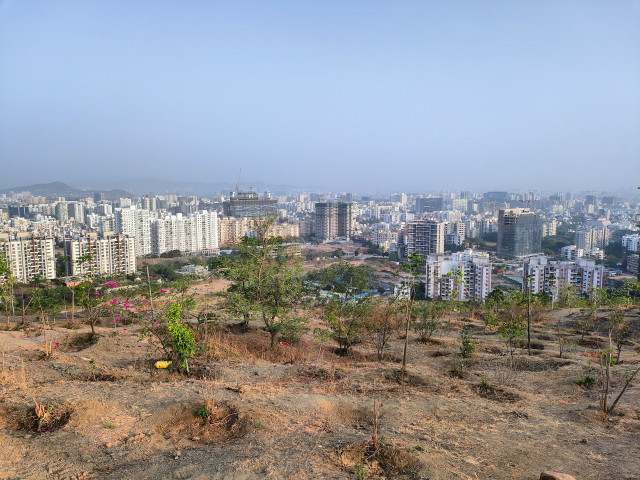
2025 Housing Policy of Maharashtra: Ambitious Targets and CSR Integration
The Times of India discontent states in this form: 5.1 The 2025 Housing Policy, Maharashtra, one of the most urban industrialized states in the fast track for accelerated development has released it; a paradigm shift to address acute deficit and concern about equity sustainability. It is a policy of great significance at a juncture where fast-paced urbanization, migration and socio-economic disparity have resulted in increased demand for affordable housing. In Maharashtra it’s the large urban areas that have seen unprecedented growth ever in history - say Mumbai-Pune-Nagpur – adding massive load on land, infrastructure and housing stock.
The ambition laced 2025 Housing Policy It is an ambitious, integrated approach to addressing this divide, marrying of regulatory reform, financial innovation & partnering with CSR. It conceives of housing not only as an infrastructure need but as a human right and as an engine of growth. The policy is informed by three principles: affordability, accessibility and sustainability. It is aiming for not just financially affordable housing but also housing that is environmentally sustainable and socially inclusive.
Mandated by the government to provide ‘Housing for All by 2030,’ there is a strong focus on the EWS and LIG sector. Now, with an eye on generating fresh capital and keeping public ends connected to private means, CSR funds and the private sector have become a part of Maharashtra’s solution.
This is not a silo policy, it seamlessly integrates with national programmes like Pradhan Mantri Awas Yojana (PMAY) and Smart Cities Mission, involving both central and state governments synchronising their best efforts. It is also to attempt regional balancing by incentivising growth of housing outside the large metros, and support Tier-II, Tier-III cities through schemes such as land-pooling and digital governance.
The Maharashtra 2025 Housing Policy is fundamentally a model for such comprehensive development—about a belief in the fact that housing equality - sustainable housing equality—lies at the foundation of economic and social stability, justice and environmental well-being.
Expanding the Housing Supply: From Policy Vision to Ground Implementation
A policy is only as good as its implementation Maharashtra’s housing strategy highlights pragmatic frameworks to turn vision into reality. The government has laid out a three-fold strategy by utilising land bank of the public sector, regulatory flexibility and data enabled local level planning to fast track affordable mass housing construction.
The goal is to construct more than 2.5 million units of housing in urban and semi-urban areas by 2030. The redevelopment of the slums is emphasised especially since nearly 40 per cent of Mumbai's population stays in slums. The policy seeks to minimize administrative delays that in the past have hindered delivery of affordable housing by revising Development Control and Promotion Regulations (DCPR) as well as providing single-window clearance systems.
There is also a policy decision from the government that includes land pooling, where collective action of landowners and developers can result for local authorities to obtain benefit of any gain in the value of land from development as more equitable form of growth. This method —models from successful ones in Gujarat and Delhi are transferred to less endowed states, which also require “activation” of their talent pools — involves inclusion rather than distribution without displacement for communities.
Rental housing in particular is another large concentration. Acknowledging the transient nature of the work force at industrial belts and metros, the policy has envisaged to promote development of affordable rental housing through incentives for public/private agencies working in the sector. This is a solution for the blue and white collar workers who can no longer afford to have any stability from a rental rotation.
The second solution is digital integration. You now have a centralized housing portal logging projects under way and approved, as well as inventory — giving confidence to investors. The government’s partnership with banks is intended to ease lending for developers and buyers by offering interest subsidies and risk-sharing guarantees.
Through a mix of policy innovation, land reform and digital governance, Maharashtra is leading by example for other states. But the rubber hits the road in execution — that construction turns into occupancy and those policies actually lift up whom they purport to serve.
CSR Integration: Forging Partnership for Inclusive Development
The 2025 Housing Policy in Maharashtra had one unique feature which was Corporate Social Responsibility (CSR) in the housing system. Recognizing the tremendous potential and size of private sectors resources, expertise and experience in implementing developmental projects government was thinking to earmark CSR funds for some specific areas like affordable housing for economically weaker section / low income group (EWS/LIG), disaster management (housing), slum area redevelopment and urban infrastructure.
At present, Indian companies are mandated to spend 2% of net profits on social work. CSR money had traditionally been used towards education and healthcare, but the Maharashtra model sets its sights on affordable housing as a sector for spending your CSR fund. That opens up the spigot not just to significant private capital, but to companies willing to invest in programs that have an immediate payoff to local communities.
For instance, builders, industry players and infrastructure companies have been given the opportunity to “adopt” CSR Housing Zones on which they can partner with city agencies to construct affordable houses or redevelop slum clusters. The policy also provides incentive to companies in terms of branding hunting, fast-tracked permissions and the availability of state land on long term lease model.
And, CSR isn’t just about the money. Corporations with specialist skills and project management capabilities, as well as sustainability solutions, are contributing to better standards of quality and energy use in construction. Partnerships with NGOs and housing finance companies are employed to target specific groups in CSR-oriented housing: women-headed households, workers of the informal sector, and people with disabilities.
To base businesses’ bottom line on what’s best Maharashtra’s CSR-linked housing formula is a way to overhaul corporate citizenship. It moves CSR from charity to shared value – where business growth and social progress are intertwined. This is an overall model which can be used by other states of India as a prototype.
Financial Constructs and Policy Drivers: Getting the Cost Down via Innovation
For affordable housing for low- and middle-income families, Maharashtra’s 2025 policy has models of financial engineering and incentives that reduces cost prognosis structures. From lesser stamp duties to tax breaks, FSI hikes and infrastructure funds.
Developers building lower-cost housing receive discounts on fees and quicker approval processes, incentivizing them to dedicate a minimum of 20% of their project space to reduced-PSF housing. First-time homebuyers are also encouraged to borrow by partial risk guarantees and interest subventions to banks or financial institutions etc.
The State is also venturing in to new financial models, ie: Housing Bonds where large wholesale institutional investors can direct long-term funds into housing development. Backed by the state’s credit guarantee, these bonds can provide safe return while curbing funding gaps.
Public-private partnerships are being made less cumbersome to attract investors more easily while maintaining accountability. The use of digital escrow systems guarantees the proper use of project money, serving both buyers and borrowers.
Additionally, the policy also offers incentives for green financial mechanisms: developers who incorporate renewable energy and use sustainable materials. Through its collaboration with nationalized banks and microfinance institutions, the state aims to increase credit access for informal workers who have historically had limited or no access to formal systems of credit through housing loans.
This robust financial architecture shows that Maharashtra understands that mere subsidy is no affordability--it takes an alignment between policy, finance and market forces.

Sustainable Housing and Climate-Adapted Habitat in the Urban Environment
The 2025 Housing Policy reflects Maharashtra's strong commitment to sustainability and resilience. Because the state is susceptible to floods, heat waves and coastal vulnerabilities, the government emphasizes green designs and disaster-resilient infrastructure.
Builders are advised to implement green building codes and get certified by authorities like GRIHA & IGBC. Works with both calculators - solar roof top or roof top rain water harvesting and energy efficient lighting get extra FSI + Tax benefits. These are measures lowering operating costs as well as things recommended for environmentally friendly operation.
The policy also aligns with the State Climate Action Plan that seeks promotion of low carbon construction materials and efficient waste management mechanism. A requirement for low-cost housing projects in floodplains is that they incorporate disaster-resilient measures – such as raised plinths and drainage systems which are built to last.
The policy also endorses mixed-use development that features homes alongside foundational facilities such as schools, clinics and job centers to mitigate against commuting emissions and support social inclusion.
Putting an emphasis on resilience is one of the ways Maharashtra is ensuring that its housing sector will be future proof – able to endure economic as well as environmental shocks.
Policy Challenges: Bridging Gaps between Vision and Implementation
Even though Maharashtra’s 2025 housing policy is ambitious in its vision and progressive in its approach, the growth of inclusive housing will now depend on how deftly it can negotiate the ground-level reality of implementation. India’s housing sector has long suffered from a gap between vision and action — plans that falter at the level of municipalities or administrators. New policy must address and transcend such barriers, if it is to be all that it can be.
The first is land acquisition and availability. Land in cities of Maharashtra, especially Mumbai Metropolitan Region (MMR) and Pune are still costly and fragmented. A lot of housing projects are held up by disputes over who owns what, slow approvals or absence of integrated land records. Land pooling and digital mapping are moves in the right direction, but better implementation and mechanisms to resolve conflicts remain necessary.
A second major problem is bureaucratic impediments. Builders, in many cases, are forced to wait for months – or even years – to obtain clearances on environmental grounds, occupancy certificates and development approvals. The policy’s single-window clearance system holds out potential, but its working dynamics will dictate if it actualises housing delivery quicker in reality or merely adds a bureaucratic layer more.
The funding environment could also use some shoring up. Although this type of housing is operated on a slim margin, developers frequently do not have reliable access to long-term low-cost finance. Even after the advent of housing bonds and CSR based funding, availability of continuous credit through Banks & HFIs is very important.
Finally, there's governance and coordination. Housing is a multi-agency concern — municipal corporations, urban development authorities, state housing boards and private players. These bodies also tend to have a serious lack of co-ordination, resulting in duplication and waste, as well as gaps in accountability.
To overcome these challenges, Maharashtra needs to implement real-time monitoring tools, independent oversight mechanism and robust urban governance frameworks. Your intent should be in tune with the capacity and resources of your institution, so that the state’s vision for housing translates into real impact on the ground – quickly.
Public Perception and Social Impact: Restoring Faith in Housing Policies
The 2025 Housing Policy has been met with a mixture of optimism and bemused pragmatism. To many it represents a long overdue push to democratize housing — to make it available, beyond the privileged few. Yet public faith will rest on how well the government delivers in practice.
For middle-income and lower-income families, the policy is a source of hope that they may become homeowners — especially in urban centers where real estate prices have long since lost touch with wages. Inclusion of rental housing, CSR participation and slum redevelopment act as entry points for different strata into formal housing markets. But citizens remain wary of delays, cost overruns and corruption that plagued previous initiatives.
The policy’s social impact might be transformative. Affordable, safe housing is a force multiplier — it drives better health and educational outcomes and more productivity. When families are not burdened by excessive rent or unhealthy living environments, they can invest in their children’s education and long-term stability. What’s more, the focus of the policy on inclusion — particularly for women headed households and for informal sector workers — could make a major impact on social equity.
Affordable housing projects in small towns and semi-urban areas would help in the revival of local economies. Construction creates jobs; new housing bring demand for schools, shops and health care facilities. But maintaining public trust demands transparency. State must ensure proper messaging, grievance redress and benefit tracking tools." Citizens should feel seen, heard and served in this housing mission.
Ultimately, the social value of the policy will be measured not just in housing units completed, but also in communities that have been built up. By making housing less about aspiration and more about opportunity, Maharashtra’s policy has the potential to remake not just India’s urban landscapes but also its social mobility.
Road ahead: Maharashtra as a model for India’s housing future
As Maharashtra prepares to turn its policy on paper into reality, it is on the threshold of a housing revolution. The 2025 Housing Policy is not just a state trailblazer — it could be a national rejoinder for equitable urban development.
The CSR, green finance and technology combination is part of a new housing co-development opportunity. If Maharashtra pulls it off, the other Indian states might look to such hybrid funding models, where private innovation is combined with public accountability.
But the road is long, and gaining strength requires relentless coordination. Data-driven governance, including housing dashboards, satellite monitoring and automated compliance systems for works must be focused to make the state efficient. We need to authorize local governments like these to move with urgency, directed by a statewide authority on housing missions to monitor and maintain consistent quality.
And as cities grow, we could do with planning so that infrastructure — roads, transport, sanitation and digital connections — are all aligned in the same direction rather than creating bottlenecks. The state’s investment in transit-oriented housing may recast how people move around, by making affordable homes more of a place to live and less of an obstacle.
Finally, Maharashtra should adopt an adaptive policy-making — meaning that it has to frequently modify regulations based on feedback and results. The housing sector is ever-evolving with migration, technology and climate change among the biggest influences. Only a responsive and responsible governance will provide longevity and relevance.
If the Maharashtra 2025 Housing Policy is implemented through will and accountability, we can kick-start a new trajectory for development in India — one that places housing at the center of dignity, economic growth and inclusive progress. It’s a vision that goes beyond infrastructure — it’s a plan for a more equitable, resilient India.
Concluding the Way to Build an Inclusive, Sustainable Future
One of India’s most ambitious and inclusive housing frameworks, the 2025 Housing Policy in Maharashtra combines high ambition with inclusivity, policy with pragmatism. Parenthetically, through focused reforms, CSR mainstreaming, financial innovation and sustainability-oriented focus, it paints a transformative trajectory of making the access to housing universal.
The effectiveness of such a policy will depend upon cooperation — between government, private developers, civil society and financial institutions. When done transparently and responsibly, Maharashtra stands to be a national leader in this drive for equitable housing development.
Also Read: Maharashtra’s ‘Mera Ghar, Mera Adhikar’ Policy: Aiming for 35 Lakh Affordable Homes by 2030



-ySWGlp0vgc.jpg)










LEAVE A REPLY