

Using Local Materials For Low-Cost Housing: How Ghana Can Harness Its Natural Resources
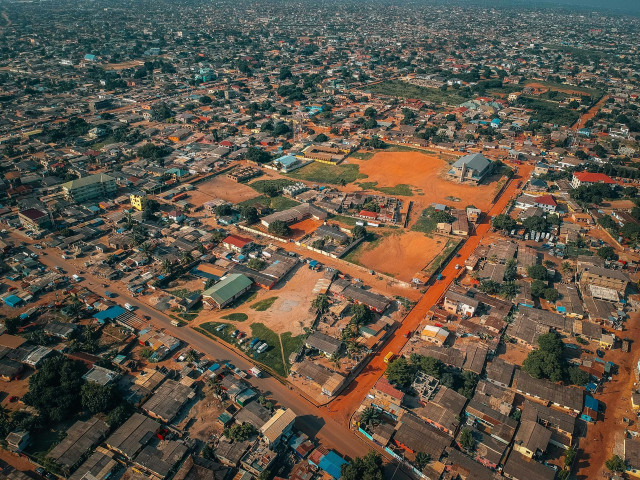
Affordable housing is one of the most burning issues of Ghana today. High population growth and the growing urbanization and cost of construction have not helped many citizens to obtain decent and affordable homes. The housing shortfall is approximated to be more than two million units in the country and this shortfall is ever increasing with the increase in urban population. The high cost of construction materials, including cement, steel, and aluminum roofing sheets and finishing products, has been caused by heavy dependence on imported construction materials. The materials may be costly because of the importation fees, cost of transportation and changes in the exchange rates.
In as much as this is the case, Ghana is blessed with an
array of natural resources that can be utilized in construction. There is wide
availability of materials like clay, laterite, bamboo, timber, sand, stone and
agricultural by-products in the country. Traditionally, most of the Ghanaian
communities constructed houses using these local products, which were not only
cheap but also fitted well in the environment and the local weather.
Nonetheless, as time has passed, the current construction trends have changed
to the imported materials, and the advantages of the locally-based alternatives
are not given a second thought.
There are benefits associated with the use of local
materials to produce low-cost housing units. First, it greatly lowers
construction expenses and houses will become affordable to the low and upper
middle income families. Second, it promotes the local economies as it creates
demand on local materials, as well as offering people work opportunities in the
rural and peri-urban localities. Third, locally produced materials may be less
harmful to the environment since they take less energy to manufacture and ship
them as opposed to imported building products.
Architects, engineers, and policymakers have started
reconsidering the possibilities of local building materials in solving Ghana
housing problems in the recent years. New technologies in building and better
construction methods have enabled the development of the materials used in the
local areas to increase their durability, strength and beauty. Indicatively,
modern housing designs now use compressed earth blocks, laterite bricks which
have been stabilized and engineered bamboo products in their designs.
Nonetheless, the large-scale use of the local materials is
still challenged by a number of barriers. These are little knowledge among the
general population and poor attitude towards stability in conventional
materials, technical capacity and insufficient policy support. These barriers
can only be overcome through concerted efforts amongst the government
institutions, personal developers, research institutions and the local
communities.
This blog discusses how Ghana can utilize the available
natural resources to develop low-cost housing. It explores why local materials
are important, the economic and environmental advantages of using local
materials, how innovation enhances construction methods and what policies are
required to promote their use. Ghana can revolutionize its housing industry by
adopting local materials and environmentally friendly ways of building, which
can enhance the economic growth and sustainability of the environment.
The Importance of Local Materials in Affordable Housing Development
Local materials are also important to make housing cheap,
particularly in a developing nation where the cost of construction is usually
expensive. In Ghana, most families find it hard to construct or buy houses
since building materials that are modern keep increasing. Global market prices,
and fluctuations in exchange rates have a big impact on imported materials like
steel, cement and glass. This consequently makes the work of housing
construction more expensive to the average citizen.
Costs of construction can be cut pretty low with the
utilization of the available local materials. Clay, laterites, stone, bamboo
and timber are some materials that are used in most parts of Ghana. Since these
materials are not transported or imported across the country, they are usually
cheaper than the foreign ones. This low cost makes them especially appropriate
to low-income type of housing projects.
The other significant advantage of local materials is that
they are suitable to the climate of Ghana. Traditional building materials were
selected in the past according to the capability of withstanding the local
environmental conditions. As an example, the natural insulation might be the
earth-based materials like mud bricks and laterite blocks which contribute to
keeping the indoor spaces cool in hot weather. On the same note, grasses or
palm leaves thatch roofing is an effective protection against rain and
sunlight.
There is also the local materials that encourage the culture
and architectural heritage. The architecture of the Ghanaian culture tends to
be exposed to the values and way of life of inhabitants in the area. The
introduction of local resources into the design of modern houses allows the
architects to retain the cultural traditions and design houses according to the
modern standards.
Besides cultural advantage, the utilization of local
materials favors the rural economies. Raw materials like clay bricks, bamboo,
and timber can be produced and processed to provide jobs to the locals. This
economic activity assists in alleviating poverty and enhances sustainable
livelihood.
Moreover, locally made materials can have a lesser effect on
the construction environment. Most of the imported construction materials
consume a lot of energy during production and transportation and this is a
source of carbon emission. On the contrary, materials that are locally sourced
are generally less processed and use less energy, and therefore are more
environmental friendly.
But the use of the local materials should be backed by a
good quality, and construction standards. Unless it has the relevant methods,
certain conventional materials can either be susceptible to weather or
structural inefficiencies. The strength and durability of such materials can be
enhanced with the assistance of modern engineering techniques without making
them too expensive.
In general, it is hard to overestimate the role of local
materials in affordable houses. Through its natural resources, Ghana has
potentials to lower the costs of construction, subsidize local economies, save
on cultural heritage and facilitate sustainable development.
Exploring Ghana’s Natural Resources for Construction
Ghana has a vast assortment of natural resources, which can
be used in housing construction. These materials are dispersed in various parts
of the country and have been utilized in the traditional construction ways over
centuries. The knowledge on how these materials can be maximized can help
greatly in the solution of the housing shortage in the country.
Clay is one of the most commonly available construction
materials in Ghana. Mud bricks, adobe blocks and compressed earth blocks are
made using clay. These materials are affordable and thermal and over the
centuries they have been used in traditional housing. Clay-based blocks may be
at times made to be strong and durable building materials when properly
stabilized using cement or lime, and they may fit in a contemporary housing.
Another resource that is highly available in most parts of
Ghana is laterite. The laterite bricks can be manufactured using the laterite
soil with stabilization and they are also becoming a significant trend in
sustainable construction. These bricks are durable, strong and are
environmental friendly since they do not need a lot of cement as compared to
the ordinary concrete block.
Another natural resource that is significant in Ghana
building industry is timber. The nation boasts wide forest cover which yields
quality wood needed in roofing of buildings, doors, windows and interior
decorations. Timber can be a valuable renewed and cost-effective building
material when they are used in a responsible manner to practice sustainable
forestry.
Another potentially valuable material which has been taken
into notice in the recent years is Bamboo. Bamboo is a very fast growing plant
and can be harvested after a few years thus is a very renewable resource. It is
powerful, pliable and can be used in the structural aspects, roofing structures
and wall panels. Bamboo can be one of the materials of construction that is
very reliable and durable with the right treatment.
Stone and sand are also in large supply and are also used in
foundations, walls, and also in concrete mixture. These are materials that are
giving strength and stability to buildings and they are considered necessary
materials of most construction projects.
Other by-products of agriculture (i.e. coconut husks, palm fibers, rice husks) can be utilized in novel building materials as well. This can be used in lightweight panels, insulation materials and composite boards, as an example. Through research and exploitation of these natural resources, Ghana would be able to become less dependent on imported construction materials, as well as enhance sustainable development of housing.

Innovation and Modern Technology in Local Material Construction
Modern technology is vital to enhance the performance of
traditional materials and their acceptance in modern housing construction
despite the numerous benefits associated with it. The development of
engineering, architecture, and material science has offered an opportunity to
strengthen, increase the sustainability of locally produced materials and
enrich them with beauty.
Creation of compressed earth blocks is one of the main
innovations. The mixing of soil and stabilizing agents is done using special
machines after which these blocks are pressed. The outcome is a robust and
consistent block of building which can be incorporated to walls as well as
building blocks.
Stabilization of bricks made out of laterite using a mixture
of cement or lime is another technological development. Laterite bricks are
more weather resistant and stronger than the traditional mud bricks which have
been stabilized. They may be applied in high-rise buildings and the
contemporary house architecture.
There is also an improvement in the treatment technologies
of bamboo. The correct treatment techniques help bamboo to be resistant to
pests, moisture, and decay enabling it to be employed in structural purpose.
Engineers are also considering using bamboo as an alternate to steel and timber
in some construction environments in order to have a sustainable construction.
The other innovation that can increase the local material
use is prefabrication. Components of the building that are pre-fabricated with
local materials can be manufactured in controlled conditions and assembled at
the construction sites. This method saves time of construction and also
maintains uniformity.
The use of local materials will also be encouraged by
architectural innovation. The contemporary designs that embrace the use of
traditional materials have been able to produce homes that are aesthetically
pleasing, yet affordable. These inventions prove that the local materials can
be used to match the recent construction requirements under the condition of
the effective research, technologies and competent workers.
Policy Support and Government Initiatives.
The governmental policies are critical in encouraging the
use of the locally available materials in the development of houses. In the
absence of conducive policies, the builders and developers will persist with
importation of materials as they have been doing since time immemorial.
The incentive of awarding a developer who uses local
materials in building is one of the policies. The tax cuts, subsidies and
grants can generate the incentives towards sustainable building practices by
the private developers.
Universities and research institutions should also be
assisted to carry out research on the local construction materials. Research
can be used to enhance the quality of the materials, come up with new building
methods, and boost the confidence of the people in local materials.
Use of local materials Public housing projects could be used
as models of demonstrating their use. Government housing programs can instill
the same practices to the private developers when they manage to include the
local resources.
There is also a need of training programs to builders,
architects, and engineers. Most of the construction experts might not be
experienced in the field of using conventional material. Experiential learning
programs are capable of equipping the required skills and the knowledge.
The use of local materials should also be identified and
controlled by the quality standards and building codes. These materials are
safe and durable as clear standards are used to ensure that buildings
constructed on them are safe. The government can help to establish enabling
environment in large scale use of local materials in building of houses through
the application of supportive policies and initiatives.
Community Development and Local Industry.
The participation of the community is paramount in enhancing
the use of the local materials in the development of housing. The local
communities have important information concerning the traditional methods of
building and materials available locally.
Community engagement in housing development can bring down
the building expenses and enhance social norms. During the construction, the
members of the community can donate labor, local resources, and traditional
knowledge.
It is also important to develop the local industries
producing building materials. Small-scale businesses can produce clay bricks,
bamboo products and the likes of construction material. These are enterprises
that generate employment and spur economic development.
The local artisans and craftsmen can participate in training
programs to enhance the quality of construction and also to increase the number
of job opportunities. Professional employees, who can learn to utilize local
materials in a productive way, can be of great importance to the sustainable
housing development.
Microfinance schemes will also assist the households who
want to construct houses with the locally available materials. Availability of
low-cost financing means that families will not have to use costly imported
goods to build houses.
Empowering the local industries and the community
participation will make the housing development beneficial to the individuals
as well as the economy at large.
Conclusion
The local materials provide a viable and long-term solution
to the housing problems in Ghana. Having over two million housing units in a
housing deficit, the country needs to consider innovative and affordable
methods of developing housing units. The utilization of the resources,
including clay, laterite, timber, bamboo, and stone, that are available locally
can go a long way in lowering the construction costs and also boost the local
economies.
The environmental benefits of local materials are also that
the materials also cut down on carbon emissions that are generated during the
manufacture and transportation of imported building products. These materials
with modern technology and better construction methods can help them to fulfill
the current housing standards at a reasonable price.
It takes the government policies, research programs and
industry cooperation to create the local materials usage on a large scale. The
change of perception to traditional building materials can be facilitated by
training programs to construction professionals, incentives given to the
developers, and awareness campaigns to the population.
The local building materials have more potential in housing
development due to community involvement and development of the local building
industries. Ghana can generate job opportunities and boost the economy through
engaging the local communities and empowering the small-scale businesses as
well as addressing the housing issues.
Finally, the use of local materials is not only a question of lowering the costs of housing, but rather a question of a more sustainable, stronger, and more inclusive housing industry. With the rich natural resources, Ghana can use them to revolutionize its housing sector and offer houses to millions of its citizens at affordable prices.














LEAVE A REPLY