

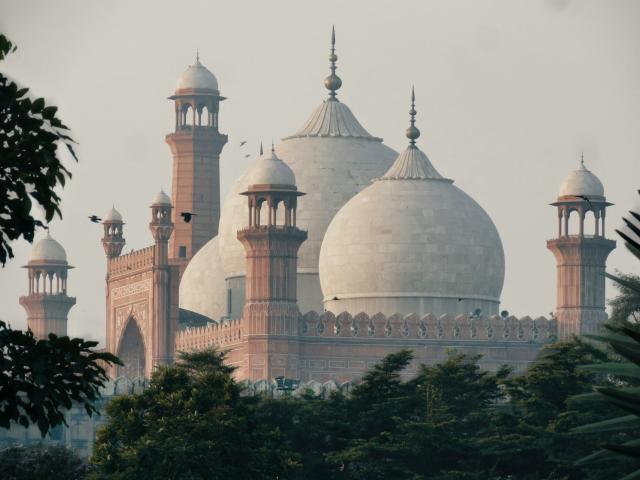
Lahore’s Smog Crisis: How Urbanization Made It Worse
Lahore, known in the past for its beautiful gardens, scenic boulevards and chilly winter mornings, has been choked by smog every year recently. Becoming a big city has greatly benefited the economy, but it has damaged the environment. In the past two decades, the growth of cities has been faster than the city’s ability to manage pollution.
A situation that was at first few and far between in the early 2010s is now recognized as a yearly crisis for health. While many people discuss things like car fumes, farm burning and factory wastes, the real problem is that unplanned city growth connects all these issues. With each new skyscraper, broader road and more industry, Lahore has given up its varied greenery for grey construction. As population grows, concrete takes over conservation, vehicles fill the streets instead of forests and money comes ahead of our health.
By creating more roads, authorities aimed to fix congestion, but saw more traffic start to use them. As housing societies moved further outward, the city had to provide new infrastructure, energy and transportation. As a result, Lahore’s size began to stretch across the land and forests that used to clean the air and reduce heat.
The signs are obvious: unsafe air quality readings, crowded hospitals of children and the elderly with lung problems and a thick cover of dangerous haze that descends each winter. Sadly, it’s obvious; through urbanization, we seek to help or progress, but it instead creates a truly harsh environment where we cannot safely live outside for months. The fact that change is happening too slowly makes the crisis all the more serious.
Expert warnings on urban sustainability have hardly changed how Lahore is being developed. In general, these plans do not factor in environmental damage and when they do, action is rarely strong. They do this more to appear concerned than to actually reforest. Those responsible for regulating emissions say they have neither the resources nor the autonomy needed to do their job properly. The rapid growth of Lahore’s cities caused problems for the ecosystem which now puts residents in danger. What people said about it was in Lahore are paying for development with each gasp they take.
Vehicular Explosion and the Airborne Cost of Commuting
Changes in urban mobility in Lahore have brought about big improvements in the air there. Instead of bicycles and rickshaws filling its roads, Lahore now has motorcycles, cars, buses and trucks whizzing by. Urban population growth has gone hand in hand with an increase in cars, but vehicles are now a leading source of smog. Because vehicles are poorly maintained and lower-quality fuels are used in the city, the air is full of fine particles and nitrogen dioxide which are linked to continuous respiratory and heart problems.
Rapidly increasing numbers of people own private vehicles. If buses or trains are unreliable or poorly supported by the government, a car or motorcycle is something you need instead of just something useful. Such ease of use is achieved at the expense of something important.
Because of the large number of new cars on the roads each day, Lahore’s transport system is struggling. Keeping your car on idle while traffic is jammed releases harmful fumes and wastes gas. When people drive their own cars, rather than use public transportation, pollution rises, since many of these vehicles are well past their best emission levels. Although services such as the Metrobus and Orange Line are provided, they cover a restricted part of the city and have integration problems, so most people prefer other choices.
Policies on how people and goods are moved in the city only make the problem worse. Even though there are many road and flyover expansions, this just leads to an increase in the number of cars on the roads—a situation called induced demand.
Many infrastructure projects focus mostly on supporting vehicles. Most people forget about pedestrians and cyclists, even though they protect the environment better than other modes. Smog is made worse by the exhaust from commercial vehicles. Lahore is a main center for the economy and each day thousands of trucks journey through the city. Because many of these trucks use old diesel engines, they send out a powerful pollutant called black carbon that affects both health and climate change. Standards for emissions are not hard to break, vehicle testing is inadequate and officials are easily bribed to keep unfit cars on the road.
The vehicular explosion in Lahore has more to do with policy problems than it does with the number of people killed. Those metropolitan areas that struggled with this issue—such as Delhi and Beijing—have put limits on vehicles, used better fuels and invested in modern public transit. Yet, facilitating private vehicles and wasteful mobility is still a priority here. As long as this continues, smog will often be a popular visitor to Lahore during the winter season.
The Failure of Regulation During Industrial Expansion
Transportation is a big source of Lahore’s smog, but its rapidly growing industry is also equally guilty. Much of the emission from city industries nearby goes unchecked, including sulfur dioxide, nitrogen oxides, carbon monoxide and suspended particulate matter. Many factories and small manufacturing units release toxic smoke from burning coal, rubber and other wastes. The fact that many operations take place within confusing or poorly regulated environments limits possibilities to watch over and consistently penalize this business.
According to regulations, Pakistan restricts emissions, requires using pollution control tools and controls the use of hazardous fuels. Rarely are these laws ever truly put into effect. EPAs tend to be short of financial resources, have fewer staff members and receive little freedom from politicians to stand up to business owners involved in environmental damage. Checks are not done regularly and when they do, the results are lenient. It is also hard to map or calculate pollution hotspots accurately, since data on emissions are not gathered consistently. If data are unreliable, it is almost impossible to develop or start effective intervention programs.
Many people blame the smog on the brick kilns found mostly on the outskirts of Lahore. Many vehicles break rules during smog season and use easy methods that create a lot of black exhaust. Although zigzag kilns are more efficient and recent, many people have not switched to them since there are few incentives and little awareness about them. In addition, industries near Lahore send pollution to surrounding towns which are not part of the same administrative district. Steel mills near Sheikhupura and chemical plants in Sunder Industrial Estate put more pollution in the city’s air.
Lack of accountability in industry also points to problems with the government as a whole. With the common view that environmental regulations stop the economy from growing, politicos are slower to implement them. Yet, failing to solve these problems is becoming more expensive, with poor public health, a slowing economy during smog and a loss of what makes Lahore a nice place to live. Making green production, energy and emissions improvements is viewed by many as an unnecessary, onetime cost, not a long-term must.
There does not have to be conflict between industry and pollution. There are many jurisdictions that have learned how to balance economic growth and protecting the environment. However, for this to work, we need leaders to act, strong institutions and public involvement—all lacking at present in Lahore. As long as things remain unchanged and no proper enforcement happens, the health of the community will suffer while industry does well.
Agricultural Practices and the Menace of Crop Burning
As autumn arrives, smoke starts to blanket Punjab and Lahore heads the list of affected areas. Most of this pollution isn’t from the city itself, but comes from nearby farms who use crop residue burning. Since farmers have little time and few facilities for preparing their fields, they burn the remains of rice and wheat in the stubble before planting for the following season. It doesn’t take a lot of time, spend much money or require much skill, but it leads to serious pollution of the environment.
When these forest fires burn, they put a great deal of PM2.5 and carbon monoxide into the air. Because Lahore’s air is already full of pollution from traffic and industry, the added fumes create a thick smog that remains for weeks. Lahore is even worse because it is situated in a valley; during chilly weather, smog often stays put and does not easily go away.
Seasonal ban orders have been given by authorities, but they struggle to enforce them and issues like weak fines and only uncovering small amounts of burnt stubble remain. Many farm owners state that in order to use other methods, they would need special financial aid or lower-cost straw-management equipment. At the same time, not enough cooperation between urban policymakers and rural communities has maintained the difference. A lack of government services for agriculture and crop diversity has put farmers in a position with few helpful choices.
What’s more, this is something people do in many countries. Northern India also plays a large role in smog and the wind brings these pollutants across the border for Lahore to face. Since air pollution is shared with other countries, finding a solution is not simple. Though essential, teamwork at a regional level, using satellite data and creating crop-residue programs is not developed enough.
Many people in cities think of crop burning as a problem in the countryside, but it really impacts Lahore’s suffocating air. Many hospitals are overflowing, business activity is down and schools are closed. It becomes clear that issues related to farming can badly impact urban health. Before policymakers address these issues and improve city infrastructure, Lahore’s smog will be caused by things happening both within the city and outside its boundaries.

Rising health problems and deaths are linked to the air pollution assault on people
The worst aspect of Lahore’s smog crisis is the damage it causes to people’s health. Millions of residents face smog every day as a real and threatening challenge to their health. During this time of year, medical centers in the city see a large increase in cases of respiratory illnesses, asthma, and bronchitis and eye infections. Those who are young, elderly or already sick often must remain inside for long periods due to dangerous air pollution.
PM2.5 particles which are airborne pollutants, are especially dangerous. Very small particles can get into the lungs and into the blood, causing widespread inflammation that may lead to heart disease, strokes and cancer. Being around high levels of air pollution for a long period can negatively impact children’s growth and can harm adults’ brain function? No one should be pleased to discover that for five straight winters, the air quality in Lahore was among the worst anywhere, because this indicates a serious threat to public health.
The financial burden caused by ill health is just as huge. Less gets done when workers are sick and staff cannot teach, while the cost of healthcare rises. Those with the least income are most at risk, since their homes often do not have proper ventilation, they cook with dirty fuels and they either cannot use air cleaners or pay for private medical services. Such communities often endure their diseases alone, as the public health system is still struggling with being under-staffed.
Since Lahore faces these challenges, environmental policy hasn’t given public health special importance. Not enough data on pollution-related health issues is open to everyone, there’s no early warning system and public awareness efforts are few. Sometimes, the government informs people during smog days and both masks and protection are supplied mainly by NGOs and private people, not the government. Most workplaces and schools overlook scientific advice when deciding to shut down.
Health specialists and environment enthusiasts sense that combining action plans such as air monitoring in need, clean energy rewards, harsher vehicle emission norms and smart city designs would help, yet progress is moving slowly and separately. Until the government gives more attention to public health and handles pollution as a serious medical issue, the number of people affected by Lahore’s smog will keep increasing. If climate change leads to more extreme weather, the bouts of unhealthy air might become both longer and more intense, making the crisis worse in the city.
How to Break out of Policy Paralysis
The environmental crisis in Lahore is caused by factors beyond infrastructure; instead, it’s a result of visionary, managerial and political failure. The city’s group in charge has publicly admitted the problem, but practical action has not yet appeared. Although there are environmental policies, they are found in various departments, do not always match each other and usually go unenforced. All of these departments—transport, industry, agriculture and health—play key roles in smog, but there is hardly any cooperation between them.
At different times, the Lahore High Court has granted orders to ban crop burning and make plans to clean the air. While they help, these actions are only temporary and not well integrated. Long-term thinking is seldom done. While the Punjab government has a Clean Air Policy, it is not put into practice correctly, has no budget and few measurable goals. It is not easy for leaders to block vehicles, close down polluting factories or punish offenders, because they might face strong opposition from the public’s angry temperature.
There are already technological answers to these problems. Communities in different places have turned to electric buses, added congestion pricing and increased green roofs to improve their air quality. Lahore uses lots of those technologies, yet it struggles to get the institutions and investments needed to use them well. It also seems that very few measures are taken to mix with civil society or help people learn about the environment. No matter how good the policies are, they will not succeed if the majority does not participate.
Conclusion
This smog crisis is just one sign of bigger problems: uncontrolled urban spread, varied lengths of authority and lack of care for the environment. Despite its growing concreteness and numbers, the city’s atmosphere is soldering under the effects of pollution. You could describe it as an environmental story, but it’s also a public health threat, affects the economy and is a humanitarian issue—all at the same time. The smoke we experience comes with reminders of bigger problems we haven’t been able to fix. Lahore’s plight is particularly sad because so much of it could be prevented.
The country already has in place actions like setting emissions limits and encouraging public transit, as well as support for cleaner energy use in industry and farming. What’s lacking is a willingness to act and the organization to carry out the plans. Too many times, people try to blame someone else—like farmers or industry—because we are all responsible for solving this crisis together.
The results of not acting are very negative. Many children are growing up breathing in harmful air. As companies are interrupted and healthcare costs rise, the economy will be unable to build. Social disparities are likely to get worse for the poorest. The nickname “City of Gardens” for Lahore may one day be forgotten, replaced by talk of toxic air.
The city has glimmers of hope. Protests from citizens, increased action by youth groups and worldwide interest provide us with a rare but genuine chance for reform. Since urbanization won’t stop anytime soon, it requires rethinking with balance, fairness and resilience in mind. Smog doesn’t have to rule our lives. It’s really just a lot of small decisions people make in life. It still has the chance to produce more impressive development results.
Also Read: Pakistan Land Tenure Security And Resident's Stability In Squatter Settlements Of Lahore



-ySWGlp0vgc.jpg)









LEAVE A REPLY