

Karachi’s Traffic Apocalypse: Can BRT Systems Save It?
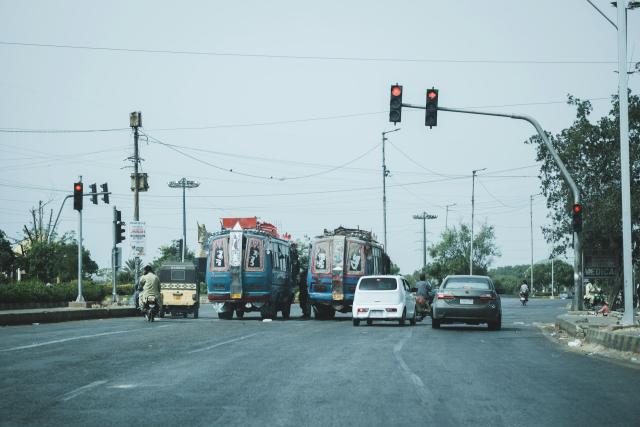
In recent times, Karachi, Pakistan’s largest economic center, has gone from a frequent traffic standstill to a complete collapse. Because it’s home to millions of people and most of the country’s business, Karachi’s roads now have to cope with many private cars, rickshaws, minibuses and heavy commercial vehicles. It now takes people much longer, up to two hours or more, to get to work, fuel use and car emissions are much higher and road rage and traffic accidents are increasing. With each minute wasted on delays costing money, transport that is unreliable and inefficient is now leaving the city short by billions of rupees and a lot of wasted fuel every year.
We are just as concerned about the harm to people. Because the air in Karachi contains dangerous levels of small particles, it often exceeds international health standards, causing people to develop respiratory diseases, heart issues and die too early. Every day, commuters face crowded vehicles, feels unsafe on broken buses and must travel in dangerous weather. If there are no divided transportation options, women and vulnerable people face a greater risk of danger. At the same time, the roads in the city, built for much lighter traffic decades ago, become weaker and break up, resulting in holes, sunken patches and regular flooding.
Only building new roads or enlarging existing ones provides a short-term remedy to the problem. When new lanes open, new cars start using them which only creates more stress on our roads. Because informal settlements are scattered throughout Karachi, it’s very difficult to organize the city’s traffic. Such solutions have seen Bus Rapid Transit (BRT) guidelines being developed—plans for efficient, dependable and affordable mass transit that could help people save time each day and reduce environmental damage. Can BRT really clean up Karachi’s traffic mess or will standard problems get in the way?
Examining What Leads to Karachi’s Traffic Problems
The first step to figuring out if BRT might work in Karachi is learning about how the city’s traffic crisis developed. The rise in population due to rural migration and extra births has quickly exceeded the available transport services. Because informal settlements line the edges of arterial roads, buses usually have to slow down for long parts. At the same time, higher income and less regulation on importing vehicles have caused many people to buy cars and motorbikes and there are now far fewer regulated public buses than private vehicles. On-the-rise personal transport means roads are packed almost all day.
Moreover, there isn’t much organized planning for city development. Since municipalities, provincial transport branches and federal agencies in Karachi don’t coordinate, policies are broken up, there are overlapping areas of responsibility and resources are often wasted. Enlarging roads leads to problems with relocating utility lines; peak hour parking limits are not followed and even when road use changes, traffic lights don’t adapt. Even good ideas like adding exclusive bus lanes lose their value when unauthorized transport drivers take over the same routes.
Most public transport in the city is not organized through legal businesses. Despite being common, minibuses, rickshaws and private vans usually follow no specific route, operate by no set timetable and do not have safety checks. The prices for transport are not fixed and many vehicles operate in dangerous ways. Because of its broken structure, many middle-class travelers pick private cars or ride-hailing options, meaning buses lose more riders and cash.
Problems linked to money making things far worse for Lebanon. With fewer subsidies for fuel, rising fuels prices cause problems for low-income workers, so the need for cheap mass transit is greater than before. Even so, there isn’t enough money in public budgets to cover the costs of building major rail or metro networks. Since there is no other cheap option with rail capacity, BRT comes in as the reasonable alternative. The key is to build a network of committed travel lanes, upgraded stations and streamlined tickets to bring drivers to more convenient and quick service.
Principles of BRT and Stories of BRT from Around the World
Unlike other transport methods, BRT offers the reliability and ease of trains—but with rubber tires instead. Some main rules are to have lanes reserved for buses, collect tickets off the train, let people board at ground level and share real information that helps passengers. Integrating park-and-ride services and feeder bus routes allows BRT users to go from door to their destination without hassle.
City transportation has changed globally thanks to these principles. Bogotá’s TransMilenio has daily passengers totaling more than 2 million and buses arrive every 20 to 30 seconds at the busiest times. Back in the 1970s, Curitiba became the first city to develop BRT, using special buses on their own lanes to move as many people as light rail at much less cost. TransJakarta, previously the world’s biggest BRT, has around 1 million daily riders but struggles with being used by other vehicles.
In our own region, BRT systems in Dhaka and Mexico City offer examples of how these bus lines can fail or succeed in real life. Although using new bus lanes at first led to fast services, poor enforcement kept those savings from being realized. Thanks to its linkages with both metro and suburban trains, the scheme in Mexico City shows how BRT can form the foundation of a larger transit network.
Important knowledge comes out of these case studies. Enforcing carpool laws depends in large part on the support of a tough and trustworthy transit authority. As a result, putting effort into public awareness and stakeholder approval (including current transport operators) makes it easier for informal services to become more organized. Third, the use of modern technology for signals and handy mobile applications makes commutes run smoother and gives riders an improved experience. For example, parking regulations and charges for driving during busy times help to decrease use of personal vehicles. Planners in Karachi should listen to what these lessons teach, so they do not make the same mistakes.

Karachi’s BRT Initiatives: Progress and Performance
BRT planning in Karachi started in earnest during the mid-2010s. The Green Line (formerly known as the Red Line) started running in 2022, covering 20 km from Surjani Town to Merewether Tower. It claimed to operate 22 stations and buses with seating for 80 people, expecting 250 000 passengers every day. At the same time, the Orange Line started running from Quaidabad to Board Office and ideas for a Blue Line from Korangi to DHA were made.
The Green Line did not see as many riders as expected, with a daily figure of about 60 000. Various observers complained that training services were sluggish, ticket machines did not function and private-bus operators showed no interest in joining the project. Problems with the road layout—such as small medians that let cars use the pedestrian crossing—and unsafe pedestrian crossings kept people from using the service. Work on the Orange Line was further halted by delays and disagreements over land.
In some areas, things are going well. People passing through on the Green Line corridor now spend significantly less time waiting. With barrier-free boarding, elderly and disabled passengers can now use enclosed stations with ease. Some women have started to use public transport because there are now women-only coaches and security. Customers have praised ‘real time’ displays and mobile ticket pilots.
Significantly, transport authorities can now easily shift their actions. Now, special BRT police officers ensure that riders are in the proper lanes and transportation from city neighborhoods to the main BRT stations is provided by new dedicated minibuses. Ride-hailing partnerships include first- and last-mile routes, making things more convenient for people. Now, art organizations gain support from the government as well as from private groups which helps reduce budget problems. The BRT in Karachi is still being developed. The results highlight the need for all elements of infrastructure, operations, enforcement and complementary rules to work together. While the network grows, the lessons learned must help every new pathway deliver BRT’s promise of quick, dependable and fair transport.
Obstacles to the Success of BRT in Karachi
Karachi is making progress, but there are strong obstacles to turning the BRT into a citywide system. First, the problem of fragmented institutions continues. Because there is overlap in what the Karachi Metropolitan Corporation, Sindh Mass Transit Authority and different provincial bodies do, matters often get put off and each entity points fingers at the others. When there is no united transit authority, BRT corridors might face irregular requirements and enforcement.
Also, funding sources continue to be uncertain. Building and maintaining stations and depots, along with buses, means constant budget support, but running services often requires many subsidies. While loans from ADB and JICA relieve many costs in the beginning, their rules for buying and protecting the environment can interfere with the project’s progress. Private investors are attracted by the transportation sector, yet stable prices and set revenue are things that governments prefer to avoid.
In addition, opposition to ideas can delay or stop the development process. Many informal operators who manage trips in busy neighborhoods think BRT is a problem and as a result, they sometimes protest or convince officials to halt making new BRT lanes. Because people often disagree with land acquisitions, politicians have been hesitant to back certain projects. Groups focused on civil society ask that small businesses should consult first and receive compensation for any disturbance.
In addition, the complicated design and technical issues make it hard to build in Karachi’s crowded city center. Since medians are restricted and utility lines may shift, along with hawkers crowding the roads, cutting road corridors is a tough task. Heavy rain each monsoon season washes away pavement and harms stations, so special designs are needed that make the whole project more costly. Getting commuters to change their habits isn’t easy. If the routes are not flexible, owners of motorbikes and cars prefer not to use BRT services. Bringing about mass use of public transport by professionals requires showing them that it beats private cars for speed, comfort and reliability.
It will take strong leadership, changes within institutions and an agreement by all that cities should count on mass transit to succeed. Only with a network of BRTs can Karachi start solving its severe traffic problems.
Towards Sustainable Mobility—Integrating BRT into Karachi’s Future
Building BRT will not solve Karachi’s traffic problems on its own. Instead, BRT should be the backbone of an approach that combines different types of transport and guides travel behavior. BRT should be combined with current and future railway, bus, ferry and taxi services to form a well-connected whole. Shared ticketing and timetables lead to lower penalties for transfers and widen zones where people can travel. Making pedestrian and cycling routes safe around BRT stations creates other ways for passengers to get to their bus stops nearby.
Additionally, the use of complementary policies supports the move toward using mass transit. Pricing on main roads during rush hours discourages driving alone and varying the cost of parking helps drivers choose park-and-ride. Social sciences show that promoting TOD, with projects built at stations and more people sharing the same space, increases ridership while discouraging long and tiring trips. Third, it is essential to reform institutions. Unifying Karachi Transit Authority with a definite role in planning, constructing and running services improves both decision-making and responsibility. With the ability to enforce dedicated lanes, coordinate actions with traffic police and deal with integrated ticketing, this Authority is now responsible for the city’s overall mobility vision.
In addition, having a sustainable way to pay for projects guarantees future support. Working together, subsidies, user charges and the private sector can ensure that projects are possible and within a government’s budget. Investing in taxing land values influenced by BRT helps obtain money for maintaining and building additional routes. Having open and honest communication and working with people in the community helps build ownership. Regularly reviewing operations, listening to what customers think and talking with neighborhood people and informal operation groups make BRT a civic project people take part in.
A new age for Karachi is possible if mobility becomes a single system that puts people’s needs before those of vehicles. Through strong BRT corridors that are supported by demand control, reforms and people’s trust, the city has a chance to stop its traffic disaster. Karachi’s way forward will be arduous, yet if we keep at it and plan carefully, its streets will be restored, major commuting hours regained and everyone will have access to an equal, dependable commute.
Conclusion: Navigating Karachi’s Path from Gridlock to Mobility
Years of quick city growth, disjointed government control and a lack of proper public transport have led to Karachi’s traffic disaster. Every day, the noise of honking and constant idling makes driving difficult, whether it’s in crowded downtown or flooded Gulshan-e-Iraq. Roads have been made wider, flyovers have been added and the city has watched unregulated minibuses operate, but all these efforts have done little to resolve the situation for long. BRT systems should be seen in this situation as a leading part of the overall revolution in mobility, not as a perfect solution.
The first years of the Green and Orange Lines provide us with useful lessons. Buses in special lanes and advanced stations allow BRT to help reduce travel time by 50% and make transportation more accessible for women and persons with disabilities. On the other hand, failure of some systems suggests that runners on lanes should not be allowed, small technical glitches in operations must be addressed and continued support from elected officials is necessary. If planning, construction and operations in Karachi’s transport system are led by many disconnected bodies, the city risks facing the same challenges on a much larger scale.
Creating a broad network for BRT requires thinking about all the systems involved. First, mass-transport corridors should unite with buses, rail and ride-hailing services, offering similar tickets and schedules, as well as uncoordinated infrastructure. Offering safe footbridges and well-designed lanes for bikes means BRT services can reach everyone, without causing any problems for the last part of the journey. Policies that help manage demand such as charging for congested roads, changing parking fees and building transit-focused areas, can discourage car use and bring income to invest in continued development.
Institutional and financial changes are necessary and equally important. Enforcing dedicated lanes and standardizing the quality of bus service can happen through a Karachi Transit Authority, led by technicians and working free from short-term politics. Mixing user fare, money from the government and tools for value capture, along with private investments, can meet the needs of people who use BRT affordably but maintain good service. Getting through Karachi’s traffic disaster depends on everyone determined to help.
If open communication, consistent monitoring and giving everyone a say are used, BRT can go from simply a government project to something people in the community support together. If BRT brings safer, prompt buses to kids, frees up lost time for office staff and provides easier access to jobs and services for marginal communities, it will truly enhance equity, economic growth and the environment.
Also Read: Briefs of JAMSHED Quarters, Martin East, Martin West, and Jahangir Quarters, Karachi- Pakistan



-ySWGlp0vgc.jpg)




LEAVE A REPLY