

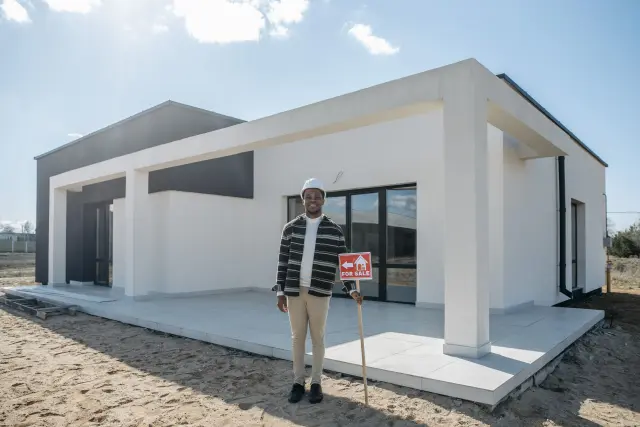
How Nigerian Real
Estate Startups Are Making Housing More Affordable
The issue of affordability of housing has become a crisis in Nigeria. The high population growth rate, urbanization, inflation, and income inequality have synergized to render decent living housing more unattainable to a big portion of the population.
 With the increasing demand of housing,
high construction costs, lack of access to finance, bureaucratic land
systems, and old models of delivery continue to constrain the supply.
With the increasing demand of housing,
high construction costs, lack of access to finance, bureaucratic land
systems, and old models of delivery continue to constrain the supply.
Conventional real estate development in Nigeria has been more about high-end
and luxury housing and has left low- and middle-income households without much to
offer. Consequently, millions of Nigerians have to live in overpopulated areas,
in informal settlements, or in poor housing, which compromises health,
productivity, and social stability.
However, over the past few years, several new actors have started to redefine the housing picture. These real estate startups in Nigeria are disrupting traditional methods of housing development and access through their goals of technology, innovation, and social impact.
These startups are using digital platforms, new financing models, construction
innovations, and solutions based on data to reduce costs and increase access to
housing. Most of these startups are specifically oriented on affordability,
transparency, and inclusion, unlike their traditional counterparts.
The fact that real estate startups are a pointer to a bigger
change in the entrepreneurial ecosystem in Nigeria. The increased access to
technology, the increased attention of venture capital, and the young,
innovation-focused population have offered the ideal environment for disruption
in all industries, including real estate. Historically a sluggish industry
in terms of innovativeness, housing is now undergoing a re-evaluation in new
business models, which are more efficient and less user-occupying.
This blog discusses how the real estate startups in Nigeria are rendering housing more affordable. It discusses the structural issues with the housing market, how a startup-based solution emerged, the role played by technology and finance, the social and economic effects of the startup-based solution, the challenges that startups have faced, and the future of startups in terms of providing housing affordability in Nigeria.
In this analysis the blog
has emphasized the transformational value of entrepreneurship to the
development of one of the most critical problems in Nigeria.
Nigeria: Structural Obstacles to Affordable Housing
To know how real estate startups are enhancing affordability, it is important to look first at the structural factors that have inhibited availability of housing in Nigeria in past. The high cost of construction is also among the greatest challenges.
The inflation, depreciation
of currencies and reliance on imports have led to a sharp increase in prices of
important building materials like cement, steel and roofing sheets. The
conventional ways of construction are also time consuming, inefficient and cause
delays and overruns that end up being transferred to the home buyers.
The other significant barrier is land access. The Land Use Act places ownership of land in state governors, and establishes bureaucracy in land acquisition, title registration and consent.
All these processes are
usually fairly slow, opaque, and costly, making small developers and raising
costs of projects away. Illegal risks also increase with lack of clarity on
land titles since this will limit access to financing and confidence amongst
investors.
Affordability is also curtailed by the constraints of housing finance. The penetration of mortgage in Nigeria is very low, as majority of the home purchases are made as a result of personal savings or unofficial transactions.
Nigerians are locked out of the formal mortgage
systems by high interest rates, low tenure of loans and stringent eligibility
criteria. Even relatively affordable housing cannot be purchased by average
income earners without access to affordable long term financial loans.
Conventional real estate development models have led to
affordability as well. Due to the need to avoid risk, many developers focus on
high-margin luxury housing, which leads to the low provision of the low- and
middle-income households. This trend has been enforced by the lack of quality
data on demand as developers do not trust the buying capacity of under-served
groups.
These issues are aggravated by urban planning and lack of
infrastructure. Lack of proper transportation, power and water facilities add
on the cost of development and restrict the housing places. As the cities grow,
the housing supply is failing to match the population growth, which creates an
upward pressure on the prices.
Such structural barriers have resulted in a housing market
that is inefficient, exclusive and unequal. It is against this backdrop that
real estate startups are emerging and are looking to leap over, or reorganize
these constraints through innovation, technology and alternative business
models in Nigeria.
Emerging Startups of Real Estate in Nigeria
The creation of real estate startups in Nigeria is a drastic change in the way housing issues are being solved. These startups, unlike conventional developers, might have a technology, finance, or social enterprise background as opposed to traditional construction companies.
This move to
venture into real estate is an indication that they have realized that the
housing affordability issue is not just a construction issue but a systems
issue that has to be addressed in a systemic manner.
These startups started with a lot of pain points in the housing value chain. Others were concerned with information asymmetry and created online platforms, connecting buyers, renters, developers, and agents more effectively.
Other people focused on financing lapses and provided new
payment plans, rent-to-own options, or fractional ownership that makes the
initial cost cheaper for the client.
The peculiar feature of real estate startups is the focus on scalability and user experience. Through the application of digital
technologies, a startup is able to access such vast customer bases at a
relatively low cost, which enhances the visibility of the market and minimizes
the friction in transactions. This is unlike the conventional real estate
businesses that have much dependence on informal networks and intermediaries.
The startup has also led to the use of data in
decision-making in the sector. They can structure products to better conform to
market needs by gathering and examining data about housing demand, the supply
of houses and how people are buying them. This data orientation enables
startups to consider affordability and remain financially viable.
Collaboration is another characteristic. Several startups
collaborate with developers, financial institutions, and government agencies to
provide housing solutions. Instead of owning land or building houses and homes,
they tend to be an intermediary, facilitator, or platform provider and this
makes them less capital-intensive and less risky.
The ecosystem developments that have enabled the emergence
and growth of real estate startups have been the expansion of internet access,
the use of mobile money, and the subsequent interest in proptech by investors.
All these have helped startups to venture into newer models that they could not
have made viable before.
Albeit being of relatively small size in comparison with the
overall housing shortage, the Nigerian real estate startups are a valuable
source of innovation. Their strategies confront established traditions and show
that affordability is a solvable problem, which can be solved by using
creativity and entrepreneurship.
Affordability by Technology and Innovation
The key to the affordability of housing is technology, and
this is how real estate startups in Nigeria are progressing. The search for properties has been revolutionized by digital platforms, as it saves time
and money on the process of acquiring a housing unit. The aggregation of listings and the availability of price transparency allow startups to enable better
decision-making by the consumers and decrease the power of speculative pricing.
Transactions are also reduced through automation and
digitization. Documentation on the Internet, virtual checks and online payments
decrease the use of intermediaries and reduce fraud. These efficiencies can be
in form of saving costs which can be transferred to buyers and renters.
The efficiency in construction is being enhanced in some
startups by the use of technology. They assist developers in minimizing waste
and time delivery schedules by embracing the modular construction
methodologies, standardized designs and project management software. Though
startups do not necessarily develop houses, their technological applications
allow the production of houses to be more efficient.
The other driver is innovation in data analytics. Startups
can examine the trends in income and expenditure or the geographic preferences
to develop affordability housing products that would suit a particular segment.
This minimizes the threat of unsold units and motivates the developers to focus
on the low-income markets.
Other ownership and rental models also have technology.
Online platforms facilitate collective ownership and rent-to-own agreements and
allowable payment schedules that reduce entry barriers. These models are
especially appealing to the youthful workers in the informal sector as well as
young professionals who cannot afford the conventional mortgages.
Notably, technology increases confidence in the market that
is frequently ravaged by fraud and obscurantism. Authenticated listings,
escrows, and electronic records enhance trust and minimize risk to customers.
The growing trust will stimulate the involvement and broaden the affordable
housing market.
Technology is not the solution to the housing crisis in Nigeria but it is an enabler. Innovation can make housing more affordable to a wider range of the population by improving efficiency, transparency, and inclusivity, as evidenced by real estate startups.
Alternative Financing Models and Housing Access
Housing finance innovation is one of the most influential
areas of Nigerian real estate startups. Knowing that affordability is equally a
matter of payment structure as price, startups are working on alternative
funding mechanisms that are more in line with the reality of incomes in
Nigeria.
Rent-to-own plans are considered to be one of the most
popular innovations. These models enable tenants to accumulate equity slowly in the form of rents, and the deposits required are minimal. This strategy presents a
viable channel through which many Nigerians can own houses as they are earning
well but failing to save.
There are also startups that provide purchase plans in
installments that spread out within a number of years without the regular
mortgage requirements. They join forces with developers, thereby distributing
payments in both construction and post-delivery stages hence relieving cash
flow pressures on buyers.
Co-investment models and fractional ownership models have
also sprung up. These enable people to participate in property togetherness and
reduce personal risks. Although commonly related to investment properties,
these models may equally be used in developing affordable housing based on
mobilizing small amounts of capital.
Online credit evaluation platforms are used to allow
startups to test affordability beyond traditional credit analysis. Through
the analysis of transaction histories, mobile payments, and other data, they
will be able to evaluate the risk more precisely and provide financing to
underserved populations.
These innovations in financing lessen a lockout of the
housing market and increase productive demand of the low-cost housing.
Nevertheless, they must be dealt with in terms of careful risk management
to guarantee their sustainability and protection of the consumers.
Nigerian real estate startups are trying to deal with one of
the most insurmountable affordability obstacles by reconsidering housing
financing. Their success shows the necessity to match the financial products to
the local economic conditions.
Challenges Facing Real Estate Startups and the Path Forward
Nigerian real estate startups have a great deal of
challenges despite their innovations. One of the most significant challenges is
regulatory uncertainty since laws and policies are not well adjusted to the new
business models. The startups may be put at risk of a legal disputes due to
ambiguities regarding property rights, digital transactions, and alternative
financing.
The other problem is access to capital. Although investor
proptech is on the rise, most of the startups are finding it hard to get long
term funding that would enable expansion. Housing is capital-intensive and the
startups need to balance between growth and financial sustainability.
Operational deficits are also caused by infrastructure
lapses. The inadequate power supply, inadequate internet connectivity in
certain regions, and transportation complications make them more expensive and
restrictive. Such limitations may compromise the efficiency benefits that
startups aim to provide.
The factors of trust and consumer education are still in
progress. Nigerians are very skeptical of innovative housing patterns because of
their past experiences with fraud. The startups are forced to spend much on transparency and interaction with customers to gain credibility.
In the future, teamwork will play an important role. Collaboration with the government can be used to align the startup solutions
with the public housing objectives. The partnership with financial institutions
may widen access to the capital and partnership with developers may raise the
level of housing supply.
Startup-led affordability solutions can be fast-tracked by
providing policy support, such as regulatory transparency and incentives. Once
an ecosystem is mature, a successful startup is able to expand its model and
shape industry practices.
The Role of Government and Policy in Supporting Startup-Led Housing Affordability
Government policy is decisive in deciding whether the real estate startups in Nigeria can successfully scale their innovations based on affordability. Just like the creative and technological innovations and dynamics that come with startups, the regulatory, legal, and institutional environments where startups are operating determine the ultimate impact of the startups.
In Nigeria, where land administration systems, planning regimes, and
financial policies play a strong role in the housing market, the government may
either hasten or limit startup-based solutions.
Land administration is one of the most serious policy fields. The cost of land access is also a significant factor that drives cost in developing housing and the bureaucracy involved in land allocation, title registration and agreement is a key determinant of the feasibility of a project.
Any real estate startup working in partnership with developers or innovative ownership structure tends to lose time regarding inadequate land titles or excessive approval procedures.
Facilitating land registration and transforming
land records to digital would eliminate uncertainty, reduce the cost of
transactions and simplify the organization of affordable housing solutions by
startups.
Affordability is also affected by urban planning and zoning. Nigeria has a lot of cities that do not have updated master plans or implement their regulations in a patchy way, causing land use to be inefficient and costly to develop.
Affordable-housing startups usually concentrate on high-density or mixed-use projects to lower per-unit expenses, yet zoning controls could impede such designs in outdated zoning regulations.
Startup innovation and affordability would be in line with progressive planning
policies that promote density, transit-oriented development, and mixed-income
communities.
Conclusion
Startups in the Nigerian real estate are having a larger and significant role in making housing affordable. They are redefining the process of financing, delivering and accessing homes by tackling inefficiencies throughout the housing value chain.
These startups are opening up new
possibilities to low- and middle-income members of households who are otherwise
ineligible to the housing market through technology, data and new models of
financing.
Although startups cannot be the sole solution to the housing
crisis in Nigeria, they are an essential supplement to government policy and
the conventional development. They can experiment, adapt and scale innovative
solutions, therefore making them change agents.
The affordability of houses will only continue to increase
as Nigeria goes through the process of urbanization. Policy reform, investment,
and collaboration can be used to support real estate startups to unlock their
full potential. This way, Nigeria will be able to take a step towards the more
efficient and inclusive and equitable system of housing.













LEAVE A REPLY