

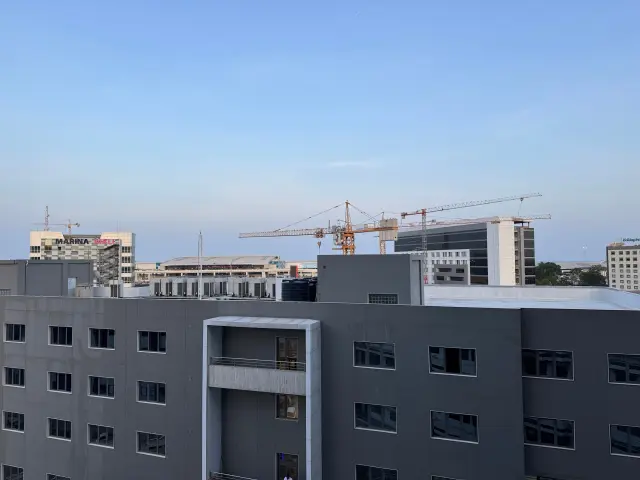
How Ghana’s Affordable Housing Programme Is Tackling the Country’s 2 million Housing Deficit
National development relies on housing as one of its pillars, as it defines economic performance, social stability, and the general standard of living. In Ghana, the housing sector is now one of the most topical spheres of interest because Ghana faces the problem of the housing shortage, which is estimated to exceed two million housing units.
 The high
rates of urbanization, increase in population, escalating costs of construction
and the inability to access affordable capital have all increased the disparity
in the demand and supply in housing.
Large urban areas like Accra, Kumasi and
Takoradi have been under a lot of strain that has resulted in overcrowded
communities, informal settlements and increased rental prices, which puts
pressure on household incomes.
The Government of Ghana has put affordable housing at
the center of its development agenda due to the scale and urgency of the
challenge. The Affordable Housing Programme aims to alleviate the housing
shortage and promote inclusive growth through policy changes, as well as institutional
change and specific construction initiatives. The project is not just about
building buildings but about building a sustainable community with the necessary
infrastructure and economic prospects.
The blog discusses the Affordable Housing Programme in Ghana in relation to its efforts to resolve the two million housing shortfall in the country. It looks at the structural reasons behind the housing shortage, the policy framework by the government, financing mechanisms, the collaboration between the government and its citizens, infrastructure and land reforms, and long-term sustainability.
Examining these major elements, we have an understanding of the
strides that have been made, the challenges that have been encountered, and the
future projections of having accessible and decent housing to all Ghanaians.
A Brief History of Ghana's Two Million Housing Deficit
The housing shortage experienced in Ghana is a compounded outcome of decades of demographic changes, economic changes, and structural inefficiencies in the housing delivery system. The population growth in the country has been steady since independence, and the urban areas are growing at high rates owing to rural-to-urban migration.
Cities such as Accra and Kumasi have
turned out as the economic hubs where people come in to work, study and do
business. The supply of houses has not kept in line with this inflow, however.
The informal housing development is one of the major sources of deficit. In Ghana, most houses are self-made, and they are frequently built progressively over a long duration of time.
Although the practice is an
indication of strength and family enterprise, it often creates half-baked
structures, uneven building requirements, and the lack of access to
amenities like sanitation and electricity. The rate of access to finished
housing units in the market is also reduced by incremental construction.
Complexities in the land administration only worsen the crisis. Ghana has a dual land tenure system, which incorporates both customary and statutory land tenure. Contention over land titles, sale of the same parcel on several occasions, and bureaucracy in registration processes have the potential to paralyze housing projects over the years.
Such uncertainties
bring high risk to investment and deter large-scale participation in investment by private investors.
Another major challenge is the high cost of construction. Several building materials are imported, and their prices become susceptible to changes in the exchange rate and other disruptions in the global supply chain.
Cement, steel, and finishing materials tend to consume a huge
proportion of the development costs, driving up the final housing prices for low- and middle-income earners.
Mortgage financing facilities are still restricted. Home
loan interest rates are not that low, and lending conditions cannot cover all
workers of the informal sector who do not have stable income records.
Consequently, most of the Ghanaians use their own savings or even informal
lending schemes to construct houses, extending the construction periods and
making it less efficient.
The deficit is also brought about by urban planning issues.
Sometimes the rapid growth has exceeded the development of infrastructures and
resulted in informal settlements that have substandard services. Lack of
strictness of zoning laws also makes it difficult to establish planned
communities.
These structural issues are key to assessing the way the
Affordable Housing Programme tries to interfere. The solution to the housing
deficit should not be limited to building new houses, but a change in the
entire system covering land administration, financial availability, the cost of
materials, and city development.
Policy Framework and Institutional Coordination
The Affordable Housing Programme exists within a wider policy framework which aims to increase coordination and efficiency throughout the housing sector.
Ministry of Works and Housing Ghana is at the forefront of
policy formulation, supervision and involvement of stakeholders. Its mandate
also encompasses sustainable housing development, regulatory standards and
promoting partnerships with the private developers.
Traditionally, the bodies like the State Housing Company
Limited and the Tema Development Corporation have played a critical role in the
provision of planned housing estates. The Affordable Housing Programme is based
on this institutional framework but incorporates new mechanisms to create
accountability and speed of delivery.
Policy changes have focused on the establishment of a conducive environment to allow the private sector to invest. The simplification of the building permits process, computerization of land records and simplification of regulatory requirements is focused on lessening administrative delays.
These reforms would aim at ensuring that the process of
housing development is more predictable and less expensive to allow wider
involvement of developers and financial institutions.
The programme has also been influenced by political leadership. The governments of leaders like Nana Akufo-Addo have emphasized affordable housing as a national agenda as part of overall economic transformation policies.
Continuity of policy is also important owing to the
duration of housing projects which are in most cases lasted years and demand
continued commitments on funding in a period that goes beyond the electoral
terms.
This requires inter-agency coordination. The area of housing
delivery overlaps with ministries of finance, local government, infrastructure
and environment. The successful cooperation keeps in place the fact that roads,
utilities, schools, and medical centers are provided to support new
developments.
Mechanisms of monitoring and evaluation have been enhanced
to follow up the progress and be transient. Evidence-based decision making
enables policy makers to modify strategies in accordance with the performance
results and arising issues.
Generally, the policy structure indicates the transition to
integrated housing governance. Through harmonizing the roles of institutions
and ensuring clarity in the regulation procedures, Ghana expects to establish a
stabilized platform of increasing the scale of affordable housing provision and
slowly decrease national deficit.
Finance Systems and Investment Policies
The Ghana Affordable Housing Programme is based on
financing. The construction of hundreds of thousands of housing units is a
capital-intensive operation, and public money is not enough to satisfy the
demand. This has led to diversified financing approaches by the government to
mobilize both domestic and international resources.
The PPPs are the pillars of the investment strategy. In a PPP
structure, land or infrastructure support is offered by the government, and the
housing units are financed and built by the private developers. Any model based
on this model incorporates the efficiency and capital of the private sector but
under public control so that the targets of affordability are achieved.
Cooperation with other organizations like the World Bank has helped the country to gain access to technical knowledge and finances.
These joint ventures are usually targeted to boost mortgage markets, improve
the capacity of city planning, and foster inclusive housing finance services.
The process of increasing the availability of mortgages is
being done by engaging the commercial banks and savings banks to create
products that suit the middle-income earners. Even though the interest rates
have been a major challenge, gradual stability in the financial sector plays a
role in favorable lending terms.
New financing methods are also being considered, such as pension-backed housing schemes and housing bonds. These mechanisms can be used in large-scale projects by converting long-term domestic savings into real estate development streams to offer them stable sources of funds. Financing is enhanced by cost-reduction strategies.
The use of materials that are locally
produced will minimize reliance on imports and enhance price stability brought
about by the currency. Large-scale ordering and standardized building
constructions also help in efficiency.
Even with this development, there are still funding problems because of rival national budget priorities. The economy is prone to fluctuations that can influence the flow of investments; hence, the need to exercise fiscal discipline and make sound choices of projects.
Simply, sustainable
financing cannot be ignored when it comes to addressing the issue of housing
deficit. Through the integration of public financing, capital, and foreign
sources, Ghana aims to develop a strong financial environment with the potential
to sustain housing development in the long term.
Land Reform, Infrastructure Development, and Urban Planning
The achievement of the Affordable Housing Programme is
founded on land reform. By simplifying land registration procedures, as well as
eliminating ownership wrangles, project delays may be greatly minimized. The
digitization projects are meant to promote transparency and reduce fraud in
land deals.
It is also very important in the provision of
infrastructure. The housing developments should be such that they have access
to water supply, roads and roads, electricity, drainage systems and waste
management services. Planned development can make sure that emerging
communities can be habitable and sustainable as opposed to residential blocks
in seclusion.
The reforms in urban planning focus on integrated
development. The provision of housing projects in line with the transport
systems lowers the cost of commuting and boosts economic prospects. Planned
communities are also good at creating social cohesion and mitigating
environmental risks.
The concern of climate resiliency is gaining much priority.
Flood control mechanisms and energy efficient building designs will improve the
sustainability in the long run. Green building will reduce the utility bills
paid by the residents and decrease the impact on the environment.
Ghana intends to develop affordable yet functional and
resilient housing solutions through coordinated land reform and by investing in
infrastructure.
Sustainability, Social Impact and Long-Term Prospects
Affordable Housing Programme in Ghana is long term based on
sustainability and social impact. Affordable housing is supposed to empower
communities, make them gain employment opportunities, and improve the quality
of life.
The construction projects create employment opportunities in
the value chain, including the production of materials and the skilled
workforce. Training of the workforce enhances the standard of construction and
increases local capacity. Engagement with the community will make sure that
developments are founded on the needs and preferences of the residents.
Sustainability in the environment is still an issue. Energy-efficient homes lead to less emission of carbon and operation costs. Renewable energy integration and rainwater harvesting also increase resilience.
Policy continuity is a necessity. The housing policies need to be above
the political cycle in order to hold the investor confidence and guarantee
completion of the projects.
The Affordable Housing Programme is, however, a major step
towards eliminating the two million housing shortage in Ghana, but not without
its challenges. The innovativeness, open governance and joint ventures will
decide whether the initiative will attain its ambitious goals.
Private Sector Participation, Innovation, and Community Partnerships
Another key component of the Affordable Housing Programme in
Ghana is the increasing involvement of the private sector and the community in
increasing housing supply. Though the Government of Ghana is the source of
policy and regulatory control, the magnitude of the two million housing
shortage evidently shows that government funds alone cannot meet the national
demand. The mobilization of private developers, financial providers,
cooperatives, and the local communities is therefore critical in ensuring real progress.
The housing industry is introduced to capital, technical know-how, and efficiency by the real estate developers operating privately. Over recent years, collaborations between government institutions and privately owned companies have helped to create mixed-income housing estates in city and suburban regions.
The government typically offers land or
infrastructure assistance through well-organized public-private partnerships,
and develops and markets the land. This risk-sharing model eliminates the financial
burden on the state, besides speeding up project delivery schedules. Such
partnerships, when managed well, make sure that some shares of units do not
fall to the more expensive price ranges but instead do not get lost in the
luxury markets completely.
Construction technology innovation is also becoming more significant. Developers are looking at new building materials that include stabilized earth blocks and prefabricated units, on which construction costs can be reduced significantly compared to concrete-based construction.
The local
production of material does not only decrease the reliance on importation; it
also encourages local production industries. The housing strategy in Ghana
allows for matching affordability with economic diversification and industrialization
by promoting innovation.
The other important stakeholder group is the financial institutions. These banks, savings and loans companies, and pension fund administrators are slowly increasing the housing finance products that are targeted at middle-income earners.
Despite the fact that mortgage penetration is still quite low, the continued finance sector reforms are meant to establish long-term lending instruments with more liberal repayment conditions.
Cooperation between the funding bodies and the developers will
facilitate easier access to credit for homebuyers; thus, the completed units
will be more affordable to the homeowners.
Another avenue to affordability is community-based housing cooperatives. In cooperative models, members share financial resources and purchase land and collectively fund building projects. This will enhance social cohesion and lessen the financial pressures on individuals.
The effects
of these grassroots initiatives can be increased with government assistance in the form of technical assistance, serviced plots, and simplified registration
procedures. Citizens are also empowered through co-operation to be owners of
their housing solutions and not only by interventions by the top.
Corporate social responsibility activities have also led to
housing development. Other corporations supply employee accommodation or
collaborate with the local governments to improve the informal settlements.
These smaller-scale interventions supplement the national level efforts and
show the importance of multi-sectorial participation.
Nevertheless, the involvement of the private sector should
be informed by the definite regulatory principles that should ensure quality
and affordability. Clear procurement procedures, uniformity in building
standards as well as high quality supervisory practices are fundamental in
averting cost escalations and guaranteeing conformity. Concordance between
profit motives and social aims is a fine yet a critical adjustment.
Conclusion
The two million housing shortfall in Ghana is not an easy but a daunting task. The Affordable Housing Programme aims at changing the housing situation through integrated policy reforms, diversified sources of funds, institutional empowering as well as investment in infrastructure.
Structural factors, including land administration inefficiency, high building
prices, and inaccessible mortgages, are important solutions to long-term
success.
The process of achieving decent housing access to everyone takes patience and long-lasting dedication by the government, partners in the private sector, financial institutions, and communities.
Although the advancement is slow, the current reforms have provided the means to pursue inclusive and sustainable urban development. Through transparency, innovation, and social equity, Ghana will be a step closer to a housing gap bridge and safe, affordable housing will become a reality to millions of its citizens.
Also read: Connecting Housing with Health: The Role of Affordable Housing in Improving Public Health in Ghana











LEAVE A REPLY