

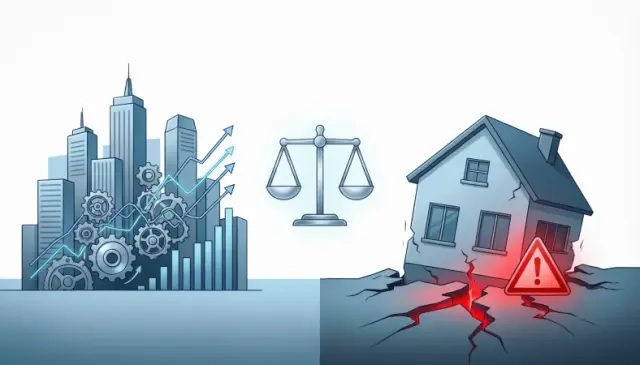
Housing Crisis Vs. Housing Emergency: What's The Difference?
In most countries, safe and affordable housing has become a complex task, as housing is one of the most basic human needs. Such terms as a housing crisis and housing emergency are frequently interchanged with each other; they refer to entirely different situations. The difference is essential to be understood by policymakers, activists, as well as individuals navigating the housing arena. Although both scenarios portend ill in housing provision and affordability, the extent, urgency and implication differ greatly.
 A housing crisis is generally a long-term systemic crisis or
instability in housing experienced by a wide population. It is a slow process
that is influenced by economic changes, demographic changes, and poor housing
policies. Some of these can be the increasing rental costs, gentrification and
the rates of homelessness increasing over a number of years.
A housing crisis is generally a long-term systemic crisis or
instability in housing experienced by a wide population. It is a slow process
that is influenced by economic changes, demographic changes, and poor housing
policies. Some of these can be the increasing rental costs, gentrification and
the rates of homelessness increasing over a number of years.
A housing crisis is, conversely, urgent and sudden. It
happens when people or communities are at the risk of losing shelter or being
exposed to unsafe conditions. Natural disasters, surges of evictions, or
unanticipated change of policies can cause emergencies. The reaction to a
housing crisis is immediate and it usually includes temporary housing,
emergency grants, and emergency response of local authorities or other
organizations.
This blog will discuss the distinction between a housing
crisis and an emergency, its causes, consequences, social and economic impacts,
policy reactions and actual case studies. Through such differences, communities
will be better placed to plan long-term housing issues and urgent housing
requirements so that they can offer better solutions to vulnerable groups.
The definition of a Housing Crisis
A housing crisis can be defined as long-term and systemic
problems in availability, affordability, and quality of housing. A crisis is a
long-term situation and is characterized by massive populations within cities,
regions, or even countries unlike short-term emergencies. It is usually a
combination of various influences: economic tendencies, population increase,
urbanization, poor housing policy, and market forces.
Affordability stress is one of the primary signs of a
housing crisis in which households use an unsustainable amount of their income
on rent or mortgage payments. This may spread out to a social issue such as
food insecurity, ill health results, and interruption of education among
children. The impact of gentrification, scarcity of housing, and demand are
usually exacerbated in the urban centers.
Structural issues in housing policy and planning are also
noted by a housing crisis. Governments can also not allocate sufficient and
affordable housing, zoning laws can limit building, and developers can aim at
the luxurious housing due to high returns. These structural problems increase
the gap between the housing supply and demand.
In addition, economic inequality is commonly associated with
housing crisis. This mostly affects the lower-income households, which results
in poverty and displacement cycles. The elderly, immigrants, and single-parent
families represent vulnerable populations and are most vulnerable to the
challenges, as they do not have the means of competing in an overheated housing
market.
Simply, a housing crisis is regarding chronic instability.
Although it is not always related to the immediate threat, it poses a threat to
the long-term health and safety of people and societies. The solutions to
housing crisis need multifaceted approaches, which involve reforms in the
policy, economic assistance, affordable housing investment, and the community
planning that considers equal access to shelter.
Knowledge of a Housing Emergency
A housing emergency is a crisis and as such it requires
emergency intervention in contrast to a housing crisis. It is about the cases
when people or communities are at the threat of losing their accommodations or
experiencing the danger of being exposed to insecure living circumstances.
Emergencies may be unpredictable, stemming out of natural disasters, eviction,
fires, or extreme structural collapses of housing.
One major characteristic of housing emergencies is
immediate. The affected people cannot afford to wait till the policies change
gradually or the long-term planning solutions are in place they need quick
action in order to have basic shelter. Relief organizations, local governments
and non-governmental organizations usually intervene to offer temporary
shelter, emergency grants and other forms of assistance to meet urgent
requirements.
Housing crises are also very conspicuous. The public and
media attention, as well as the crisis of evictions, homelessness as a result
of disasters, and displacement by environmental hazards, are easily attracted.
In contrast to crises, which can be boiled under the carpet in systemic
problems, emergencies require action now in order to avoid additional damage.
The other essential factor is the human impact. Housing
crises aggravate the condition of children, the elderly, and the health challenged. Short-term remedies like shelter, transitional housing and
emergency rents would be required to avert the occurrence of homelessness,
exploitation or deteriorating health situations.
Emergencies also depict lack of preparedness and
infrastructure. Areas vulnerable to disasters, ineffective legal safeguards on
eviction and inadequate social safety nets are highly vulnerable to housing
emergencies. The response to these crises and their understanding involves
coordination between the public governments, relief agencies, and the
communities.
Reasons Housing Crises and Emergencies
The housing crises and the emergencies are the results of
various but sometimes similar causes.
Causes of a
Housing Crisis:
1. Economic Factors: Long-term unaffordability is
contributed by inflation, wage stagnation and increased property costs.
2. Population Growth: Urbanization and migration rates are
high causing pressure on available residential facilities.
3. Policy Gaps: The lack of policies to support affordable
housing, zoning regulations, and ineffective tenant protections contribute to
the persistent shortage.
4. Market Dynamics: The speculation in real estates and the
focus on luxury develops an imbalance between supply and demand.
Causes of a
Housing Emergency:
1. Natural Disasters: Houses are destroyed by earthquakes,
floods, and hurricanes overnight.
2. Evictions Sudden deprivation of rental rights usually on
economic hardship or litigation leads to instant homelessness.
3. Structural Failures Unsafe housing conditions, which
could be a fire or collapses, drive them to move very quickly.
4. Policy Shifts: Friends and Foes of the quick shifting of
Policies concerning housing laws or subsidies may have individuals stranded
without a place to live.
Though, a crisis is cumulative and systemic, an emergency is
situational and sudden. Nevertheless, housing crises that fail to be solved may
elevate both the frequency and intensity of emergencies, establishing a
vulnerability circle.
Impacts on Society
and Individuals
Both the crisis and the emergency have significant impacts
on the individual and the community, but the extent varies.
Impacts of a
Housing Crisis:
* Long-Term Financial Strain: Homes spend too much of the
income on home, and they do not have any money to spend on healthcare,
education, and nutrition.
* Health Consequences: Overcrowding, poor conditions, and
stress have an impact on physical and mental health.
* Social Inequality: Segregation, displacement and
gentrification compound the differences between socioeconomic groups.
Impacts of a
Housing Emergency:
* Immediate Hardship: People experience abrupt deprivation
of housing, personal property and stability.
* Psychological Stress- Fear, anxiety, and trauma may be
caused by sudden displacement or threatening situations.
* Community Disruption Communicates Emergency events stress
social services, establish temporary shelters, and impact local economies.
This knowledge of such effects is critical in designing
policies that can meet the shortages at the systemic level, as well as the
immediate demands.
Response Strategies
and Policy
The solutions to housing crises and emergencies need
alternative methods.
For Housing
Crises:
* Long-Term Planning: Affordable housing developments and sustainable
urban developments.
* Economic Interventions Rent control, housing subsidies,
and financial assistance programs.
* Regulatory Reform: Zoning, incentive to developers to
construct affordable units, and tenant protection law.
For Housing
Emergencies:
* Rapid Response Systems Emergency shelters, transitional
housing, and response funding.
* Community Coordination: Co-ordination among governments,
NGOs and volunteers in order to deal with displacement.
* Prevention measures: disaster preparedness, eviction
moratoriums, as well as safety checks to prevent the short-term risk.
Although both of them need to be intervened in by the
people, crises need systemic and strategic solutions whereas the emergencies
need to be tackled quickly and in a tactical manner.
Real-Life Experience and Things You Should Learn
The analysis of examples contributes to differentiating
between a crisis and an emergency and presents the examples of effective
responses.
* Housing Crisis Example Cities such as San Francisco and
London have been experiencing years of affordability crisis, characterized by
increasing rents, gentrification and chronic homelessness. There are policies
like affordable housing requirements and rent stabilization which have had
varied outcomes.
*Housing Emergency Case Study: The Hurricane Katrina in New
Orleans left thousands of people homeless overnight, and emergency shelters
should be opened quickly because agencies must plan and coordinate their efforts
during the disaster response.
The learning lessons of such cases include preparedness, the
long-term planning, and community involvement. Societies need to be aware of
the precursors of both crises and emergencies and make an investment in
infrastructure and policy interventions that result in both chronic and acute
problems being resolved.
Urbanization and Its Contribution to Housing Problems
The crucial cause of housing crises and urban emergencies
has been rapid urbanization. Cities are the places where people go to find
work, education, and services that are more beneficial, and the urban
infrastructure fails to meet the needs often resulting in the growth of the
population. Such a discrepancy in the requests and supply creates long-term
housing shortages. The lack of land, excessive building costs, and excessive
zoning laws contribute to the solution of the problem of affordability in some
cases, the lack of solutions has been decades.
Social segregation is also increased with urbanization. The
richer citizens have the tendency to settle in better neighborhoods, and the
poor people are forced towards informal settlements or outskirts. The unequal
distribution of urban resources and risks is dictated by the fact that these
marginalized communities are disproportionately exposed to environmental
hazards, such as floods, fires, and other disasters. These trends underscore
the way in which urban development is influencing the housing supply and
affordability, as well as the social geography of cities.
City planning requires one to understand the relationship between urban development, housing supply and social vulnerability. The policymakers need to take into account the physical infrastructure as well as the socioeconomic dynamics so that the cities would be in a position to handle the growth of population without creating a systemic crisis.
Strategic plans
will be able to address the issue of housing shortages, the availability of
necessary services, and the risk of exposing vulnerable groups to environmental
risks. These issues are important in ensuring that there is a resilience in the
urban environment in ensuring that there is a balance between urban growth,
equity, and sustainability to ensure that the same emergencies that have been
associated with unchecked and unmanaged urban growth are not repeated.
Homelessness: Meeting Crisis and Emergency.
Homelessness is a symptom and a result of housing
instability that is at the crossroads between crises and emergencies. Chronic
homelessness is usually caused by a long-term lack of affordability of housing,
mental health problems, or structural social imbalances. People in this type of
homelessness are permanently vulnerable, which leads to structural issues on a
long-term basis of the housing markets and the social support system.
Conversely, acute or sudden homelessness is due to immediate
shocks like evictions, natural disasters and structural housing failures. The
events may leave people and families immediately homeless, which is an example
of housing crises being emergency-like responses. Chronic and acute
homelessness bring to the fore the complexity of housing instability that
requires solutions that are attentive to long term and short-term stresses.
The problem of homelessness needs two-sided treatment. The
long-term plans are the creation of affordable housing, the growth of mental
health and social support services, and policies that would minimize structural
differences in access to housing. At the same time, the short-term solutions,
including emergency shelters, outreach programs, temporary housing solutions,
and emergency cash assistance are also needed to address the current needs and
minimize additional damage.
The identification of the overlap between housing crises and
crises highlights the fact that new, combined solutions should be developed.
The policies and programs should be able to reduce the systemic challenges but
offer immediate relief when the events are acute. Communities can minimize the
occurrence of homelessness, enhance their social resilience, and design urban
environments that will be more responsive to long-term planning and immediate
housing changes.
Future Outlook: Preventing Crises and Preparing for Emergencies
The future of housing is tied to preemptive planning and
tenacious policies. Governments and societies need to predict long-term and
short-term housing issues, through evidence-based solutions, sustainable
building and planning, and non-discriminatory zoning codes.
Modular housing, smart city planning and predictive disaster
response analytics are just a few of the ways that technology and innovation
can assist. It is important also to invest in social safety nets, eviction
protections and affordable housing projects. Emergency preparedness, coupled
with structural issues tackling, will result in housing systems that are both
inclusive and resilient. This two-sided strategy will help avoid local issues
turning into global crises and counter the human effects of emergency
situations.
The technological development can provide a great potential to aid in these efforts. The efficiency, flexibility, and resiliency of urban housing can be enhanced by modular housing systems, intelligent city infrastructure, and predictive disaster-response analytics.
Such tools enable
the planners to predict population growth, the areas with high risks and
maximize on resource allocation minimizing the chances of experiencing sudden
housing crises. These innovations together with sustainable construction techniques
could be used to build environments in cities that are dynamic as well as
environmentally friendly.
An all-inclusive two-pronged strategy integrating technological innovation and robust social policies is needed. Disaster readiness should be accompanied by more lasting actions to address structural problems in residential areas.
This two-fold approach enhances the resilience
to the city, prevents local housing issues not turn into crises at a larger
scale, and makes communities more prepared to accommodate the shocks of
natural disasters or economic shocks or increases in population rates.
Conclusion
Although housing crisis and housing emergency are similar
terms, they have differences in terms of their duration, magnitude, and the
responses they need. Crises are systemic issues that are long term, and they
need strategic planning and policy change. Emergencies are acute and sudden,
the situations which require urgent response in order to provide shelter and
guard vulnerable groups.
This difference can be understood to enable government, organizations and communities to act accordingly. Long-term policies, including affordable housing schemes, social support structures, and zoning, can be used by policymakers to resolve the causes of housing crises.
At the same time,
emergency preparedness needs to be upheld in the form of shelters, immediate
financial support, and disaster-response strategies to be able to address
sudden shocks. By balancing on these approaches, societies will be able to
reduce the chronic housing instabilities and the acute outcome of unexpected
occurrences.
Finally, housing is more than a physical building, it is the
basis of health, security, and opportunity. It is an ethical and practical
requirement to deal with crises and emergencies to create resilient and
inclusive communities.





-ySWGlp0vgc.jpg)










LEAVE A REPLY