

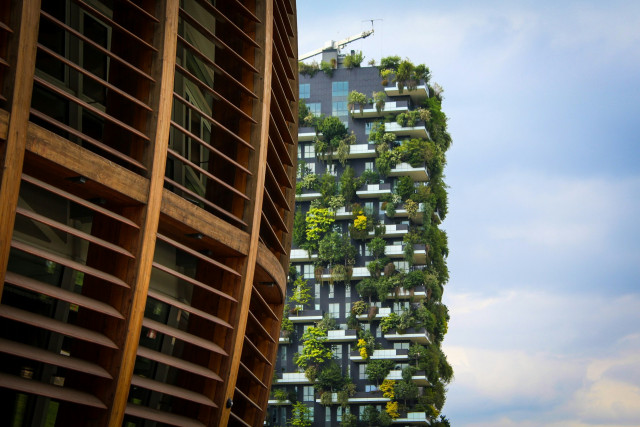
Smart & Green: Are Eco-Friendly Affordable Homes the Next Big Trend?
The meaning of affordable housing is undergoing a redefinition as urbanization increases, the climatic picture becomes less certain, and the housing shortage grows. Affordability no longer means low prices; nowadays, besides pricing, it implies sustainability, long-term savings and resilience, environmental impacts, etc. In emerging markets such as Bangladesh, it is no longer whether the market will jumpstart the eco-affordable housing concept, but when. As the temperature in city centres rises, the occurrence of floods has increased and energy prices are rising, smart and green housing is becoming less about a luxury and more of a necessity.
New breed of homeowners and tenants, (especially the younger generation and the low to middle income households) understand the prices of inefficient houses increasingly well. They are focusing more on ventilation, natural lighting, energy use and material used to construct buildings. Handling It proves to be turning a corner with developers and city planners incorporating solar energy, water collecting, rooftop gardens and energy saving appliances into their design of housing mandate, even in the lower end of the market.
This is a game changer in the ways we will think of property development, as the home ceases to be only shelter, a system imaginatively and prudently built, using minimum resources, and as part of the larger environmental plans. Rich in natural gas, Bangladesh is a vulnerable nation fighting against climate change; having a lack of millions of direct housing units, the country stands at the crossroad of a gigantic opportunity. The real estate industry either is part of the unsustainable sprawl and dysfunctional cities or is in a new movement of affordable, robust and environmentally friendly lifestyles.
Eco-Friendly Materials Are Redefining How Affordable Homes Are Built
The material that individuals have been constructing homes has played a pivoting role in determining how long their homes last, their comfort, and the cost. During the movement to build affordable housing, cost reduction under the guise of designing affordable housing resulted in the use of cheap unsustainable material. However, creative measures are turning the tide nowadays. Builders in Bangladesh and many other parts are seeking to invent new materials that will not only be environmental friendly but also will be economical in the long run.
In a number of pilot projects, conventional concrete and burnt clay bricks are being substituted by compressed earth blocks, fly ash bricks and bamboo composites and recycled steel. The material locally sourced consumes less energy to be manufactured and lowers the carbon emission by large margin. In addition, they have a high level of insulation qualities, and homes are cooler during summer and warmer during winter which reduces the energy bills.
Other cooling roof projects being incorporated in low-income housing projects include reflective coatings, vegetative green roofs, and others. These aspects can make the indoor environment colder, enhance the quality of air, and increase the durability of roofing materials, all in the name of energy efficiency.
This reduces the absorption of heat thus rendering the house to be cooler in the hot climate of Bangladesh, which otherwise would have necessitated the use of fans or air conditioning hence use of electricity thereby saving expenses. Meanwhile, builders are interested in the pre-fabricated modular approach to the construction. The following benefits are associated with these approaches:
They lead to much less material waste, they speed up the construction process and enable new foundations of versatile and flexible designs. Such innovations are becoming attractive and necessary as the demand in housing keeps increasing rapidly. They allow creating smarter, quicker, and cheaper and do not sacrifice quality or sustainability. Cumulatively, these technologies are indicative of a more considered, durable, and accommodating way forward on the subject of affordable housing.
Environmental friendliness of materials is not only about environment, but about performance, cost-saving, and health of people who use them. The conventional material such as asbestos or timber treated with chemicals is gradually getting out of the scene as the knowledge regarding its unhealthiness increases.
Urban areas of Bangladesh are covered with the heat stress, a lack of air circulation, and pollution as an everyday reality of living in the city; breathable, non-toxic, and climate-responsive materials can make the living conditions much better (and not raise the budget). The initial cost is likely to be a bit increase, although lifecycle savings are likely to be significant. With the changing regulations and increasing awareness, these materials will probably emerge as standard components in the affordable housing design.
Energy efficiency is becoming a part and parcel of affordability
Maxim is no doubt one of the greatest myths surrounding green housing and the fact that it is costly. As a matter of fact, energy-efficient homes cost less in the long term. They save on utility bills, do not need so many repairs, and make people feel more comfortable all of which is important to low-income and middle-income communities. This has led to the fact that energy efficiency is being brought to the fore of the affordable housing agenda.
The solar panels which were initially thought to be not affordable are now very cheap. In the current scenario, even affordable housing projects are incorporating solar-based lightening, heating of water and backup systems during power failures. This not only helps in ensuring less reliance on the grid but also enhances resilience in a country whereby load-shedding remains to be a major issue in most of the locations.
Passive cooling solutions through orientation of windows to maximize ventilation (cross ventilation), shades and thermal insulation are also being welcomed in the design of housing in Bangladesh. Such attributes help the houses remain cool naturally without relying on manmade cooling processes such as fans or air conditioners.
A properly-designed building considerably reduces the consumption of electricity, particularly in the warmest months, due to their optimization with regard to airflow and sun rays. This is not only a means of increasing the indoor comfort but of making an observable decrease in the energy bills that people have to pay every month, and will be significant to those households with low and medium-income levels.
Such design measures are very sensible and feasible in tropical countries and regions that have a high degree of temperature and humidity throughout the year such as the country of Bangladesh. Structures which are designed more in line with natural shapes of light and air circulation use less energy and also establish a healthier living style. With sustainable architecture moving towards the mainstream market, passive cooling will be the key that makes houses not only affordable but also environmentally friendly.
Energy-efficient fans, water-saving fixtures, LED lighting, water-saving fixtures and smart meters are creeping up the price and are increasingly becoming a feature in mid-range projects that find their way to the low-income segment. Actually, not all developers are oblivious to the fact that they could use energy savings as a market strategy--considering the initial purchasers who are often worried about living expenses in the long-term.
Moreover, market is being manipulated towards this direction by the regulatory changes. The government incentives, pilot programs, and green building certifications are gradually taking their positions. To make the situation favorable, the housing finance industry is also starting to bring good conditions to energy efficient homes, where supply and demand have ecological support. With physical advantages of reduced utility expenses and improved living standards being brought home by an increasingly large proportion of people, the myth that green costs a fortune is being broken down as so-called cost-effective is increasingly being measured not per square foot, but by the larger cost of ownership.

Smart Technology Is Entering Even Budget Homes
The initial image that comes into our mind when thinking of smart homes is a luxury apartment with app-controlled light, automatic blinds or curtains, and AI-connected security systems. However, with the technology becoming cheaper, the low-income segment is also witnessing smarter features to be included in the affordable housing segment. This movement has already been evident in the emergence of new mid-level developments in major cities in Bangladesh, and it is about to move at a faster pace.
Water and electricity smart meters are assisting in every household to control the usage and leakage or overuse. Lower-priced security systems are now found in low-priced housing units, such as motion detectors, door alarms and surveillance apps. Smart thermostats and even voice-controller assistants are no longer a preserve of the luxurious apartments.
The convenience is not the only advantage of smart technologies that are offered to tenants and homeowners. The innovations also means more control, enhanced safety, and understanding of how a household works. Whether it is in monitoring their energy usage to real time security monitoring the technology is helping the people make wiser and efficient decisions in their day to day lives.
Although the idea of appliance selection and smart home devices controlled by smartphones may not appear close enough in a country that is digitalizing as fast as Bangladesh, this is significantly changing. They are increasingly becoming available, even at middle-income and low-income households, as the price of such technologies keeps decreasing and mobile penetration increases.
Continuing innovation and local adaptation will probably ensure that by the time they roll out to the population, smart solutions will be conceived in a financial scope that many more people will be able to afford. Soon affordability will not be a limitation to the adoption of intelligent systems to make livelihoods more comfortable, allow people to utilize less energy to pay the utility bills and contribute to the overall quality of life at home.
Developers are also enjoying the benefit of the same. With smart home technology, property management is enhanced, maintenance can be tracked on a remote basis and repair scheduling can be predictive thereby saving costs over the long term and increasing resident satisfaction. Shared utilities can be monitored and potential areas of misuse can be identified by the property managers thus leading to enhancing performance of multi-unit buildings.
Besides, information gathered by using intelligent systems can assist urbanists and local authorities in apprehending energy demand patterns, rates of water consumption, and waste outputs, which are useful in creating more sustainable neighborhoods. Naturally, the digital literacy and privacy issues are to be a challenge, at least in the low-income regions. However, smart technology can be democracy if the proper training, community connectivity, and regulatory control are applied. Smart homes will likely revolutionalize our way of living just as smart phones did in terms of communication and it will begin even at the cheapest edge.
Policy and Finance Will Determine How Fast Green Housing Grows
Without appropriate support systems, technology and innovation can only take you this far. The successful development of sustainable affordable housing on the territory of Bangladesh will end up being determined by the degree to which politics, incentives and financial instruments are harmonized with the necessities of sustainability. The positive thing is that the movement is gaining ground.
The government agencies, city planners, and real estate regulators are starting to integrate sustainability in the housing policies. Energy efficiency, green building methods have begun to be recognized in Bangladesh National Building Code. Energy labeling, funding tax credits to put solar on roofs, and land use around transport hubs are just beginning to make a difference in project conceptualization.
Nevertheless, there are still loose ends. Developers in the affordable housing sector work out on very thin margins and it is unlikely that the sector would implement green features without regulatory requirements or financial incentives. It is at this point that green finance programs promoted by governments can be major players. This can be balanced in favor of sustainability by offering lower interest rates and credit guarantees or subsidies of energy efficient homes.
Multilateral institutions and development banks too are coming to the fore to fund pilot projects and aid in capacity building. When the efforts become scaled, they can initiate a healthy green housing market with no dependence on donors but rather market-oriented. There is also a role played by the microfinance institutions and the private lenders. The low-income families can take advantage of such mortgages as green ones, performance-based loans, and energy retrofit financing, which help them invest in a sustainable lifestyle. The lesser-known insurers would also provide lower premiums to green-certified buildings and limit long-term risk.
The future of affordable housing which is eco-friendly lies not only in market pattern but it is thoroughly embedded into policy. It should be affordable in all levels of governance and regulation so as to work in hand with sustainability. These are updating building regulations to promote energy efficiency design, simplifying municipal approvals on green projects, launching financing mechanisms that incentivize low-carbon construction, and investing in infrastructure to support smart and sustainable communities.
The innovations in the market might not scale well without powerful policies behind them. Bangladesh has a serious shortage of houses, so it has a chance to transform this crisis into a green transformational event. Through incorporating the sustainability concept into housing visions at the national level, the nation can create the possibility of serving the national needs, as well as become a role model in the region. Through collaborators that involve government, the private sector and the civil society, Bangladesh can direct a new phase of climate-friendly city building, where green cities can marry economic access with environmental responsibility.
Conclusion: Eco-Friendly Is No Longer Optional—It’s the Future of Housing
The meeting point of affordability and sustainability is not a far-fetched dream anymore, it is a dire need of the times. The situation in Bangladesh is that hundreds and thousands of people have a need of a decent house; and the cities are groaning under the burden of a haphazard growth: in such circumstances just the old housing philosophy is not adequate. It is not the speed of building fast or at a low price. We must get smarter in construction.
Affordable housing, i.e. a house built in an eco-friendly manner is a possible solution to several issues, simultaneously, i.e. environmental degradation, energy insecurity, increased cost of living, and urban exclusion. There is a new way of thinking about our housing, a way that focuses on people and value and the environment: a new housing paradigm, once again, one that puts neighborhoods, togetherness, and sustainability at the center.
However, such a consequence will not come overnight. It will entail radical policy changes, private and government partnership, facilitation of green finance, and engagement of the communities whose lives the houses are aimed at improving. It also requires a shift in thinking the sustainability from a luxury to a critical element of housing equity resilience.
When smart and green housing is adopted with foresight and a sense of urgency, then the next big trend on development is here, not only in Bangladesh, but much more so in the Global South. His way is straight. All that is left is common determination to create not only homes- but a fairer, better, and more sustainable future of everyone.
Also Read: Affordable Homes in Australia









LEAVE A REPLY