

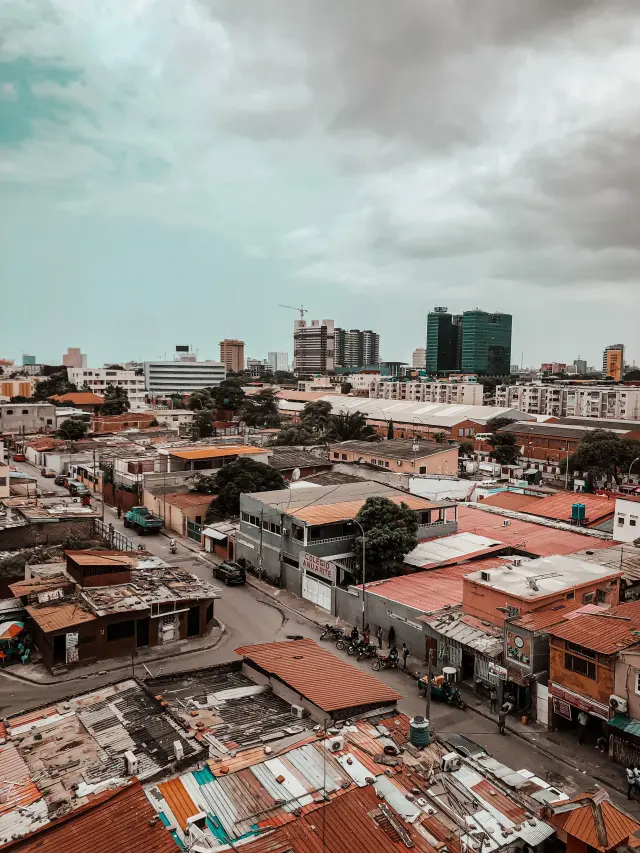
How Ghana’s Legal and Policy Framework Can Tackle the Challenges of Slums and Informal Settlements
The process of urbanization has turned out to be one of the most radical influences of societies in the world. The transformation is occurring particularly fast in Africa, where the movement of millions of citizens out of the rural regions to urban centers in pursuit of jobs, education and improved livelihoods is taking place.
 Ghana is one of the nations
that are undergoing this trend, and the cities like Accra, Kumasi, and Tamale
are rapidly developing as a result of increasing population, as well as rural
to urban migration.
As much as urban development can lead to economic growth
and modernization, it also has severe problems, especially where cities cannot
afford to house, develop infrastructure and offer enough services to
accommodate the increased numbers.
Among the most obvious consequences of this fast urbanization in Ghana is the emergence of slums and informal settlements. These are communities that are usually overcrowded, have poor sanitation, unstable access to clean water, low tenure of land, and underprivileged public facilities.
The
residents construct temporary houses with cheap materials and occupy land
that might not have been intended as a residential land. Because of this, they
can be at the risk of being evicted, exposed to environmental risks, and being
marginalized at all times.
Slums and informal settlements are not merely consequences
of poverty and poor choices made by individuals. They tend to be the result of structural issues, such as inaccessibility to low-cost housing,
complicated land tenure frameworks, deficiencies in the implementation of urban
planning, and economic inequity. These concerns are ever-increasing as the
cities in Ghana keep expanding, and policymakers, urban planners, and
development organizations have more cities to consider.
Policy and legal frameworks are also important factors in urban growth and solutions to housing issues in cities. The legislation regarding land use, housing development, urban planning and property rights can either assist in curbing the proliferation of informal settlements or lead to its accidental growth.
Good policies will be able to support the idea of
inclusiveness and development, safeguard the rights of vulnerable communities,
and ensure that the urban infrastructures remain congruent to the growth in
population.
Ghana has come up with different policies and legislative
projects aimed at solving the shortage of houses and urban development
dilemmas. Nevertheless, the success of these frameworks can, in many instances,
be based on the success of their implementation, coordination and enforcement.
Policies are influenced by institutional capacity, political commitment as well
as community participation to determine whether they will attain their intended
goals or not.
This blog has addressed the role of enhancing the legal and policy framework in Ghana to address the issues that are presented by slums and informal settlements. It explores the nature of informal urban growth and causal factors, land governance and planning legislation, the significance of housing policy changes, and the necessity of community-based development policies.
Through these problems, the discussion identifies that the urban setting can be made more inclusive and sustainable in Ghana through legal reforms, as well as through effective policymaking.
Structural Reasons of Slums and Informal Settlements in Ghana
The emergence of slums and informal settlements in Ghana cannot be explained only through changes in social conditions, but the entire structural context that leads to urban housing issues needs to be analyzed.
One of the greatest causes of informal settlements' development is rapid urbanization. With economic opportunities being concentrated in cities, people are drawn to cities to obtain employment, education, and improved standards of living.
Nonetheless, informal settlements may begin to appear as a
permanent and the only alternative to costly homes that urban planning systems
and housing markets are not able to sustain this population growth.
Lack of affordable housing is a key cause of slums in Ghana. Developments of formal housing are usually focused on middle- or high-income families since the developments offer more economic benefits to the developers.
This way, the low-income population groups are often sidelined in the urban
housing markets. In situations where people cannot afford housing facilities,
they have to construct their houses in unplanned locations using temporary
materials.
The other structural problem is that land ownership in Ghana
is complex. The country can have land owned either by an individual, family,
traditional authorities, or the government. Although this system has a historical background
concerning traditional practices, it may pose some difficulties to the
planning and management of land in urban areas. Formal housing development is
usually slowed down by disputes over land ownership, ambiguous property rights,
and slow land registration processes.
Another important factor in the development of informal
settlements is economic inequality. Most people in the slums are engaged in the
informal sector where the pay is low, and job security is minimal. When there is
no stable income, families cannot find rent in formal housing markets or take
loans to build their houses.
The laxity in the implementation of the planning policies
can also add to the growth of informal settlements. However, with the presence
of urban development plans, local authorities may not implement the plans,
which is caused by limited resources and institutional capacity. This enables
the occurrence of unplanned construction in the areas that might not have
infrastructures or are exposed to environmental hazards.
The selection of the place of informal settlement also
depends on environmental factors. Most slums are constructed on inappropriate
land where normal housing cannot be built like floodplains, wetlands, or steep
slopes. Formal developers usually avoid these places but low-income residents
tend to visit them since they are not controlled and are accessible.
These structural issues prove that the problem of slums
cannot be solved by only trying to ameliorate the living conditions of people.
The growth of informal settlements should be dealt with comprehensively through
policy solutions that deal with the economic, institutional and governance
problems that drive its growth in the first place.
Territorial Governance and Laws to support Inclusive Urban Development
One of the most important aspects of any strategy towards resolving slums and informal settlements is land governance. In Ghana, land administration deals with customary and statutory systems, and this may bring in overlapping powers and procedural complications.
Although this system
represents the historical and cultural traditions of the country, it may also
pose a problem to the development of cities and the implementation of housing policy.
Absence of clear and secure land tenure by many inhabitants
of informal settlements is one major legal issue that concerns land governance.
Residents might be at risk of being evicted any time without the official
acknowledgment of their occupancy rights. This lack of security will not
persuade people to invest in permanent housing renovations or in local
infrastructure.
The policies and legal changes that reinforce land
tenure security can significantly contribute to better living conditions in
informal settlement areas. When the residents are assured that their residence
is not at risk of being displaced, they will invest more in improving their
house and their neighborhood. Secure tenure also helps communities to obtain
financial services, including housing loans, which may facilitate long-term development.
Another significant area of legal reform is to improve the
land registration systems. Streamlined land registration systems can help
minimize conflicts, and define ownership, and promote sustainable land
use. These systems can be made more accessible and dependable with the help of
digital land records and open administrative processes.
The laws governing urban planning should also be in line with the realities of high population growth. Any too strict or unrealistic planning regulations are likely to promote informal development through the unwanted encouragement of irregularities in people when they would not be able to adhere to the rules.
Incremental housing development policies in
the form of flexible planning policies can assist in incorporating informal
settlements into formal urban systems.
Cooperation among government structures and the traditional leaders is also a requirement for proper land management. Most traditional land tenants are involved in the distribution of land for residential purposes, especially in the peri-urban regions.
Involvement of these stakeholders in
policy debates can also be used to make sure that development policies promote
sustainable urban development.
Urban Planning Strategies and Housing Policies
Housing policy is very important in deciding whether cities
would be able to offer proper shelter to the people in their cities.
Affordability of housing is among the major factors that cause the increase of
informal settlements in Ghana. To solve this problem, both affordability- and
supply-based housing policies are needed.
Housing initiatives run by the government can be used to
augment the supply of affordable houses to low-income earners. Such programs
can be direct building of housing units or subsidies and incentives that can
motivate the developers (individuals and companies) to invest in affordable
housing projects.
The urban planning strategies should also focus on inclusive
development. This is done to make sure that the new residential places have the
availability of basic amenities like water, sanitation, electricity, schools
and healthcare facilities. The transportation networks should also be taken
into consideration when planning the policies so that the residents can find it
easy to access employment opportunities.
Slum upgrading is another relevant concept of housing policy. Instead of destroying informal settlements, upgrading projects aim at enhancing communities that are already in existence,, and this is through the provision of infrastructure and basic facilities.
This strategy acknowledges
the fact that informal settlements usually possess good social networks and
economic processes which ought not to be destroyed.
The community has to be involved in an effective housing
policy design. Informal settlement residents are the individuals most familiar
with the issues they go through and are likely to offer useful information on
possible solutions. Inclusion of communities in the processes of planning can result
in more sustainable and acceptable developmental results.
Housing finance programs and microcredit programs can also
be used to assist low-income families with house improvement. The availability
of cheap lending schemes enables the families to slowly improve housing
facilities and invest in improved living standards.
With well-organized housing policies and integrative urban
planning schemes, Ghana can minimize the rate of informal settlements and
enhance the livelihood of the currently existing communities.
Institutional Co-ordination and Governance Problems
The best-designed legal and policy frameworks cannot be
effective without good institutions to execute them. In Ghana, several
government agencies deal with elements of urban development, housing, land
management and environmental management. Although this multi-agency structure
enables the development of specialization in expertise, it may also introduce
coordination difficulties.
The duplication of roles by institutions can either cause
inefficiencies, delay or lack of uniformity in policy execution. Effective
urban governance thus requires strengthening of coordination mechanisms between
the national, regional and local governments.
Cities are a special concern in terms of local governments,
as far as the control over the city development is concerned. The city councils
have a role of implementing planning policies, delivery of community services,
and interaction with communities. Although, most local governments are having
resource limitations that hinder them to effectively perform these functions.
Institutional performance can be enhanced through capacity
building programs. Urban planners, administrators and technical staff can be
trained to enhance the quality of decision-making and the implementation of
their policies.
Accountability and transparency are also another important
element of good governance. Corruption can be minimized by developing clear
steps in land allocation, development approvals and expenditure by the
government and instill trust in its institutions.
Civil societies and community-based organizations can speak
in the governance processes by ensuring that the rights of residents are
addressed and that the policies are being implemented. Their participation
contributes to the development initiatives in various ways in order to cater to
the needs of the vulnerable populations.
Enhancing institutional coordination and structures of governance is thus one of the important tasks of ensuring that the legal and policy frameworks are effective in dealing with the issues of slums and informal settlements.
The Community Involvement and Non-Discriminatory Policy
The involvement of the community is an important aspect of
any triumphant approach to slums and informal settlements. The policies of
development have a direct effect on residents of these communities and, thus,
they have to be incorporated into the development decisions.
Participatory planning enables communities to articulate
their needs, priorities as well as issues concerning housing, infrastructure
and services. By incorporating the residents in the planning processes,
development initiatives will have a higher chance of capturing the realities of
the locals and be supported by the community.
Participation can be achieved through community
organizations that are sometimes critical. Neighborhood associations, local
leaders and grass-root groups can be used to represent the interests of the
residents and organize development activities.
Social Cohesion can be empowered by participatory approaches
at the community level as well. When community members collaborate to make
their areas better, they develop trust and shared accountability in keeping the
place inhabited through infrastructural maintenance and provision of services.
The government institutions should then develop systems that
promote frequent communication between the policy makers and the community
member. The development initiatives can be made to be in line with the
community priorities through public consultations, workshops, and participatory
planning sessions.
Community upgrading projects in most countries have also
been supported by international development organizations. These projects tend
to offer technical support and finance in addition to giving local people the
authority to spearhead the process of transformation. Ghana can make
development programs effective and inclusive to the society by involving the
community in policy implementation.
Conclusion
The problem of slums and informal settlements in Ghana is
strongly related to the wider problem of urbanization, economic inequality,
land management, and housing policy. With the ever-increasing development of
cities, the necessity of proper legal and policy structures grows in
importance.
Enhancement of land governance systems, augmentation of
affordable housing, better urban planning mechanisms and increased
institutional coordination are just but a few elements of holistic response to
the problem of informal settlements. Reforms in the law that offer safe tenure
of land and clear land management can empower the citizens to invest in their
localities.
It is also imperative that a local community should be
involved in the planning and development. More sustainable and equitable urban
development is achievable through inclusive policies that acknowledge the basis
and rights of slum dwellers.
Ghana has already made significant strides towards handling the issue of housing, and further reforms and more active enforcement should be undertaken to guarantee the continuity of improvement.
Through the
harmonization of legal frameworks, policy approaches, and community
participation, there is a possibility of the country to turn the informal
settlements into healthier, safer, and more resilient communities.
After all, the future of the cities in Ghana lies in efforts to build urban spaces that would be supportive to all inhabitants, providing them with safe homes, limited services, and economic and social growth. This vision can be achieved with appropriate legal and policy instruments.
Also read: Prefabricated Housing in Ghana: How Cost-Effective Building Methods Are Changing the Market




-ySWGlp0vgc.jpg)










LEAVE A REPLY