

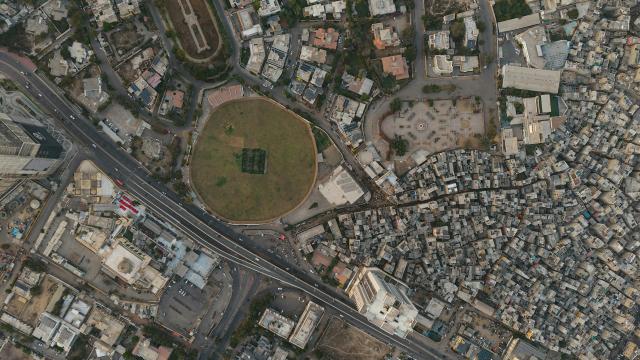
Future of Real Estate in Pakistan: Affordable Housing Trends
The market demand for low-cost housing in Pakistan is expanding rapidly because of quickest urbanization combined with expanding population and shifting economic conditions. The 240 million residents in Pakistan require millions of homes but face significant barriers when accessing affordable homes of good quality. The existing housing deficit exceeds 10 million units while experts predict it will grow unless Pakistan implements drastic improvements to enhance housing accessibility and affordability.
The Growing Demand for Affordable Housing in Pakistan
The Pakistani urban cities of Karachi, Lahore, Islamabad, Faisalabad and Peshawar experience major housing deficits because of population movements within the nation. Users who include young professionals along with newlywed couples in addition to individuals belonging to low-to-middle-income brackets find themselves unable to obtain affordable homes that match their requirements. Developers and policymakers now have both responsibility and opportunity to construct low-cost housing projects. Construction methods typical to the past have demonstrated an inability to fulfill needs regarding speed and reduced construction expenses which has led developers to look for innovative solutions.
Many major cities now have real estate costs that normal working-class citizens cannot afford. Middle-class citizens in Lahore and Islamabad cannot afford to purchase even the smallest 5-marla houses due to their high prices which start at PKR 15–20 million. The rising cost of housing has driven society toward developing affordable apartments while promoting vertical construction and developing flats through housing societies. The upper-class market received attention from gated communities such as Bahria Town, DHA, and Citi Housing but developers are currently showing a growing interest in mid-level and low-end vertical housing.
Through the Naya Pakistan Housing Program (NPHP) the government demonstrated that nation-wide public support builds better economical housing solutions. The implementation problems of the program sparked national discussions about establishing systematic housing solutions at scale. The real estate market experienced both model changes among developers and bank involvement in construction finance and increasing investor interest in producing low-cost multiple units.
The growing problem of inflation combined with unstable income streams drives consumers toward installment housing options which has made affordability and financing become critical matters in the housing sector. The market demonstrates rising demand for homes between 3-5 marla size houses together with 2-bedroom apartment units. Small residential units with functional floor plans cost accessible money and make them suitable choices for new home buyers and young families.
The story of affordable housing heavily relies on rental properties as well. People who cannot purchase real estate properties are using rented housing in semi-urban along with peri-urban locations. Investors and developers now have available opportunities to provide quality rental properties by establishing properties with emphasis on community infrastructure and safety measures while ensuring accessibility.
Affordable housing became better accessible through modern digital real estate platforms as they provide enhanced visibility of property listings. Digital platforms allow property seekers to explore real estate through specific price rates and location searches and key features which offers them more affordable information and eliminates brokerage agents. The housing buying journey has become open to wider demographics since exclusionary practices are fading away from the market.
The societal requirement for reasonably priced housing in Pakistan transcends market patterns because people truly need it. Developers alongside policy institutions and investors face the highest level of pressure to innovate in the current market conditions. Efficient and sustainable response to rising housing demand will prevent the urban development of slums alongside homelessness and economic inequalities. Proper management of this opportunity holds the potential to produce three beneficial results that include inclusive economic development and financial opportunities and stabilized real estate structures.
Innovations and Shifts in Housing Development Models
The Pakistani real estate sector experiences major changes because society demands more affordable residential solutions. New development models based on innovation have replaced traditional practices because they offer economic advantages and adapt for increasing population trends. The necessary and technological advancements drive the transformative changes in Pakistani real estate through modular developments and vertical construction techniques and digital innovations.
The main trend in contemporary urban development involves implementing vertical residence projects in city centers. The adoption of vertical development provides both space efficiency as well as the ability to construct more residential units within municipal boundaries in proximity to commercial and industrial centers. The development of vertical housing projects creates shorter travel durations while improving conditions for city residents. The cities of Lahore and Karachi together with Islamabad experience an increasing number of high-rise apartment buildings which focus on providing housing solutions for middle-income residents. Through their ventures in Askari Towers and Eighteen both Islamabad and Lahore demonstrate the potential of organized high-rise development as a fundamental solution for budget-friendly residential accommodation.
A major construction development uses prefabricated and modular construction techniques. The building process shortens through prefabricated construction techniques which lead to decreased labor expenses and lower levels of construction waste. Pakistan needs to develop prefabricated housing at the same time that researchers see great potential for this approach in rural and peri-urban areas. Such cost-effective building methods create possibilities for the government and NGOs to implement fast-track housing initiatives.
Current developments now involve real estate professionals who design single ventures with intertwined residential options and business facilities and leisure areas. The combination of this model type produces both scale economy benefits and promotes communal lifestyles while achieving efficient land usage. Smart cities along with integrated housing schemes are emerging throughout cities while adopting planned layouts and basic amenities supported by controlled entry management. These properties deliver secure spacious dwellings and achieve lower unit costs through joint infrastructure usage.
Multiple changes can be observed in how projects obtain funding. Established financial institutions such as microfinance institutions along with banks provide personalized home loans and mortgage schemes to service low-income residential needs. Progress continues to advance the mortgage sector of Pakistan even though its development stands below international benchmarks. Government credit programs with assurance diminish risks for lenders thus prompting financial institutions to offer services in this market.
The transition benefits greatly from digitization but it also serves as a basic requirement. Through digital land documentation alongside internet-based real estate booking systems and mobile payment capabilities the real estate market adopts transparent and convenient operations. Blockchains combined with artificial intelligence for property assessment operate as experimental applications which demonstrate promising potential for future application. Through their implementation investors can increase confidence while fraud reduction becomes achievable and housing becomes accessible across demographic sectors.
The affordability aspect of real estate improves through design that utilizes smart principles. People are showing interest in buying compact residences with functional floor plans and dual-use areas along with sustainable home systems. Developers understand user requirements more than design aspects because they make solutions that address practical buyer needs. The strategic homeowner expense reduction stems from building designs that optimize interior natural light and ventilation and improve resource management.
Urban regeneration stands out as an economical solution which competes against building new structures. The development of older buildings followed by their repurposing enhances both construction speed and decreases development expenses specifically within city center areas. The technique maintains historical buildings while stopping the uncontrolled expansion of cities.
Developer companies in Pakistan have started moving toward customer-centered business strategies. Rational development practices supersede large upscale projects as builders now create smarter developments that embrace inclusivity. Affordable housing no longer exists as an undesirable small-revenue segment since it represents the path toward future urban development alongside social equilibrium.

Policy, Infrastructure, and Future Outlook
The development of policies along with infrastructure improvements are fundamental components which determine Pakistan's future housing affordability situation. The essential components of market demand with innovation need government backing alongside suitable institutional structures for successful progress. The recognition of housing as an essential human right has fostered increased attention for public-private collaborations together with law system adjustments and urban development institution planning.
Through the Naya Pakistan Housing Scheme the government established basic guidelines that can guide future housing policies. The scheme generated serious policy exchanges between diverse sectors while making the vast need for affordable housing homes visibly clear. Implementation delays together with controversies have created the basis for improved official backing of cost-effective housing projects. The emergence of tax incentives together with construction material subsidies alongside expedited approval processes represents the main policy instruments adopted for these initiatives.
A positive development emerges from the government strategy to digitize land ownership records across the nation. Previous efforts to develop properties have been hindered by both corrupt property documentation practices as well as inconsistent records. The Punjab Land Records Authority (PLRA) along with Sindh’s Board of Revenue digitization projects have brought improved transparency and rising investor trust in the market. The process of buying properties becomes more secure and convenient for people acquiring real estate for the first time through these reforms.
Infrastructure development is equally vital. Affordable housing initiatives need proper access to roads along with public transport systems and complete utilities such as electricity power and gas supply as well as water facilities and waste removal services to thrive. The Lahore Orange Line together with the Karachi Green Line and the expanding motorway network has revealed residential sites which were unattainable before. Improved accessibility enables developers to build new house projects outside urban areas providing reduced land prices between residences and transportation thus lowering the cost of homes.
SEZs established within the China-Pakistan Economic Corridor (CPEC) create additional advantages that enhance their purpose. When new employment options emerge in these zones homeowners will require nearby cheaper housing solutions. Real estate developers using economic growth corridors for their development projects will achieve maximum market advantage.
Real estate in Pakistan will face its greatest challenges through collaboration between different entities. A regulatory and enabling role from the government backed by collaboration between developers and financial institutions and civic bodies represents the solution to the housing crisis. Achieving affordable housing means developing enduring neighborhoods which ensure everyone has equal opportunities to access valuable residence while ensuring preparedness for the future.
Education together with awareness provide fundamental importance in the process. Consumers require information about their property rights alongside available financial opportunities and proper home evaluation procedures. Through combined government programs with non-government organizations and real estate educational resources citizens will receive the information they need to become empowered.
Environment protection represents an essential component that must be resolved. Sustainable development will depend heavily on housing structures which demonstrate resistance to climate change particularly in areas susceptible to flooding or water scarcity. The inclusion of green building standards and solar power systems and rainwater collection and energy-saving devices must become standard features in all upcoming residential development projects.
The Role of Technology and Digital Platforms in Affordable Housing
The development of technology during Pakistan's modern real estate sector serves as a transformative factor for resolving the affordable housing problems. Digital tools establish transparent systems that offer improved efficiency as well as accessibility to property search financing and construction and ownership documentation for every stakeholder. Digital transformation has taken hold throughout Pakistan's different national sectors and the real estate industry has followed by redesigning home acquisition and construction processes.
Online property portals Zameen.com Graana and OLX Property have emerged as major developers of change in the real estate sector. Real estate portals made property listings accessible to everybody which enables buyers to see market valuation and available residential choices while searching by specific locations. The online properties listing databases empower lower-income and middle-class families to search for affordable homes without relying on pricey real estate agents who may provide unclear information. Users gain access to analytical data about properties through these platforms in addition to neighborhood information and mortgage calculation systems which empower purchasers with better decision capabilities.
Technology enables builders to construct projects at lower costs and speedier rates in the construction and design sector. Staff in the building sector use Computer-aided design (CAD), 3D printing, and Building Information Modeling (BIM) to deliver better project visualizations that result in minimized material waste. These tools have recently started to gain acceptance within Pakistani urban housing schemes that concentrate on budget-friendly units. Flexible prefabricated housing kits designed with software enable builders to construct homes in a fraction of the time originally required. Thus prefabricated housing solutions are suitable for building numerous low-cost houses efficiently.
A breakthrough technology emerged with digital land and property record processing. Real estate transactions in Pakistan experienced dozens of years of problems stemming from fraudulent documentation and manual record-keeping procedures and outdated systems. A digitization process launched by provincial land authorities currently operates across Punjab and Sindh territories. The new online capabilities empower citizens to confirm their land ownership assessment and execute property transactions without corruption and with increased visibility. New home buyers now feel better about entering the market because of easier procedures.
Financial technology known as Fintech accelerates its critical functions in various industries. Digital finance institutions along with banking institutions use artificial intelligence for credit scoring and micro-mortgages and provide digital installment plans that simplify home loans access. Traditional credit history monitoring does not include many workers including freelancers and informal sector workers so their housing finance options have been limited long term but this solution enables access for these groups. Through analysis of various alternative billing records such as mobile transactions and utility expenses fintech entities grant home loans at sensible amounts to customers who demonstrate creditworthiness.
The fast growth of smartphone adoption throughout Pakistan during the past ten years has become a vital factor in this process. Real estate applications enable users to examine properties and visit locations and reserve real estate parcels by using their mobile touch interface. New real estate development companies operate with virtual property exploration tools that provide complete walkthrough views to help potential buyers spend less money and time on physical travel especially when they live abroad. The convenience benefits overseas Pakistanis who want to purchase budget housing properties for both family residence and rent generation purposes.
Social media functions as an influential yet indirect influence on trends that affect the affordability of housing. Facebook together with TikTok and YouTube function as platforms through which property developers along with agents and influencers present housing projects while provding investment tips and marketing opportunities to potential buyers. The increased visibility through online platforms leads to neighborhood demand growth that attracts first-time buyers and youth population in particular.
As an essential aid technology enables both government agencies and NGOs to collect data for future urban development planning purposes. Through satellite mapping techniques and GIS technology along with population tracking systems cities can achieve better planning outcomes. Affordable housing schemes that approach schools and transportation nodes with health care facilities generate better outcomes for residents beyond cost-effective housing.
Technology operates as an essential force which propels changes through the Pakistani affordable housing system. In addition to infrastructure and policy foundations the implementation of innovation and digitization will lead to widespread manufacturing of affordable housing available for the entire population. The correct regulatory support allows these tools to make housing markets more accessible alongside greater transparency and higher responsiveness to next-generation housing requirements.
Conclusion
The real estate sector of Pakistan experiences permanent development because affordable housing has shifted from its role as an empty political statement towards institutional change. Different market-driven forces together with innovative technologies and proper infrastructure and governmental policies reveal a promising future where inclusivity will prevail. With proper guidance of these forces Pakistan can use them to reduce its housing shortage while transforming how future generations live in cities.
Also Read: Australia - International Trends in Housing and Policy Responses



-ySWGlp0vgc.jpg)











LEAVE A REPLY