

Flood-Proof House Designs for Pakistan’s Vulnerable Areas
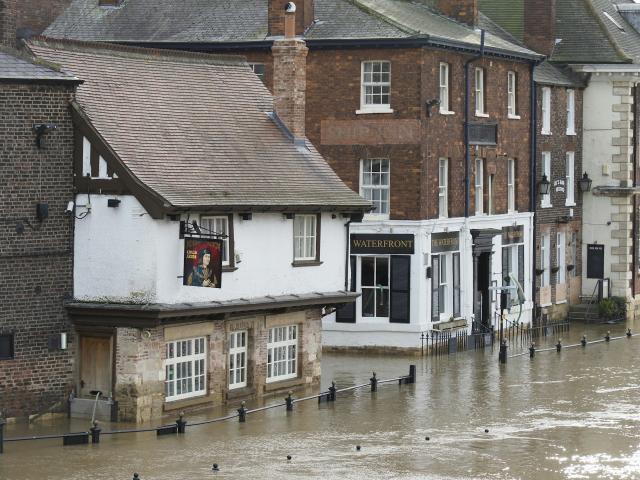
In recent years, Pakistan has suffered from increasingly severe and frequent floods, particularly impacting Sindh, Balochistan, and Punjab provinces. The impacts of climate change coupled with deforestation, poor urban planning infrastructure, and a lack of planning have heightened the vulnerabilities of millions. In 2022 alone, catastrophic floods resulted in the destruction of homes, schools, and livelihoods for over 30 million people. Of these, the rural poor were the most seriously impacted, with many residing in makeshift houses constructed of mud, straw, and other easily degradable materials. Given such destruction, we need to rethink post-disaster housing towards more flood-proof, locally viable, and sustainable construction.
Flood-proof housing is no longer a theoretical discussion but a matter of survival. These structures have to endure submersion for long stretches of time, give shelter during floods, and remain intact under pressure while keeping its occupants dry, sanitary, and comfortable after the floodwaters recede. The answer is not found in a singular design, but rather in a multi-dimensional approach addressing innovations sensitive to the local culture, community needs, climate, terrain, and area geography. This blog highlights five major aspects pertaining to flood-proof housing in the most vulnerable areas of Pakistan.
Vernacular Wisdom Meets Modern Innovation
Pakistan possesses a unique cultural architecture shaped by geographical contexts. In flood-prone areas, communities have traditionally built homes on wooden stilts or raised earthen platforms, constructed sloping thatched roofs for rain runoff, and utilized breathable materials such as mud, bamboo, and thatch. If these techniques were combined with modern design capabilities and materials, they could provide unparalleled affordability in construction along with durability and scalability.
There is no question that these approaches and defined styles can be enhanced with the use of modern technologies like CSEB, reinforced foundation, and modular precast panels without losing indigenous identity. Not only does adequate ventilation, light, and temperature control contribute to structural resilience, but it also improves the overall wellness of the residents. Where cement is expensive or inaccessible, binding materials coupled with earth construction offer an alternative that is local and climate responsive.
The use of waterproofed plinths with deep foundations, bamboo-reinforced walls, and pitched roofs aids in the attempts to flood-proof a region’s infrastructure. The described construction techniques serve the disaster-resilient purpose; waterproof paints serve as an additional layer of protection by preventing mold-related damage. Areas that are at risk of flooding often face problems with structural collapse, and severe weather greatly increases these problems.
As vital is the teaching of the local builders, who are community members, the sophisticated methods of constructing. Such bottom-up approaches guarantee participation and access to resilient methods and self-sufficiency. Economically, this promotes employment opportunities by transforming disaster-resilient construction maintenance into local tenants. From an economic standpoint, local builders are empowered by gaining skill-based technology knowledge, contributing to smoother growth.
As a result, when adopted at scale, local masons can transform such building practices for other impacted regions. The holistic approach integrated with local infrastructure faces not only future floods, but other natural disasters. Using this proactive strategy fosters improved recovery time while reducing construction expenditure. Ultimately, integrating community building alongside enhanced techniques ensures borders become harder to breach, both literally and figurative
Elegant Structures and Basics of Flood Handling
One of the flood harnessing designs is putting the structure at certain height to control flooding. The vast destruction of floods arises when water gets into the living organisms and feeble foundations result in the defaulted damage of the construction. Hence, one of the approaches caregivers increase the earth works ivory set bases is by increasing the plinth/placement of the directed hindered which is the restriction of the whole structure to assumed advanced advancements with in ground level engineering works this type of foundations are generally placed on frameworks, the housing can be raised in height in civil construction ranging from 2 to 8 ft., usually employed using reinforced concrete or column supported structures.
Designing the foundation of the building is additionally important. Shallow foundations are carved from loose or water soaked soil tend to sink slowly and gradually or get swept away. The strength and durability of houses exposed to floods can be vastly strengthened my using deep pile foundations, raft foundations, or concrete pedestals with water proof chemicals built right under the surface level. In the case of economically accessible peripheral areas, structures such as gabion bases afford an appealing and moderate blend of reliability and resilience.
While designing the slope of the house and the direction of the foundation, lay attention to the direction where water moves, slope of the ground, distance from the river or drainage hits the area. Moreover, as a last step to increase the likelihood of redirecting the flood away from the house, install natural flood control systems like bios wales or French drains. In addition, sanitation and water supply systems need to be adapted to withstand floods. Protecting hand pumps, raised latrines, and septic tanks with backflow valves can eliminate the risk of contamination during floods. Access to clean water is a recurrent problem during emergencies, but circumvented by placing roof-based rainwater harvesting and storage systems above the flood line.
Low-Cost and Expansible Construction Models
The flood- prone areas of Pakistan are mostly inhabited by underprivileged people. Any feasible housing model must be economically and socially viable. The target cost for a flood resistant house should be set to under PKR 500,000 (roughly $1800 USD) if it is to be economically accessible, but uses of materials and design complexity can greatly influence the unit cost. The goal should be to create standard designs which allows for flexibility in customization.
Standardized designs developed by private and public institutions can facilitate the construction surge while maintaining technical safety. Such initiatives are already being piloted by NGOs and housing charities in response to disasters. For example, the Pakistan Poverty Alleviation Fund (PPAF) and Akhuwat Foundation have pioneered low-cost, disaster-resistant housing models using reinforced bricks, fiber cement boards, and insulated roofing systems. Increasing community participation—from design workshops to sweat equity contributions—enhances the sense of ownership, lowers the cost, and enhances the project's effectiveness.
The efficient use of materials and time in construction increases with the mass production of prefabricated components such as wall panels, roofing trusses, and foundation blocks. Simultaneously, these designs should accommodate for culture—family composition, room layout, cooking, and gender delineated areas—so that homes are culturally appropriate and can be inhabited. To address the issue of affordability, microfinance, housing vouchers, and public-private partnerships are effective solutions. Construction subsidized loans, cooperatives, and large scale shifts toward safe housing will require the most supportive technical assistance programs.

Community-Centered Design and Local Capacity Building
Flood-resilient housing must go beyond the physical structure to provide floods with durable housing which can withstand the floods. This type of structure must cultivate knowledge, tools, and agency within the community. In order to ensure nothing is done on a whim, community-centered design encourages dialog in a manner where families are able to have a say in the construction of the house which includes choosing the materials and planning for future adaptations.
Women and children are known to suffer post-disaster more than the rest of the population, making them sensitive to design for. This makes gender-sensitive design especially important. Wives and kids often face the threat of not being able to gain access to safe private areas or getting washrooms away from them, making having reserved indoor spaces vital. These are fundamental for any family to enjoy wellbeing and having women partake in the whole design process assures that these family needs are taken care of.
With limited supply of skilled labor comes the need to first build local technical ability and top quality construction works. Boosting the economy can be done through tailored rebuilding policies which encourage flow of funds through construction of local manuals, guides, and toolkits. The plans would be in their native languages, enabling them to be practical. Local masons, carpenters, and flood engineers proficient in building resistant structures would only enhance these programs further.
Policy and Climate Strategy Related to Government Involvement
In the context of Pakistan, strong institutional support alongside a policy framework that synergizes with flood-proof housing is paramount for disaster-resilient housing to function seamlessly within the broader socio-economic system. Pakistan still requires a coherent national policy on disaster resilient housing as most efforts are reactive, fragmented and donor driven. It is pivotal that the government synergizes the adaptation policies on climate change, housing policy and disaster risk management into a national policy framework of cohesive integration.
Congested informal neighborhoods can also be formally defined, which allows titling and regularization, thereby encouraging residents to actively spend on better quality construction. Empowered local governments, especially in remote districts, have to be mandated to actively control the enforcement of codes at all levels, make available all relevant technical services, assist with construction, equip building subordinate units with legal authority, and develop sub-district level administrative structures.
Encouraging practices that fall under the bracket of sustainable development can also be achieved through tax rebate incentives associated with construction, subsidized production of local building materials, and insurance policies linked with sole proprietorship claimants of welfare state capitalism. Flood intensity can further be alleviated through housing planning being integrated with climate mitigation strategies such as reforestation, wetland restoration, and watershed management. Infrastructure, the environment and public health are interlinked and have a symbiotic relationship that creates a multi-faceted ecosystem of resilience whereby housing cannot simply be compartmentalized.
Just like international funding and cooperation, developing climate finance instruments, green bonds, and multilateral partnerships offer unique opportunities to increase investment on flood-resilient housing. Supporting locally led housing initiatives which are sustainable requires donor agencies to transition from providing emergency aid, towards long-term planning for building resilience.
Integrating Climate-Responsive Architecture in Flood Zones
The difficulties posed by floods cannot be solved by architecture resisting water. Rather, modern building construction must incorporate features that mitigate water impacts, and also plan ahead for climate changes and environmental adaptation in design. Architecture adapts to the environment where it is sited. Relevant variables include the degree of rainfall, changes of seasons with air temperature, dominant winds and their direction, saturation levels of soil. It is now crucial within the flood impact zones of Pakistan to ensure safety through this design, and to boom lives.
Orientation is a practical construction requirement. Homes ought to be oriented to block monsoon winds entirely, but make it easier for free-flowing winds to circulate inside the house. Roofs also make an impact, sloped roofs, or the more advanced form of the butterfly style. They make excellent air funnels, they assist in efficient fetching and storage of water for use in dry seasons. Overhangs and shaded verandas mitigate internal temperatures for hotter climates while raised flooring aids with standing air and increases airflow which reduces insects and moisture intrusion.
Use of sustainable, climate-adaptive materials is another core principle. Bamboo that has been grown locally emerges as an effective compress for earthen blocks, while the mortars are of lime, thus optimizing everything for sustainability and strength without compromising the breathable interiors. Such materials are useful where temperature and humidity, accompanied by floods are prominent. They maintain comfortable environment indoors without electricity. Further, these materials contracting and expanding freely deal with the changing levels of temperature so cracks and wear out long-wear are strived for diminished.
Passive cooling techniques like aiding ventilation, tall ceilings, and shaded courtyards also support adaptive living with the climate. Daylight is able to penetrate and privacy is maintained at the same time due to airflow with traditional open lattice brickwork and jali walls design. These features aid in reducing the expenses associated with mechanical cooling and lighting, thus lowering the cost of living.
While combating floods, climate responsive architecture provides protection physically as well as enhances environmental harmony for the long term. Homes start becoming practical and widely embraced when communities are consulted and design incorporates culture like shared outdoor cooking areas or livestock pens. More than a technical solution, climate responsive homes provide the dignity of people in flood prone regions by demonstrating that beauty, culture and comfort can coexist with resilience.
Post Flood Reconstruction and Self Build Models
Restoring homes is not the only focus after floods, lives as well as livelihoods needs to be restored. Many vulnerable families face aid access delays, construction material access barriers and dependence on external aid agencies post floods. In these situations, powerful community recovery tools arise for families through self-build housing, where families construct or co-construct their homes.
Self-build models encourage agency by enabling families to make housing choices tailored to their individual traditions and aspirations. From determining the number of rooms to their housing compartments and cultural showcases, this method guarantees that every construction is as personal and functional as a home should be. It also fosters community spirit, as neighbors tend to help in the building process as a form of social interaction through sharing labor, tools, and knowledge.
UN-Habitat, the Rural Support Programmes Network (RSPN) and Heritage Foundation Pakistan have also promoted self-build approaches by providing technical training, starter kits, basic materials, and modular design templates. These aid frameworks sustain basic self-reliance while ensuring flood-resilient construction. Simple illustrative manuals and mobile applications may help users with fundamental concepts such as wall reinforcement or waterproof foundation crafting.
Cost efficiency is another benefit. By removing subcontractors and using materials from the locality, expenses are slashed. This is particularly important in post-disaster scenarios where transport and markets are closed. Self-build initiatives are also better positioned to encourage innovations such as community-built drainage, recycled plastic insulation, and reused steel as compared to formal regulations.
Some issues still persist, such as a lack of technological supervision, land ownership conflicts, and assistance for at-risk groups like elderly widows and disabled individuals. Nevertheless, self-build models, when accompanied by effective strategies and thorough planning, can foster not just enhanced physical structures, but fortified communities. Coupled with municipal government aid and catastrophe insurance, these strategies have the potential to serve as the foundation for a sustainable, self-sufficient housing recovery framework. The ability to allow the impacted people to undertake recovery actions for their houses post-flood is the reinstatement of shelter, yes; but more importantly, self-sufficiency, herculean strength to tackle hardships, and enduring fortitude.
Conclusion
For a country like Pakistan –who has climate-vulnerable citizens within the millions- the task of flood-proof housing is no longer simply a technical issue. With extreme weather rapidly shifting from being an exception to the rule, traditional modalities of housing will no longer be sufficient. Pakistan needs to adopt an all-encompassing paradigm regarding housing that seeks to combine local and modern engineering, protect and fortify culture along with people- and community-centric approaches where solutions are not provided from the top down.
They work more efficiently when it’s collaborative, integrating communities with government agencies, NGOs, architects, as well as climate specialists. Providing affordable, resilient, and inclusive housing would avert displacement, protect lives, and greatly improve the future of its most vulnerable citizens. Flood-proof homes do not only serve as structures, they serve as a foundation of hope that encompasses a resilient nation.
Also Read: Climate-Resilient Affordable Housing In Pakistan: Designing For Floods, Heat & Monsoon



-ySWGlp0vgc.jpg)











LEAVE A REPLY