

-tfR2nNF7ds.jpg)
Employer-Backed Rental Housing Near Industrial Zones: Win-Win Or Risk?
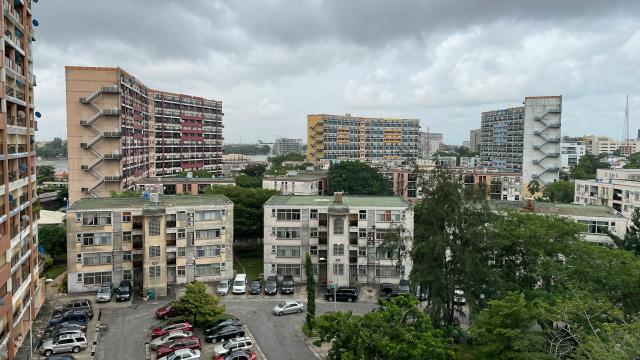
With urban growth and industrial expansion into the peri-urban and semi-rural zones, a problem recurrently appears, and that is, where are the workers to reside? The long commuting distance, increasing urban rental rates and shortages of public housing have prompted many employers to consider a formerly popular but now rediscovered answer that is employer-provided rental houses in areas near the industries.
These residential projects, in most cases
near factories, logistics centers and manufacturing centers, are situated in a
way that is thought to be in response to labor shortages, loss of productivity
and inability to afford housing. To the employees, the offer is too tempting:
cheap housing, shorter traveling, and a feeling of stability. To the employers,
the model will provide enhanced retention of the workforce, time-saving, and
efficiency.
Nevertheless, such an arrangement also makes some serious
questions. Is employer-provided housing dependency-forming and restrictive to
worker mobility? Do we have any health and environmental risks of living near
industrial activity? Would these types of housing strengthen economic
inequality or lessen local housing markets? Since governments, corporations,
and city planners reconsider this notion, it is important to understand that
the idea of employer-supported rental housing around industrial areas is really
a win-win scenario or that it is not risk-free in the long term. In this
article, the author discusses the problem in terms of the economic, social,
environmental, and ethical approaches in order to present a balanced and
detailed evaluation.
Background of Housing provided by Employers.
Housing is not a new concept by employers. As an industrial
revolution developed, company towns were constructed by the proprietors of
factories to accommodate workers in the mills, mines, and other plants. These
plans were convenient and stable, however, in most cases, at the expense of
employee independence because employers regulated not only salaries but also
housing, internal trade, and even family traditions. Gradually, numerous of
these towns turned into an icon of exploitation resulting in labor reforms and
the progressive detachment of employment and housing.
The employer-sponsored rentals have come back in a new form
in the contemporary era. The present day models do not necessarily entail fully
controlled company towns and commercial agreements with real estate developers,
local governments or housing trusts. It focuses on the cost and not the
possession and the accommodation is not a requirement but an option. This
change is an indication of what was learnt in the past, and emerging economic
pressures that include; housing crunches and competition in the labor market.
Nevertheless, the shadow of the historical legacy still
prevails. Even modern-employer-supported housing, critics contend, will
reproduce the power imbalances unless it is strictly controlled. According to
proponents, these risks are minimized by contemporary legal systems, safeguards
of tenants, and labor laws. This historical development is crucial to
determining whether contemporary implementations are an improvement or a simple
rebranding of the models of the past that had issues.
Why Industrial Zones Are Driving Housing Demand
The industrial zones are usually in the outskirts of the
cities where land is cheaper and large scale business is possible. Although
this is economically rational on the part of the businesses, it poses a
logistical problem to the workers who have to travel long distances in the
cities where they live. In these areas, there is often no transport or train or
limited transport that is not reliable, which makes the travel more
time-consuming, expensive, and stressful to the employees. Such challenges will
eventually result in absenteeism, high turnover, and low productivity.
This problem of mismatch between the location of the jobs
and housing can be directly solved by employer-sponsored rental housing around
the industrial areas. Companies will be in a position to reduce the problem of
commuting since it will bring workers nearer to working areas and make the jobs
more appealing to prospective employees. This is especially relevant in
industries which demand shift labor like manufacturing, warehousing and energy
production where unusual working hours compounded with infrequent hours are
also cumbersome with long commutes.
Also, it is common in industrial areas to fail to attract skilled workers because they feel isolated or they do not have the facilities. Specifically designed rental apartments can serve as a trigger to the creation of a larger community in terms of retail, healthcare, and leisure amenities. Although this may be beneficial to both employees and the nearby communities, it also brings about the issue of sustainability in the long run and whether the industrial employers need to be the major players when it comes to dictating the residential patterns.

Employee Benefits: Convenience and Affordability.
Employer-provided rental housing has concrete benefits to a
great number of workers, particularly those who occupy the lower- and
middle-income groups. The first advantage is the cheapest price. Rents are
usually charged at a lower price than the market rate or they have utilities
and maintenance thus lowering the overall cost of living. This can be a
much-needed financial assistance and an increase in economic security in areas
where there is housing shortage or skyrocketing rental rates.
The other major benefit is the proximity to the workplace.
Less commuting will save time, decrease transportation expenses, and enhance
work-life balance. When the number of days needed to travel to work is reduced,
employees can also have lower stress levels, an improved health status, and job
satisfaction. In the case of shift workers, it may be particularly beneficial
to be living close enough to have greater flexibility and rest during shifts.
Community or a sense of belonging is also achievable through
employer-provided housing, especially to workers who have migrated or moved to
a new location. Residing alongside co-workers can help them to socialize less
and to feel less isolated. In other ones, housing developments may come with
shared facilities like childcare facilities, gyms or communal areas which also
increase quality of life.
These advantages are, however, strongly reliant on fair
practices of renting, the rights of the tenant, and the willingness to
participate. Employer-provided housing can be an effective instrument of
enhancing employee welfare when done intelligently, yet its benefits may be
accompanied by huge trade-offs without protective measures.
Employer Advantages Productivity and Retention.
In the eyes of an employer, there are some operational
benefits which can be realized through investment in rental housing around
industrial areas. Shorter commuting times can often be translated to increased
punctuality, decreased absenteeism and increased reliability of employees. By
having workers living near the workplace, there is a lesser chance of the
unexpected delays due to traffic or weather and any form of transportation
failures to act out.
Another major benefit is employee retention.
Employment-linked affordable housing may enhance positions, especially in
competitive labor markets. Employees that feel financially stable and
maintained tend not to find other jobs, lowering the employer recruitment and
training expenses. Housing benefits can act as a strong differentiator in
industries where there are chronic labor shortages.
Housing sponsored by the employer can also strengthen
corporate reputation. Firms that are actively involved in housing issues can be
considered socially responsible and this will enhance their relationship with
regulators, investors and the community. This may be particularly helpful in
the industries that are exposed to questioning labor practices or environmental
effects.
With that said, there are responsibilities that these
benefits are associated with. Employers should also handle the housing programs
in ways that are open and ethical so that they are not used as a source of
coercion and control. Housing programs can be used to achieve both business
objectives and the welfare of the employees when the employers find the right
balance.
Implications on Urban Planning and Infrastructure.
The construction of rental houses within the industrial
areas which are supported by employers is a major indication in the planning of
cities. On the one hand, it may minimize urban sprawl, moving housing nearer to
the job centres and reducing the strain on the city infrastructures and
transport systems. This match between jobs and housing is commonly recognized
as one of the best practices in sustainability in the city development.
Conversely, inappropriateness housing around industrial
localities may overstretch local infrastructure when there is lack of proper
support of services in those localities. Sewage, water supply, schools, roads,
and health facilities should be made up accordingly to suit the new residential
populations. These developments can only be isolated enclaves with fewer access
to basic amenities unless coordinated planning is done to ensure this does not
happen.
The zoning laws are also important. Non-residential purposes
are normally applied in industrial zones because of the fear of pollution,
noise, and safety. The introduction of housing to these regions will have to be
regulated, evaluated based on the environment, and planned on the long-term
land-use basis. Governments should make sure that housing projects should be
health and safety standards and at the same time should be well integrated with
the overall direction of urban development.
Employer-sponsored housing can have a positive impact on the
development of the region when included in a set of planning systems. In its
absence, it is likely to have disjointed and unsustainable communities.
Environmental and Health Considerations
People who live close to industrial areas have justifiable
environmental and health issues. Any industry may create air and water
contamination, noise, and dangerous waste, which represents the potential
threat to the residents. Prolonged use of pollutants can lead to more
respiratory diseases, heart diseases among other health complications. The
assessment of these risks has to be closely conducted before residential
developments are given consent.
In modern industrial areas, there are usually stronger
environmental policies than used to exist, and there are emission control,
buffer zones and monitors. Green building standards, better ventilation, and
landscaping to minimize environmental effects may be included in the
employer-supported housing projects. Nonetheless, enforcement and supervision
has a wide range of effectiveness of these measures.
The psychological effect also has to be considered. The
mental health and the quality of life in general can be harmed because of
constant exposure to industrial noise or unattractive sight. The healthy
communities need access to green spaces, recreational facilities and clean
environments irrespective of their proximity to employment.
One of the biggest problems of the employer-backed housing
around industrial areas is finding the balance between the economy and the
environment health. The risks will be more than the benefits of living in the
area without stringent measures and continuous checks.
Social and Economic Risks for Workers
The employer-sponsored rental housing has drawbacks though
it has its benefits in that it can form dependency which restrict autonomy of
the workers. When the housing is directly related to employment, unemployed
persons may also lose their homes and become vulnerable when the economy
declines or there is bad blood at work. This can discourage employees who might
raise their issues and switch jobs or even engage in labor organizing.
The threat of wage suppression is also present. The
employers can offset low payments by providing subsidized housing, basically
transferring the cash payment to in-kind benefits. Although this might seem
good in the short run, this may decrease the earning potential and financial
self-sufficiency of employees in the long run.
At a larger economic level, employer-provided housing may
mislead in the local real estate market. In the event that provision of housing
is dominated by large employers, the private landlords can withdraw or increase
rents, which diminishes choice and competition. This may have adverse impacts
on the non-employee residents and increase the inequality in the communities.
To prevent these risks, there should be high legal
regulations, strict distinction between employment agreements and tenancy
agreements as well as availability of other housing opportunities. In the
absence of such, the social benefits of the employer supported housing can be
defeated by the social cost of the same.
International Cases and New Paradigms
Employer-supported accommodation in the world comes in
various forms. In some Asian regions, enormous manufacturing companies offer
dorm-like living quarters to migrant laborers, which is cheap but not much
privacy and freedom. In Europe, mixed-income housing is of support through
public-private partnerships, frequently with robust tenant rights, with
communal integration.
In the United States, workforce job bonuses have brought
about some technology and logistics companies investing in workforce housing to
deal with shortages of housing in the region. These programs usually entail
partnership with local government and non-profit developers in which they look
to strike the right balance between affordability and independence. Although
still relatively small in size, they indicate increased appreciation of the
problem of housing as a workforce issue that has to be taken seriously.
These international case studies show that the results can
be extremely dependent on the regime, culture, and legislation. Housing can be
positive when it is voluntary, controlled and incorporated within the larger
communities. In those areas, where there is a weak oversight, the risk of
exploitation and segregation is high.
The international experience can guide policymakers and
employers to come up with housing models that are beneficial and yet, do not
fall into the traps.
The Role of Government Policy and Regulation
The role of government policy is a decisive one to define
the fact that employer-supported rental houses around industrial areas would
become the long-term solution or the long-term risk. Regulatory frameworks must
be clear in order to prevent the exploitation of workers and to make housing
arrangements fair and free and not tied to the employment contracts. Effective
tenant protection measures can help eliminate arbitrary evictions and
manipulation of rents or even loss of residence when a job is lost.
Concurrently, responsible employing can be supported by
governments using incentives like tax benefits, zoning or by public and private
partnerships in case projects satisfy the standards in the sphere of health,
safety and affordability. The environmental laws are also critical and
residential constructions in the industrial regions must be able to meet the
pollution threshold and also provide good buffer areas.
Employer-sponsored housing can support more general
objectives in urban development when governments is proactive in managing and
leading such efforts. Such projects will however be at a risk of focusing on
corporate efficiency at the expense of worker welfare and sustainability of the
community without proper regulation.
Conclusion
Rental accommodation sponsored by employers in the vicinity
of industrial areas is located between the sphere of innovation and risk.
Designed and carefully operated, it can help overcome the acute issues of
housing affordability, shortage of labor and unfriendly commuting habits. It
can be of benefit to the employees by giving them reduced costs, increased
convenience and better living standards and to the employers increased
productivity, stability and reputational benefits.
Nevertheless, the threats are also existent and cannot be
overlooked. The threat of caution is pointed out by historical precedents,
environmental issues, power disparities, and market distortions. The
employer-provided housing in the absence of solid regulations, tenant
protections, and integration of urban planning may destroy the autonomy of the
worker and the welfare of the community.
It all depends on the implementation of this model; in the end it will be a win- win or a risk. They must have transparent governance, free participation, protection of the environment and a distinction between job and housing rights. As urbanization and industrialization keep maturing, rented housing sponsored by employers can become a part of the future of work and life, although only in case of the fact that it will care as much about people as about productivity.



-3dkuLgKhRD.jpg)
-49HupTvwDD.jpg)










LEAVE A REPLY