

Can Social Housing Really Meet the Needs of Low-Income Families in Ghana?
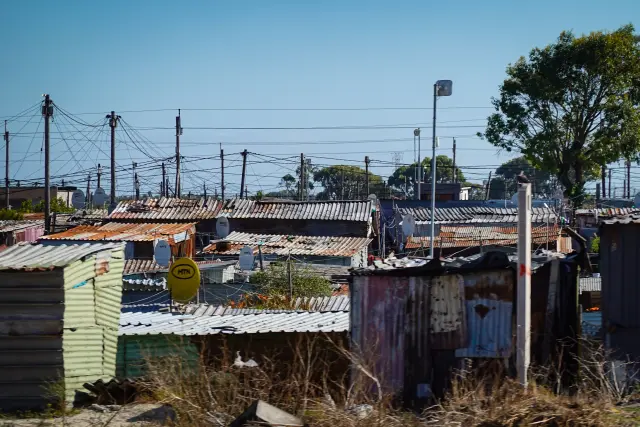
The availability of safe, decent, and affordable housing is one of the endemic problems in the development of many developing countries, and Ghana is not an exception. The increased urbanization rate, population increase, rural-urban migration, and escalation of construction costs have widened the gap between housing demand and supply.
 In the case of low-income
families, the variance is particularly harsh that the family might be compelled
to reside in overpopulated compounds, shantytowns, or low-quality houses that
lack proper sanitation, ventilation, and safety.
Social housing has also been suggested as a common resolution to this crisis. Social housing is usually advanced as a way of leading to dignified livelihoods, enhanced social wellbeing, poverty elimination, and enhanced societal stability by governments, development agencies and individual investors.
Nevertheless, the question
arises, can social housing in Ghana be truly satisfying the needs of people
whom it is supposed to serve?
This is not a straightforward question since housing is not merely offering a physical structure. A home is associated with access to livelihoods, transport, education, health, social connections and preferences towards cultures.
Affordability is just but one of the factors that determine low-income families; job proximity, flexible payment systems, family size, informal economic activities and tenure security are all determining factors.
In the event that social housing does not take these integrating realities into
consideration, then there is a likelihood that projects would get
underutilized, poorly maintained or become financially inefficient.
The housing industry in Ghana is a combination of state projects, the real estate sector, self-help construction and informal rental. Although the governments of the day have proclaimed ambitious housing programs, the implementation problems, land administration problems, high cost of construction, and limited finances have not helped much.
In the
meantime, most of the low-income families live in incremental building,
communal compound housing, or unofficial rentals which are not legally secure.
Social housing seems prospective in this environment; however, its success will
be determined by the careful design and governance and compatibility with the
needs of the community.
An important question that is critically discussed in this article is whether social housing is a viable measure that could address the needs of low-income families in Ghana. It discusses housing shortcomings in structures, economic constraints, government restrictions, social and cultural factors, financing approaches, and sustainability in the long term.
Based on
the consideration of the opportunities and limitations, the discussion
identifies viable directions towards making social housing more open, effective, and attentive to the changing urban realities of Ghana.
The Housing shortage and Urbanization problem in Ghana
The Ghana housing shortage is both qualitative and quantitative. Urban growth has shown a high rate that has surpassed formal housing delivery, causing a shortfall that is estimated to be in the millions of housing units.
With people coming to seek employment, education and improvement in the standards of living, major cities are still growing. It is unfortunate that the urban planning systems are not able to keep up with this development.
Consequently, informal settlements are growing on urban outskirts and unplanned
areas of the inner city where infrastructure is poor or absent.
For low-income families, urbanization is a paradox. Economic opportunities are available in the cities, but there is a prohibitive cost of formal housing in the cities. The prices of land increase at a high rate because of speculation, development of infrastructure, and business need which is commercial.
Middle- and high-income markets are usually targeted by the
developers as profit margins are more lucrative and financing is relatively
easier to get. This leaves a massive segment of the populace reliant on
informal rents, congested compound dwellings, or slums.
Social wellbeing is also influenced by the shortage of housing. Overcrowding enhances the chances of disease spread, stress, family violence, and low educational achievement among youngsters.
Poor sanitation
leads to the emergence of public health crises, and a poor tenure system prevents
families from investing in the sanitation of their houses. Informal settlements that are
prone to floods also subject vulnerable households to climate-related disasters.
The weak coordination between land agencies and the local governments and planning authorities escalates urban housing issues. The large-scale affordable housing projects are also hard to implement due to delays in land titling, lack of clear ownership titles, and bureaucracy in permitting.
Infrastructure delivery, including roads, drainage, water, and electricity services, is regularly trailing infrastructure demand,
increasing the cost of development and decreasing the availability of appropriate
building locations.
Social housing has been put forward as a tactical measure to correct these problems by setting up targeted, mass, and subsidized construction. It is best that it can lower congestion, substituting slums with housing that is safe and encourages planned urban growth.
Nevertheless, Ghana
has such a large deficit that single projects cannot resolve the crisis. Unless
social housing is incorporated into the wider urban planning schemes,
transportation, and workplaces, new estates stand a chance of remaining isolated
settlements that cannot support the livelihood of the residents.
Affordability Barriers and Income Realities of Low‑Income Families
The issue of affordability is still the key one in the question of whether social housing can be available to low-income households. Families in Ghana also have irregular earnings through informal jobs like petty trading, artisanal jobs, transport services, and small-scale agriculture.
The
income level on a monthly basis is not very steady, and thus the traditional
mortgage systems are not applicable. Even the comparatively low installment
payments can prove to be a liability when the incomes are seasonal or daily.
Conventional housing finance schemes discriminate in favor of formally employed employees with verifiable earnings and excellent credit history. Mortgage interest rates are usually high, the period of repayment can be quite short, and the down payments can be unrealistic for poor households.
This means that most families have to depend on incremental self-construction
whereby houses are built as money is earned. Such flexibility would be more
suitable to the irregular patterns of income, but it leads to longer building
times and inconsistent quality assurance.
Social housing programs seek to overcome these affordability barriers by using subsidies, rent-to-own agreements, cooperative ownership, or public-private cooperatives. Nevertheless, the process of targeting needs to be specific.
The so-called affordable housing in other instances is still out of
the financial means of the lowest-income groups. In cases where eligibility
requirements are not enforced well, middle-income earners can seize the units
which are meant to be allocated to poorer households.
Hidden housing costs is another important determinant. The
actual cost of living in the social housing estates can be very high due to the
utility bills, community service charges, maintenance fees and transportation
expenses. When these expenses are not well controlled, families can default on payments or go back to informal settlements where living conditions, though poor, seem
to be economically viable.
Rental social housing can provide an easier entry route for exceptionally low-income families that cannot afford their own homes. Rents
that are well managed offer flexibility as well as lessen long-term debt
interest and enable the family to migrate in search of jobs. Nevertheless,
rental accommodation needs powerful management organizations to guarantee
upkeep, reasonable costs, and security of tenants.
Affordability is not only limited to price, but to the structure of payment. The ability to have flexible installment schedules that accommodate informal income patterns would go a long way in enhancing accessibility.
Housing loans based on microfinance, local savings groups, and cooperative
models of finance have demonstrated the ability to help incremental ownership
and maintain affordability.
Governance, Policy and Institutional Limitations
Social housing cannot work without strong governance
structures but institutional challenges usually sabotage housing programs in
developing economies. In Ghana, there is a duplication of roles between
ministries, metropolitan governments, land commissions, and regulatory
agencies, which lead to a problem of coordination. The project approvals might
be lengthy, acquisition of land may be complicated, and compliance with the
regulations may be expensive.
Land administration is a very sensitive topic. Several claims to land, common land tenure systems, and incomplete land records are a source of uncertainty, which hinders large-scale affordable housing investments.
The process of negotiating with the traditional authorities,
compensation stalemates, and lawsuits can potentially incur years of delay that
inflates costs and generates a lack of investor trust.
The other key concern is policy continuity. Political
administrations tend to change housing programs, and the projects are left
behind, causing various priorities, and unstable funding streams. Social
housing initiatives might find it difficult to have sustainable effects without
long-term national policies on housing that are non-political.
There is also a threat of corruption and mismanagement. Costs can be overstated and the quality of construction could be defective due to procurement anomalies, contractor latitude and lack of proper oversight.
When the social housing units are deteriorating rapidly because of poor
materials or poor maintenance systems, the residents will be exposed to unsafe
living conditions, and they will have to incur extra repair costs.
There are institutional capacity constraints that also
impact project delivery. Local governments might also have incompetent
staff in urban planning, housing finance, engineering oversight, and community
involvement. Lack of proper monitoring systems complicates the determination of
project effectiveness or the act of imposing eligibility.
These limitations notwithstanding, governance reforms can
have a strong positive effect on social housing. Delivery can be increased by
making procurement transparent and digitizing land documents, simplifying
permitting, and enhancing better interagency coordination. Responsiveness to
local housing needs could also be enhanced by decentralized application with
well-established accountability strategies.
It is also important to have the attention of the people.
Involvement in planning and design of projects is important because it makes
the projects culturally oriented, with family set-ups as well as patterns
of livelihood. People tend to become owners of housing projects, which results
in high standards of maintenance and social integration.
Social, Cultural, and Community Considerations
The solutions to housing that do not consider social and
cultural realities hardly work, no matter the quality of physical housing. The
housing preferences in Ghana are influenced by extended family patterns,
community living and home-based economic activities. There are several
families that depend on compound housing arrangements where children are
supported in sharing, social networking, and home-based businesses.
A uniform social housing design can be incompatible with
such patterns of living. Lack of large or multigenerational families may be reduced by the small unit size, the absence of outdoor space, and the
limitation of home-based businesses. When the arrangement of houses does not
allow the residents to involve themselves in petty trade, food processing,
tailoring, and repair services, then livelihoods will be affected.
Dignity and ownership are also perceived in a way based on
the cultural expectations. Self-owned houses in most communities symbolize
individual performance and status in society. The switch to state-owned housing
can be looked at with suspicion in case residents feel restricted in their
right to modify, expand, or even will.
The other factor is community integration. The social housing estates used to separate low-income families, and the mixed-income neighborhoods can strengthen the social stigma and economic segregation.
Social
mobility and integration: Urban design that is inclusive in nature, combining low-cost homes with schools, markets, recreation centers, and transportation, brings about social cohesion.
Housing satisfaction is also determined by safety and social
trust. Proper illumination together with social meeting areas and good
neighborhood management systems enhance security and social networks. On the
other hand, uncontrolled estates can be subject to vandalism, crime and poor
infrastructure.
The common sense in the management of the estate that
incorporates the residents in the management of the estate builds on shared
responsibility. Maintenance, conflict resolution and group decision-making can
be organized by housing co-ops and tenant organizations. These institutions
enable communities and make them less dependent on overstretched state
institutions.
Gender aspects are not less important. Women are usually
left with major responsibility of taking care of children and home economics.
The housing designs are based on safe cooking facilities, access to water,
sanitation facilities, and proximity to schools, which enhance the daily living
standards of women and children.
Towards Financing Models and Long-Term Sustainability
The sustainability of social housing projects depends on
financing. Diversification of sources of funds is usually a necessity to
support very high housing deficits; otherwise, government budgets alone would not
be adequate. The government can use public-private partnerships to offer land,
tax concessions, or infrastructure as the privately-owned entities bring in
capital and technical capability.
Long-term capital can be mobilized using housing funds that
are backed by pension schemes, insurance investments and development finance
institutions. Concessional loans and grants are also offered by international
development partners to help in the affordable housing programs.
Affordability can be increased using innovative financing
mechanisms. In mixed developments, cross-subsidization models enable
higher-income housing units to make up the costs of low-income units.
Incremental housing support program is the provision of serviced plots and core
housing units that are expanded by the family over time.
Models of rental housing with government guarantees will be
able to appeal to institutional investors and ensure that low-income tenants do
not become targets of exorbitant rents. Co-petitions allow occupants to share
savings and receive shared finance.
Maintenance funding is also a requirement of long-term
sustainability. In the absence of proper maintenance mechanisms, building can
degrade very fast compromising living standards as well as the value of
investment. The charge of services should be at a relatively low cost but high
enough to cater to repair, garbage handling, security and maintenance of the
infrastructure.
Sustainability of the environment is becoming very crucial.
The use of energy-saving building materials, drainage, and climate-resistant designs will minimize costs in the long-term perspective and environmental
dangers. The ability to withstand floods, heat waves, and water shortages is
also enhanced by sustainable housing.
Conclusion
The condition of housing among low-income families in Ghana has potential value in the meaning of social housing to enhance the standard of living of families, but this is not a universal or automatic solution.
The issues related to housing are multi-factorial as they depend on
economic, social, institutional, and spatial aspects and demand multi-level
solutions. Although a properly planned social housing system can minimize overcrowding
and enhance sanitation, and maintain urban order, an inadequately designed
housing system threatens to increase inequality and financial burden.
In order to address the needs of low-income households truly, social housing should focus on affordability, flexible financing, strategic location, cultural fit, and effective governance.
Transportation,
livelihoods, education and access to health services should be incorporated into the
projects so as to have holistic development of the community. There can be
suitability and long-term maintenance improvement with the participation of
residents in the planning processes.
Reforms in the institutions are also necessary. Open land
management, stable housing policies, responsible procurement regimes, and robust
regulatory enforcement will enhance investor confidence and efficiency in
implementing projects. By utilizing innovative funding models and public-private partnerships, it is possible to increase the supply as well as
keep it affordable.





-ySWGlp0vgc.jpg)










LEAVE A REPLY