

-kCz2X6mz2h.webp)
Can Modular Homes Solve Ghana’s Affordable Housing Crisis? Exploring Alternative Housing Models
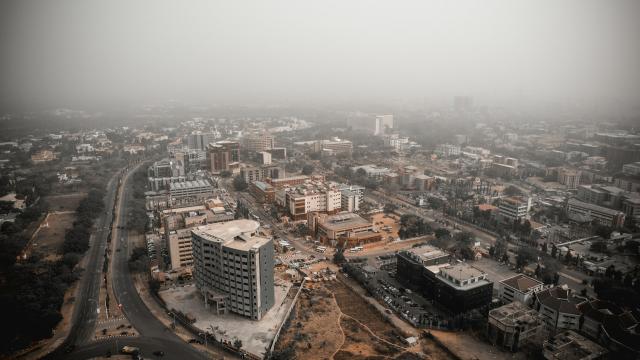
One of the most basic human needs is housing, though it continues to be a great problem among many developing countries. The affordability of housing in Ghana has been on the rise because the population has been rising coupled with the increase in urbanization.
 Accra, Kumasi, and
Takoradi are the cities that are rapidly growing because of rural-urban
migration, economic prospects, and population. Although this growth is
associated with economic growth and modernization, the whole activity puts
tremendous strain on the housing systems, infrastructure, and urban planning.
The lack of affordable housing is one of the most urgent issues in Ghana nowadays. Numerous households, especially low- and middle-income families, find it difficult to afford decent houses that are within their budget.
The traditional methods of housing construction are usually
costly in that they use costly building materials, prolonged construction
processes, and labor costs. Consequently, a large population is compelled
to reside in crowded housing or informal settlements where they may have little
access to sanitation, water and other essential services.
The Ghana government has taken a number of initiatives to house projects in order to minimize the housing shortage. Conventional means have, however, failed to bridge the gap between supply and demand. The escalating prices of land, building materials, and city infrastructure make housing development still costly.
This is why alternative forms of housing are
being considered by policymakers, developers, and experts in the field of
housing as means that will offer a quicker and less costly yet more effective
solution.
Modular housing is one of these alternatives. Prefabricated homes are also known as modular homes that are assembled at the construction site but are prefabricated in the factory by building in parts or modules.
Its
popularity in most regions of the world has largely been attributed to the fact
that this type of construction may save a lot of time and reduce waste of materials, and
the cost of the entire building has also been reduced. Modular housing may
also offer high-quality housing that is durable to accommodate modern
housing requirements.
Other new housing models are also being considered around
the world in addition to the modular construction being discussed. These are
pre-assembled housing units, container homes, 3D-printed housing, and
community-built housing. All these strategies have the potential to be useful
in the housing crunch by making them pocket-friendly and sustainable.
Nonetheless, the adoption of these alternative housing
models in Ghana needs proper attention to a number of factors. These consist of
local construction laws, funding sources, culture, access to infrastructure,
and the environment. The social acceptance and enlightenment of the masses is
also a critical factor in whether such housing solutions can be popularly
adopted.
This blog examines how modular homes and other innovative housing construction models can be used to address the problem of affordable housing in Ghana. It discusses the causes of the housing crisis, the benefits of modular building, the importance of technology and innovation, the economic benefits of other housing models, and the policy frameworks required to endorse their use.
In this analysis, the discussion points out the ways that
Ghana can adopt innovative approaches to housing to help develop more inclusive
and sustainable communities.
Introduction to the Affordable Housing Crisis in Ghana
The affordable housing crisis in Ghana has developed over a number of decades as a result of a conglomeration of demographic, economic factors, and institutional factors. One of the greatest causes of the housing shortage is rapid urbanization.
With the migration of people into cities in
search of jobs and improved living standards, the population in the urban
centers keeps growing, thereby creating pressure to accommodate more people.
Unluckily, the housing supply has not been in line with this
increasing demand. Residential real estate developers are usually interested in
developing luxurious residential homes since they are associated with more
financial gains. Consequently, affordable housing has not been adequately
served, and thus most of the low- and middle-income households have minimal
choices.
Another factor that causes the housing deficit is construction costs. In Ghana, building techniques are more traditional and, therefore, cement, steel, and concrete blocks are extensively used.
Such
materials may be costly, particularly in the case of imported materials or
those obtained in an energy-consuming process. It can also raise the cost of
construction in terms of transportation fees and changes in the prices of
commodities across the world.
Another significant hindrance towards the development of
affordable housing is the cost of land. Due to high demand and speculative
investment in the urban areas, land prices have increased drastically in most
of them. Besides, land tenure system, involving customary and statutory
ownership systems, in Ghana has the potential to complicate and prolong land
acquisition.
Housing crisis also gets aggravated by the problem of
financing. The high interest rates, stringent lending policies and poor
financial literacy disqualifies the mortgage finance to many potential
homeowners. Lack of affordable financing facilities makes people find it
difficult to construct or acquire houses.
Government housing programs have tried to solve these
problems but they are usually limited in terms of funding, bureaucracies and
the capacity of implementation. Consequently, there has been a significant
housing deficit and a large number of citizens have no choice but to settle on
informal houses.
The impact of the shortage of housing is not only the
inability to have a shelter. The overpopulated housing situation may lead to
the danger of the health of the population, diminished living standards, and
social injustice. The informal settlements are also likely to be lacking in the
necessary infrastructure such as clean water, sanitation, and good electricity.
The solution to the housing crisis in Ghana hence has to be
creative ideas that are not limited to conventional ways of building. Other
housing models such as modular construction have a potential of offering homes
that can be delivered faster and more efficiently whilst being affordable.
What Are Modular Homes and How They Work
Modular homes are a new method of construction that is greatly
different to the conventional way of building. Rather than building a whole
house on-site, modular housing entails building small segments of a building,
called modules, in a factory setting. These modules are then carried to the
construction site whereby they are put together into a whole structure.
The production process that is based at factories has
several benefits. Since modules are created in controlled settings,
construction teams will not experience delays due to weather impact and also
have the ability to retain the same level of quality standards. This is
capable of saving a lot of time in the execution of housing projects.
After the arrival of the modules at the construction site,
the modules are assembled on prepared foundations before the use of cranes and
other specialized equipment. Construction of the modules is usually much quicker compared to the traditional method of construction. In most instances,
a modular house can be finished in a few weeks as opposed to months.
Modular construction is also flexible in terms of design.
Houses can be modified to suit various size, design and architecture. There are
many ways in which modules can be assembled together to form single-family
houses, apartment buildings, schools, and even hospitals.
The other benefit of modular homes is that it lessens
construction waste. With factory production, there will be better utilization of
the materials, thereby reducing the number of leftover materials that would be
caused by the traditional construction sites.
Along with the advantages of cost and efficiency, modular
homes may be elaborated to the high standards of durability and safety. These
structures are able to withstand the environment conditions like heavy rains,
strong winds and fluctuation in temperatures when well-engineered.
The modular housing has been applied in other countries like
the United States, Sweden, Japan and Singapore among other countries globally.
The modular construction is the way these countries are dealing with a shortage
of housing, cost reduction, and improved efficiency in building.
Nonetheless, in Ghana, modular housing is yet to be adopted
particularly. Some of the developers and homeowners have no acquaintance with
the technology and there might be doubts about the quality, durability and maintenance in the long run. Developing confidence in modular construction and
proving successful pilot projects can be achieved through the increase of
awareness on the topic.
Policy, Financing, and the Future of Modular Housing in Ghana
The supportive policies and innovative financing systems have to be at the center stage of making modular housing a significant intervention to the affordable housing crisis in Ghana.
Although modular
construction has benefits like short construction duration, minimized material
waste, and minimal labor expenses, its use in Ghana is limited because of gaps in
its regulations, poor finance access, and low awareness among relevant people.
The prospects of modular housing might not be fully utilized without the concerted
efforts of government agencies, individual developers, or financial
institutions.
Among the initial spheres that need to be engaged is the policy and regulatory framework on the construction of housing. Most of the building policies in Ghana were modeled based on old building systems like cement block and reinforced concrete buildings.
Modular construction with or without prefabricated units produced off-site does not always fit into existing building codes. This may create delays in approvals or confusion among the developers who may wish to use these alternative ways.
By revising national
building codes to officially acknowledge the existence of modular and
prefabricated housing systems, developers would find it simpler to test out new
building models without jeopardizing the quality and safety standards.
More modular housing could also be promoted through government incentives. Reduced taxes on prefabricated materials, duty-free import of specialized production devices, or subsidies given to the developers of the modular housing sector may reduce the costs of production greatly.
Such
incentives would have local firms invest in modular housing factories and
supply chains to provide employment and increase housing supply. It may also be
the case that government housing programs incorporate modular housing into
their affordable housing programs, which would serve as an indication that the
government has faith in the technology and that it should be accepted by more
individuals.
Funding has also been a major obstacle to developers and prospective homeowners. Existing traditional mortgage systems in Ghana are also not yet established and numerous low and middle income households find it difficult to use long term housing finance.
Modular houses although they tend to cost less to construct, do need start-up capital that most families are unable to pay. In order to overcome this challenge, financial institutions would develop customized loan products to meet the modular housing.
Since modular
houses can be built within a shorter time compared to conventional buildings,
lenders can enjoy shorter project outcomes and the risk involved during
construction and lending such loans might be a good financial option.
The implementation of modular housing on a scale could be also done through public-private partnerships. The government can offer land, infrastructure and policy support and in turn, the technological expertise and investment can be offered by the private developers.
Through collaboration,
these partnerships will be able to come up with massive modular housing systems
that will focus on low and middle-income families. Effective pilot projects
would prove that modular housing is viable and would prompt more widespread
adoption within the country.
In the future, modular housing may be a game changer in the housing industry in Ghana assuming that the appropriate policy, financial and institutional set-ups are in place. Ghana can increase housing supply at a faster and cheaper rate by being innovative and promoting cooperation among the government, the industry, and the communities.
Modular housing can not only be
used to solve the housing shortage in the country due to proper planning and
investment but also transform the design and construction process of houses to
be utilized in the future.
Modular Housing Advantages to Ghana
Modular housing has a number of potential benefits that can
be used to solve the affordable housing crisis in Ghana. Speed of construction
is among the greatest advantages. The classical housing projects may take
several months or even years to be completed, especially when there are
postponements which are caused by weather conditions or shortages of labor or
even shortage of materials. Modular homes on the other hand can be constructed
and assembled far faster.
The other significant benefit is the reduced construction
prices. The production in the factories enables a more effective control of the
materials and labor used, which lowers the general building costs. Moreover,
the shortened construction schedule is able to reduce the costs of financing
and project management.
Big housing development projects can also be supported by
modular housing. Due to the production of modules in factories, a variety of
housing units could be produced at once. This also results in the construction
of whole communities more effectively.
The other advantage is enhanced quality control. The factory conditions enable the constructors to have uniformity in building standards and carry out proper inspections throughout the production process.
The other
important benefit is environmental sustainability. Modular buildings tend to
result in a lesser amount of waste and the incorporation of energy-saving
systems like solar panels and better insulation systems.
In the case of Ghana, these benefits may be used to speed up
the affordable housing development and also contribute to the mitigation of
environmental effects.
Alternative Housing Model Policy and Investment Strategies
Policies and investment plans in the government have a
significant role in promoting the innovative housing solutions. As the
policymakers can promote modular housing by changing the building codes to
support the prefabricated construction procedures.
The developers can also be motivated to invest in the
modular housing projects through financial incentives like tax reductions,
subsidies, or low-interest loans. Large-scale housing efforts can have extra
resources and experience through public-private partnerships.
By investing in local production centers of the modular
components, a transportation cost can be minimized and job opportunities will
be generated. Architectural, engineering, and construction worker training can build the technical capacity to deliver modular housing projects
successfully.
Conclusion
Housing affordability in Ghana is a multifaceted problem that needs creative, sustainable solutions. The conventional type of
construction is not sufficient to support the increasing housing needs in the
urban centers that are booming.
It promises to solve this problem with the help of modular
homes and other model housing options. Modular housing can contribute to
providing more families with affordable houses by shortening the construction
period, decreasing the building expenses, and increasing the effectiveness of
construction.
The effectiveness of these solutions is however determined
by the supportive policies, awareness of the people, infrastructure investment
and cooperation between the government, the interested players in the private
sector and the community.
When Ghana is ready to adopt the new housing technologies
and to adjust its policy frameworks to support those technology, modular
housing may be the significant component of the national policy concerning the
challenge of housing shortages and the development of sustainable urban areas.
In Ghana, housing models can revolutionize the housing sector with some proper planning and dedication; alternative housing models could offer safe affordable houses to the generations yet to come.
Also read: Modular Construction in Kenya: How It Can Help Close the Affordable Housing Gap




-ySWGlp0vgc.jpg)










LEAVE A REPLY