

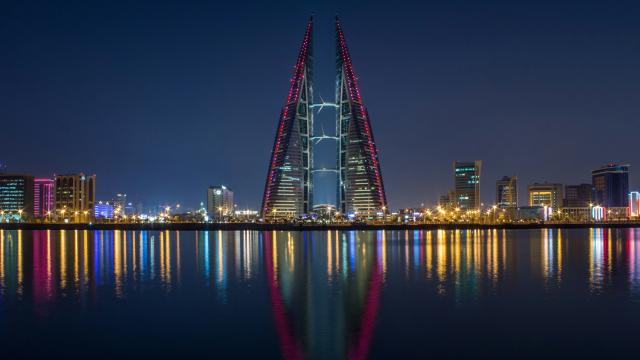
Bahrain Construction Market
Because of the fast-changing construction industry, Bahrain, a small nation in the central Arabian Gulf, is transforming significantly. Since its inception, Bahrain has attracted international businesses due to being one of the oldest and most free markets in the Gulf Cooperation Council (GCC). These days, the nation is paying particular attention to improving its infrastructure as part of a drive to diversify its economy. As part of the Economic Vision 2030, the government is putting a lot of money into housing, roads and rails, commercial areas, green energy and tourism buildings. In addition to creation of the excellence of life better for the individuals, these movements are making Canada a more necessary place for businesses to invest in.
Building and construction in Bahrain has a foot in both old and new ways of doing business. To develop, the country focuses on restoring old cities and designing new ‘smart’ cities. Unlike some bigger GCC countries, Bahrain is following a plan for development that includes everyone, is sustainable and relies on forward planning. Social and economic changes can be clearly seen through the construction industry which supports and promotes the country’s ambitions. It discusses the leading trends, developments and what to expect in Bahrain’s construction market using five important themes to give a clear sense of its impact on the country’s growth.
Vision 2030 and Strategic Mega Projects
The main force behind Bahrain’s success in construction is the Economic Vision 2030, a vision released in 2008 intended to turn Bahrain into a strong, sustainable and flexible economic hub. The vision strategy pays attention to social development, growth of the economy and care for the environment all at the same time. To carry out its Vision 2030, Bahrain announced an investment plan for infrastructure in 2021 worth BHD 11.3 billion (equivalent to about USD 30 billion). They are created to make cities more liveable, increase the connections between locations and create more investment possibilities.
Fasht Al Jarm, Suhaila Island, Fasht Al Azem, Bahrain Bay and the Hawar Islands are among the major urban areas currently being developed in Bahrain. These projects are created to meet the needs of more people in Bahrain using smart solutions, city planning and advanced transportation. The USD 3.5 billion King Hamad Causeway between Bahrain and Saudi Arabia and the USD 2 billion Bahrain Metro are both projects that have the ability to shape the future. They look to address overcrowding and carbon emissions while promoting easy movement and trade among the regions. The government is devoted to these projects which also demonstrate a wider plan to improve Bahrain’s urban setup and become a top regional builder.
Government Policies and Investment Incentives
The Bahraini government is helping the construction sector develop by introducing several unique policy reforms and incentives for investors. Bahrain allows foreign investors to own companies fully in some fields such as real estate development which has greatly encouraged more investors to back the nation. A modest and open tactic to regulations, in accumulation to economical fees for licenses and small capital needs, has made Bahrain a popular destination for investors in the Middle East.
Bahrain places strong emphasis on PPPs in its construction strategy. The government partners with private entities to fund, develop and operate big infrastructure schemes which are known as PPPs. By following this process, the risk of unpredictable financial expenses is shared, new ideas can be tested and projects can be finished in a timely way. Using the PPP framework in Bahrain has helped to carry out many successful projects in housing, collecting waste and providing public transport. In addition, the Golden Residency Visa for professionals, investors and retirees seeking long-term residency has also increased interest in Dubai’s high-end properties.
Besides tax relief, the government also aids businesses through subsidizing energy and providing grants for major projects. Aligning with the nation’s purposes, these incentives aim to reduce unemployment, grow the GDP that isn’t oil-based and increase foreign direct investment. With these policies in place, the construction industry grows and Bahrain showcases itself as a regional leader in both sustainable and all-inclusive development.
Urban Development and Housing Initiatives
Bahrain is giving more attention than ever to growing urban areas and developing homes. Since the population in the kingdom is growing, it is experiencing greater demand for affordable and decent housing. So, the Ministry of Housing is carrying out a major housing project that will provide 40,000 apartments for people in East Hidd, East Sitra, Salman Town and the Northern Town. The goal of these projects is to help Bahraini citizens with reduced loans and housing opportunities offered by the government.
Bahrain highlights the importance of developing communities when planning its growth. Most other urban areas in the region focus on high-rise developments, but Bahrain is building neighborhoods that have schools, parks, health centers and places to shop. With this process, people who live in new communities get to enjoy the connectivity and amenities found in traditional communities.
Historic areas such as Muharraq and Manama are recently experiencing a rise in urban renewal. The international-grade Pearling Path project integrated preservation of its past with innovative construction to encourage tourists and support the city’s local artists. Through such projects, Bahrain mixes its modern economy with its distinctive culture. Additionally, projects like Bahrain Bay and the Bahrain Financial Harbour are helping to change the skyline of Manama and make Bahrain a major financial center. As a result, these initiatives are building stunning office buildings, elegant homes and hotels for people from all over the world.

Sustainability and Technological Innovation
Bahrain is supporting global sustainability by adopting environmental awareness in its construction industry. The NREAP and the NEEAP are the main policies helping the country move toward more environmentally friendly infrastructure. The government of Bahrain is working towards cutting its carbon emissions by 30% by 2035 and achieving complete neutrality by 2060. They are encouraging the construction sector to make use of sustainable building materials, energy-saving designs and modern water management systems.
In Bahrain, certification systems such as LEED (Leadership in Energy and Environmental Design) and BREEAM are attracting more businesses and are aimed at a number of major projects. Net metering policies have made it possible for people to sell the extra solar energy their buildings produce to the power grid.
Technology plays a key role in transforming Bahrain’s building sector. Many construction companies are using BIM, 3D printing, prefabrication and drones to make their projects more efficient, accurate and faster. Thanks to them, projects face less waste, better safety and lowered costs, making these technologies very popular today. Moreover, with digital permitting, the government makes it easier for businesses to get approval quickly and start their projects sooner. Bahrain’s new approach to development and planning focuses on making the nation resilient, innovative and prepared for the future. It is required not only to protect the environment, but also to keep up with economic changes around the world.
Market Challenges and Future Outlook
Even though Bahrain’s construction sector is strong, a few factors are standing in the way of its rapid progress. One main challenge is the increasing cost of both materials and labor due to problems in the global supply chain and inflation. Though it is easy to accomplish projects in Bahrain due to its scope, the country relies comprehensively on materials and workers from abroad. This leaves the industry vulnerable to surprises and makes it tricky to set budgets.
It is still a challenge for small and medium-sized developers to get funding. The federal government has supported the industry, but the number of construction loans given by Bahraini banks has dropped somewhat recently. The delays that large or mixed-use developments experience in getting required government approval have not completely disappeared, since too many agencies may be involved in these projects.
Nevertheless, there is still reason to believe that the construction sector in Bahrain will perform well in the long run. Analysts believe that transportation, housing, energy and tourism infrastructures will lead to a steady annual growth of 4% to 5% for the following five years. Building the King Hamad Causeway, the Bahrain Metro and new urban cities will give fresh opportunities to architects, contractors, suppliers and consultants. Moreover, Bahrain’s expanding role in regional economic groups and bilateral deals will increase the market’s stability and strength.
The industry’s future will depend on its ability to respond to international trends such as building with modules, following the circular economy principles and digital tools in managing construction projects. Firms that adopt new technologies, develop skills among employees and follow the nation’s development objectives will achieve better results. Since Bahrain is pursuing a knowledge-based economy, the construction industry will always be vital for the country’s development.
Tourism and Hospitality Infrastructure as Economic Catalysts
Bahrain’s plan to diversify its economy focuses on tourism and the construction sector is crucial in achieving this. Many travelers are attracted to the kingdom because of its great history, cultural attractions and closeness to other GCC markets. Noticing the benefits, Bahrain has been focusing on expanding its infrastructure for tourists mainly by improving its hotels, entertainment options and places to shop.
The Bahrain International Airport expansion is among many ongoing or recently finished projects, allowing it to welcome over 14 million passengers every year. More upscale resorts are opening in Hawar and the northern islands, welcoming tourists from all over. High-class hotels like Four Seasons, Address and Vida Hotels suggest that the tourism in Egypt is now centred on attractive shopping and accommodation options.
There is a lot of attention being given to cultural tourism these days. Bahrain’s Bahrain National Theatre, Bahrain Fort Museum and the Pearling Path help highlight the nation’s past and add impressive architecture to the country.
The government is focused on developing cruise facilities, bringing international events and advertising Bahrain as a prime MICE (Meetings, Incentives, Conferences, Exhibitions) destination—and all this will need the help of the construction industry.
Human Capital, Labor Dynamics, and Workforce Localization
The construction sector of Bahrain brings together a unique blend of local and foreign skilled workers. Like the other countries in the GCC region, Bahrain has relied on international manpower for building and engineering tasks. For some time now, the government has been striving to change this with workforce localisation policies as part of the Bahrainisation initiative.
The labor fund Tamkeen has also been developing vocational training and upskilling programs which is one of the initiatives outlined above. Such training courses equip Bahrainis with the required skill sets in construction management, architectural design, surveying, project planning, and sustainability engineering. In addition, government agencies together with the private sector and universities have developed job-specific courses tailored to the immediate needs of the labor market.
In the realm of labor rights, there has been considerable advancement over the past several years with the introduction of more protective provisions regarding the occupational health and safety of workers as well as their housing. New labor camps are being constructed which allows for the provision of dignified housing. Proactive steps to comply with labor legislation are being enforced through the use of technology such as monitoring systems at building sites. Drones, AI safety inspection systems, and remote training sessions for the active workforce are some innovative technologies being introduced to fill the existing skills gap.
A constructive area of locally sourced workforce that is skilled, well treated, and well managed is important for milestone achievements and to meet future needs for growth of the construction industry. Bahrain’s movement toward a knowledge based economy requires investment in intellectual resources as much as in buildings and equipment.
The Role of Real Estate and Commercial Development in Economic Growth
Commercial development resides with real estate as a major pillar in Bahrain’s construction industry, and both serve as the core of the economy’s growth. Bahrain is home to not just office towers, retail hubs, industrial parks, and logistics zones but numerous commercially strategic development assets. The last decade has witnessed rapid change in Bahrain’s real estate market, fueled by an economic policy supportive of new economic zones alongside strong demand.
Commercial real estate in the country has been expanding, and so has the capital city Manama, which serves as the financial and business epicenter for the GCC. The Bahrain World Trade and Financial Center, Bahrain Bay, and Bahrain Financial Harbor are major high towers in the region; to go alongside them, over the last decade has seen construction of luxury apartments, grade A office towers, and high net worth individual mixed use facilities, further establishing Bahrain’s reputation as the new business hub in the Gulf region. Smarter building technologies and robust sustainability measures, as well as advanced high speed digital infrastructure, have set a new global standard for urban planning and building construction in Bahrain.
Bahrain has several large retail, leisure, and entertainment facilities such as City Centre Bahrain, The Avenues, and Seef Mall. Unlike other shopping malls, Marassi Galleria in Diyar Al Muharraq is a beachfront hospitality and high-end retail center integrated into a master-planned community. These developments are pioneering new frontiers in consumer spending while also enhancing tourism, food and beverage services, and small business retail.
The public housing sector, mid-market constructions, and high-end residential villas and apartments form a balanced real estate market. Government housing projects are aimed at accommodating Bahraini families while initiatives from the private sector cater to an expatriate population along with investors and young professionals. Amwaj Islands, Reef Island, and Juffair offer modern amenities and waterfront views which makes these regions popular residential center. The growth of the real estate market is also attributed to the willingness to accept foreign ownership in specific zones which attracts regional buyers, especially from Saudi Arabia and the UAE.
The advancement of industrial activities and logistics is picking up, particularly with the development of Bahrain’s ports, free zones, and manufacturing corridors. Initiatives such as the Bahrain Logistics Zone and the Salman Industrial City offer regionally tailored lighter manufacturing, warehousing, and global distribution infrastructure. These activities are very closely associated with Bahrain’s aim for a strategic position as a logistics center for the Northern Gulf, which takes advantage of existing port facilities.
Bahrain appears to be in a favorable position, because their plan will provide sustained growth from other region’s downturns. Even with the volatility in the real estate market due to the international economic cycles and local demand rhythms, spending flows from either region still provides a solid backbone. Bahrain infrastructure investments are moving towards sustainable development, which is useful in attempting to control the volatility. The transparency, investor protection, and the reputation of The Real Estate Regulatory Authority (RERA) also appears to be lifting the perception of the market confidence. In the forthcoming period, the combination of smart technologies with sustainable solutions along with community oriented design would shape the next phase of commercial and real estate construction in Bahrain.
Conclusion
Bahrain’s construction market is constantly developing and contributing significantly to the country’s development plans. Under the influence of future-focused rules, significant investments and dedication to sustainability, the industry transforms the kingdom significantly. Thanks to its world-class infrastructure, housing for all, efforts to restore culture and green solutions, the construction sector demonstrates Bahrain’s desire for a successful, diverse and well-built country.
There are obstacles, but also many chances for international aid. Because of a straightforward plan, proper institutional backing and a good investment environment, Bahrain is advancing to a leading position in the regional construction market. All types of investors, developers and experts find that Bahrain is a great place for their growth, inventions and life-long projects. The groundwork is done and we’re moving forward one project, one neighborhood and one vision after another.
Also Read: Affordable Housing in UAE







LEAVE A REPLY