

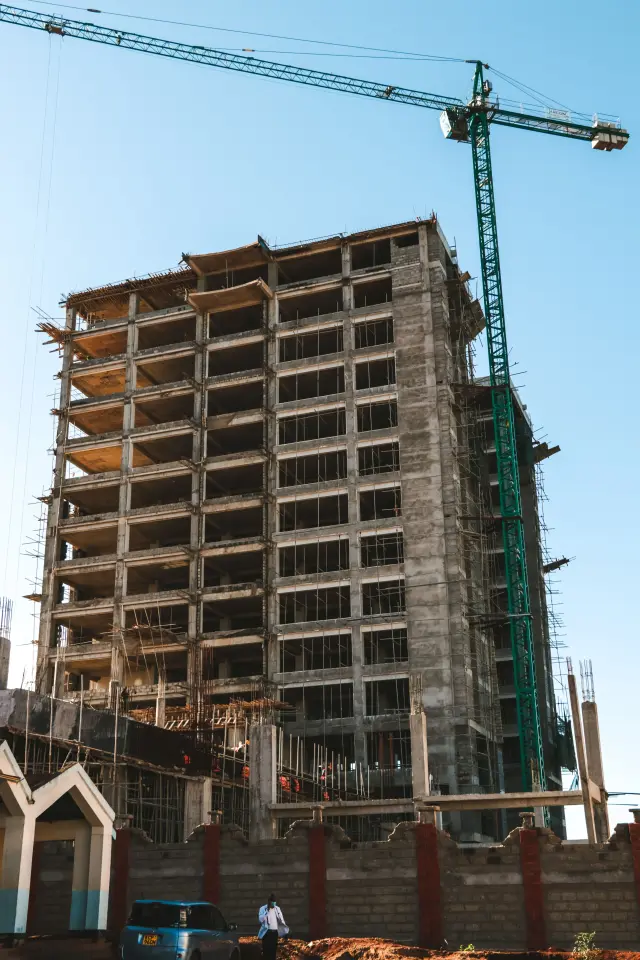
Can Kenya Meet Its 200,000 Affordable Housing Target Amid Rising Costs and Delays?
The Affordable housing agenda of Kenya has turned out to be one of the most observed development projects in East Africa. As the population has grown at a very high rate and urbanization is increasing at an alarming rate, and there is an estimated housing shortage of millions in the country, the promise of the government to provide 200,000 affordable housing units per year is as ambitious as it is a challenge.
 This project is not only meant to bring
down the housing shortfall but also to bring about job creation, increase home
ownership as well as to change the living standards of low- and middle-income earners in the city centers.
Nevertheless, escalating construction prices,
supply chain and other supply chain challenges, land procurement challenges,
funding limitations and red tape have cast severe doubt on whether such a grand
target may be achieved.
The affordable housing program is pegged on wider economic transformation policies that place housing as a driver of industrial growth and social equity. Policymakers project a multiplier effect throughout the economy by encouraging local production of construction materials and generation of jobs in the construction industry and related industries.
However, inflation, currency depreciation, and economic instabilities in the
world have made the cost of building materials like cement, steel, and imported finishes
very expensive. The strain is being felt by the developers, contractors and
even the potential homeowners such that affordability may be undermined even in
the event that the units are being delivered.
This blog discusses the possibility of Kenya meeting its
annual goal of 200,000 affordable housing units against rising economic and
logistical challenges. It looks at the policy framework in the launch of the
initiative, financial and structural hurdles that may face the implementation,
the importance of the involvement of the private sector, land and urban
planning limitations, the socio-economic consequences, and the possible pathways
to success. Although the vision is transformative, it can only be realized
through strategic coordination, innovative financing, regulatory reform, and a
long-term political will.
The Policy Vision and Institutional Framework Driving the Affordable Housing Agenda
The Kenyan affordable housing program has its foundation in the fact that decent housing is not only a constitutional right, but also a socio-economic stability engine. Several decades have passed with rapid urban migration exceeding the formal housing supply, which results in the growth of informal settlements with overcrowding, poor sanitation, and poor tenure security.
The 200,000 unit-a-year government target is aimed at bridging
this gap by significantly increasing the supply and ensuring that the supply
remains affordable to the low and middle-income families.
The key element of the initiative is to create institutionalized funding tools that are aimed at mobilizing funds to build on a large scale. Such mechanisms are meant to mobilize long-term capital and spread the risk among the stakeholders.
The institutional reforms have also
aimed at simplifying approvals, computerizing land records and expediting
building permits to minimize bottlenecks in the system. Policymakers also wish
to have coordinated urban planning and equal distribution of the projects to different
geographical areas by including the national and county governments in the
implementation process.
But the process of policy translation to practice has been complicated. Liaisons between different agencies within the government tend to create delays particularly when land titling conflicts are witnessed or environmental reviews cripple project schedules.
Moreover, the issue of
political and social friction has come in with the opposition of a section of
the workforce towards the mandatory contributions towards housing. This
resistance is an indication of fears on transparency, management of funds and
long term returns to contributors.
Nonetheless, despite the mentioned difficulties, the policy framework shows that the issue of the housing deficit is thoroughly understood. It recognizes the necessity of mixed-income developments, cross-subsidization models, and long-term mortgage-related deals.
Housing developments are also
focused on the need to incorporate infrastructure (roads, water supply,
sewerage system, and transport) in place to ensure the residential clusters are
not isolated.
The capability of the institutions to provide on a large scale is under question. It takes some processes of efficient procurement, the availability of skilled labor force, and the flows of funds regularly to deliver 200,000 units a year.
Any of such components delayed could work its way
down the construction pipeline. Besides, the need to guarantee quality control
and speed up production is another point of complexity.
In the end, strength of the policy vision is the dream and structural planning. However, its success will depend on the efficiency in its operations, transparency in the management of funds and its capability to sustain the mistrust of the people.
The absence of strong oversight systems and
effective coordination between the implementing agencies will mean that the
200,000-unit target will become more of a dream than a reality.
Influx Construction Costs and the Affordability Dilemma
The increasing construction cost is one of the greatest risks of achieving Kenya affordable housing target. In the world, the impact of global supply chain, currency fluctuations, and inflationary pressures have led to a sharp rise in the prices of basic building materials.
There has been an
influx of price of cement, steel reinforcement bars and roofing materials,
tiles, imported fixtures etc. in the last few years. These increase of costs
have a direct impact on the ultimate selling price of housing units.
Affordability as the term implies means that the housing expenses are not supposed to be higher than a percentage of the income of a household. Housing is now beyond the means of even small price increments to many urban Kenyans, particularly those with informal jobs or those earning below the median wage.
With the increase in the cost of inputs, developers have
to shoulder losses, lower profit margins, or compromise the quality or raise
prices per unit. Both choices have some implications that can harm the goals of
the program.
In addition, the costs of transportation and logistics are
considerably affected by variations in the cost of fuel. Most building
materials used are transported to the construction site over long distances
between the production facilities and the building site; this means that an
increase in petrol prices will increase the total cost of the project. The cost
of labor has also been elevated as the skilled labor force expects to be paid and
the increment in living standards has led to an increase in their wages.
Some of the recommendations aimed at curbing these obstacles
are the encouragement of local building material production and adoption of
different and less expensive construction technologies like prefabrication and
modular construction. Although these innovations could save money, their
widespread introduction involves investing in training, technology transfer and
adjusting the regulations.
Deflation of the currency also makes the equation difficult.
Most of the construction elements are imported and a weak domestic currency
increases the cost of imports. This pressurizes the developers and the
financing institutions especially in cases where the budgets of the projects
were initially determined at lower exchange rates.
In case the costs are not put in check, the government might
be forced to generate more subsidies or provide other promotions in terms of
tax so that the affordability levels are met. Nevertheless, fiscal space is
minimal and an increase in subsidies may put a pressure on state budgets. The
price war is then a compromise between economic facts and social obligations.
The target of 200,000 units sold is not just about the
volume of construction but about units that can really be affordable. The
increasing construction cost can easily reduce the speed of project design and
delivery without an effective cost-control strategy and sustainable supply
chain management since the main focus of the program is to achieve the main
objective of the state.
Financing Models and the Challenge of Mobilizing Sustainable Capital
The central agenda of affordable housing is all about funding. It needs billions of dollars in capital investment, including the land purchase, infrastructure investment, construction and long-term financing of the mortgage to construct 200,000 housing units in a year.
Conventional
budgetary allocations by the government are not enough to accommodate this
demand and that is why there is need to consider blended financing structures
that involve both state and private funds.
Public-Private partnership is also placed as one of the important strategies used in scaling delivery. In such plans, the housing projects are financed and built with the help of the private developers and the government supports it by supplying land, tax incentives or infrastructure.
This strategy will minimize the financial cost to the state and also tap into
the efficiency of the private sector. Nevertheless, individual investors are
normally interested in reliable returns, which can be contrary to stringent
affordability limits.
Another limitation is accessibility to mortgages. In cases
where the housing units are priced at affordable rates, most of the low-income
earners are unable to access formal credit because of low-income, poor credit
histories, or high interest rates. The low-income borrowers are considered to
be high risk by financial institutions, and therefore strict lending
requirements lock out large groups of the population.
In order to fill this gap, policymakers have facilitated
tenant purchase schemes, incremental ownership models that enable buyers to
make payments after a long time. These models lower expenses at the start-up,
however, they need robust administrative mechanisms to process payments and to
enforce the regulations. In case the default rate of payments increases, the
sustainability of the project can also be in jeopardy.
Capital inflows are hugely dependent on investor confidence.
The involvement of the private sector is determined by transparency in managing
funds, regulatory rules and sound macroeconomic environment. Any form of
mismanagement or inconsistency in policies will scare off investment and delay
the project implementation.
In addition, the economic uncertainty that prevails in the
world impacts the accessibility of foreign direct investment and concessional
finance by the development partners. The higher the interest rates in the
international market, the higher the cost of borrowing money, hence,
large-scaled housing finance will be costly.
Financing structures should be strong and flexible to get
Kenya to its 200,000-unit target. It can include the further capital markets
elaboration, stimulating the participation of pension funds, and using
infrastructure bond that will be committed to the housing development. Even the
best laid down housing policies might not make it through to practice without
credible and sustainable flows of capital.
Urban Planning, Infrastructure and Land Bottlenecks
Another significant obstacle to the attainment of the affordable housing target is the land availability and urban planning restrictions. Proper land in towns is not very available and can be costly.
Poor titles or misunderstandings over ownership of land in most instances slows
down the start of a project. The time taken to resolve such disputes can be
months or even years leaving a schedule much later than the estimated deadline.
Although the regulations governing the urban planning are needed to maintain safety and sustainability, there is the likelihood of delays in the regulations through slow or irregular approvals.
Long permit processes,
duplication of jurisdictional requirements are often mentioned by the
developers as major setbacks. Automating these procedures without reducing the
standards of regulations is a fragile undertaking.
It is also important in offering infrastructure. The housing
developments must have access to roads, electricity, water supply, sewerage,
schools, and hospitals. Infrastructure development in most cases falls behind
the development of houses resulting in half built or under-serviced
communities. The need to incorporate infrastructure planning in the housing
projects requires a lot of integration and financing.
Affordability of housing projects is also affected by the
location of the project. The fact that developments are located miles away
from job centers can deter potential purchasers because of the high cost
of commuting. It is, therefore, necessary to ensure that it is located near
transport and economic centers in order to sustain demand.
The cost of land also plays a major role in the budget of a
project. When acquiring land takes a big portion of resources, there will be
left with little money to construct and improve the quality. The introduction
of innovative methods like land value capture, land swaps, and strategic land
bank can be used to reduce these costs.
Finally, the solution to land and planning problems needs institutional effectiveness, digital land records, and open governance systems. These structural bottlenecks will continue to present an uphill challenge of housing delivery to 200,000 units per year without addressing them.
Socio-Economic Impacts and Public Perception
The affordable housing project has far-reaching
socio-economic consequences not just physically constructed. The ability to
deliver 200, 000 units per year was a success that would create thousands of
jobs in construction, manufacturing, logistics, and professional services. This
will generate jobs which will boost the economy and raise household earnings.
Better housing conditions also lead to improved health,
increased educational attainment, and increased social stability. Families
which live in a safe and well-serviced surrounding have higher chances of
investing in the long-term economic activity and community development. The
ripple effects do not realistically stop at the direct beneficiaries and are
spread further to the economy.
Nevertheless, program sustainability is determined by what
the people think. Transparency, allocation criteria and fairness can lead to a
lack of trust. Citizens might support the move only when they feel that the
initiative is going to benefit certain groups of people or political interests.
Lack of legitimacy means that there must be clear communication, transparency
in selecting beneficiaries and accountability mechanisms.
Affordability should be at the heart of the program.
When units are sold to people who cannot afford them, then the initiative will
be perceived as a real estate business and not as a social development project.
It is thus essential that the pricing systems and income eligibility levels
should be continually monitored.
Significance of community engagement also impacts on project
success. Design should be made more appropriate through incorporation of
feedback of the prospective homeowners and local residents. The sense of
ownership and minimization of resistance is created through inclusive planning.
Finally, the socio-economic potential of the 200,000 unit
objective goes beyond bricks and mortar. It is a chance to transform the
quality of urban life and encourage equality. However, this will only be
possible through regular delivery, fair accessibility, and long-term trust by
the population.
Conclusion
The promise of 200,000 affordable housing units every year is Kenya’s transformation vision in urban development and socio-economic
inclusion. The project manages a current housing shortage and makes
construction one of the sources of economic advancement. However, the
increasing cost of construction, funding, land restrictions, bureaucratic
delays and trust issue by the people are all daunting challenges.
To achieve the target, it will not be enough to make policy
statements but to be operationally efficient, creatively financed,
technologically modified, and governed openly. The affordability should
continue to be in focus, with the finished units actually benefiting the
households of the low and middle-income group instead of becoming inaccessible
investment.
The way forward is challenging, but it can be accomplished through joint effort, cooperation of the private sector, and long-term institutional change. If properly realized, the affordable housing program may transform the city's standard of living and make the economy more resilient.
Whether Kenya will be able to achieve its 200,000 units is not the question, but whether it can continue with the structural reforms to ensure that this target can be meaningful, inclusive, and sustainable.
Also read: Kenya’s Comprehensive Housing Plan: What’s The Path Forward For Meeting The Housing Deficit?






-ySWGlp0vgc.jpg)










LEAVE A REPLY