

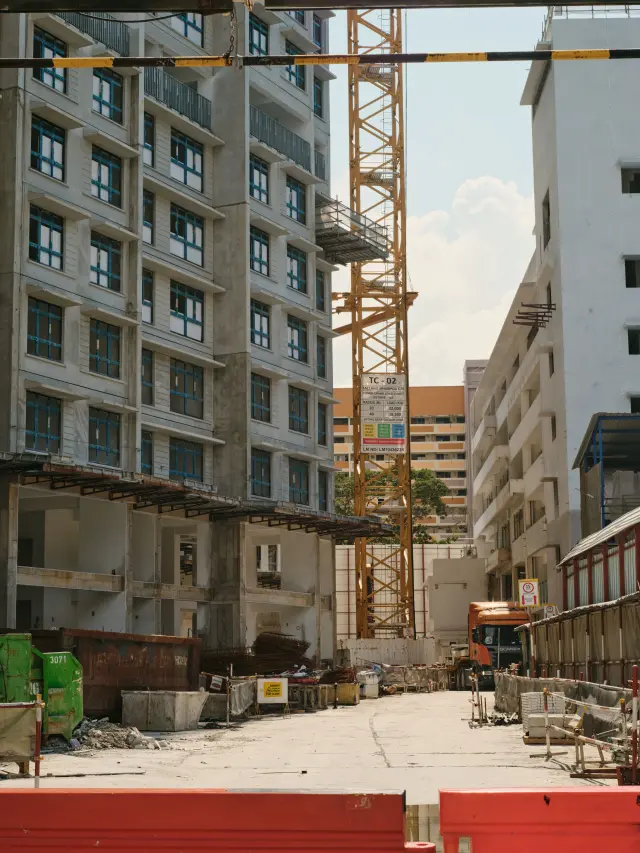
How Legal Disputes Are Stalling Affordable Housing Projects: The Case of the Langata Housing Controversy
Affordable housing is among the socio-economic priorities in Kenya that are urgently needed today. The city has been further strained by rapid urbanization as well as an increase in land prices and population, which has increased the demand considerably more than the supply of decent and affordable housing in Nairobi.
 In response, the government initiated the Affordable
Housing Programme as one of the Big Four Agenda initiatives to provide hundreds
of thousands of housing units to low- and middle-income earners.
This program
was presented as a radical change policy aimed at minimizing informal
settlements, enhancing living standards, and increasing economic growth by
creating employment opportunities in the construction and other related
sectors.
Nonetheless, the policy ambition is evident, but its actualization has been much more complicated. Some of the housing projects in the country have faced opposition in the form of legal cases, community protests, land ownership and constitutional petitions in various parts of the country.
Such conflicts frequently result in injunctions, court orders, and
litigation lasting months or even years to put such a project on hold. The
outcome is the costing up of projects, uncertainty to the investor and delays
that erode the purpose of making housing affordable and timely.
The case of the Langata, a Nairobi suburb, housing development is one of the most notable ones. The Langata case has turned into an icon of the greater conflict between development objectives and legal protection.
It poses significant questions concerning the ownership of land,
citizens' involvement, environmental adherence, purchasing procedures and the
contribution of the judicial system in mediating between the conflicting
interests.
In this blog, the author discusses the stalling of affordable housing projects by legal wrangles, with the Langata housing controversy as a central case. It examines the origins behind these controversies at the structural level, the legal and constitutional aspects of the case, the economic costs of delayed projects, the social and political factors, and some reforms that could be put in place to ensure such controversies are avoided in the future.
Finally, as the Langata case shows, although legal responsibility is a necessity
in a democratic society, mismanaged conflicts can severely come in the way of
achieving important social facilities.
The Affordable Housing Push in Nairobi and the Reform Potential
The Affordable Housing Programme in Kenya was also an initiative meant to remedy an ever-increasing urban crisis. The housing shortage in Nairobi alone is estimated to be in the hundreds of thousands with the informal settlements accommodating a large percentage of the inhabitants.
Homeownership has become unaffordable to most of the residents due to the
increasing rent, low access to mortgage funds and speculative land markets.
The strategies set by the government attempted to deal with these problems by favoring partnerships between the government and the private sector along with massive housing projects and the emergence of new financing tools like the housing levy.
It was not merely to build housing units
but to make integrated communities where infrastructure, schools, healthcare, and public transport services are available. Since Lang’ata is a strategic
location in Nairobi and there are parcels of land, it was found to be the right
place where such developments can be done.
Paper wise, the plan was innovative. The cheap housing would lead to construction due to the employment generated, and as a result, building materials would have demand, and this would boost the GDP.
It would also
institutionalize the housing markets and help to alleviate the strain on
informal settlements as well. The policy included housing not only as a
shelter, but as an economic booster and social stabilizer.
Nonetheless, this was to be done amid the Kenyan complicated
land administration system. Urban land is prone to historical issues,
overlapping titles or ownership claims. Moreover, because of the constitutional
obligations on citizens involvement and preservation of the environment,
development projects have to be implemented in accordance with rigid laws.
In Langata, there was controversy where questions were
raised on the allocation of land, how it was procured, and whether proper
participation by the people had been done. The issues of transparency and
legality were raised by residents, civil society organizations, and political
actors. These fears led to lawsuits that aimed at ensuring that construction
was stopped pending proper due process.
It is an example of a common dilemma in the Kenya
development agenda where all-inclusive policy aims clash with procedural
protection. Though some form of protection is necessary to curb corruption and
land grabbing which have been long time challenges in the land sector of Kenya,
it might cause bottlenecks in cases where litigation becomes a result of a
dispute.
The Langata case, which started as a housing project,
turned into a court case. Court petitions raised the question of whether the
land in question was allocated properly or not and whether the procurement laws
were adhered to. Construction either stopped or was slowed down as the interim
court orders were issued.
Reform by way of affordable housing met the legal and
institutional reality of Kenya thus. The wider implication is that housing
policy alone can never work without land reform, judicial efficiency and
administrative transparency. Until these underlying problems are tackled, any
well-meaning housing programs can be hampered by setbacks and controversies.
Legal Underpinning of Housing Project Issues
The legal challenges of housing projects are usually based
on a number of related factors: ownership of land, purchase procedures,
environmental issues, and civil rights. The Langata controversy exemplified
much of this, and thus it is a case study of how complex legal issues can put
development in reverse.
The most typical trigger is land ownership disputes. The history of irregular land allocation in Kenya has led to stratifications of disputed titles, particularly in urban areas. In cases where the government has found land to be used in providing affordable housing, the concerned parties might question whether the land was acquired legally or whether it is owned by the institutions of society, individuals, or communities. A single case of unresolved title claims may lead to court injunctions stopping the construction business.
Another common area of contention is the procurement laws. The Public Procurement and Asset Disposal Act in Kenya has stringent contract award procedures. There is allegation of irregular tender processes of work which usually leads to the legal petition.
When the housing project is done
with huge amounts of government money, then the level of scrutiny is enhanced
and any irregularity that is perceived can be used as a basis to bring legal
suits.
Environmental issues are also very crucial. The developers
must also undertake Environmental Impact Assessments (EIAs) prior to the
commencement of construction. The residents can question the fact that
these assessments were conducted properly or whether this project endangers the
green areas, water resources, or wildlife corridors. Such concerns are
significant in places such as Langata, which is close to environmentally sensitive areas.
Matters are complicated by constitutional provisions. The
Constitution of Kenya ensures that there is involvement of the people in
developmental decision-making. In case the communities feel that they have not
been consulted, they have the opportunity to approach the courts on the grounds
of violation of the Constitution. The involvement of people by the court is
usually considered by the court as a substantive one and not just a formality.
In the Langata case, reports showed that there were
petitions that challenged transparency and adherence to procedures. These
allegations were eventually proven or dismissed, but the very fact that
litigation was still actively pursued was sufficient to hold things back. When
a case is being heard, the courts usually pass out conservatory orders to
maintain the status quo thereby putting the construction activities on hold
over a long period.
The part of judiciary plays a vital role. On the one hand, the case courts should protect the rule of law and avoid the unlawful action of the government.
Conversely, long litigation will put on hold projects which
have a wider public interest. Judicial control and development effectiveness
are not the only aspects of Kenya, but it is especially evident in those
situations when land governance systems are historically weak.
Finally, a judicial battle is usually a mirror of systemic rule breaches. These are indicators of poor documentation, lack of transparency or stakeholder involvement. In cases where such lapses arise, litigation is an unavoidable mode of litigation.
The Langata scandal
highlights why pre-project due diligence should be made more effective so as to
reduce the vulnerabilities that can be exploited by opponents in court.
The Economic Impacts of Project Delays
In cases of housing projects that come to a halt because of
legal wrangles, their economic impact is far reaching than the location itself.
Costs caused by delays in construction are inflation, contractor fines, and
interest charges. In the case of affordable housing, where already the profit
is already minimal, these cost overruns can destroy the whole financial model.
In Lang, as with other controversial projects, contractors and financiers had no idea when to pay their dues and to whom because of lengthy litigation. Investors are normally pursuing foreseeable schedules.
Financiers can withdraw or charge risk premiums that are even greater when
court cases are protracted. This makes it more of an expensive to borrow, and
this may reduce the affordability of housing units for end customers.
Besides, delays also influence employment. Constructions
offer employment opportunities to engineers, architects, workmen, and artisans.
When the work is stopped, the workers are deprived of their incomes and local
businesses providing materials and services lose their demand. The housing
development is thus disturbed with the economic multiplier effect.
Budgets of governments are also affected. Affordable housing
programs are usually based upon government subsidies or assurances. Budgets
will have to cover extra administrative and legal expenses as the timeframes
become longer. In other instances, half-finished structures are ruined in the
long process of court litigations causing further losses.
The opportunity cost also exists. Each of the delayed
projects implies families hundreds or thousands of people stay in poor houses.
Informal settlements are on a continued increase and this puts a strain on the
infrastructure and social services. The greater the supply of affordable
housing is below the demand the higher the urban rents.
The case of Langata exemplifies how the issue of the lack
of clarity in the law can spread to the housing sector. The developers who have
witnessed such conflicts might be afraid of investing in such projects. This
reluctance can prevent the general speed at which the delivery of housing in
the country.
Housing is a growth driver in Macroeconomics. It spurred the
production of cement, steel, glass, financial services (mortgages), and
retail (home furnishings). These linkages are broken by stalled projects. Legal
battles are therefore not simply an inconvenience in the process; they cost, to
some degree, money.
It is consequently necessary to balance accountability and efficiency. Although it is important to attend to legitimate
legal issues, the number of special land courts, time-limited hearings, and
alternative dispute resolution needs to be put in place as a way of minimizing
long delays.
Social and Political Implications of the Langata Controversy
The Langata housing debacle had a non-economic social and political connotation. Housing is very emotional and a political issue. In case of a contested project, a story of land grabbing, elite capture, or government overreach will soon develop. Citizens of the impacted regions might have the fear of displacement, overcrowding, or pollution.
In case the communication by
the authorities is poor, then suspicion increases. Housing issues in political
constituencies such as Lang’ata can be mobilizing, as part of general
discontent with their governance.
Such controversies can also be used by the politicians to
create agendas. Cases of litigation occasionally overlap with election periods,
adding pressure to the process and raising it. In its turn, the judiciary is
under the pressure of the populace to portray itself as independent and loyal
to the constitution.
Delays may be disheartening to beneficiaries of affordable housing units who are waiting to acquire the unit. There are several donors to housing funds or subscribers with the hope of being allocated.
The failure of projects slows down progress, and trust in government promises is lost. The case of Langata therefore brings out the relevance of trust and transparency. Technical planning is not the only way of successful development projects; social legitimacy. Even the most legally viable projects can be under attack without wide social approval.
Strengthening Legal and Institutional Frameworks for Future Projects
Reforms should address causes in order to ensure that the
housing projects put on hold by court battles and disagreements in the future
are avoided. To minimize title ambiguities, first, land records should be
computerized and checked. Transparent ownership of land can be committed to the
prevention of lawsuits.
Second, there should be strong and authentic processes of
public participation. Early interaction with communities would help in
identifying their issues before their escalation into court proceedings. Trust
can also be developed through transparent disclosure of the procurement
processes and environmental evaluations.
Third, specialized court systems might help to hasten
infrastructure cases. The time bound judgments would make sure that there are
no prolonged injunctions to settle disputes.
Fourth, management of conflicting interests may be achieved
using alternative dispute resolution strategies including mediation so as not
to engage in protracted court battles.
The Lang’ata debacle provides good teachings. It shows that
the affordable housing policy should be combined with the legality
preparedness. It is much more effective to anticipate the possible
disagreements and search the way to avoid the pitfalls than protect the
projects by their shields in the court.
Conclusion
The Langata housing controversy is a case in point of how
legal wrangles can greatly cripple affordable housing projects. Although Kenya
is still commendable in its endeavors to develop housing as part of national
development programs, the challenges in its implementation exercise certain
underlying structural flaws in land governance, procurement transparency, and
citizen involvement.
Constitutional rights and curbing of the misuse of public
resources are vital in the protection of rights and the law. Nevertheless, the
burden is taken by citizens who have to wait until the end of the litigation to
acquire decent housing. Slugs increase the cost of a project, erode the
investor confidence, and destroy the trust in society.
The way to go is to strike a balance between accountability
and efficiency. Empowered land regimes, open procurement, significant community
participation, and speedy dispute management can serve to ensure that affordable
housing projects are implemented without undermining the rule of law.
Langata is both a warning and an educational tool. Kenya can use the legal and institutional loopholes revealed in this scandal to make its housing aspirations more sustainable and implement them in a timely manner so that the dream of affordable housing is the reality it can experience but not the one that they have had on hold.





-ySWGlp0vgc.jpg)









LEAVE A REPLY