

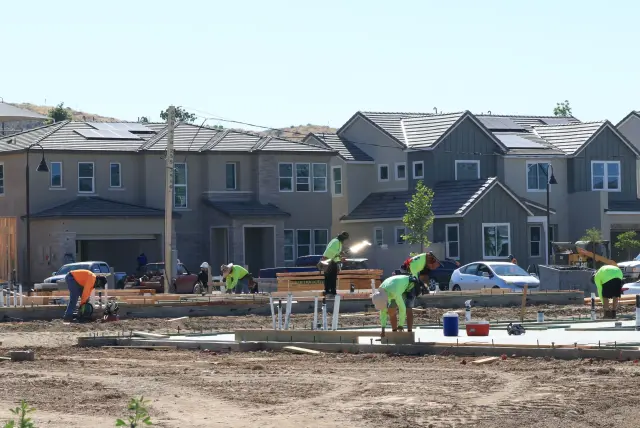
Affordable Housing and Land Acquisition: How the Law Needs to Support Developers
Affordable housing is one such issue, which is of paramount concern in the developing countries with a high rate of urbanization around the globe. With the increasing populations and the growth of the cities, safe, decent, and affordable housing is in high demand but barely meets the demand.
 Although this imbalance is triggered by many factors such as increased cost of
construction, and few sources of financing, infrastructure shortages, and
market speculation, land acquisition is one of the biggest and most complicated
challenges facing developers.
The basis of all housing projects is the land,
although in most jurisdictions acquiring land is tedious legal processes, poor
records of ownership, bureaucracy, high transaction costs, and the lawsuits
that may slow down projects to years.
Affordable housing at scale heavily relies on the developers. Nevertheless, the success with which they can plan, fund, and implement their housing projects relies on the effectiveness, openness, and predictability of their legal systems that control land ownership, transfer, zoning, planning permission, and enforcement of property rights.
In
areas with old or disjointed land laws or where the law is not fairly applied,
developers are exposed to high risks that deter them from investing in low-margin
affordable housing development. Consequently, there is a limited supply of
housing, and low- and middle-income earners are unable to get decent houses
according to their economic capabilities.
The contemporary legal systems need to be thus adjusted in line with modern housing requirements. The legislation should strike a balance between the needs of the community, environmental concerns, and proper urban planning and the practical needs of the developers; they need predictability, speed, transparency, and equity.
The efficient land acquisition processes not
only help to decrease the project delays and financing costs, but also promote
the involvement of the private-sector, competition and finally reduce the cost
of houses to consumers.
The fact that there is a favorable legal system does not
mean that protection is being eroded or that development is being encouraged to
be irresponsible. Instead, it implies the development of clear processes,
computerization of records, harmonization of regulations, speculative hoarding
of land, enhancing dispute resolution systems, and provision of incentives that
will direct the flow of private investments in socially desirable housing.
Well-organized legal systems minimize uncertainty, spur responsible land use,
and hasten affordable home delivery.
The blog addresses the issue of the need to change legal and
regulatory frameworks in a manner that would assist developers involved in the
provision of affordable housing. It discusses such important areas as the
security of tenure of land, the effectiveness of regulations, the reform of
planning and zoning, the policy of compulsory acquisition, protection of
property rights, the system of dispute resolution, and legal incentives that can
boost inclusive urbanization.
Enhancing the Security of Land Tenure and Transparency in Ownership
Efficient development of housing is anchored on secure land tenure. The developers would need specific, verifiable evidence of ownership before they invest substantial finances in land acquisition and project development.
Incomplete records of ownership, disputed records, and those with poor documentation expose developers to legal risks that may build up to slow down construction projects, make them more expensive, and even discourage investment.
In most areas, overlapping customary rights, informal settlements,
inheritance disputes and archaic land registries can become the source of
uncertainty that makes transactions of land difficult.
The reforms of the law should focus on thorough land registration systems that will offer precise, accessible, and current records of property ownership. There is less fraud, less time wasted in paperwork, and developers can easily check ownership of a piece of land through digitized land registries.
The application of geographic information systems and cadastral
mapping technologies also helps in improving accuracy, as the boundaries are
clearly defined, and this helps in avoiding duplication of claims.
Clear titling systems not only favor the developers but
also the owners of the land and the communities. Once ownership is legalized,
the owners of the land can comfortably carry out transactions, borrow
and use property as collateral, and get involved in formal real estate markets.
The transparent ownerships also minimizes the conflict that is likely to arise
in the case of large-scale housing developments.
Traditional land tenure systems that are still dominant in
most of the developing countries must be harmonized with the statutory land
laws. The governments need to put in place systems that can appreciate the
traditional authorities without allowing land transactions to be conducted in a
non-standard legal process. In its absence, developers can deal with numerous
negotiations, ambiguous consent issues, and legal difficulties in the future.
An efficient property transfer process is also essential.
Intense documentation processes, high charges, and long-winded approval
processes deter formal transactions and delay project schedules. Simplification
of law, standardization of documentation, and predetermined processing
schedules contribute to the minimization of the lack of flexibility and
administrative overhead.
The prevention of fraud should also become stronger.
Developers can avoid financial losses and lawsuits by using identity
verification systems, open records of the population, and severe punishments
that can be related to fraudulent sales.
The legal systems provide stability in the environment
through good tenure and clear ownership of property so that the developers can
invest with ease in the affordable housing projects without the fear of being
hit by unseen property ownership tussles.
Facilitating the Process of Regulatory Approval and Minimizing Red Tape
In addition to the verification of ownership, developers
have to navigate an extremely broad range of regulatory approvals prior to construction starting. These usually encompass environmental certificates,
building plan permission, zoning permission, infrastructure study, safety
certification and utility connection permission. Delays are bound to occur when
these processes are broken in several agencies where their mandates overlap.
The high approval processes are extremely costly to
projects. Developers incur costs on interest on loans, consultant fees,
salaries of personnel and material price inflation when awaiting permits. Such
delays can make developments expensive in terms of finances in case of
affordable housing projects that run on thin margins of profit.
Laws should thus come up with systems of approval where
various approvals are brought to be coordinated into coordinated ones. One-stop
permit centers enable developers to establish documentation in a single
platform as respective bodies conduct parallel reviews of the documentation.
Time restrictions should be placed in the law to allow the agencies to consider
the applications as soon as possible.
The efficiency is also improved by the use of digital
platforms as submissions can be online, automated tracking is possible and
terms of status are visible. Minimizing physical contact restricts
opportunities of corruption and under-the-table deals that add cost to
projects.
Processing can also be speeded up using risk-based approval
models. Projects which satisfy set standards or where the environmental impact
is low can be subjected to fast-track approvals and the regulators can devote
resources to complex developments that require closer evaluation.
Affordable housing would also be of benefit in terms of
review time because standardized building codes and pre-approved design
templates are available. Developers that work on compliant designs have less
revision and administration hurdles.
The coordination between agencies is also very important.
The institutional duties should be clear in the law, and no duplication of
roles taken and a system of accountability put in place to avoid unnecessary
delays. Law can simply make developers provide housing more quickly and cheaply
through less red tape, which has a direct effect of making it more affordable.
Reorganizing Planning and Zoning Laws to Promote Inclusive Development
The availability, density, and affordability of housing are influenced by urban planning and zoning regulations. Zoning restricts the
quantity of housing units that can be constructed in areas with heavy demand
through restrictive zoning rules that limit the height of buildings, ban
mixed-use development, or set larger minimum sizes of the land that can be
developed.
The reforms of the law should promote inclusionary zoning
policies, which include allowing high-density construction and mixed-income
communities. High density will lower the unit land costs and enhance
infrastructure effectiveness.
The policies of transit-oriented development combine housing
with the public transportation systems, making commuting less expensive and
promoting the sustainable development of cities. Adaptable land use categories
permit adaptive re-use of underused lands like former industrial premises.
Inclusionary housing requirements may impose requirements on
developers to set aside some units of housing to serve the affordable housing
needs in exchange to density bonuses or tax benefits. Streamlined rezoning
processes minimize time wastage and legal ambiguity.
The balanced planning laws take care of environmental protections and prevent over-restrictions that inhibit supply. The involvement of the local communities in the planning process minimizes resistance and legal battles. The updated zoning legislation allows innovation and delivery of housing in an economical manner.
Promoting Transparent Land Markets and Preventing Speculation
Clear and properly governed land markets are needed to make sure the delivery of affordable housing projects may be conducted on a large scale and at an affordable cost. During the rapid urbanization in most areas, land speculation has emerged as a big challenge to affordability of housing.
The
investors usually buy bulk pieces of land and do not develop them over time
with the anticipation that the land value would go up as urbanization growth
would boost demand. This artificial inflation of land price, supply limitation,
and inability to get suitable land by a real developer make it hard to develop
affordable housing projects.
The laws have to therefore provide solutions that deter the speculative hoarding of land and promote the productive utilization of land. The first is the land value taxation system, which charges high taxes on underdeveloped or underused land within the growth boundaries of urban development.
Governments can encourage the sale or development of the property
by ensuring that the cost of holding the idle land is increased so that the
owners are encouraged to sell or develop the land instead of waiting to realize
the passive value increase. This will assist in releasing more land to the
market, stabilizes prices, and enhances access to the developers who are
concentrated on delivering housing.
Land allocations and permits can also be subject to time conditions of development. When residential development of land is given, the regulations can mandate that construction be initiated within a given time.
Any
failure to comply would invite financial fines or loss of development rights.
These provisions are meant to make sure that land allocated to the house is
serving the intended social and economic purpose.
The other significant legal reform is enhancing transparency in the transactions. The information asymmetry in property markets is minimized through publicly available databases that store land prices, information on ownership history, zoning, and transaction activities.
Informed investment
decisions can be made by developers using the certainty of market data and not
speculation or rumors over the table. Open markets minimize chances of
corruption, manipulation of prices and fraudulent sales.
The land administration institutions should also be
strengthened on anti-corruption guards. Markets are distorted through bribery,
political meddling, and favoritism when it comes to land allocation and this
puts potential legitimate developers at bay. Easy procedural rules, external
control institutions, electronic application software, and transparency of
publicity encourage responsibility and justice.
Fair and Efficient Compulsory Acquisition Frameworks
In most cases, governments obtain land used in
public-interest housing projects by compulsory acquisition. Although it is
needed in some situations, inappropriately planned frameworks cause conflicts
and stagnation.
Clearly defined legal criteria should be used to determine the definition of the public purpose and the transparency and justification of acquisitions. The market-based mechanisms of fair compensation avoid conflict and safeguard property owners.
The on-time payment process eliminates litigation risks. Valuation bodies are independent and objective. Displaced communities are assisted by the resettlement and livelihood restoration policies.
Significant grievance avenues enable the impacted groups to find redress easily. Such processes of acquisition are predictable and thus allow developers to plan well. Nonspecialized systems safeguard rights and facilitate essential housing initiatives.
Strengthening Property Rights Protection and Dispute Resolution Systems
Good property rights will promote investment in low-cost housing by decreasing legal uncertainty. The special land courts enhance the
speed of cases. The alternative dispute resolution strategies save on
litigation expenses.
There are strict contract enforcement legislations that
favor developers and land owners. Corruption control laws increase levels of
transparency. Title insurance systems minimize financial risks. Good
foreclosure regulations empower mortgage markets.
Legal assistance services are providing fair access to
justice. Dependable dispute systems develop investor confidence and industry
development. Legal Incentives, Financial Instruments and Public-Private
Partnerships.
Affordable housing can be aroused by legal schemes. Tax
credits decrease development expenses. Participation is promoted by the use of
fee waivers. Inclusionary housing is encouraged by density bonuses. Low-income
buyers are taken care of with the help of subsidy programs.
The use of public- private partnerships involves the
mobilization of resources and expertise. Infrastructure is funded through land
value capture means. The housing trust funds offer long term financing. Green
buildings objectives encourage sustainability. Public housing objectives are
harmonized with the unique legal instruments.
Conclusion
Delivery of affordable housing relies greatly on the legal
framework that regulates land acquisition, planning, ownership, and development
rights. With the uncertainty, time wastage and high costs that arise when laws
are not clearly spelt out, the developers will not be willing to invest in the
affordable housing projects that already meet on tight financial straps.
The legal reforms in modern times have to focus on
transparency, efficiency, fairness and predictability. An enabling environment
to large-scale affordable housing delivery exists through secure land tenure
systems, simplified approvals, flexible zoning rules, equitable acquisition
frameworks, robust property rights security, efficient dispute resolution
systems and targeted legal incentives.
Through alignment of legal frameworks to development
realities, governments can open the door to the involvement of the
private-sector, relax the supply side of the housing market, and allow millions
of households to own homes. Good legal systems will make land a propellant to
inclusive urban development and not a hindrance.
The aid to developers in the form of clever legal reform is
not thus a compromise to commercial interests but rather a course of action
that will bring the society to the solution to one of its most acute problems
safe, decent and affordable housing to all.
The efficient market of the land is further improved by
clear subdivision laws. Streamlined land use processes to decrease large
parcels of land to smaller ones that can be used to build homes allow more
variety in housing construction and enhance responsiveness in supply.
Finally, open land markets are predictable and equitable, and developers know that they can make long-term plans. By making legal systems discourage speculation and encourage responsible land deals, artificial price inflation is minimized, and land becomes available to affordable housing projects.
Also read: Modular Construction in Kenya: How It Can Help Close the Affordable Housing Gap






-ySWGlp0vgc.jpg)










LEAVE A REPLY