

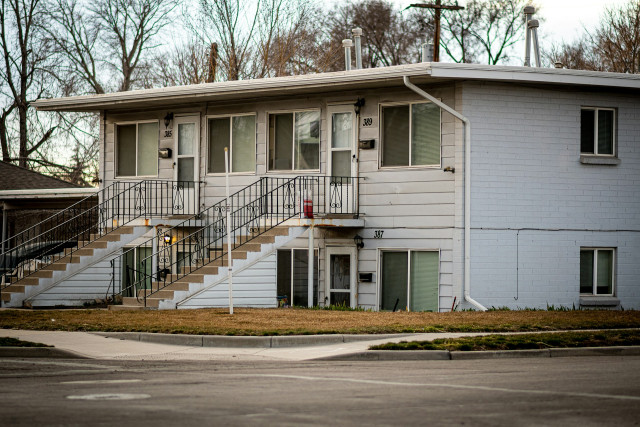
Year-15 Rehabs: Breathing New Life into Aging Affordable Housing
Affordable housing is not just about new construction; it is also about keeping and managing what is already there. In the US and the world, many affordable housing units were built using programs like the Low-Income Housing Tax Credit (LIHTC). These developments often reach a critical point 15 years in— that’s when the initial financing agreements and compliance periods end. The “Year-15 event” is a milestone for many properties. Owners, developers, investors, and communities face the question of whether these older properties will stay affordable, undergo major renovations, or flip to market-rate housing.
The Year-15 moment is both a development challenge and an opportunity. Often, properties that have aged for 15 years face challenges of deferred maintenance, outdated systems, and the normal wear and tear that every housing development faces. Without the investment that these properties need, there is the likelihood of loss of habitability or affordability, and leaving the most vulnerable residents without locked housing security. However, Year-15 rehabs do allow developers and community stakeholders to extend affordability periods, while also modernizing, improving distress energy systems, and upgrading the quality of life for residents.
For affordable housing to remain sustainable long term, Year-15 rehabs comprise more than a simple technical financing exercise. They symbolize a commitment to housing for low- and moderate-income families and to fulfilling the varying needs of a community over time. Because rehabilitating housing is more affordable, it can sustain the affordability of housing to more fully revitalize neighborhoods, reduce displacement, and improve the environmental sustainability of a community.
In this blog post, I will discuss the importance of Year-15 rehabs, the challenges they mitigate, and the potential they have for transforming affordability.
Understanding the Year-15 Moment in Affordable Housing
After 15 years, the cycle of affordable housing primarily financed under the Low-Income Housing Tax Credit (LIHTC) program reaches an important milestone. By the time the LIHTC was established in 1986, it included a 15-year compliance period of guaranteed property affordability. After 15 years, original investors (usually large financial institutions that bought the tax credits) usually exit the partnership, leaving the general partners, usually nonprofits and mission-driven developers, important choices regarding the property.
Year 15 doesn’t necessarily mean a ‘clean break’ from program compliance. Many, if not all, of the properties financed by LIHTC have ‘layered’ financing which means a combination of soft loans and state and/or federal housing funds and each of which have their own unique set of regulations to adhere to. At this stage, owners consider the legal dissolution of their partner investors, debt restructuring, and weigh the financial conditions to determine if the property can continue to be affordable. For nonprofit owners, limited financial reserves and the complexity of the buyout negotiations can be daunting, to say the least.
However, the moment at Year 15 entails something additional to compliance. It is an opportunity to assess the physical condition of the property. Roofs, HVAC systems, plumbing, and electrical systems may be in need of replacement or substantial overhaul. With no reinvestment, properties will deteriorate, and the objective of providing safe and stable housing will be jeopardized.
For a good number of mission-oriented organizations, the transition at Year 15 is an opportunity to reclaim the commitment to affordable housing and to the residents. Engaging in rehabilitation and refinancing to secure new tax credits allows owners to extend the affordability period another 15 to 30 years and regarded the property for future residents. The Year 15 process is, therefore, a decision made on a moral and community level, and not one driven strictly by a financial transaction.
Addressing Deferred Maintenance and Modernization Needs
When affordable housing properties more than 15 years old, they frequently significantly deferred maintenance. This is due to the financing structures of the initial developments, whereby operating reserves and replacement funds were not set aside to cover the cost of maintenance. Consequently, resident satisfaction and essential systems may become outdated, energy inefficient, and deteriorated.
The physical challenges created by deferred maintenance are exacerbated by the 15-year cycle. More extensive, comprehensive rehabilitative efforts commonly consist of addressing the deferred maintenance of roofs, windows and mechanical, plumbing and electrical systems, structural systems and structural systems. In addition to modernizing health and safety standards and building codes, properties are repositioned to address the accessibility challenges of the Americans with Disabilities Act (ADA).
Beyond the basic repairs, the level of modernized rehabilitative efforts shifts to improving the overall quality of life for residents, and may include more energy-efficient, affordable housing appliances, renewable energy integration with housing, enhanced common areas, and greater insulation. Such efforts more directly improve residents’ housing costs, but they also minimize the environmental impact, and reduce the housing operating costs for the owners.
Rehabilitation remains key in responding to the changing demands of the residents. For instance, older residents might need more adaptable spaces, such as units, elevators, and sheltered service areas. Families might need play areas, resource centers, community rooms, and other modifications. That is, Year-15 rehabs still offer more than the returning of the building to Year-15 conditions. They are focused on the building’s survival and its middle- and long-term prospects.
For the first time, Year-15 rehabs are preserving the dignity of affordable housing. They are responding to the behavioral distortions on affordable housing by proving that neglect and poor housing conditions are affordable. They are consolidating the two dimensions of respect so that residents are proud of their housing and of themselves.
Financing Year-15 Rehabs: Challenges and Opportunities
Dealing with financing Year 15 rehabs can be complicated. For the first 15 years of a property's life cycle, its financing primarily consisted of tax credits, layered subsidies, and investor equity. After 15 years the initial financing structure will generally need to be extended or replaced. This is the time when old financing structures will start to be replaced and when new financing or new equity will need to be brought in to cover funding gaps. With old equity investors cashing out, new equity is required to fund the resale. This is when the developer will face gaps and opportunities, depending on the new financing structure, which will be needed to rehabilitate the property.
The biggest challenge is securing new funding. The costs associated with rehab can be quite sizeable, especially when the primary systems of a building have to be replaced. Financing the rehabs will be problematic for nonprofit organizations with little to no cash flow and will be gapped for extended periods of time. The more traditional funders will require a subsidy or a guarantee in order to finance the rehabs and, thus, justify the risk. Behavioral finance suggests that, for limited partners cover and control major funding decisions, the more they will be likely to fight losing strands. This will lead to a more compensatory exit, which gives the illusion of aligning structures.
For many states and local municipalities there are new opportunities. Owners are able to recapitalize their projects with new rounds of tax credits. Large scale rehabilitations utilizing Low-Income Housing Tax Credits at 4% or 9% are considered to be one of the best strategies. Upgrades highly needed can be financed by new equity from new investors drawn in by the tax credits. Developers are able to offset the costs with other funding sources like the financed HOME program, and Community Development Block Grants (CDBG), or green financing associated with energy efficient upgrades.
Another approach is debt restructuring. Cash out refinancing with lower rate loans is an option for some properties and the excess cash can be used for prioritized rehabilitation. Owners can also focus on public-private partnerships and municipalities offering property tax abatements and land use incentives for preservation, or direct cash subsidies.
In the end, the best results with Year-15 rehabs come from the most resourceful developers who are willing to blend a diverse scope of the proposed financial strategy. The complexity of the approach is justified with the property preserving affordability and having a greatly improved financial position rehabilitated over the long term. The improvement is a rehabilitation of the physical space, and a reinvestment in the tenants lives.

Preserving Affordability and Preventing Displacement
The Year-15 Process has one overarching question: will the property stay affordable or does it become market rate housing? For many residents, the answer unambiguously determines whether or not they will be displaced from their homes. From the standpoint of displaced residents, preserving affordability becomes a social and moral imperative, not a financial one.
After the first compliance period of 15 years, owners have the option of selling their property and, thus, not renewing the affordability contract. In high-demand neighborhoods, where rents are steep and housing is scarce, this puts vulnerable populations living on the property at risk of displacement. Communities, of course, do not only lose housing, they lose the stability, resilience, and diversity that those families contribute.
The Year-15 rehabs are critical to preserving affordability. With new financing, they can extend the affordability covenants for 15-30 years. This is seen by many nonprofit organizations and mission-driven developers as a core responsibility to the community: permanently affordable housing is a long-term community asset, not a short-term financial investment.
When demand happens to be greater than supply, preservation helps protect affordable housing resources to reduce the number of affordable housing units lost to market conversion. Each time affordable housing units are lost to market conversion, housing insecurity grows. By investing in Year-15 rehabs, policymakers and developers are responding to the growing demand on affordable housing resources and market conversion to protect and upgrade rehabs to more modern standards.
The Role of Community Engagement in Year-15 Rehabs
Rehabilitation projects work not only due to financing and construction, but also due to resident and community involvement. Rehabs that take place in Year-15 are known to bring about major alterations in properties that have been inhabited by residents over a long time. It is important to engage these residents in the process so as to assure trust, buy-in and address actual needs of the community.
Good interaction is initiated by clear communication. The residents should be told early of the process of rehabilitation, when it will happen and the kind of inconveniences they should expect. Uncertainty leads to anxiety, especially to the low-income households which might feel threatened of being displaced. Through engagement of the residents in the planning process, developers will be able to show their seriousness about affordability, as well as stability of the community.
The local people are also a source of priceless knowledge about what is needed in their housing associations. As an illustration, developers might consider the priority of structural improvements, but residents might emphasize the need to improve safety (through better lighting), to add community spaces or allow children to play. These views should be included so that rehabilitation projects modernize the infrastructure besides improving the quality of life.
In addition, community involvement may lead to pride and ownership. By enabling residents to feel that they have a say in determining how they live, they will be more willing to contribute towards the long term success of the property. It can be turned into the improved maintenance of properties, the enhanced social networking, and more robust communities.
It is also necessary to have local partnerships. They can also be used to incorporate supportive services at Year-15 rehabs (job training, health care access, after-school programs, etc.) through collaborations with neighborhood organizations, advocacy groups, and service providers. Rehabilitation increases the social effect of these services, and thus housing is a platform to enhance the well-being of a wider community.
With the focus on community voices, the Year-15 rehabs are no longer physical repair, but rather empowerment and inclusion tools. They represent the idea that housing that is affordable is not merely about buildings, but also about individuals, pride, and identity.
Sustainability and Innovation in Rehabilitation
Year-15 rehabs also provide a platform to incorporate affordable housing within the bounds of sustainability and innovation. During economically challenging times, the rehabilitation of housing units with climate-sustainable technologies will be a necessity, not just a responsibility.
Energy-saving windows, LED lights, water-saving devices, and energy-efficient HVAC systems available will lower utility costs. Utility bill savings for residents and low-income families will provide greater financial flexibility, improving their overall quality of life and living condition.
Sentiment fuels the design and innovation for Year-15 rehabs. Radical modular retrofitting will be the new practice of fast and low-disruption renovations. Affordable housing is improving with the new technologies of smart systems and energy control systems coupled with advanced security, increasing the properties value in a modern fast-paced housing market.
Community resilience will hinge to a large part on the environmental sustainability of properties. Communities most affected by climate change will most need property upgrades. Climate change mitigation features also offer communities outlined with environmental upgrades to withstand climate-induced extreme weather events and challenges.
First and foremost, sustainability is not a luxury; it is a necessity. Those living in affordable housing should also be able to reap the benefits of eco-friendly living. Through the Year-15 rehabs, we make sure that low-income communities are included in the shift to a more sustainable future. This not only lessens inequity, but also builds sustainable resilience.
Conclusion
Year-15 rehabs play a very important role in the affordable housing ecosystem. They are a turning point and aging properties can either deteriorate or can be restored to toil to benefit communities in decades to come. Via rehabilitation, owners increase affordability, deferred maintenance, modernization infrastructure and alignment of properties towards sustainability.
There are not such challenges in the process. Funding is not an easy task, investor negotiations may be a struggle and governmental obstacles can be sluggish. Yet the rewards are profound. Rehabs of year-15 maintain affordable housing units, which are scarce, avoid displacement, and increase the quality of life of residents. They also reiterate the dedication of mission oriented organizations on equity and community welfare.
At their finest Year-15 rehabs are not just property rehabilitation, but social rehabilitation. They reinforce communities, develop a sense of community and enhance environmental resilience. They show in a time of housing shortages and increasing inequality that affordable housing can be about not only constructing new units but also taking care of and maintaining existing units.
With policymakers, developers and communities looking to the future, Year-15 rehabs offers a solution in the form of a roadmap to balance financial realities and human needs. They bring back to life old buildings, keeping them affordable housing, not just a roof on the people’s heads, but making them a base of opportunity, stability, and dignity.
Also Read: “Why Low-Rise Affordable Housing in Colombo Still Hasn’t Scaled”











LEAVE A REPLY