

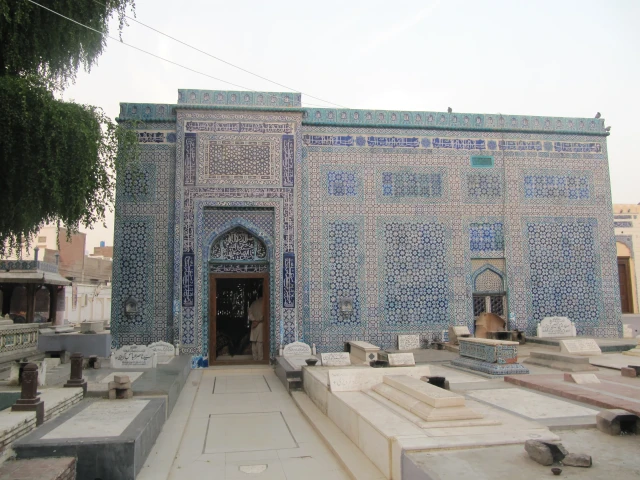
Why Sufi Shrines Thrive in Slums Pirs vs. Poverty
Sufi shrines in most overcrowded slums where urban poverty dictates the day in and day out survival of
urban gangs sear pristinely unfazed. These holy places provide something which is generally lacking in
the secular world, profound individual comfort. They do not act as educational centers of standard but
as tonic centers of curing. Sufi shrines replace mental, physical, or other types of formal healthcare,
where unreliable public services and inaccessible professional systems of care exist. In this case, religion,
tradition and personal experience provide a reprieve to the unseen poverty scars.
Spiritual Solace Where the Secular Falls Short
Life in slums is simply a life of struggle because the inhabitants do not have stable incomes, a stable
home, and in many cases, the fear of eviction and violence. The necessitated lack of difficulty is what
makes a shrine appealing to the people in this kind of atmosphere. You do not need to be rich, high and
mighty to get in. No admission charges, no strict hierarch. One may be barefooted, beaten up in the
world, all he wants is peace. The friendly environment of these shrines destroys the walls, and makes it
egalitarian and intimate space in which people are equal before god.

Although the Pir or the saint that is venerated in the shrine would have passed on long ago, it is thought
that his spiritual presence is still active and guardian like. Human beings visit the church when they want
to seek blessings, say prayers of thanksgiving or even cry in silence. There is nothing unusual in visitors
winding threads on the lattices of shrines, escorting candles and walking around the tomb during prayer.
These are small acts of devotion yet the weight of it emotionally to the people who have burdens on
their shoulders is immense. This religious symbolism keeps the desire to survive in the event that the
secular systems collapses.
This spiritual action is not at all abstract or mystical in an abstract sense. It bases on the immediate and
the actual. Sick child, broken marriage, loss of employment-that is what people present at the shrine.
The prayers that are prayed are down to earth and highly personal. Due to failure of doctors and
government officials, many believe that in the case of a saint, the blessing might be effective. The Pir
takes on a role of an intercessor-- neither dealing with medical or legal systems, but doing what they do
not do.
In addition, a shrine has a distinctive way of being therapeutic. The incense, the cadence of the prayers
being whispered, the peaceful sound of people around you as they are in deep thought, all of this is
some sort of spiritual oasis. When someone is in an extremely busy environment and most of the time is
spent there, when one logs out, these serene customs bring about emotional recharging. This, transitory
as it may be, is life-altering in an environment where trauma and tension have become inseparable
bedfellows.
Finally, Sufi shrines are more successful in slums as they satisfy both emotional and spiritual demands
which cannot be supplied by any other organisation. They give hope, not bureaucracy, healing, not
judgment and dignity, not conditions. Making their way out in an inequality-run world where people can
be neglected, these tiny, holy places become the living evidence that faith may not only be a comfort
but a form of silent protest.
A Marketplace of Belief and Survival
Sufi mausoleums within slums do not solely therefore become centers of spiritual cure, they are also
active community-based economies where profit and faith embody each other. In these failed
communities where work is informal and unreliable, the shrine goes way beyond being a spiritual haven,
it turns to a humble but steady system of income. Around the religious epicenter of the shrine, is a
marketplace that naturally sprouts, fuelled by a stream of followers or visitors who pay little stalks,
prayers and most importantly economic involvement.
Along the walkways to the shrine are stalls selling flowers, incense sticks, oil lamps, religious charms and
amulets. These products do not appear to be of much value when it comes to cost but they are the
foundation of the income of many micro-entrepreneurs. A female selling rose petals, a young man
selling handwritten charms, elderly providing sacred threads tied as a blessing- each is engaging in a
virtuous cycle that is based on belief. The shrine enables them to survive with low overhead and
constant flow of people as opposed to the formalized markets that have lofty rent prices and
competition.
Goods, however, are not the only part of the economic ecosystem. There are also services in abundance.
There are those who happen to request prayer recitations on a fee basis and there are others who are
allowed to guide rituals. The care of shrines may be funded through donations or offerings within the
community or the community may pay in order to receive spiritual guidance.
People who sing the Sufi devotional songs, called qawwali, are occasionally scattered the money by the audience and performance gets transformed to livelihood. Beggars as well make a good hiding place around the shrine, as they assume the charitable nature of the visitors, who are touched with spirituality and obligation to become part of the community.
The centre piece of this merchandise is langar; the free communal meal served by worshippers and
servants. Even though it is free of cost to the person who gets it, langar is essential in maintaining the
spiritual reputation as well as the economy of the lands around the shrine. The food is largely prepared
in large quantities, and there will be an ephemeral need of labor, provision procurement and delivery.
The people who visit the place to have their food, especially the homeless, elderly, or unemployed,
might rely on langar as the most successful meal of the day. Herein, the religious charity as well
becomes a highly practical sort of social safety net.
The peculiarity of this economy consists in its availability. Whereas formal employment oftentimes
requires the applicant to possess some specified qualification or connections, the shrine economic circle
requires no qualifications and just presence and initiative. This is more so in slums where the residents
miss entry into the formal economy either due to lack of documentation, education or social capital. The
shrine, free to anyone, permits respect through donation, whether of the spiritual, artistic or
commercial.
The barter-market of faith is also an extension of emotional ties of the shrine. It is not the case that
people are just buying and selling, but they are mingling, they are sharing stories, and building up
intimate relationships. To many, the rituals of exchange that continue day after day can thus become life
anchors to otherwise unstable lives. Here, to survive does not simply mean to be able to earn money. It
means to be someone. The commercial hub around the shrine cannot be divorced with its religious
purpose and both of them form a distinctively tight knit location where work and prayers are united.
Social Cohesion in Fragmented Urban Spaces
Fragmentation is what defines the overcrowded and inhumane urban slums structures. Individuals have
diverse backgrounds, races, and geographical locations and are usually jammed together through
economic need as opposed to history. The outcome is a society which is characterized by physical
proximity and emotional separation. Such spaces do not easily sustain social wellbeing. Nevertheless,
against this background, Sufi shrines perform an exceptional and influential task as centers of unity
drawing the people who would otherwise be strangers.
Sufi shrines are highly inclusive as opposed to formal religious institutions which are mostly rigidly
structured and contiguous to a given religious denomination. These institutes do not discriminate based
on wealth, religion (Muslim or non-Muslim), sex (men or women) and all are welcome. The openness
presents an option that is difficult to find in slum settings a judgment-free zone people of diverse
backgrounds can congregate in. One can find a shrine frequented by people of different faiths to receive
blessings or to be grateful or even just to sit in silence. This common holy space enables the
establishment of an emotional connection to be across social or sectarian lines.
The shrine provides a beat to the social life, which would otherwise be devoid in slums. There are
various times when people congregate, they attend evening prayers, they attend the death anniversary
of the saint (Urs), and they eat together. They do not only have spiritual events, but they also have social
events. By attending a number of gatherings, individuals start to know one another, greet, deliver food,
and communicate on prevalent problems. A collective ritual can turn into more community.
Among the most visual features of the shrine functioning is the fact that it is a temporary, but effective
escape into the reality of slum life which tends to be ruthless. The interior and surrounding of the shrine
is generally peaceful, hygienic, and somber relative to the streets surrounding it. There is less restriction
in movement among children, older people can sit anywhere without being intimidated, and there is the
element of interacting politely. This relationship highlights or supports the notion of the shrine not only
as a place of religion but as a pattern of how the community could have realistically been. More dignity,
compassion, and respect of one to another.
What is important too is the role of music, in particular Qawwali, that promotes social cohesion. These
performances unite masses in common experience, and it is an emotional experience, both group and
inclusive. When the listeners are sitting shoulder to shoulder before the performers, it is not only the
music that takes its toll; it is the feeling that they belong to a bigger thing. The shrine, in a society where
individuals are being increasingly scaled down to being a statistic, unemployed, homeless, illegal, the
shrine is reminding people that they are more than mere statistic, they are partakers of a common
spiritual and social life.
At slums where people can hardly trust each other and have to struggle every day to survive, the Sufi
shrine offers a relief where a person can learn to work together, learn to empathize, and the community
identity can mature. It does not resolve structural inequality of urban poverty, it spares the emotional
costs by making an individual feel witnessed, heard, and related. By doing so, the shrine not only serves
as a place of prayer, but forms an alternative against social atomism of slum life, by providing a model of
co-existence.
Cultural Continuity and Artistic Expression
Under the pressure of bare-subsistence driven life in the fast-paced urbanizing slum settings, cultural
expression may abscond into the periphery. Heritage such as traditional music, language, narration and
spiritual aspects are usually ignored in the survival struggle. However, Sufi shrines can be denoted as
influential custodians and bearers of cultural continuity. It is in these sacred precincts where art,
language and tradition are able to flourish not because poverty is absolved, but with poverty. To slum
dwellers who face the threat of modernity which may erode the displayed cultural identities of the slum
dwellers, the shrine is where the past is reflected upon, glorified, and preserved.
Music is one of the most obvious ways through which shrines are used to conserve the cultural heritage.
The soul-moving, rhythmic devotional songs of Sufism known as qawwali performances are a main
ingredient of shrine life. These performances are often presented live using harmoniums, tablas, and
clapping of hands but they do not represent ordinary source of entertainment.
They are paeans of prayer and group mantra, gushing poetic lines in Persian, Urdu, Punjab or local languages. The tradition of Qawwali reminds the listeners to a long history of spiritual tradition that dates back to the past centuries. The music attracts people, catches them at a very emotional level and also makes them belong to a chain of saints, poets and seekers.
The shrine itself is also decorated and is reflective of art. Said even the most modest Sufi shrine can be
festooned with colored cloths, painted tile, handwritten verses. These images are unstandardized and
institutionalized, they are local aesthetics and community involvement. Beauty in slums is a luxury
commodity and the shrine a symbol of color and concern, a place that nourishes the eye and the spirit.
The decoration of the shrine is itself a kind of artistic ritual-one that includes and involves, rather than
excludes, the community.
Oral history and storytelling also prospers here. Old people tell stories of the miracles of the Pir,
historical visitors and prayers answered. Many of these stories may be ignored as mere folklore, but
they have a much deeper purpose: they keep moral values, traditional wisdom and a sense of place.
These stories reassure the urban poor that they are important in larger story and in a world that keeps
on telling them otherwise. This informal sharing of memories enables young people to hear these stories
even though they are not exposed to contemporary history book learning, yet they are able to get first-
hand experiences passed on to them through these channels.
Language which is, so often, a lost victim of urban migration is also preserved at the shrine. Most urban
slum tenants talk the minority languages or dialects which are being overtaken by the dominant
languages. In the shrine, the languages are welcomed, much rather, it is venerated. The mother tongue
is emotionally and spiritually powerful and that is why prayers, poems and songs are recited in this
language. By doing so, shrines can counter the homogenization of cultures and the resulting mosaic of
linguistic diversity can persist even in the most peripheral of places.
The point is that, after all, Sufi shrines are an opportunity to find spiritual solace, but also the
opportunity to ensure that art, language, music, and stories do not die and carry further. In such a world
where the culture of the poor is frequently devalued, these shrines are claiming that tradition is not a
luxury, rather it is an absolute must. Survival is not independent of culture. In the life of the slum
dwellers, it is what makes the survival interesting.
Conclusion
Sufi shrines survive and flourish in urban slums precisely because they do not hold out general solutions,
but provide solutions to fundamental, daily needs-emotional, spiritual, social, economic, and cultural.
This is seen in the sacred spaces in environments where life has been reduced to mere survival, it
provides something so human-like dignity. They act as unofficial institutions, providing healing in those
places where hospitals fail, provision in those places where there is little to feed, and solidarity where
everything is divisive. Besides that, they construct a platform whereby slum dwellers can regain their
agency, culture, and community.
Although they offer no alternative to the structural reform or state assistance, Sufi shrines form crucial
links between marginality and hope. It is where the divine reaches out to street-level battles of life and
shows people that even in dereliction there is beauty, faith and community. Their survival has a strong
allusion showing that despite being deprived of material resources, the human spirit has a way of
blooming through. In this silent rebellion to despair, Sufi shrines are no mere victim of poverty but they
provide a refuge against poverty.
Also Read: Top Successful Slum Upgrading Projects















LEAVE A REPLY