

The urban inequality in the contemporary world has one of
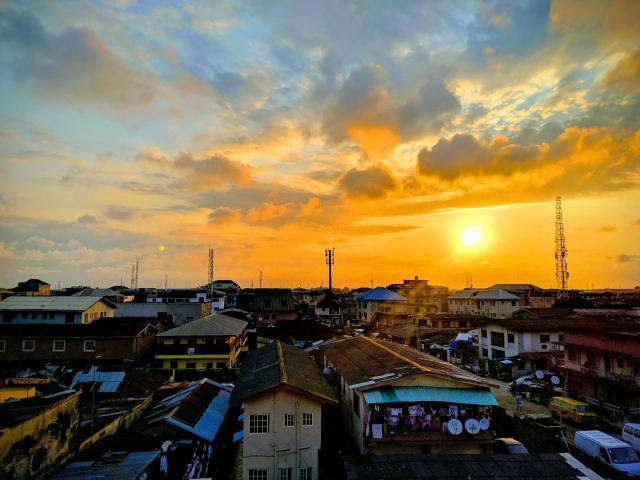
the most explicit and the most enduring forms in the form of slums. Slums
accommodate over a billion people across the world; these include sprawling and
informal settlement on the outskirts of cities and the overcrowded inner city
neighbourhoods with lack of basic amenities. Their lives are generally viewed
as a failure of the individual as opposed to a systemic economic, social, and
policy system. As a matter of fact, slums are created due to the collision of
slow urbanization and inadequate planning, inefficient institutions, and
inaccessibility to affordable housing.
Migration and urbanization are the main driving forces of
this reality. Cities are the place with opportunity, employment, and higher
standards of living, which are appealing to the rural population and small
towns. But in the event that housing supply is not able to match population
increase, informal settlements turn out to be the only solution to millions of
people. High land prices, restrictive regulations and limited governmental
investment exacerbate this crisis via affordable gaps in housing.
This blog attempts to explain how slums develop by looking
at the inter-relationship between urbanization, migration, and affordability of
houses. It examines the interplay of economic demands, policy decisions and
structural inequalities to create informal settlements through nine major
lenses. Knowledge of these causes is crucial in development of successful,
humane and sustainable solutions to one of the most urgent urban problems of
our age.
The Pressure on
Cities and Rapid Urbanization.
The urbanization has made cities into economic growth and
cultural exchange engines however it has by the same breath put enormous strain
on the urban systems. When people are concentrated in metropolitan regions,
housing, infrastructure and services buildings demand increases dramatically.
The rate of urbanization in many cities, especially the developing nations, is
much greater than what the city is able to plan and react to. This imbalance
produces the circumstances that the formal housing markets will be unable to
accommodate new dwellers.
The issue of rapid urbanization usually struggles the land
administration, the planning authorities, and the local governments. Due to
small budgets and institutional capacity, serviced land and affordable housing
at scale are hard to deliver. This has meant that new urban dwellers have been
forced to seek refuge in any place that has land, irrespective of legality and
security. Informal settlements have been a viable solution to the immediate
needs of housing although they are not provided with secure tenure and basic
facilities.
It is not urbanization itself, but uncontrolled
urbanization. Slums are the housing of choice of low-income communities when
cities are developed without any urban planning or investments. The problem of
slum creation should be met accordingly not by slackening the pace of urban
development, but by improving urban governance and matching housing supply to
the truth of population transformation.
Rural-Urban Migration
and the Quest of Opportunity.
The processes of urban growth and the creation of slums are
characterised by migration, which is one of the key factors. The rural
population resettles and moves to urban regions to find work, education,
healthcare, and better living conditions. The agricultural deterioration,
climatic changes, and division of land and the absence of countryside
opportunities drive people and families to cities. Cities are seen as arenas of
possibility, and they are a beacon of hope and survival.
Nevertheless, migrants typically come in with few financial
resources and social networks. The formal housing markets are usually
characterized by consistent incomes, documentation and initial expenses which
are unaffordable to migrants. Migrants live in the informal areas whose entry
barriers are minimal without having access to affordable rental housing or
social housing. Slums therefore become the initial access point of the urban
life of many new inhabitants.
Migration also brings about cyclic growth trends in the
slums. As people migrate and settle, they bring with them their family members
and friends thus strengthening settlement growth. This practice brings out the
fact that slums are not accidental but socialized environments that are formed
within the migration networks. The concept of seeing migration as the
structural force, not a short-term shock, is essential to effective housing and
urban policies that would avoid the development of informal settlements.
The Continuous
Disconnect between Affordable Housing Supplies.
A chronic lack of low-cost housing is one of the most
immediate causes of slums creation. The supply of housing in most cities is
saturated with market development, targeting middle- and high-income earners.
The escalating land prices, building expenses and profit margins make
non-subsidized or incentive-free housing development of low-income financially
unattractive to most private developers.
The lack of affordable housing is becoming wider due to the
commodification of urban land. Developers concentrate on those projects that
can bring maximum returns, low-income households are pushed out of the formal
markets. Where they exist, public housing programs tend to be underfunded,
mismanaged or small in scale. What the households can afford and what the
market has to offer do not match.
This gap is bridged by slums, which provide cheap, informal
housing at a very high price in safety, legality, and quality. Informal
settlements enable the residents to reside near employment and services without
taking the financial strain of a formal housing. This fact highlights that
slums are not only housing failures but also a pointer to systematic lack of
affordability of a system which need concerted efforts in policy response.
Land Markets,
Informality and Tenure Insecurity.
The availability and access to land is at the center of slum
formation. In most urban areas, the formal land market is not accessible to the
low-income group as the prices are very high, the laws are complicated, and the
bureaucracy is cumbersome. Another form of development is informal land deals
whereby people can occupy land without legal ownership or the tenure of the
land.
Unclear land ownership, weak enforcement of land ownership
and corruption tend to strengthen informality. Unoccupied government land,
hazardous zones and peri-urban areas are the hot spots of informal settlement.
Although these neighborhoods provide temporary accommodation, they subject the
residents to dangers like eviction, floods, and landslides. Insecurity of
tenure also leads to poor housing and infrastructure which continue to sustain
poor living conditions.
The interconnection between land markets and slums explains
why and why, inclusive land policies are of significance. When land is simply
seen as a speculative commodity, affordability will be affected. Universality
of tenure, open land administration and pro-poor land redistribution is
critical in preventing slumming and facilitating rational housing enhancement.
City Poverty and
Informal Employment.
Urban poverty and the informal employment are closely
connected with slums. A significant number of slum inhabitants have insecure
jobs in the informal sector characterized by low wages in street selling,
domestic services, construction, and small-scale production. Such livelihoods
offer a small and inconsistent income and thus formal housing is not affordable
even on the occasions that it is available.
City economies tend to use informal labour with inadequate
living conditions being offered to employees. This contradiction brings the
problem of spatial inequality, as the working population serving the city is
pushed to the farthest areas. Slums allow access to play in employment areas,
and this access to jobs makes transportation affordable and the slums allow
people to survive on the best of bad pay.
Housing insecurity is further enhanced by poverty that
restricts degree of access to credit, insurance, and social protection.
Households lack financial buffers, which result in failure to survive rising
rent and eviction risks. The slum formation is, therefore, indicative of larger
labor market and social safety net failures. Housing informality must be fully
tackled with a combination of measures to enhance economic inclusion and reduce
income stability and housing provision.
Governance Failures
and poor Urban Planning.
Poor governance and poor urban planning also play a major
role in the development of the slums. Most cities do not have elaborate plans
to project the growth of the population and allocate land where people can
afford housing. Where strategies are set plans are usually compromised by
political interference, lack of capacity and absence of agency
responsibilities.
Regulations may unwittingly contribute to informality. Tough
building regulation, zoning limitations, and delays in the process of approval
also add to the cost of development and locks out low-income housing solutions.
At the point where compliance is no longer a possibility, informal construction
is the only way to go. Slums therefore are not only created by lack of
regulation, but also by ill-conceived regulation.
Failure of governance is also expressed through negligence.
Informal settlements are also often not covered in the delivery of these
services, which only strengthens marginalization by them. Such exclusion has
furthered the waves of poverty and informality. Urban governance enhancement,
enhancement of planning capacities, and adoption of inclusive regulatory
measures are important measures towards the prevention and upgrading of slums.
Social Exclusion and
Urban Development Inequality.
Social exclusion and inequality are manifested or reflected
in slums. Informal settlements are overrepresented in terms of marginalized
groups, such as migrants, ethnic minorities, and the low-caste or racialized
groups. Housing, employment and public services prejudice limits their access
to formal urban areas.
The areas of the city that are more focused on in urban
development are frequently commercial areas and high-income neighborhoods,
which contributes to spatial segregation. Infrastructural and service-based
investments are likely to avoid the informal regions making inequality even
greater. The trend demonstrates the lack of balance in decision making process
in which the needs of the urban poor are underestimated.
The development of slums is not just an economic matter but
also a social justice matter. Planning the city in an inclusive way involves
participatory planning that empowers the voices of the marginalized. It is
imperative to tackle the cause of inequality to minimize the circumstances that
breed slums and to make the urban opportunities equitable.
Environmental
Sensitivity and Climate Stressors.
The environmental factors are becoming factors that affect
the slum formation and expansion. The informal settlements are usually
established in the ecologically hazardous regions including floodplains,
slopes, and coastal belts. They are not good places to be developed formally
but can be reached by the low-income households since land costs are cheap or
there is poor enforcement.
These vulnerabilities are worsened by climatic changes. Slum
dwellers are disproportionately impacted by extreme weather events, which cause
damage to their homes and livelihood. Pollution and sanitation are other
factors that weaken health and quality of life, therefore environmental
degradation. With these dangers, residents do not go since they do not have
other housing opportunities.
The housing, poverty, and climate resilience concur in the
area of environmental vulnerability. The environmental planning and the housing
policy should be united to prevent slum formation, which means that the
affordable housing should be safe, robust, and well-positioned. Lack of
consideration of environmental dimensions contributes to displacement cycles.
Housing Finance and
Credit Exclusion in the Formation of Slums.
Access to housing finance is a very important issue that is
not well understood in the development and maintenance of slums. Housing
systems, which are formal, are directly associated with credit markets where
mortgages, rental deposits, and construction loans necessitate the presence of
stable incomes, credit histories, and legal documents. Informal workers and
low-income households and recent migrants find these demands insurmountable.
The deprivation of affordable credit essentially excludes households in formal
markets when it comes to acquiring housing particularly when they are willing
to pay small, stable payments over a period of time.
Exclusion in credit leads to informal options where entry
fees are minimal and payments are convenient. In slums, the construction of
houses is frequently done in bits with savings, informal loans, or community
support. As much as this enables families to get shelter, it also incarcerates
them in conditions which have no legal status and accessibility to basic
facilities. The lack of formal finance does not encourage spending on
long-lasting constructions and infrastructure, which supports poor living standards.
Transformative concepts of public and inclusive housing
finance systems may be useful in stopping slum development. Housing, rental
services, and credit guarantees Microfinance can fill the divide between
informal income and formal housing access. The access to finance, along with
secure tenure and favorable regulations, can help low-income households to get
out of informality. The slum formation will persist as a logical reaction to
the financial obstacles but not to the failure of the individuals to choose
reasonably without any reference to the credit exclusion.
Informal Settlement
as a Survival Strategy and not a City Calamity.
Slums are commonly depicted as exceptions to the planning
and the development process in the city or temporary imbalances, in the actual
sense they are survival strategies in the unequal urban systems. Informal
settlements are the only option available to millions of residents to enable
them to access employment, education and social network in urban areas. They do
not seem disordered, but get used to systemic constraints set by housing
markets and policy structures.
There is a great level of internal organization in informal
settlements. The inhabitants form social networks, informal systems of
governance and local economies that sustain day to day life. The lack of formal
services and institutions is compensated by these systems and emphasized the
resiliency and agency of slum populations. The perception of slums as a problem
to be eliminated overlooks their contribution to the maintenance of urban labor
markets and population in the process of population growth.
The identification of slums as coping strategies changes the
policy discussion to include the issues of eviction and clearance to that of
inclusion and upgrading. Infrastructure, tenure security and provision of
services are ways of providing better living conditions to the inhabitants as
their rights are recognized as well as the deficits in the urban areas are
failed. This point of view highlights the fact that slum development is not a
rogue phenomenon, rather, it is an expected consequence of discriminatory
cities. The solutions to this problem should be therefore sustainable
solutions, instead of criminalizing the survival tactics of the urban poor.
Conclusion
The emergence of slums is not due to the desire of people to
remain in the informal state but due to the structural forces that leave them
with no other choice. The combinations of rapid urbanization, migration, and
inexpensive housing differences with land markets, poverty, governance failure,
inequality, and environmental pressure result in informal settlements. The
slums are the symptoms of more profound systemic problems of the models of
urban development.
The issue of slums creation needs more than demolition or
relocation. It requires integrated city planning, increased supply of
affordable housing, safe tenure of land and equal economic opportunities. The
policies should appreciate the slum dwellers as part and parcel of the city,
and not as hindrances to development.
The decisions taken today will determine the future of the
cities in generations to come as cities keep expanding. With a focused approach
on addressing the underlying causes of slum formation and the priority of
affordability, equity, and inclusion, cities can become places of exclusion
tactics to places of shared prosperity.















LEAVE A REPLY