

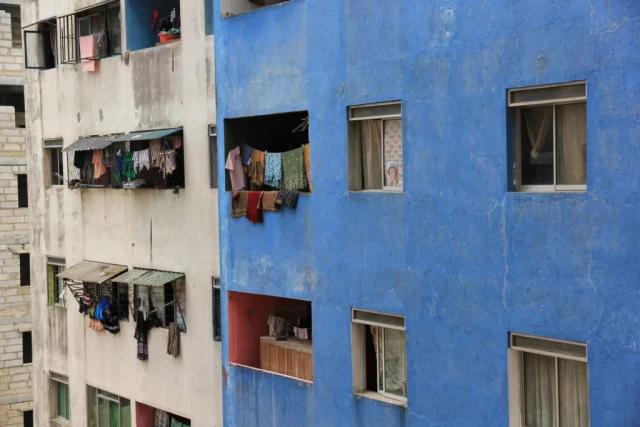
Why Low-Rise Affordable Housing in Colombo Still Hasn’t Scaled
When it comes to Colombo, the prospect of the low-rise affordable housing frequently faces an unsurmountable obstacle, namely the massive cost and scarcity of land. Due to the ever swelling population of the city, land in ideal urban centres has been made unaffordable leading to land in fringe urban environments. This becomes a problem of structure when one tries to develop low-rise affordable housing- how to fit within low rise available vertical space and keep costs low.

Land Costs and Urban Density Challenges
Low-rise developments by virtue of their footprint cannot have the same efficiency with that of high-rise construction where one is trying to maximize the vertical space in order to justify the premium land cost. A two or three story building would need much a larger area in order to provide as many families as can occupy the same space which can be accommodated by a high-rise building in a much less base. Such a model is not economically viable in this dense urban context such as in Colombo where all square meters have a premium without significant subsidies or incentives.
Such projects are avoided by private developers whose motive is solely to make profits. The margins are just not worth it when stacked, CBD systems have much better margins. Even where acquisition of land is relatively cheap in less central places, the infrastructure development costs; roads, sewage, water, electricity increase the load at the toll gate. That is why low-rise housing schemes in Colombo have never been more than conceptual or at the lowest magnitude.
Making this even more problematic is the land tenure in cities which is a mess of differentiation. There are also a lot of parcels, which are involved in judicial litigations, encroachments or uncertain titles. This causes problems of delay in acquisition and large scale planning is hard. These ownership complications present an opportunity whereby developers are only able to find a promising locality yet are not able to consolidate it with something that will be meaningful development. When it comes to low-rise affordable housing, it is just a logistical nightmare when done in such an environment.
Also, the zoning regulations and urban development policies adopted are not always provided in Colombo to attract low-rise affordable housing in a way that is significant. A great deal of policy accentuation has been off balance on high-density city development, which, though efficient in certain environments, does not really take into consideration they needs of families wanting to dwell in larger, more agglomeration minded habitat. The issue is that with no specific land use zones and with nimble permitting procedures, the low-rise projects are no less prone to bureaucratic delays than any other form of development but with thinner profit margins to cushion against the delays.
Ultimately, though the concept of low-rise affordable housing fits the goal of a sustainable and community-based urban lifestyle, there exist an economic roadblock of land values in the city of Colombo that is also the ultimate inhibitor to the idea. As long as government or policy-based processes do not come in to overhaul the costs of acquisition of land or supplement development activities, then low-rise housing in the capital will just be a dream. Developers and planners will have to struggle with a big question on how they can provide affordable housing to its increasing population without using the land itself which is already beyond reach.
Financing Gaps and Lack of Incentives
Among the most discernible causes of why low-rise affordable housing has failed to grow in Colombo are the chasm in access to funding schemes. Although the government and financial institutions tend to support affordable housing rhetorically, they have little targeted financial product to assist and to encourage developers of low-rise low-margin projects. The financial ecosystem is still skewed towards the commercial and luxury developments that bring higher and faster gains.
Financing involves more than plugging into money--one needs to get capital at a reasonable price and at a level of security. Posing a risk to the banks and other independent lenders is that there is likely to be a lower profit yield of low-rise housing projects when compared to other projects. These also tend to occur in lesser quality markets, they target less affluent clients with not as strong credit repairs, and they have longer absorptions. This puts together to form less desirable risk profile on the part of traditional lenders.
Conversely, luxury/high-rise residential towers tend to attract preferential financing deals since they also attract buyers with more purchasing power, and there are robust presale prospects and upfront cash flows. The medium-sized apartment complexes in Colombo are found to be safer investments by Banks because they can be sold very quickly, especially due to price advantage and location benefits. Consequently, developers of affordable low-rise housing have to self-finance or turn to costly short term loans further affecting their low margins.
There are also barriers to buyers of low-rise affordable housing. Mortgage and home loan products that suit the low-income earners have a narrow range and scope. The informal sector hires many potential buyers or people do not have the paperwork required in obtaining a conventional source of any financing. Even where the loans exist, it may be at a very high interest rate and at a strict repayment schedule. This dampens the demand and keeps developers away of the idea of developing at scale knowing that the target market potential buyers are not able to find a way to finance their units.
It also has no government incentives concentrated on the developers in this segment. Some programs are just on paper, but then they end up being bogged down in red tape or constrained on a small level. Tax breaks, subsidized infrastructure, fast permits and access to public land can all be huge incentives but have been applied inconsistently enough to have little impact. Consequently, developers consider low-rise housing with lower costs as a high-cost, low-gain investment that does not deserve the investment of time and money.
Finally, the equation of finance has to shift to make low-rise affordable housing expand in Colombo. This implies special loan facilities to developers as well as to the buyers that are guaranteed by the government or that come at subsidized interest rates. It also implies the establishment of the partnership between the state and the business in which risk is not imposed solely on one side. Unless there is a reworking of how the funding of the affordable housing industry should be constructed, the optimal models of low rise building will sit on the drawing board perpetually.
Infrastructure Bottlenecks and Utility Access
Such obstacles as land and financing are significant, but there seems to be the absence of infrastructure of any utility access that works as an unseen murderer of lower rise affordable housing in Colombo. Even with the land and initial spending in hand projects often falter or fail because of issues related to water supply, sewage management, electricity grids and connectivity of roads. In the case of low-rise developments the inherent size of the developments, which tends to occupy larger plots of land, means that the associated infrastructure requirements may be especially high and potentially logistically challenging.
Low-rise housing could have made sense in several outer-urban or peri-urban areas of Colombo where the infrastructure may be underdeveloped or non-existent. The developers are then left with the unenviable prospect of having to put up access roads, lay down electrical lines, water tanks, even waste disposal systems; all of which can end up multiplying the budget of a project by up to two or even three times as soon as the project is put into place. Unlike high-rise buildings with such expenses spread across hundreds of apartments, low rise buildings often have only a few apartments in them and so the cost of infrastructure per unit is very costly.
To potential residents, insufficiencies in infrastructure are not just inconveniences, it is a case-nailer. House consumers might be attracted to a house that falls within their price range, and still, it might not be as attractive as it lacks water, electrical, and transport infrastructures. Families, in most cases, are pushed back to slums that are poorly connected areas as opposed to the inconveniencing idea of living in an isolated peninsula without infrastructure despite its low costs.
A recent dimension has been digital connectivity that has gained a lot of importance in the post-pandemic world. Affordable housing projects that lack connectivity to the internet or mobile services will be regarded as less desirable, especially to working families with children or home workers. The utility is developing smart infrastructure that is needed nowadays, however, most of the expansions are still made in the analog way of thinking.
As much as land and finance are the primary impediments, the lack of infrastructure and utility supply can be seen as the silent killer of low-rise affordable housing in Colombo. Projects often fall or get stalled even after land is acquired, and the first investment has been made because of water supply and sewage systems, power grids and other roads etc. The result of such demands on the infrastructure can be out of proportion to the low-rise developments and logistically challenging when compared with such schemes spreading out over larger pieces of land.
Basic infrastructure is undeveloped or completely non-existent in the majority of outer-urban or peri-urban areas of Colombo where low-rise housing could be quite sensible. After this, the developers would have to grapple with creating access roads, laying electricity line, using water tanks as well as creating a waste disposal system, which can often double or even triple the budget of the project. The low-rise projects tend to have fewer houses than high-rise projects and that such expenses cannot be shared between a large numbers of units, and hence, the cost per unit of infrastructure is very high.
Policy Inconsistencies and Regulatory Hurdles
The scale of low-rise affordable housing in Colombo has not been achieved mainly due to the non-scaled fragmented and in many ways contradictory policy environment. Regardless of what the government signs at the annual conferences concerning housing to everyone, or the need to address housing issues, there has never been an integrated structure or scheme that would directly reflect on the exclusive needs of the low to rise development. What is present is a checkerboard of laws, zoning controls and permit procedures that in many cases create barriers where housing with low to middle level income families is desirable and difficult to make possible.
The barriers start to affect the developers head-on. Regulations on land-use also do not limit the distinction between haunts with luxury, or business, or low-income housing projects. The result is that the low-rise developments will have to go through the long approval procedures same as large-scale commercial towers. That translates to numerous clearances by various departments which overlap hence making compliance checks very time consuming which takes a toll on already constrained budgets and also prolongs time unnecessarily.
What is more, the zoning regulations in Colombo are biased to high-density urban patterns. Although this can be reasonable in CBD, not taking into consideration the possibility of mixed-use, mid-density precincts with low-rise buildings to put the same rules on the whole city will disregard this potential. And we have a basic mismatch between the aspirational vision of an idea of affordable housing entitlements and the actual instruments that we have to implement it. Unless there is policy elasticity that accommodates low-rise structure, for example easing height limits outside of the central areas or financially encouraging low-density developers, there is no incentive to the developer to take the gamble.
Another major bottleneck is bureaucracy. Even the developers with the good intentions are caught up in administrative delays. Whether it is the environmental impact assessment or even municipal permits, all the paperwork can transform a worthwhile project to leaving it lonely and long dead. The threat of corruption and in-efficiency also hinders investment in the low-end sector since technically it may be judged that the cost and time of having to grease the wheels would be a factor. Meanwhile, giant developers with luxury or high-rise construction, can more often than not, get through these hurdles, even by going around them.
What makes it more complex is the absence of long-term planning of cities. Housing affordability requires decade-long policies that are directed toward the same goal, but most policies in Sri Lanka tend to change as political parties come and go. Governments come and go, thus redefining the priorities and thus the programs can either be inherited or rebranded out of existence. This insecurity makes it hard on developers and financiers to enter low-margin, long-payback undertakings such as low-rise affordable housing when they cannot count on regulatory or financial assistance remaining intact.
The other problem is a lack of coordination between the central authorities and local ones. Although national housing agencies have the ability to put forth programs, many of the programs are actually done by the local councils. This makes implementation fragmented and accountability weak. Companies can also find themselves repeatedly travelling between ministries, provisional departments and municipal councils as each places its own interpretations, demands and schedules.
The road ahead needs much regulatory dismantling. This will involve streamlining the approvals of the affordable housing and the review of zoning regulations to allow low-rise densities and means to develop fast-tracking developers who operate within the label of affordability regulations. The low-rise housing potentially becomes not only viable but also appetizing with transparent, consistent, and pro-affordability policies. As such, until now it has remained nowhere in the barren lands of red-tape and policy contradictions.
Conclusion
The affordable housing in Colombo is a wish that still awaits to be fully fulfilled-a dream that has been envisioned, yet never been materialized on larger magnitudes. Although it concomitantly entails well-defined benefits including, but not limited to, community-driven living arrangements, improved integration into the surrounding environment, and possibly reduced costs of construction, all of them are inevitably outweighed by a series of systematic challenges. Central areas are too expensive to do such developments. It is restricted by the absence of personalized funding and developer incentives that restrict supply and demand. There is weak infrastructure, confusing regulations and a drifting culture toward high-rise urban living that makes matters more challenging.
The core problem of the issue is a non-match between the policy objective and the realities on the ground. Affordable housing is something that everyone agrees is important but we lack mechanisms to build them particularly in low-rise forms. In the absence of specialised support, simplified policies and long-term city planning, residential low-rise will only represent an isolated pilot, instead of a large-scale solution to the increase in housing needs of the modern era Colombo.
However, this need not be so on a permanent basis. Low-rise affordable houses can be a reality with the appropriate changes in the current strategies in land use policies, funding mechanisms, planning of infrastructure, and the perception of people. This will involve coordination of the various institutions, which entails the cooperation between the government, private sector developers, financial service providers and the community players. What is most imperative is that it will necessitate a determination not only in the construction of affordable housing, but also in construction of its value, dignity, and livability.
Going vertical may not be as important as going out on the minds of the city officials seeking sustainable ways of expanding. Low-rise housing is not a U-turn- it is the basis of a more inclusive city.



-3dkuLgKhRD.jpg)
-49HupTvwDD.jpg)






LEAVE A REPLY