

Why Lahore’s Roads Can’t Keep Up With Its Population Boom
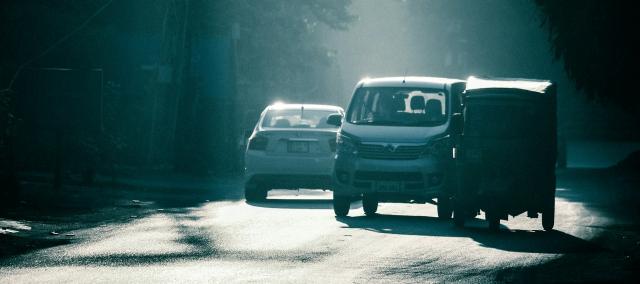
Lahore, the main cultural center of Pakistan and its second largest city, is on the verge of change. The city has grown significantly since Mughal times, now dealing with fast population growth that hasn’t allowed its infrastructure development to keep up—especially its road system. Roads planned decades ago now struggle to handle the traffic, air pollution and confusion created by many drivers.
The latest numbers say Lahore has a population of more than 13 million and its population is increasing faster than the national rate. An increase in city populations comes from people moving from rural areas, centralization of money and jobs and the city acting as a center for learning, healthcare and business. As the population rises, there are more cars on the roads, more places are needed and strain on officials increases. Regretfully, the roads in the city have not improved fast enough. Actually, a lot of critical routes were built many decades in the past, long before the city expanded significantly.
In this blog, I look into the reasons behind Lahore’s road crisis, the gap between what the city has built and what it needs and the broader deficiencies in urban planning. How a city’s expansion can result in policy paralysis, incorrect land planning, failing old public transport plans and harm to the environment will be studied. Above all, we’ll talk about what Lahore needs to improve quickly to keep moving ahead.
Full Global Strain from Increasing Populations
In the last two decades, Lahore has grown from a city that was easy to manage into a huge megalopolis. Because of a growing population and an increase in economic migrants, Lahore’s city is always strained. Even though the city’s edges are crowded with new housing and commercial buildings, highway development has slowed. At a pace unlike any before, the city’s urban area is spreading outward and making more low-density suburbs in the surrounding land. Thanks to this type of urban spread, traveling in cars has become more important, yet the road systems connecting these areas are frequently crowded, often badly maintained and generally not wide enough.
What the numbers say is sobering. More vehicles are now being registered than ever before in Lahore. Official figures from Punjab’s Excise Department show that there are presently more than 6 million registered vehicles in the city, among them motorcycles, cars, rickshaws and commercial vehicles. As more people arrive each year, the roads in the city are not expanding to keep up. The reason for the city’s heavy traffic is a lack of transportation infrastructure as the population grows.
The growing number of people in Lahore isn’t just expanding in one location—it’s happening everywhere. Yet, even with Bahria Town, DHA Phase XI and LDA Avenue expanding outside the city, they still lack strong links to central Lahore. Most people living there have to drive their own cars, as nearby public transport is scarce. Because of this, cars flood main highways every day, with jams lasting for hours on roads like Ferozepur Road, Canal Bank Road and Multan Road.
Because of how fast the city is urbanizing, it cannot handle or complete infrastructure work as planned. Flyovers and underpasses are often put into place as a response, after congestion has become too bad to bear. Even though these are handy, they do not support an overall plan for city traffic and travel. Worse yet, they may move congestion to a new location instead of clearing it.
Outdated Urban Planning and the Death of the Master Plan
Lahore’s road system not working is largely because of the city’s poor urban planning. The Master Plan that defined the city’s growth long ago has been set aside for projects being rushed by politicians. While new versions of Lahore’s master plan have been produced, most of them never get followed or put into action.
There is no single, enforced plan for urban growth which has resulted in messy development. Road-building projects often pay little attention to the future number of road users or integration with buses or trains. Usually, when new neighborhoods are granted approval, roads are not properly planned until complaints about traffic build up. People often highlight flashy projects such as wide streets and pretty underpasses instead of improving the long-term, environmentally friendly connectivity of cities.
In addition, zoning rules in Lahore are regularly broken. Building sites for commercial plazas are located in neighborhoods alongside housing, while apartments are made in the same space without adding parking or roads. All these zoning problems lead to short lines of congestion at different spots in the city.
At the same time, land long set aside for parks or transportation has been developed or sold off to private owners. Also adding to the problems is the fact that control of city functions is divided among many agencies. The LDA, TEPA, MCL and several cantonment boards are responsible for overlapping parts of the city. With so many parts involved, it becomes hard to coordinate, so many projects often fail or collide.
It’s particularly clear that a city is not being planned well if it favors building roads for cars over other solutions. Although more people are choosing to walk and bike, footpaths are slowly disappearing, pedestrian crossings are few and cycling isn’t safe. Planning for cars in cities leads to building larger and more roads and flyovers that clear up traffic for a little while, but still cause more cars to be on the streets.
Lahore badly needs a fresh plan that links land use, how many people live in certain areas and how people travel through the city. If urban planning for a new master plan is not followed today, Lahore could turn into an urban nightmare of nonstop traffic and rising pollution.

Public Transport: The Missing Link in Urban Mobility
Any large city relies on a smooth, budget-friendly public transportation system. Because the population is growing, Lahore’s current public transport system is not good enough. Transport in the city mainly using cars, motorcycles, rickshaws and ride-hailing is no longer efficient and can’t be sustainable. When it debuted in 2013, the Lahore Metrobus System (LMB) was a major achievement for the city.
But because it only travels along one corridor—Ferozepur Road—it does not link most of the city’s developing suburbs. The Orange Line Metro Train was created to be a major upgrade, but its costs and limited number of passengers have slowed its progress. Because there are no feeder buses or final link public transportation, few people make use of the Metro and Orange Line.
Before, minibuses and wagons were important in Lahore’s informal transit, but they have shrunk because of a lack of rules, good maintenance and few people trusting them. Because of this, many commuters need to take a car or motorcycle, regardless of distance. This is why we are seeing more motorcycles and mopeds on the road, leading to extra traffic and more accidents.
There have been inefficiencies in transportation because different transport modes have not yet integrated well. People who use different types of transport for their daily journey may not arrive on time and end up spending a lot. As an alternative, for example in Istanbul and Delhi, regular public transit makes it easier for people to avoid using cars for their journeys.
How people of different genders experience transport access matters a great deal. As Lahore’s public transport is not safe, some women avoid using it, leading families to have to use their own cars. If the transport system is more inclusive, safer and runs often, it could help with road congestion and create a better distribution of opportunities across the city too. Putting money into public transport is more than just building the occasional big project. The system ought to feature local buses, separate lanes for walking and cycling, ticket options through apps and guided urban development. If there is no such commitment, Lahore’s roads will still handle traffic from citizens who lack other options for getting around.
The problems from growing populations are not only seen in the number of cars on the streets. Rising vehicle use, longer time spent on the road and more air pollution are harming the comfort and wellbeing of urban citizens. More people are reporting noise, accidents and stress today. Lahore’s increasing size creates more mobility issues, but if its roads are not coordinately improved, they will not be able to handle the teeming people.
Environmental Consequences of Traffic Overload
Confined traffic movements in Lahore cause serious damage to the environment and directly affect public health. All the cars and trucks in the city have made it one of the most polluted towns in the world. Every winter, Lahore is covered in thick smog created by the mix of fumes from cars, factories and nearby farming activity. Lahore often makes the list of the world’s most polluted cities during smog season, according to IQ Air reports. Vehicles have greatly increased the impact of this crisis.
All of these vehicles produce nitrogen dioxide, carbon monoxide and particulate matter that lowers air quality. Persistent contact with these pollutants causes lung problems, heart diseases and early death. Both children and the elderly are particularly at risk.
More than just air pollution, continual honking and the sound of running engines in traffic make city life more stressful and tiring. Backed-up roads are dangerous for everyone involved, as many accidents happen there and can shut down roads for hours. Besides, the practice of idling in congestion means excess fuel is burned and CO₂ is emitted. Damaging the city’s green spaces so that roads and flyovers can be built leads to a larger impact on the environment in Lahore. Areas crowded with vehicles are getting hotter because there is not enough tree cover to protect against the intense heat absorbed by asphalt.
Lahore will have to use green mobility to address this issue by supporting electric vehicles, creating shaded footpaths, increasing cycle lanes and imposing pollution standards. In order to help the planet long-term, more people need to rely on public transport because Lahore’s road conditions deteriorate rapidly.
The Economics of Gridlock: How Traffic Congestion Is Costing Lahore Billions
While gridlock is inconvenient for everyone in Lahore, it is economically damaging as well. Time spent driving in traffic each hour is time lost for work, costing millions of people every single day. Such inefficiency costs the global economy a huge amount, but is often hardly recognized.
According to researchers, excessive traffic can cause a city’s GDP to fall by up to 2–4% because of delays, fuel-use wastage and more expenses for cars and trucks. Increasing vehicles and population growth in Lahore make the problem of air pollution much worse than usual. Freight shipments are late, workers come to work later and businesses spend more on logistics. Rideshare workers waste more time in low-income idling and those in the public sector experience the same issues from traffic delays.
Fuel waste also directly affects the economy. Moving slowly in traffic pollutes our air and wastes huge amounts of fuel. Focusing on roads and flyovers takes money away from better ways to travel. Therefore, poor spending decisions only solve the problem temporarily, without lasting change. On top of that, the health expenses caused by air pollution—more cases of asthma, heart diseases and hospital visits—affect both people and the healthcare system. Looking at it with an economic perspective, Lahore’s traffic jams are not limited to being an annoyance—they also create obstacles to the city’s development, make the economic situation worse and increase inequality.
Learning from Global Cities: What Lahore Can Adopt from Smarter Urban Models
While Lahore faces more traffic, seeing how other successful cities manage theirs can be very useful. Bogotá, Curitiba, Singapore and Copenhagen have shown that using new, inclusive and eco-friendly methods in urban transport can lead to success. Similar techniques can be applied in Lahore.
The BRT system in Bogotá was introduced to give buses superior lanes, cutting down on the use of private cars by residents. Curitiba is famous for planning its neighborhoods to be centered on transportation, rather than having roads cut through them. Singapore successfully uses tough tolls and an effective MRT system to lower the popularity of personal vehicles. The city of Copenhagen has dedicated a lot to cycling, so about half of its population uses bikes to travel.
They are united by a clear goal: mobility is an important part and priority in city-planning. They focus more on being cheap, open and environmentally friendly, not only driving development. Furthermore, they focused on earning public trust by making sure transport was both safe, clean and reliable. This requires Lahore to approach roads as useful for more than just vehicles; they should be useful to people as well. This involves harmonizing planning for land use with transport, improving non-motorized ways to get around and seeing that all people can access good mobility, not just drivers. Lahore can avoid being crowded and develop in a meaningful, fair and visionary way by using world-class methods tailored for its own needs.
Wrap-up: Enabling a City to Become Smarter
The city is now at a turning point. The large increase in people worldwide is here to stay. The way the city’s roads have been designed does not support the reality we live in. Urban congestion, air pollution and stress will get worse unless action is taken now, together, with innovative ideas. Flyovers and underpasses should not be the only way to improve Lahore’s roads. True mobility can only start if public transportation is strong, urban planning is modern, zoning is equitable and we keep the environment in mind. The government is called to focus on issues that are accessible, support sustainability and help the nation restore long-term resilience, rather than on political matters or fast, temporary solutions.
If Lahore is to respond efficiently to its transportation issues, it is necessary for leadership and coordination to be centralized and powerful. Those leading agencies should have the power to design and apply a mobility strategy that touches all parts of the metro area. It is important for urban transport planners to link their work with land use policies, instead of operating independently.
By making regions similar, we can limit further disconnected urban areas and promote consistent, environmentally friendly development across the city. Sustainable transport of the future should give priority to inclusive and accessible transportation for all. Cities must be sure that last-mile connectivity is strong and that people have safe, efficient ways to travel by walking or cycling. Moreover, women should have their mobility needs taken into account first. When transportation is unsafe and unwelcoming for women, a huge number of people are left out of both economic and social activities.
The city should change its views on what roads and transport truly mean. People should see roads as helpful for equity, employment and sustainability, rather than only recognizing them for development or political success. Being mobile is something everyone deserves, not just a privilege. Every resident, women and men, poor or rich and in any place, should be able to get around their city in safety, comfort and without high cost. If people in Lahore begin to think this way, the crowded roads can become an example of modern, inclusive city life for everyone living there.
Also Read: Green Palms Housing Lahore



-3dkuLgKhRD.jpg)
-49HupTvwDD.jpg)








LEAVE A REPLY