

Why Karachi’s Slums are growing faster Than the City
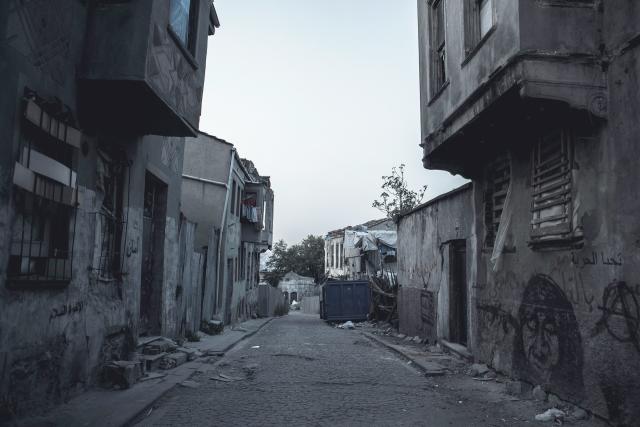
The most important city of Pakistan, Karachi, is both an economic hub and a picturesque city. It boasts magnificent business centres alongside cultural activities, however, has an approaching problem of housing. Residents live in informal settlements, known as katchi abadis, and the rate of construction of these informal settlements is much faster than urban planned development. This leaves the city with stark contrasts. Slums prevalent in the inner areas of the city mark a gap in focus, as slums are surrounded and are indicative of a city’s standards of living.
In the heart of Pakistan, the city is known as one of the most fast paced urban areas in the world due to its population being approximately 20 million. It goes under the banner of one of the most rapidly developing regions, but the amount of underdeveloped areas like housing slums also increases simultaneously. With the great number of resources available come inadequate living requirements such as basic housing, infrastructure and sanitation facilities, which leads to a scenario where the core of the city becomes flooded with slums.
This expansion is not simply a response to population growth; it is affected by complex problems like poor urban development, weak policy frameworks, and pervasive socio-economic inequality. The development of such informal housing areas illustrates not only the incapability of the city to cater to the supply of housing units for the economically weaker sections, but also the larger socio-political processes at play. To understand the rapid pace with which Karachi’s slums are growing in relation to the pace at which the city is expanding requires careful analysis of a number of such issues.
Factors Driving the Rapid Expansion of Slums
Understanding the growth of Karachi’s slums poses the challenge of attribution to multi-dimensional socio-economic and political aspects on interrelated scales. Rural to urban migration is one of the most important elements which accentuates the issue. Outdated technology in agricultural production leads to insufficient income. This lack of services, educational institutions, and employment opportunities in rural parts of Pakistan drives many families to Karachi. The city has a diverse economy, but its growth cannot keep pace with the rate of population influx, leading to many being forced into informal employment.
Due to the lack of adequate affordable housing, many migrants are choosing to settle in informal settlements. The more formal housing market in the city is characterized by subsidized developments which are unattainable for the working class. Furthermore, these sophisticated private homes along with government sponsored housing complexes have always received the main attention at the expense of affordable urban housing. As such, vast stretches of land where the soil is either cheaper or free from any regulatory oversight gives rise to pop-up structures that are claimed by people as makeshift homes.
Similarly, there is very little planned infrastructure for in Karachi to aid the citizens. Since no cohesive or executable citywide scheme exists that can effectively incorporate slum cities into the core of a contemporary city, many slums need to be constructed around precarious locations. This construction without any supervision increases the difficulty in the provision of water, sanitation, power, and other services.
The Socio-Economic Consequences of Slum Growth
The consequences of slums expansion in Karachi are complex and multi-dimensional as they impact both residents and the city. Residents often live in slums marked by substandard housing which include sanitation service, clean water, electricity, and overpopulation alongside public health challenges including water borne diseases and respiratory infections. Slum-dwellers’ health status is precarious and worsened by the lack of subsidized healthcare and purchasing power.
Most residents of the slums have no education, and at best, stay in under resourced schools. The tacit acceptance of schooling is counterproductive, which helps perpetuate the already elevated poverty, lowers the lack of socio-economically productive age groups, and widens socio-economical divide. At the same time the overly informal nature of work in these areas means that most adults are stuck in casual underpaid employment with no social assistance which halts socio-economic growth for the region.
The pattern slum life follows is often ignored, but social exclusion remains one of the most critical forms. In addition to facing social prejudice and discrimination, residents are often marginalized from societal public services and the opportunity to participate in politics. Where numerous slums are situated there is a complete political neglect and very little attention is paid to the urban governance policies related to these slums. This deliberate neglect perpetuates alienation, deepens the disenfranchised state, and preserves the systemic disparities.
In Karachi, sprawled, uncontrolled urban housing poses tremendous pressure on already fragile urban infrastructures. The rising population of slums contributes to an already dire situation concerning traffic congestion, access to and distribution of freshwater, waste management, and environmental pollution. If these problems continue to receive insufficient attention from qualified multidisciplinary teams, the social and infrastructural demands of the city are likely to decline sharply, leading to greater regional social conflict.
The onset of perpetual social issues in Karachi is on account of slum areas, which is made tenfold worse because of the environmental problems that come along with it. Many shanty towns are constructed on areas that are environmentally sensitive such as river banks, floodplain, and general urban green fields. The lack of primary sanitation facilities leads to the unrestricted disposal of untreated industrial sewage into rivers, which results in catastrophic contamination of both rivers and the ocean. Mountains of waste are carelessly dumped across different water bodies posing a danger to slum dwellers.
The uncontrolled expansion of slum areas has been the main reason behind the destruction of urban valuable green spaces. The disappearance of tree cover and the green belt worsen the climate change effects raising the temperature in the slum areas making the existence there increasingly uneasy for its inhabitants. The emergence of natural buffers aids in shielding the city of nature against flooding and storm disasters further exacerbating the vulnerability of nature.
Lack of regulation in the development of slums contributes to the deterioration of the environment and the city’s economy. Karachi’s environmental risk of flooding is also worsened by slum development which does not follow guidelines. Slum areas like these suffer extreme flooding during the monsoon season which catastrophically damages homes, crops, and displaces families. Without basic infrastructure, slum areas in Karachi stand to suffer severe outbreaks of disease. These areas become even more problematic with the effects of climate change.
Public health concerns understand pollution as one of the most serious issues. Pollution of this nature originates from slum areas which add hazardous contaminants to water supplies and exhaust existing resources. Such problems create a need to address the environmental conditions found in slums, not just for the residing population, but for the sustainably robust future of Karachi.
The growing gap between the rich and poor is yet another critical issue. Considerable economic disparity exists in Karachi, where affluent areas are juxtaposed with dilapidated slums. Most slum dwellers are either working in the informal sector or other low-paying jobs, which offer little security, making it impossible to accumulate enough savings to escape the squalid surroundings. This lack of social inclusion, coupled with inadequate educational and healthcare opportunities, as well as negligible political representation, entrenches these individuals in poverty and significantly increases the likelihood of them being stuck in slums permanently.

Challenges in Governance and Urban Policy
The unregulated and uncontrolled sprawl of slums in Karachi reveals an area of governance and policy concern. To this date, urban planning for Karachi has been multifaceted. There are many jurisdictions and municipal agencies which do scant coordination leading to duplication.
This lack of integration stifles more comprehensive approaches to planning and allocating resources for investment, particularly for informal settlements. In the case of Karachi, the problem is worse than what is perceived at face value.
There always seems to be a clear lack of political intent as far as something being done for slum dwellers. Policies either completely ignore slums or focus on eviction and demolition rather than upgrading and integration. Often leading to more insecurity and displacement while failing to deliver real solutions.
In addition, controlling the enforcement of building codes and zoning boundaries is a challenge. Escapades of illegal construction and land grabs takes place in a number of uncontrolled zones, uncontrolled control of slums leads to unchecked deprivation of basic amenities. This, coupled with a lack of safety regulation, leads to a scenario wherein structures prone to hazards are built unsafely. These modes of construction worsens further unsafe living conditions due to poor construction techniques.
Bottom-up governance entails participatory policies to ensure a proper execution of governance models and thus takes care of community level issues. This is a controllable gap in governance in Karachi. Slum dwellers are hardly ever invited to such activities that influence their day to day lives, meaning real change is never brought about. This results in policies that are disconnected from the reality and gives reason why residents’ priorities.
The lack of adequate funding, technical personnel, and administrative capability severely restrains the municipal authorities' ability to provide even the most essential services in slum regions. Muni6l set-up has not infrastructure developed or serviced provided.
Towards Sustainable Solutions and Inclusive Development
Karachi’s slum problem requires a more holistic approach that integrates all aspects as opposed to a singular focus with superficial solutions. One approach might include informal settlements being elevated through regularization. This transformation allows slum spaces to be legally acknowledged which assists residents in securing basic rights required for them to innovate and improve their environments.
Affordable means of providing adequate clean water, sanitation, electricity, volume of road traffic, and medicine should be given to slum dwellers. This will not only help improve their quality of life but also minimize health related risks. Equally, such measures promote the social integration of slum sections into the society and non-slum areas. Pushing for decent, inexpensive housing options for low-income families will ease the burden on slums. Such projects should happen at the community level, considering the residents’ perspectives in both the design and execution phases.
Restaurant-style participatory governance for slum development will help enable trust in these communities and make sure that their voices speak to the level of change desired hence making them fundamental to the goal. Supported community structures from civil society alongside spaces for dialogue enable residents and government departments to foster partnerships. Incorporating environmental issues into urban development policies is a must. Sustainable waste systems, green spaces, and flood prevention measures are important in lowering the environmental risks in slum areas.
The political will together with the necessary financing and multi-sectorial intervention is what is ultimately needed to turn the slums of Karachi into productive and vibrant functional neighborhoods. With proper planning and continuous strives, Karachi can transform into a more equitable, resilient, and dignified city for its residents while eradicating insecurity.
The Role of Civil Society and NGOs in Slum Development
In the context of Karachi’s sprawling urban setting, civic societies and NGOs have sought to alleviate the problems experienced by slum populations. Through bureaucracy and a lack of motivation resource government efforts are often insufficient.
A great deal of NGOs however try to fill gaps by offering services, advocating, and providing community strengthening projects. Such organizations address greater and basic human needs such as education, health care and even vocational training aiding community members to acquire skills and improve their earnings. Certain immediate welfare concerns like Health awareness campaigns, child nutrition programs, and sanitation drives tackle the issue.
Furthermore legal aid and Housing rights advocacy aimed at assisting slum dwellers to ensure recognition and protection from arbitrary eviction is also undertaken by NGOs.
Civic society aids in creating and facilitating the development of local services beyond simply providing them. Once provided with the opportunity these people help enable residents to interact with the authorities at the local level.
The enhanced communication of the society with the marginalized elements enables the creation of all rounded urban development policies where these people are aptly catered for as well as eliminating top down policies. Besides the above important actions, the civil society bears continued constraints in the form of limited resources, funding, political influence, and security challenges.
The combination of all these operates as a choke hold on the civil society. Combing the enable the disable paradigm aid in overcoming these obstacles to improve the direction of intervention to be enhanced between governments, NGOs and community to aid these slum areas.
With the growth of Karachi, it is essential that slum dwellers are given the opportunity to engage with the civil society, which in turn helps construct an urban future that is inclusive.
Economic Potential and Opportunities within Slums
Slums are usually regarded only as an area of struggle, neglect, and poverty, but for Karachi, they also offer notable economic value and opportunities. Many residents of these informal settlements actively participate in the economy of Karachi through informal activities such as small scale industries, vending, transport, and other forms of paid domestic work.
Informal activities help in improving the standard of living for people in slums, as well as aid in the functioning and sustainment of urban areas. The informal sector is flexible and often readily available, filling gaps left by more formal markets, particularly when it comes to low-cost goods and services. Recognizing and formalizing these businesses can enhance the level of participation in the economy and reduce economic poverty.
The lack of a governing structure to these regions’ economic activities leads to little to no access to credit, market structures, legal protection, and financial help. Funds that encourage the trimming back of regulations governing informal small businesses, the provision of microfinance, and increased skill training can bolster the economies of slums.
In addition to these, the construction of basic but essential amenities like roads, electricity, and internet within the shack will aid in stimulating entrepreneurship and productivity. Developing the economies of the slum regions sharpens the overall economic fortification and variety of Karachi. Thus, accepting the economic benefits enclosed in slums is an integral part of sustainable urban development which changes these societies from neglected areas into powerhouses of growth and invention.
Conclusion: Closing the Gap for Karachi’s Prospective Growth
Not only does Karachi possesses one of the fastest growing slums in the world, it also has mega challenges that stands with it. Along with urbanization, the fast paced digitization also brings along issues related to proper management, rise in international and local inequality, violence, economic deprivation, lacking basic needs as well as ecological scarcity. Add to that, the city's sub sustenance and infra-structure sores makes lead to immense struggles of affording basic housing and services, resulting in threats to the social balance of the economy and to resiliency in the long term.
Therefore, there is hope in slum growth that offer opportunities for more advanced urban development. With the right policies, there is hope for affordable housing, enabling better financial support and allocation management directed towards slum communities allowing for formal housing granted management towards carpentry enabling the gaps between settlements and the regions formally recognized as the districts within the city. This needs civilian and government organizational participation who will both be central in constructing proper managed neighborhoods.
In the end, Karachi's future rests on accepting its diversity and ensuring that every resident, no matter their socio-economic standing, has access to adequate shelter, housing facilities, crucial services, and opportunities for upward mobility. Karachi can only emerge as an all-inclusive resilient metropolis that serves all its residents after addressing the core of slum proliferation while fostering sustainable urban development.
Also read: A Situation Analysis of Slums in Uganda and National Slum Upgrading Strategy and Action Plan




-3dkuLgKhRD.jpg)
-49HupTvwDD.jpg)









LEAVE A REPLY