

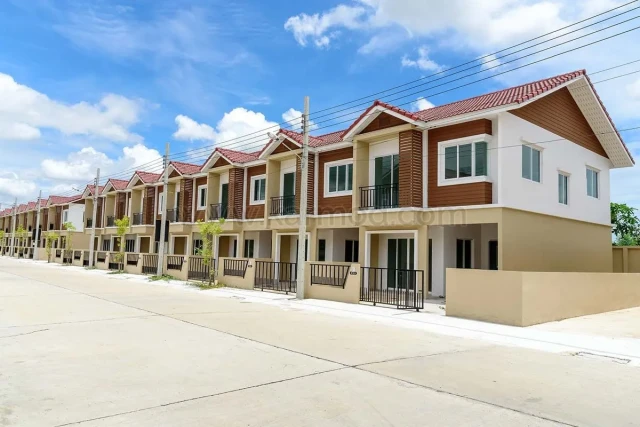
Why 70% of Sri Lankans Can’t Afford a 500 Sq Ft Home—and What Can Be Done
The issue of affordable housing has been theorized a lot, but to 70 percent of the households in Sri Lanka, it is a very different picture. By 2025, the prospect of having a simple 500sq ft apartment, which is essentially a two-room apartment is too expensive to own by most people. This has nothing to do with prices tags; it is a sign of an uneven system in income, access to land, and housing policy.
Various forces affect the housing market of Sri Lanka: the rapid growth of the costs of construction, dominance of land prices which fluctuate in the urban centers, interest rates are too high, and the availability of housing at the lower-income levels is not too diversified. Meanwhile incomes of most people stagnate and purchasing power is strangled by inflation. A 500 sq ft flat which was a symbol of humble aspiration has today been out of reach of most of the working and middle classes.

This blog explains why this simple unit is so expensive to most of Sri Lankans. We look at economic disparity, constrictions in supply, limits in financing, and policy incompetency. More pertinently, we set out how to transform the scene: strategic land reforms, financial, welfare and planning changes which together could afford to all small homes as a realistic possibility.
The Affordability Gap: Why the Majority Can No Longer Afford a 500ft 2 Home
To procure a 500 sq feet house at the down payment and interest rates a family should have an average monthly earning of LKR 150,000 (USD 500) to service the deposition and monthly installment of interest (EMIs). But the majority of Sri Lankans make many times less: the median household income of the urban population is less than LKR 80,000, and the income of the rural one is still lower. Given most of the households in Sri Lanka are below that percentage (approximately 70 out of the 100), it is next to impossible to afford it.
The issue is aggravated by the increase in the costs of real estate. In Colombo, the square-foot price has risen above LKR 25,000 such that even tiny units have become more expensive than ever before--a 500 sq ft flat is nowadays often priced at over LKR 12.5 million (USD 30,000). These are coupled with high interest rates on mortgages (usually 10-12 percent) and most families cannot responsibly afford monthly loan payments.
The price of construction and material costs including cement, steel and trained labor is very high compared to construction costs of various similar nations across the neighborhoods because of taxes and limitations of supplies. With no affordable building methods or subsidies, the developers cannot provide the low-priced housing units without reducing profit.
In the meantime, the social housing schemes have fallen short of touching the poorest due to eligibility barriers, insufficient funding and comp apply disjointed operation. In the absence of any firm policy support, developers are discouraged to develop mid- or low-tier units which acted as a narrowing factor on the supply side once again. This has led to over 70 percent of the Sri Lankans being unable to make any financial threshold that would help them access such housing. The disparity between what people aspire to and what they can afford has continued to increase and unless something is done about it, it will continue to increase.
Structural Barriers: What Makes Houses to Be Too Pricey
There are quite a number of structural concerns that render 500 sq ft home impossible to afford to the majority of people.
- The shortage of land and high values of land in cities have restricted the area in which affordable units could be constructed. There is a significant amount of urban land in Colombo and major cities and both privately owned and inefficiently controlled by state (such as multiple layers of regulation) that makes acquiring their use costly.
- There is a short term in loan and quite high interest rates. Non-salaried, informal sector households have limited access to finance to house and credit scores and requirements to be collateral exclude many potential buyers.
- Zoning and building codes restrict building density in vast swathes of not only downtown cities but also on the fringe and regional cities as well, so building perfectly little compacts requires expensive variances or additional paperwork. Restrictions of Floor Area Ratio (FRA) do not make smaller unit projects economical to builders.
- In the meantime, welfare programs and government subsidies are narrowly distributed. It is common to find programs that offer low interest loans, or subsidizes the number of plots over which the government does not want to give tenure in terms of secure titles to land use regardless of which system they are. This can exclude many in the informal settlements.
- Consciousness of consumers is low. Incremental housing or micro-financing is something unknown by many families. Without accessible information or assistance, they may postpone the building of their own houses or use informal building practices.
The following structural impediments require some policy adjustments to address them: long paper process, streamlined land titling, long-term loans, loose zoning, incentives of building small buildings, and increasing welfare coverage.
What Can Change: Policies That Could Make Small Homes Viable
So as to ensure that 500 sq ft houses are affordable to most people, Sri Lanka can seek out a number of cohesive approaches:
- Digitization of land records, regularizing of informal occupancy and land-pooling models should be the focus of land-reforms. Smaller sites in a suburb or peri-urban area should be offered to developers in exchange for incentives (e.g. tax waiver/ FAR bonuses) to construct compact units.
- Second, longer-tenure mortgages (2025 years) that are subsidized (< 7 percent) should also be implemented in the finance reforms and there should be rate sharing strategies to benefit banks. Rent to own and micro-mortgages should be promoted particularly among the informal and rural people.
- Third, zoning and planning should be fixed to enable more densities along transit corridors and mixed-use developments, and vertical housing through integration of small-unit housing typologies. The change of planning to allow compact-unit clusters and integration of civics is necessary.
- Fourth, the developer should be incentivized to create social or middle-tier home development by the commitment to subsidize the housing by cross-subsidies, green building rebates, or a concessionary loan. Low-cost housing can be offered in a large scale through a public-private partnership.
- Fifth, plan the access to affordable housing to be integrated with subsidized construction material, plot grants, and incremental lending of home improvements loans to the income-poor households-tenure secure.
- Lastly, the empowerment of consumers should be intensified. Legal aid and housing education and documentation support programs guide the household through land, credit processing, and construction.
Informal Settlements Are Not the Solution—but They Are the Symptom
Unaffordability of formal housing has led to the emergence of informal housing around the edges of towns and cities such as Colombo, Kandy and Galle in the national scenario of Sri Lanka. With over two-thirds of the population living beyond their means, families are building their own shelters on unregularised ground, where more often than not there is no legal status, lack of clean water and sanitation mechanisms. This kind of settlements is good in the short term however, these are long run disasters in terms of urban planning, land policy and provision of welfare.
Widespread informal housing: This type of housing is frequently ignored in the development plans of a country, but it serves as shelter to a significant population in Sri Lanka particularly the employers in the construction, domestic, transport and small scale trade industries. These settlements are especially susceptible to eviction, floods and epidemics. The situation can only be aggravated when they are treated as illegal or temporary.
Sri Lanka needs to change the evict-and-resettle schemes into the in-situ-transformations, gradual housing provisions, and legalizing the intents. Making these neighborhoods more modern with infrastructural and legal security will be a way of making this connection between the unregulated housing sector and affordable mortgaging. Unless something is done about it, informal settlements will further grow, causing even greater gaps and lowering measures of national development.
The Rural Urban Disparity in Housing Affordability
Although the crisis of affordability is evident in large cities, rural Sri Lanka is having a problem with housing, albeit with a different cause. Land availability is more in the rural districts and the cost of construction also is low but entry into credit, building material and skilled manpower is an impediment. Moreover, the housing investment is less encouraging in villages due to poor connectivity, poor job markets and migration tendencies of the younger population.
To provide an example, there may be a family in Anuradhapura or Monaragala that does own ancestral land but cannot afford to even construct a simple structure because they are not able to save money, access banks or because the government cannot help them. The rural young people in the meantime migrate to the urban centers, where they have even more problems of housing.
An effective housing policy will be required to take note of this de facto segregation. The pressure put on urban housing markets could be alleviated by the construction in the countryside on a subsidized basis, decentralization of employment opportunities, and better services provided by the government. Affordable housing cannot be an issue of the urban area only, it should be approached as a national problem that embraces the social and economical diversity of the nation.
Empowering Women and Marginalized Groups through Homeownership
Another topic which is not as popular as the other aspects of housing affordability is its impact on marginalized groups of people, and particularly women, single moms, people of color, and disabilities. In Sri Lanka, ownership of homes remains a predominantly male issue and women are held back in most incidences by their legal, cultural and financial capabilities in trying to seek land or gain housing loans.
The policy on affordable housing should be exhaustive. Government programs must be more concerned with co-titling lands among married couples, simplified ownership among single-headed households and gender-based financing products. The commonly left behind groups may never have access to the legal documents or inheritance rights or streams of revenues to reach housing programs.
Moreover, more targeted housing based on vulnerable populations such as war-affected families, plantation workers, and displaced persons should be integrated into the national agendas- and not taken as a separate concern. An affordable housing rights-based practice will be able to elevate a whole community and even cover the historical inequalities. By so doing, Sri Lanka can change the nature of housing into an instrument of social justice and inclusion, rather than having the housing as a market product.
Why Housing Is a Public Good, Not Just a Private Asset
On-going housing crisis in Sri Lanka has revealed the simple fact that homes cannot be just mere study investments but are a kind of publicly good. As most of the citizens can no longer afford even the most humble form of shelter the effects of this reverberate throughout the entire economy- education, healthcare, productivity and even national unity.
Access to housing defines access to sanitation, clean water, schools, and employment. It impacts psyche, social mobility and economic survivability. Still, housing continues generally to be regarded by policy as a market product, subject solely to market forces. The builders are concerned with profits, banks worry about credit ratings and the government is in a last-minute rush with patchy initiatives.
As a solution Sri Lanka has to start seeing housing as an important social infrastructure- like roads, hospitals and electricity. This implies that there has to be a collaboration between the public investment, regulatory reform, and innovative financing that will provide affordable homes as opposed to lucrative real estates. There will be no solution while housing is not considered as a key of social stability and long-term development. Desegregating the idea of a house as a public good is the only way to consider more inclusive and fair policies in the field of housing policy and the future of the 70 percent left behind.
The Missing Middle: Why the Mid-Income Segment Is Falling Through the Cracks
Although much of the housing debate in the country thus far has been dominated with the lower-income citizen groups, what is happening in terms of housing the middle-income category of citizens in Sri Lanka is a quiet calamity. Those are income earners, intellectuals, small entrepreneurs and those who are educated making normal wages and too poor to pay the soaring urban land prices and too rich to be accorded a shelter as subsidized housing. They are the ironical breadwinners of the economy in the country, but they are being increasingly expelled because they become less affordable to have a home of their own.
They can easily be classified by banks as not poor enough to attract social housing loans, but earn too little to invest in huge mortgages, with interest rates and inflation still on the increase. Instead, developers often skip such a segment, preferring luxury or super low-end apartments either on high-profit margins or with subsidies. That makes a huge hole in the housing supply: there are simply no decent middle-class housing that can be considered affordable by a typical member of a society.
This missing middle causes missed marriages, pro-longed family stays, long commutes, and incrementing mental pressure. It also leads to talent flight- the migration of individuals out of the country in search of cities worth living in and having a future to achieve it. This blind spot has to be acknowledged and addressed by policy. Customised home lending products, incentives in the middle tier housing and public-private partnerships on mid-tier projects might suffice. Assuming that nothing is done, the middle income may be the next vulnerable group in terms of housing in Sri Lanka, fueling inequality, and reducing social cohesion.
This is a question of the future of the cities in Sri Lanka and the economy itself because this group has to be properly housed.
Conclusion: Heart of a Lovable Future
This could be portrayed in the fact that 70 percent of the population of Sri Lanka is simply not able to afford a 500 sq ft house and this is not a statistic it is a national red flag situation. It points to the fact of the unavailability of the most basic sense of human dignity and shelter to an increasingly larger portion of the population. And yet this crisis cannot be permanent. Through concerted efforts in land policy, zoning, housing finance, welfare, and planning, the affordability divide can be overcome in Sri Lanka, and further write the history of housing.
The change will not emerge in a single industry. Government should take the initiative to be instrumental through bold and all-inclusive policy. The corporate world is forced to remodel to a long-term sustainable growth that is inclusive. The banks should increase availability of funds. The communities need to feel empowered so that they can call upon and predetermine their housing futures.
Affordable housing is more than bricks and square feet it is something about creating a society with all the people in it who can live in the house, to blossom and feel that they can belong. It is not only feasible but necessary to make the 500 sq ft home affordable in order to have inclusive prosperity in Sri Lanka.
Also Read: “Why Low-Rise Affordable Housing in Colombo Still Hasn’t Scaled”











LEAVE A REPLY