

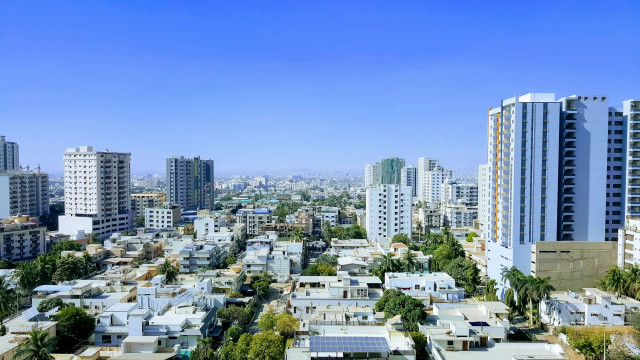
Secondary Cities on the Rise: Where Affordable Housing is taking off beyond Karachi
Karachi has been the gravity point of Pakistani employment, trade, and urban life for long, however that gravitation is costing a price. Over-burdened infrastructure, increased land costs, overloaded utilities and the challenge on providing new large-scale and community-affordable housing in a hyper-dense megacity is having both households and developers consideration looking outward. Meanwhile, the regional economies are becoming mature in Pakistan. The industrial cluster in Punjab, agribusiness corridors in South Punjab and upper Sindh, remittance-based communities in Khyber Pakhtunkhwa and the peri-urban townships built by individual developers all over the GT Road belt, are changing the residential landscape of Pakistan.
The effect: a palpable move to secondary cities, that is, to our cities big enough to support employment, services and civic amenities, but not yet far enough along in their land-value curve that entry could be unaffordable. Buying into Karachi can sometimes feel like climbing the price ladder to salary-and first-time consumers, whereas in many of these new centres a buyer still follows down the ladder of smaller serviced plots and stages of construction and logical options by the developers that pay on debt, and by so doing, may reach the top of the ladder.
Due to enlargement of its infrastructure (motorways, ring-roads, industrial estates, better airports, Bus Rapid Transit corridors), several of these cities are now parts of commutable or logistic networks that previously seemed far away.
The term affordable housing here does not specifically refer to flats sponsored by the government. Within the mixed formal/informal property environment of Pakistan, the gradient of affordability is defined by the price of land, the ease of paying in installments, proximity to services, the area of a plot, the ability to self-construct, the possibility of accessing micro- or Islamic home finance, and proximity to employment. To most of the families, a 5-marla serviced plot at the outskirts of growth corridor, coupled with construction in phases financed by savings and remittances can prove to be much viable investments than the perpetual renting in Karachi dense rental markets.
In this blog we would examine five secondary (or peri-urban) markets that demonstrate how affordable housing is taking off beyond Karachi: Faisalabad, Multan,, Peshawar, and New Metro City Gujar Khan. Each city convenes on a dissimilar way in, industrial job magnet, agrarian logistics center, manufacturing channel, frontier entryway that is in redevelopment and master-planned private township related to the greater metros. Collectively, they illustrate the convergence of affordability, connectivity, and local drivers of the economy and how the next wave of housing construction in Pakistan might approach what is happening beyond its largest metropolis at the country coastal: Karachi.
Faisalabad: Industrial impetus turning into a housing potential.
The shift of Faisalabad into a multi-sector urban territory has direct impact on affordability of house. The foundation was laid down by decades of manufacturing capacity: mills, dyeing plants, and small and medium plants geared to exports established density of employment, which attracts workers, even in today time, to leave their districts and enter the city.
The larger part of such a labor force, in the past, lived in the colonies that were established gradually or the informal settlements near factories. As incomes began to be spread and the land around the core became congested, the housing frontier started spreading outwards, first along major roads, then around motorway interchanges and now into designed residential developments that were set to cater to both industrial workers and the growing population of middle-managers.
The feature that puts Faisalabad in high ranking regarding the affordability debate is its elastic land boundary line. No existing house would compete with this, since no new city house could be built, without reclaiming or redeveloping vertically, at a more price (than Faisalabad). Nor does Faisalabad have the congestion on current-day megacity service capacities being found in other megacities, where every new acre more requires costly reclamation or redevelopment.
The developers exploit this by providing a range of plot size i.e.3, 5, 7, 10 marlas, to make the entry barrier small. A gap is closed by the availability of installment plans of 2-4 years (and even longer in cooperative societies) over which households with salaried incomes unable to mobilize all the capital at the time of purchase can spread their remittances.
The infrastructure connectivity adds to the value equation. The M-4 motorway connects Faisalabad to Multan and further nodes in the national highway network that reduces logistics friction to firms and expands on employment catchment areas. Motorway access areas are magnets to ancillary occupations; where workers are concentrated, so is land consolidation of housing; In the past few years there has been an increase in the number of developers establishing projects within a reasonable commuter radius of industrial parks with the aim of focusing on all-basic-utility (water, sewer, power) and gated perimeter security, all of which suit migrating families who can have a quality upgrade of their informal settlement existence.
Multan: Southern Punjab’s Connected Growth Corridor Fueling Accessible Homes
An example of this is Multan where a combination of strategic geography and the improvement of infrastructure can open a different level of housing choices to more price-conscious customers. The Sufi shrines and agrarian trade that the city has long been associated with have been supplemented by it being a multi‑modal logistics hub in linking South Punjab to the central trade flows. Highway upgrading and region wide road widening with air linkages (Multan International Airport is being expanded over the past few years) has put Multan in the limelight not only in agricultural exports but also in services and education- which is attracting migrants among smaller tehsils people who migrate to find employment, education and healthcare.
Under the perspective of affordability, Multan takes a middle position being more urbanized than the small district towns and, hence, more costly compared to most planned societies but also more accessible when cost per Azure in most planned societies is used to compare the cost of Multan with that of Lahore, Islamabad, or Karachi. Such a price range has promoted portfolio diversification by developers: brands on a national level deploying luxury enclaves and local hands operating middle price housing offers with extended payment plans to middle‑income households. Although high-end developments such as DHA Multan can only indicate long horizon capital inflows, paying attention to the ring of middle-market societies is where affordability is being practiced.
The major triggers are:
- Fringe availability of land. Existing agricultural land in peri-urban areas is still being bought, re-platted into residential stages, and road access is already enhanced due to provincial initiatives.
- Installment culture. Planners who facilitate development are marketing stage payments that adjust to seasonal cash and that is a significant issue in a regional economy with an agrarian influence since cash can be seasonal.
- Health and educational lapels. With universities, privately run colleges and medical institutions populating together, visiting land is red hot among faculty and staff members who are seeking a cheaper living environment than what they can find in northern Punjab metros.
- Inter-urban investment. Lahore and Islamabad investors and even overseas Pakistanis who know about the South Punjab heritage, tend to regard Multan land as a cheap diversification hedge: low price tickets, perceived upside as roads gradually get built.
Having low prices does not necessarily mean that the place is livable. Water pressure, sewage and waste management are aspects of municipal service delivery that may lag behind the growth of residential houses. This gap has led to numerous private societies seeking semi enthusiastic self-contained utility solutions (tube wells, special sewer lines, in house solid waste contracts) which although have the potential to increase the cost of development will enhance the happiness of the residents. Renters in Karachi will need to compare the cost of occupation of property in Karachi and ownership options in Multan considering overall cost of occupation (lowest maintenance costs, non-metered utility costs, and cost of convenient transportation to study or work centre).
Gujranwala: Body Building Crosses All Trifles
Where Faisalabad prides itself on being a textile capital, Gujranwala boasts of a more diversified manufacturing industry; textile fans, appliances, ceramics, metal works, farming equipment, and a solid small and medium enterprise base to cover the domestic as well as the export markets. Dynamism in industries leads to pay rolls; pay rolls to homes.
But even in comparison with Lahore, which is, during favorable traffic conditions, only about an hour drive away, the residential land in Gujranwala is conspicuously affordable in most of the corridors. The difference is fuelling two related trends, resident upgraders replacing informal or compact inner-city housing with serviced plots and commuter investors who have purchased in Gujranwala but maintain business or employment connections with the coeval Lahore-Gujranwala-Sialkot triangle.
Affordability on this case has to do with scale of labor force in manufacturing. There is enormous desire in blue and grey collar classes housing that is not aspirational luxury but simply useful, which can be expanded and which is transportation-connected. Builders who customize products toward this market segment, smaller lots, installment plans based on a monthly salary and community amenities instead of clubhouse trimmings, can expect a high rate of absorption. Those formed around particular industrial groupings (e.g. groups of workers in a factory complex petering their funds together to buy land) have traditionally been significant in the growth of Gujranwala, and the tendency exists to this day to form societies in this way.
There are a number of affordability strategies which were present in Gujranwala and are being copied in other secondary cities:
- Step up instalment ladders that where the first year’s payments are a little lighter and rise upon taking possession making it easier to adopt.
- Aggregated (parks, masjid, small strip of stores) services to minimize cost of infrastructure and maintenance fees.
- The permission to construct in increments in which the owner constructs the ground floors so that he may live in it and the upper storeys as the finances enable.
- Pre-design catalogues by developers or partner architects with low-cost code-compliant plans on houses that minimize the design fee.

Peshawar: Gateway City Pivoting from Constraint to Planned Expansion
Peshawar has a special position in the urban hierarchy of Pakistan: it was a historic capital on the frontier, both a gateway to Afghanistan and Central Asia, and administrative capital of Khyber Pakhtunkhwa (KP). Security headwinds and institutional capacity restrictions on large scale investment in private residential development had constrained large storey housing to investment for years resulting in a concentration of large segments of the population in high density, aging neighbourhoods.
The forces of demand have strength. KP exports substantial domestic workers to foreign countries especially the Gulf and remittances are one of the biggest contributors to the purchase of plots. Hundreds of families want to renovate ancestral houses or acquire new land that they could commute to in Peshawar education and health facilities. However, the land in central Peshawar is poor and costly as compared to regional incomes and thus the growth narrative is playing out in the periphery and the satellite corridors: Charsadda Road, the Peshawar‑Nowshera axis, and regions which are already being impacted by some upcoming motorway connections toward Dera Ismail Khan and beyond.
The overall strategy of government sponsored affordable housing programs whether wide umbrella nationally or provincial programs is to raise supply to the low to middle income segments. Although this has been implemented in an uneven manner, the policy direction has sent a signal to the private developers that the entry level products find a market. Less extensive plot divisions, small lot housing and low rise apartment blocks are becoming more popular but cultural traditions in KP are biased toward self-built detached houses on land ownership when possible. The hybrid schemes \-- short, attached houses on titled lots-- can be the intermediary between acceptance and density.
New Metro City Gujar Khan: Privately led Affordability as a Counterpoint to Major Metros
Although the first four cities on our list are well‑known towns already, New Metro City Gujar Khan has proven to be a different case: the large, privately developed master‑planned development in a smaller tehsil with the best strategic location by the high constricted Islamabad Rawalpindi metropolitan cities. The privately financed township combined with built-out infrastructure and plots that could be sold on an installment plan has literally become a prototype of affordable housing pushing affordability to those households who cannot afford the center of the twin cities but do not want to move far away to employment or family.
Gujar Khan is located in a long-standing trading route area, the Grand Trunk Road which has undergone commercial change to a commuter roadway. Taking ownership and master‑planning a large piece of land, developers who gave birth to New Metro City wanted to pre‑package most of items that new purchasers find challenging to pull together in separate segments: inner roads, poorly appointed utilities, protection, parks, commercial strips, and standardized lot stock. Value proposition is also straightforward yet strong, predictability. The customers understand in the areas the roads will be constructed, plot size available, time they will be making payments, and the preliminary services that will be offered at the time of handover.
Gujar Khan being close to Islamabad / Rawalpindi has had most of the buyers consider a plot as a commuting satellite, a sort of long term retirement fall back. Other families rent nearer their work and slowly construct in New Metro City, subjecting it to timings in life (education of children, intergenerational change, and withdrawal of Foreign Service). The overall land + incremental build cost in Gujar Khan can be much cheaper compared to the expensive central sectors in Islamabad even when transport cost is considered.
There exist caution points. Just like any other privately owned township, thorough homework on consents, rate of development and projected facilities is a must. It is advisable to set aside the distinction between ownership of land and the complete development of infrastructure; some of the stages of the development are lengthier in their completion than might be presented in marketing information. Nevertheless, the status of New Metro City has created awareness of how peri-urban developments can alleviate the pressure of affordability in large cities, a phenomenon to which the possibility of Karachi has taken a toll on those considering moving to a suburb or the outskirts of town.
Conclusion
Karachi will continue to be the commercial powerhouse of Pakistan but the destiny of the housing sector in this country will not be scripted in a single city. Economic strain, intra‑regional migration, transportation nexus, remittance housing and professionalization of personal development are all resettling opportunity on the map.
There is the industrial gravitational pull, and an elastic land fringe, in Faisalabad; the transport axis connection and installment friendliness of suburban growth in Multan; the employment and development of manufacturing payrolls into an artful, and salary scaled housing stock, in Gujranwala; the way a frontier capital can rotate toward orderly growth as stability reassures Faisalabad, and there is the example of New Metro City, Gujar Khan, a superior private master-planning extending the affordability radius of a major metro area.
Such secondary cities have numerous avenues to spending into ownership: serviced plot, build on layaway, mid-rise or small-lot design, developer financing, and evolving directorial alliances correlated to housing finance provisions. Holistic approaches to affordability must be considered as infrastructure, land cost, build cost, utilities, transport, climate resilience, and community services. Still though in all the markets discussed here there exists at least at present, a price range in which an investment in ownership can be sought at a level that is less than in the most costly urban areas of Pakistan.
And if you are looking elsewhere or investing anywhere outside Karachi, the three things to do first are: (1) calculate your actual affordability pocket in terms of total monthly cash requirement (not just land sticker) and are you sure; (2) trace commuting or remittance channel that will support the household; and (3) ensure you seek development approvals, service promises and payment terms on paper. It can be a trend in the headlines, but with the proper due diligence and discipline, secondary cities in Pakistan are the merging of the headlines to the place where you, and thousands of other families, call home.



-ySWGlp0vgc.jpg)




LEAVE A REPLY