

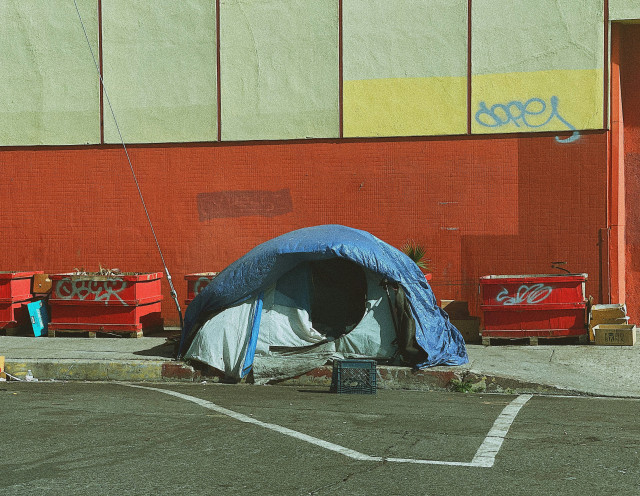
What is Urban Poverty?
Urban poverty currently represents an escalating international issue because it impacts millions of individuals residing in metropolitan settings and cities.
The challenges of urban poverty stand apart from rural poverty because city-dwellers manage with expensive life costs while experiencing population density along with few work opportunities and insufficient housing.
The expanding urban area together with growing city populations makes social and economic disparities between rich and poor more visible.
This blog provides analysis about the concept of urban poverty as well as its main origins together with its effects and possible answers.
Causes of Urban Poverty
Various elements combine to create urban poverty which manifests as a complex phenomenon between them.
Rapid urbanization without sufficient planning functions as one main reason why urban poverty develops.
The rapid population expansion exceeds the capabilities of infrastructure to manage it thus generating informal settlements with inadequate housing and service exhaustion for public services.
The primary component which drives urban poverty consists of economic disparities and lack of work opportunities.
Cities usually function as economic centers yet their residents face significant challenges finding dependable employment options.
The growth of illegal work sectors that lack protection regulations forces many people to live with vulnerable economic conditions.
Urban residents struggle to break free from poverty because their wages are unpredictable and their employment security remains unstable.
Affordable housing accessibility serves as a principal factor behind economic problems.
Municipal housing costs exceed what low-wage workers earn so these residents must settle in either overcrowded slums or unofficial settlements.
Particular areas lack fundamental infrastructure such as clean water supply and proper sanitation together with electrical power networks which intensifies their poverty condition.
The barriers to both healthcare service and educational access work as substantial factors in this process.
The inability to pay for quality education by low-income urban citizens blocks their path toward obtaining high-paying employment opportunities.
Poor healthcare facilities cut off access to medical services which exposes people to long-term illnesses while simultaneously damaging their work productivity.
Urban poverty intensifies because of government policies together with social exclusion practices.
Religious and ethnic biases in regulatory mechanisms and insufficient social protection network together with institutional racist structures prevent marginalized populations primarily including migrants and ethnic minorities from obtaining pathways to economic success and social progress.
Consequences of Urban Poverty
The impacts of urban poverty penetrate all levels from individual people up to complete urban communities as well as entire cities.
The main visible result of these changes can be observed in the new emergence of slums together with informal settlements.
Places lacking basic infrastructure and sanitation together with insufficient safety measures enhance health dangers alongside increased susceptibility to natural calamities.
Residential populations experience substandard life quality because they obtain restricted access to decent water supply along with inadequate waste disposal and electrical power services.
Social instability together with raised crime levels constitute a major outcome.
The combination of high employment rates and weak economic opportunities produces fury between citizens who then commit violent crimes.
Economic deprivation in urban neighborhoods leads to regular theft and organized criminal activities which generate dangerous situations for local residents.
Poor health together with inadequate sanitation maintenance represent serious problems.
High population densities together with substandard living arrangements in slums promote the rapid transmission of tuberculosis along with cholera and respiratory infections.
Lack of healthcare service accessibility creates worse health results which shorten both life duration and complete wellness.
The educational infrastructure suffers serious detriment through the effects of urban poverty.
The lack of quality educational opportunities results in early school dropout for children who come from impoverished homes.
The absence of education causes people to face obstacles finding secure work so they stay trapped in cycles of poverty which prove difficult to overcome.
The problems caused by urban poverty create effects that spread outside of individual neighborhoods.
Complete urban regions experience economic deterioration together with social fragmentation.
The persistent condition of poverty among sizable portions of a population leads to both decreased productivity and numerous severe citywide challenges including homelessness alongside insufficient services and political chaos.
Strategies to Alleviate Urban Poverty
The solution for urban poverty needs to incorporate both momentary and long-lasting solutions as part of its strategy.
Job development and entrepreneurial initiatives form one of the most successful approaches to address this issue.
Public institutions alongside private entities must team up to build secure job positions while establishing just payment scales along with backing small businesses.
Permission to start businesses among lower-income communities provides people the tools to establish enduring income sources.
Tackling urban poverty requires affordable housing programs to be in place. The government must support low-cost housing development together with rent control regulations and housing policies that benefit different income brackets.
Slum upgrading efforts that improve infrastructure while giving informal settlements legal rights help enhance life quality for residents.
The improvement of education and skills development constitutes a necessary step along with these changes.
Presenting free or inexpensive educational opportunities combined with vocational training and digital literacy instruction will help ordinary people develop job skills leading to higher income possibilities.
Education policies should establish inclusion through programs which give marginalized groups equal opportunity to participate in learning activities.
The provision of quality healthcare requires enhancement throughout urban regions.
The expansion of inexpensive healthcare platforms combined with mobile medical service sites and better sanitary infrastructure will lead to enhanced health results among low-income residents.
Governments must allocate funds toward disease prevention programs which will help decrease medical costs associated with urban poverty conditions.
Social welfare programs include cash transfer schemes together with food assistance which offer fast support to families experiencing financial difficulties.
The government must establish taxation systems that restrict increasing wealth inequality while providing the resources needed to combat poverty.

The Role of Technology and Innovation in Combating Urban Poverty
Technology along with innovation creates modern approaches which help solve problems of urban poverty.
Big data analytics combined with artificial intelligence technology enables the detection of poverty-stricken areas so organizations can deliver their resources more efficiently.
By utilizing data organizations along with governments can deliver their interventions to the areas that require them the most to maximize fund and service effectiveness.
The increased adoption of digital financial services through mobile banking and microfinance services has given low-income urban residents better economic possibilities.
Technology enables poverty elimination through its capacity to provide financial literacy programs and credit services together with savings accounts thus enabling people to establish financial security.
The advent of smart cities represents how technology addresses urban poverty problems.
Through AI-powered public transport management systems low-income residents receive better access to job opportunities along with lower expenses for transportation.
Through digital platforms individuals gain access to e-learning programs that deliver education combined with essential skill training to people who cannot attend traditional schools.
Technology acts as an essential factor that enables greater healthcare accessibility. Through telemedicine and mobile health applications low-income urban residents can access medical consultancy services from their location thus minimizing obstacles in accessing healthcare.
Technology-based diagnostic solutions alongside predictive systems give healthcare providers the tools to create specialized solutions for vulnerable patients.
Modern methods in sustainable urban development services as an instrument to decrease poverty levels.
The establishment of green building initiatives combined with renewable energy solutions and smart waste management implements builds better urban settings and creates new employment options for disadvantaged residents.
Governments should use technology to create policies which drive sustainable development along with an integrated growth model.
The Impact of Climate Change on Urban Poverty
The global climate crisis affects disadvantaged groups to a greater extent because poor populations combined with residents of urban areas experience the most severe consequences.
The combination of rising temperatures and environmental deterioration and extreme weather events produces worsened social and economic differences that notably decreases the chances for urban poor communities to break free from poverty.
The vulnerability of urban centers to climate change impacts directly affects their basic structures as well as health standards and employment opportunities.
The development of sustainable solutions to protect vulnerable populations requires a proper understanding of how climate change connects with urban poverty.
Climate change produces more frequent occurrence of natural disasters including floods hurricanes and heat waves which creates serious effects on urban poverty.
The population of low-income urban residents resides in slums which face high risks from flooding and landslides because they choose unsuitable areas for settlement.
The settlements lack basic construction quality featuring absent drainage systems which makes them extremely susceptible to weather-related destruction.
Disasters affect urban poor families most seriously because these families lack the capacity to rebuild damaged homes or move to safer locations.
Climate-related disasters which cause damage to property and infrastructure and destroy livelihoods create such tremendous difficulties for families to recover that poverty levels escalate.
Higher temperatures together with heat waves directly affect the overall health status and well-being of citizens in low-income communities.
The workforce performing manual labor outdoors suffer exposure to dangerous heat because most work in the informal sectors of construction and street vending and waste collection.
Workers who lack air conditioning units and shaded public zones during their shifts experience dangerous medical threats such as heat exhaustion and heatstroke.
Poor ventilation within crowded urban slum houses impedes the ability of residents to handle hot temperatures because it results in increasing respiratory health problems and heat-related sicknesses.
The detrimental effects of climate change produce both food scarcity and water problems in urban settings.
The combination of extended dry spells with changing precipitation patterns and increasing ocean rise damages water reserves which prevents low-income families from obtaining safe drinking water.
The poor population in numerous cities fails to access clean drinking water so they use polluted water sources which results in cholera and dysentery outbreaks.
Extreme weather events which interrupt food production result in higher market prices for food products thus lowering purchasing power among low-income families who need basic essentials.
The problem of food shortage and malnutrition intensifies in impoverished urban regions where these issues already exist.
Climate change causes significant economic uncertainty through widespread job replacements. City residents within the poverty bracket depend mainly on climate-dependent economic sectors including fishing and agricultural activities and building industries to support themselves.
Industry disruptions caused by temperature increases and flood damage together with severe weather phenomena cause workers to lose their jobs while incomes suffer. Rising coastal waters place coastal economic sectors such as fishing and tourism at risk which forces displacement of thousands of workers in these industries.
Limited economic stability and no access to social protection programs prevents affected people from obtaining alternative employment which deepens their urban poverty condition.
The urban heat island effect (UHI) creates a climate problem that exploits vulnerable residential populations in poor communities.
Cities that lack enough green spaces and contain excessive concrete structures together with scanty tree canopy reach higher temperatures when compared to surrounding rural areas. The heat island effect impacts low-income neighborhoods most severely since they commonly lack access to parks together with shaded areas.
UHI and high residential cooling demands drive both increased electricity bills and public transportation dependency while depleting financial resources among city dwellers who live in poverty.
The proper mitigation of climate change effects on inner-city poverty requires cities to develop policies built for climate resilience focused on low-income populations.
Public authorities need to invest funds toward building housing that resists floods as well as constructing improved drainage systems together with secure accessible water supply systems.
The implementation of green spaces together with urban forests and sustainable cooling measures reduces heat island impacts and pollution levels in urban deprived areas.
The installation of solar-powered facilities combined with sustainable energy assistance plans offers poor communities a solution for their elevated power expenses.
Strategies for climate adaptation need to establish economic growth pathways for populations who face high vulnerability.
Government entities alongside organizations need to fund training initiatives which allow disadvantaged workers to learn modern skills suitable for climate-friendly jobs including renewable energy services and environmental sustainability services alongside urban agriculture.
More access to financial services through microloan and disaster insurance programs assists urban poor communities in climate shock recovery while developing lasting resilience capabilities.
The solution to combine the challenges of climate change with urban poverty needs coordinated work involving government bodies together with international organizations matched with local communities.
Regulations need to prioritize that climate change policies will protect those who face maximum disadvantage.
Climate adaptation approaches linked with poverty reduction initiatives will help cities establish urban areas that protect future populations from environmental risks.
The Role of Government Policies in Reducing Urban Poverty
The government controls poverty alleviation initiatives because they generate jobs and better resources and keep the essential services available to vulnerable urban populations.
The expanding urban areas together with accelerated development increase urban poverty's complexity thus necessitating protection strategies which cover short-term help as well as long-term remedies.
Public involvement by authorities serves to minimize poverty levels while promoting economic stability for all members of society.
Affordable housing policies represent a fundamental measure that governments should utilize for reducing urban poverty rates. In many cities, the high cost of living forces low-income residents into informal settlements or overcrowded slums.
Governments should fund public housing development along with rent control regulations and subsidy programs for low-income citizens to address this matter.
Millions of urban poor can benefit from the installation of slum upgrading programs that deliver fundamental infrastructure consisting of clean water alongside sanitation together with electricity services.
When authorities formally legitimize informal settlements they become part of the urban system and their residents obtain property ownership which generates more financial security.
The reduction of urban poverty requires employment programs that generate income as a vital component.
The present requires governments to work on generating employment prospects through backing small businesses and establishing robust workplace safeguards.
Administrations should establish policies which promote entrepreneurship development among low-income communities through microfinance services and startup benefit programs to sustain their economic stability.
Governments need to welcome investments in sectors which generate work opportunities for untrained and partially trained workers through manufacturing production and construction work and service industries.
Labor exploitation will decrease together with financial stability increasing when urban poor populations receive fair wages and job security as well as worker protection standards.
Conclusion
The solution to urban poverty needs multiple strategies because it exists as a complicated social problem in cities.
Incorporating rapid urbanization together with economic inequalities and insufficient housing options leads cities to see continued increases in their poverty population numbers across the world.
The consequences created by urban poverty affect both the residents in specific areas as well as the general economic and social stability of entire cities.
The effective solution of urban poverty requires a partnership between governments and private sectors and communities to deploy lasting solutions.
The four essential methods to fight poverty in urban regions consist of economic support initiatives and improved affordable housing options and educational advancements and enhanced medical care availability.
Technological solutions including digital financial services together with AI-driven analytics and smart city initiatives serve as essential tools against poverty as well as the development of inclusive urban spaces.
A thorough forward-thinking method allows cities to cut down poverty rates and build environments that ensure everyone obtains access to improved living standards.
Modern urban development will succeed through three key principles: innovation, sustainability and equity to guarantee that every person gains from the urban transformations.
Also read: Urban Heat Island Effect: Causes and Cooling Strategies




-bsBmIgEW58.jpg)
-5yCS4OoVBg.jpg)




LEAVE A REPLY