

What Is the World’s Cheapest City?
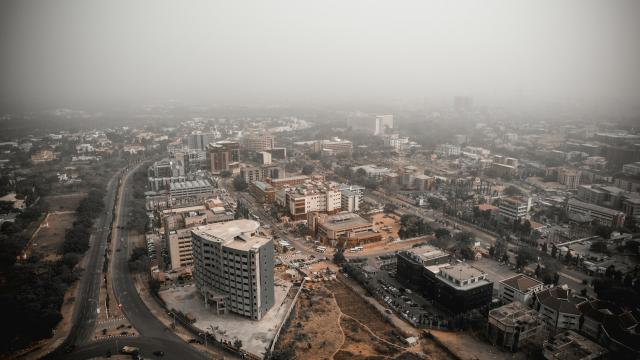
The short answer is Abuja, Nigeria,
according to Mercer’s latest published Cost of Living City Ranking. In Mercer’s
2024 ranking, Abuja was placed 226th out of 226 cities,
making it the least expensive city in the survey for international assignees.
Lagos followed at 225th, while Pakistan’s Islamabad ranked 224th and Karachi
222nd.
However, there is an important qualification: there is no single, permanent answer to the question “What is the world’s cheapest city?” Different organizations use different baskets of goods, currencies, housing assumptions and resident profiles. A city that is cheapest for an expatriate may not be cheapest for a local family, a student, a remote worker or a retired couple.
Abuja is the
strongest answer under Mercer’s latest internationally comparable city ranking,
while Islamabad and Karachi are among the most affordable major cities in Asia.
How Do Researchers Decide Which City Is Cheapest?
Cost-of-living rankings usually compare several everyday expenses, including:
• Rent and housing costs
•
Groceries and household supplies
•
Restaurant meals and takeaway food
•
Local transportation and fuel
•
Utilities, mobile services and internet
•
Clothing and personal-care items
•
Education, entertainment and healthcare
• Currency movements and inflation
Mercer’s ranking compares the prices of more than 200 goods and services. Its survey is designed particularly for multinational employers and international employees, so it includes housing, transportation, food, clothing, household goods and entertainment. New York City is used as the reference city, and exchange rates are measured against the US dollar.
This approach is useful for comparing international assignments, but it should not be treated as a complete measure of living standards. A low price does not automatically mean that residents enjoy high incomes, reliable public services, strong infrastructure or excellent housing conditions.

Abuja is Nigeria’s capital and an important administrative
and economic centre. In Mercer’s 2024 survey, currency depreciation and
comparatively low local prices helped make it one of the least expensive cities
for international assignees. Lagos and Abuja occupied the bottom two positions
in Mercer’s global list, with Islamabad close behind.
The result does not mean that every expense in Abuja is cheap. Housing in secure neighbourhoods, private schooling, imported products, electricity backup and international-standard services can be costly. In many lower-cost cities, the price paid by an international resident can be very different from the price paid by a local resident.
This is why cost-of-living rankings should be read as indicators rather than promises. They show broad price relationships, not a fixed monthly budget for every household.
Islamabad: One of the World’s Most Affordable Capitals
Islamabad deserves special attention for readers in
Pakistan. The city is regularly identified as one of the least expensive major
cities in international comparisons, and Mercer placed it 224th in its 2024
ranking.
Islamabad combines relatively affordable local services with planned neighbourhoods, access to universities and government institutions, and proximity to the Margalla Hills. Its costs vary significantly by location and lifestyle. A person living in a modest apartment, using public or shared transport and eating mostly local food will spend far less than a household renting a large home in a premium sector, using private schools and purchasing imported goods.
Numbeo’s Islamabad data, updated in November 2025, estimated monthly expenses for a single person at about US$361 excluding rent. The same source listed an average one-bedroom apartment at approximately PKR 31,969 per month outside the city centre and PKR 58,789 in the city centre. These figures are community-reported estimates and can change with inflation, exchange rates, neighbourhood demand and the date of measurement.

Karachi and Other Affordable Cities
Karachi ranked 222nd in Mercer’s 2024 global list, also
placing it among the least expensive cities in Asia. Its lower everyday prices
can be attractive to students, entrepreneurs and workers earning in foreign
currency. At the same time, Karachi’s housing market, transport demands,
infrastructure pressures and security considerations vary greatly between
neighbourhoods.
Other cities commonly included in low-cost comparisons include Lahore, Bishkek, Cairo, Dhaka, Kathmandu and parts of India. Their final position depends on the ranking method. Some indexes emphasize rent; others focus on consumer prices, expatriate expenses, purchasing power or the cost of a specific lifestyle.
A city should therefore be judged not only by its price tag but also by what residents receive for that price.

Is the Cheapest City the Best City to Live In?
Not necessarily. Affordability is only one part of urban
quality of life. Before choosing a city, residents and policymakers should
consider:
2
Access to work: Are jobs
close enough to avoid long and expensive commutes?
3
Public transport: Can
residents reach schools, hospitals and markets without depending on a private
car?
4
Climate and environment:
Does the city face heat, flooding, water stress or air pollution?
5
Healthcare and education:
Are essential services accessible at different income levels?
6
Safety and inclusion: Can
women, children, older people and people with disabilities use public spaces
safely?
7
Income and purchasing power:
Are local wages sufficient to cover housing and necessities?
What This Means for Affordable Housing in Pakistan
The global discussion about the cheapest city offers an
important opportunity for Pakistan. Islamabad, Karachi and Lahore can become
more affordable and more liveable when housing policy is linked with land-use
planning, transport and basic services.
•
Supporting serviced plots and incremental housing for
lower-income households
•
Improving public transport and pedestrian access
•
Encouraging energy-efficient construction to reduce
utility bills
•
Making housing finance more accessible and transparent
•
Upgrading informal settlements without displacing
residents
•
Using reliable data to track rents, construction costs
and household affordability
Final Verdict
So, what is the world’s cheapest city? Abuja, Nigeria, is the best-supported answer when using Mercer’s
latest published global city ranking. Lagos, Islamabad and Karachi are
also among the world’s most affordable major cities in that comparison.
But rankings change, and “cheap” is not the same as “liveable.” Anyone comparing cities should examine housing, transport, wages, public services, safety and quality of life alongside headline prices. For Pakistani readers, Islamabad’s strong position in international affordability comparisons shows the potential of well-planned urban development—but it also highlights the need for better housing data, inclusive planning and affordable homes connected to jobs and services.
The real goal should not simply be to identify the cheapest city. It should be to build cities where people can live securely, sustainably and with dignity.
Also read: The 10 Least Affordable Cities In The World (2026 Ranking)



-3dkuLgKhRD.jpg)
-49HupTvwDD.jpg)









LEAVE A REPLY