

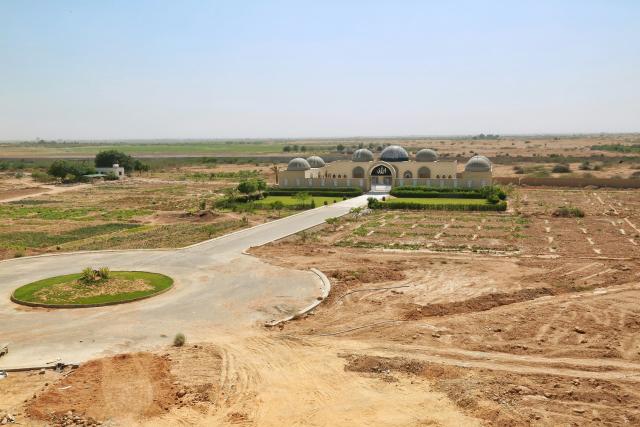
What is Ehsaas housing program?
The right to adequate safety and security of housing in Pakistan is treated as a basic dignity that is owed to citizens. However, millions of Pakistani citizens do not possess this basic right. The country faces a severe and persisting housing crisis which takes the form of informal housing settlements and history of overcrowded homes. In light of these challenges, the Government of Pakistan has initiated the Ehsaas Housing Program, which aims to construct tangible solutions towards long-standing systemic deprivation along with infusing stability and opportunities to the neediest citizens. Under this framework, the Ehsaas Housing Program aims to alleviate poverty.
As part of their vision to become a welfare state, the program aims to extend coverage to the most vulnerable citizens. This offer intends to bridge the stark chasm of individuals for whom basic shelter is a need versus a dream. The program attempts to provide respectable housing through an assemblage of subsidies, zero interest loans, and government aids for land and infrastructural development. Moreover, the potential benefits of the program are greater than just provision of basic shelter. The approach taken is intended to foster socio-economic inclusivity and address chronic socio-economic imbalances. These aims are particularly directed towards the so-called working poor, blue collar workers, and landless households by granting them legal status of lifelong residence.
By prioritizing visibility, public-private coordination, and scalable approaches, the social housing initiatives in the country have reached new heights through the Ehsaas Housing Program. This is done with the solemn assurance to transform living conditions and improve self-perception for citizens through love, promise, and acceptance rather than just providing buildings. Moreover, these blogs outline with precision the architecture, influence, hurdles, and aspirations of the said Program.
Policy Vision of the Ehsaas Housing Program
The policy framework of the Ehsaas Housing Program epitomises Pakistan's constitutional socio-economic responsibility blended with international development commitments as part of social welfare reform is subsidized in the country. This is not a project in isolation. Rather, it is an initiative that falls under the broader umbrella strategy of The Ehsaas Program which has several other projects and schemes aiming towards alleviating poverty and providing social security. Strategic housing interventions were designed to address the concerning gap in housing availability at various levels across Pakistan.
Currently, there exists a deficit of over 10 million homes in the country and a significant proportion of the urban poor are living in squalid conditions. Hence, the government considers housing as a fundamental precondition in the fight against poverty. The will power to translate this vision into reality went from the top of the governance structure, “Apna Ghar” is positioned as a right rather than a luxury, which needs to be entrenched in political perception.
The policy recognizes the multiplier benefits of housing - that with the construction of a house, there is creation of jobs opportunities, supporting industries such as cement and steel are stimulated, and community development is promoted. For this reason the Ehsaas Housing Program was designed to serve as a driver and instigator of transformative socio-economic change.
Its approach is comprehensive: it involves quite a number of steps such as land identification, legal paperwork, urban design or planning, community participation, etc. Additionally, social policy makers have crafted woman-sensitive provisions which place a widow and women-headed households in primary consideration not only ensuring safety and security through shelter but also empowering them. These perspectives show that the Ehsaas Program is a means to combat social and economic inequities maintained for years. By embedding housing within a policies framework that is rights-based, the program set out to shift national development priorities from the so-called elites to the overriding majority.
The Program’s Implementation and Design
The details of the program from the beginning have elicited more trust than previous housing projects. Previous initiatives often collapsed under their own weight due to lack of foresight, added politics, and struggle to garner support from the lower tiers of government, unlike the ever-evolving Ehsaas Housing Program. This program focuses on the administrative aspect, financials, and popularity among the people at the ground level.
The realization of planning revolves around the National Poverty Graduation Initiative, which meshes together all levels of governance: central, provincial, and local, to prevent fragmentation and redundancy in service delivery. Several different approaches are used in the model, such as financial aid in the form of interest free loans, selective grants for land and construction materials, and even collaborations with private enterprises to foster more rapid building. Selection of the recipients is done through a meticulous process by the NSER, which in this case stands for National Socio-Economic Registry, consisting of transparent data driven metrics to ascertain eligibility.
Managing finances remains one of the primary challenges in implementing the strategies. Moreover, the program works collaboratively with microfinance organizations to facilitate applicant access to loans with either no or minimal interest. These loans can be repaid within a timeframe that corresponds with an hourly worker's income stream and even allows wiggle room which is not common with bank loans.
Additionally, allocation of land is of particular importance. A lot of the people who are part of the program do not own land or reside in informal shanty towns without any form of identification. The focus of the program is to determine what government land is available or offer land estimates through proposals that are not only legal but clear to all parties involved. In addition, the design and construction of shelters have incorporated standards that make them more suitable to local designs to withstand continuous exposure to climate vulnerabilities.
Raised structures built below flood or earthquake prone areas use weather resistant materials; those that can withstand extreme temperatures. Finally, this program places emphasis on engaging the public within the community. Instead of passive beneficiaries, these people actively engage themselves into becoming potential clients. Local planning exercises and committees allow the community to determine the specific features of housing that address community needs which increases sustainability and ownership.

Impact on Communities and Individuals
The consequences of the Ehsaas Housing Program cannot be evaluated only by the quantitative figure of houses constructed. It's real worth lies in the change it brings in the lives of the recipients. For example, in rural Punjab, women who used to dwell in kucha houses now have brick homes with proper sanitation facilities. In interior Sindh, couples who spent decades renting a single room now enjoy the pride of owning property. The same applies for Balochistan and Khyber Pakhtunkhwa, where tribal people tend to live in makeshift housing, the program has provided more secure and durable options which still honor cultural designs and traditions.
Psychologically, the change from being renters to homeowners instills pride and provides psychological anchors. Parents take pride in sending their children to school knowing that their home will not be destroyed because of a rent argument or eviction. Properly built houses with locking doors and rooms construct safe spaces and increase the safety perception of young girls and women.
In terms of finances, homeownership enables families to repurpose the money that was used for rent towards their health, education, and microbusinesses. It also allows them to use the property as collateral for small business loans, which in turn helps alleviate poverty. In addition, the housing program has also improved the infrastructure of neglected areas. The roads, water, sewage, and electricity are installed after the houses are built, changing entire regions into communities.
Cohesion on a social level increases. When families are stably situated within supportive neighborhoods, social networks are fortified, communal violence is reduced, and collective support is easier to coordinate. In some regions, the program has resulted in voluntary committees set up by women to oversee the fund set up for upkeep of the housing complex and community projects. Impact is therefore multi-faceted and transformative. Outcomes change more than just providing housing, rather it provides shelter alongside cultivating dignity, stability, and progression.
Obstacles Encountered with the Program
Like all housing programs geared towards the betterment of society, the Ehsaas Housing Program also suffers from funding constraints. The hurdles in funding appear on a national level as the revenues and overall economic health of the country ebbs and flows. In addition, there is always a need for capital investment at the initial stages of large-scale housing projects for construction to take place which has always had funding issues at both domestic and international fora. The reach of private sector alliances does not span to all the provinces fueling the delay further. These issues also lead to slower construction and fewer units in the more inaccessible regions.
Land bottlenecks are only compounded with the addition of urban sprawl. The sheer number of people competing for land in cities and regions serves to raise the value even further beyond what boundaries the program can afford. The time-consuming legal battles for land ownership combined with the more hands-on processes of transferring land documents mean waiting for several months and in some cases years to get anything done.
In the past there have also been some reports that suggest that some locals have looked after their friends and let support be handed to those who don’t qualify which further erodes the trust people have in the system. Efforts to change that focus on ensuring that the NSER database is maintained, however, the trouble is with providing regular updates and boosting its reliability.
The increasing expenses pertaining to construction materials also poses as a new difficulty. Durable and affordable homes are increasingly harder to build due to inflation heavily affecting cement and steel prices. Further, floods in Sindh, extreme heat in Balochistan, and earthquakes in KP all have to be considered for climate adaptive designs which also could raise construction expenses. Finally, low levels of public awareness and literacy hinder the most disadvantaged from engaging. Countless individuals who are eligible do not know how to apply or feel daunted by the required documents and forms. From strong outreach and community support, the people who truly need aid can be neglected.
The Road Ahead: Expansion and Reform
To optimize the Ehsaas Housing Program, a comprehensive approach that incorporates scale, innovation, and reform is crucial. The government has already indicated plans to that direction by further integrating housing with other social welfare programs. Future iterations of the program are expected to include more climate adaptability, efficient technologies, and broadened social acceptability. One impending change is the use of digital platforms for application and resolution monitoring. These systems promise to streamline administrative workflows, reduce errors, and improve transparency. Enhanced accountability could be realized through a centralized dashboard that enables real-time monitoring of application status, fund allocation, and completion of housing units.
There are also plans to further integrate vocational training and livelihood support into the program. Rather than mere living quarters, Housing settlements could also serve as centers for employment, education, and healthcare services. This would ensure that the housing program does not human development in a fragmented manner. The government is also looking into subsidized access parallel to middle-income earners to widen urban development support without the polarization of low- and high-income stratum.
As in any effort, collaboration of different disciplines will be essential. It will be important for state actors to partner and integrate the efforts of Architects, Engineers, Urban Planners, and even NGOs so that the design meets innovation, community integration, and responsiveness. Creativity is needed also on the economic side. To achieve program viability, different sources of funding such as housing bonds and diaspora donations need to be considered. In any case, the major challenge of the Ehsaas Housing Program is to continuously, broaden, deepen, and adapt its endeavors in order to bring not only shelter, but hope to people all over the country.
Conclusion
More than a mere program, The Ehsaas Housing Program symbolizes Pakistan’s enduring dreams for a just and inclusive society. The program encompasses the idea that a home is not just a building but a means to propel someone into a new level of social status and dignity. This program, as part of the larger \'Ehsaas framework\' which is one of the biggest social aid programs in the history of Pakistan, aims to deal with the lack of supply of houses quantitatively and qualitatively in terms of stability, empowerment, and sense of belonging. Such a well-defined public initiative is exceptional for an emerging economy like Pakistan, which has a striking deficit of social housing for low-income workers.
This shift captures…the aspirations of the government to ensure no one is left behind when considering sustainable growth. The government’s development strategy recognizing the existence of citizens who do not have access to basic shelter, citizenship rights, or any acknowledgment, is a positive sign in the thinking around societal development in Pakistan.
Stories of policy impact can be told in more human terms, as we see in the illustrative examples from Pakistan: a Punjab widow with children finally feels safe in a home of her own, or a Sindhi family now living in a flood-resilient house built through the program. The groundwork laid for these families further reduces health risks, escalates school attendance, strengthens community ties, and increases employment opportunities associated with construction work. This program, as it’s easy to see, demonstrates that housing is not simply a single answer to a problem. Rather, it functions as a hub that integrates health, education, income, and social security. People with stable houses begin to dream, plan, and meaningfully engage in society.
To guarantee that there are sustainable social and economic development improvements, the program needs continuous adaptation. There are notable lessons from the program’s successes as well as its shortcomings. The challenges such as escalating construction costs, administrative bottlenecks, complex legal land ownership structures, underfunding, and limited resources are indeed obstacles but not at face value.
They frame the fundamental problems that chronically under develop social welfare in Pakistan. If not resolved, these problems will fundamentally undermine social welfare development in Pakistan. The future of this initiative, therefore, relies on strategic solutions and bold policy changes in social governance and collaborative partnership frameworks. Active engagement of the intended beneficiaries is equally critical so that they democratically participate as participants in the process. Citizen participation in the design and oversight of housing programs leads to more effective and longer-lasting results.
Additionally, the program cannot be self-contained. It must align within the larger framework of city planning, construction, and ecological approaches. Climate change, in particular, poses an imminent danger for vulnerable community’s housing security. The succeeding step of the Ehsaas Housing Program must be climate resilient, technologically advanced, and incorporate a cross-sectional approach of gender as well as regional representation. There should also be room for creativity concerning new financing constructs, partnerships with diaspora citizens, and implementation of green construction practices.
To summarize, the Ehsaas Housing Program has sought to build an equitable Pakistan where housing is offered as a right instead of a luxury one reserves oneself to. It stands as an exemplary to be executed in human policy design, which has a long way to go, but it is undoubtedly crystal clear on where to go next. If this policy is supported politically, willingly participated in socially, and coordinated by willing institutions, these policies will not be a mere change in construction, but transform lives for the better.
Also Read: A Project Proposal on Low-Cost Rural Housing Program



-3dkuLgKhRD.jpg)
-49HupTvwDD.jpg)




LEAVE A REPLY